High purity nitrogen from cryogenic ASU for lithium battery manufacturing is no longer a niche topic. ultra-dry nitrogen has become a decisive factor for product quality, safety and yield. For process engineers and researchers, the question is not whether nitrogen is needed, but how to specify, design and operate the supply system so that it supports every critical step in the battery value chain.
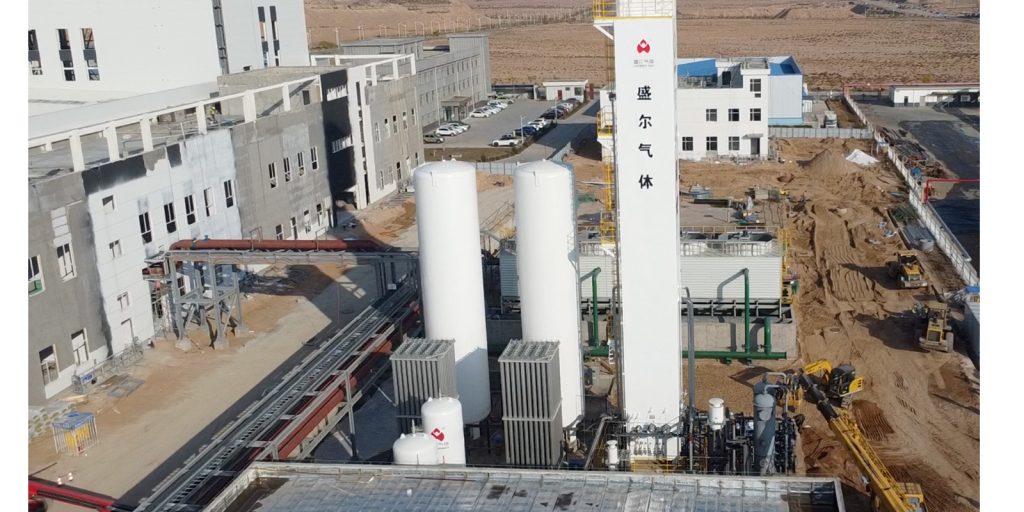
This article outlines why cryogenic air separation units (ASUs) are often chosen as the backbone for high-purity nitrogen in large lithium battery plants, how nitrogen quality links to process performance, and what engineers should consider when integrating this gas supply into dry rooms, ovens and gloveboxes.
1. Why lithium battery plants need high-purity nitrogen
Lithium battery manufacturing is unusually sensitive to oxygen and moisture. Cathode and anode powders, binders, electrolytes and separators all react—sometimes slowly, sometimes catastrophically—with atmospheric components. Even trace levels of water can trigger:
- Hydrolysis of lithium salts and additives
- Formation of HF and other corrosive species
- Degradation of electrode interfaces and increased cell impedance
- Gas generation and swelling in finished cells
To avoid this, production lines rely on a combination of ultra-dry rooms and high-purity nitrogen atmospheres. Nitrogen is used in:
- Powder handling and mixing – to prevent oxidation and moisture uptake
- Electrode coating and drying – as purge gas in convection or IR ovens
- High-temperature calcination and sintering – for cathode material processing
- Electrolyte filling and sealing – to minimise dissolved oxygen and moisture
- Formation and ageing – as blanket gas in formation chambers and storage
For modern plants producing tens of gigawatt-hours per year, total nitrogen demand can reach several thousand Nm³/h. In this range, High-Purity Nitrogen from Cryogenic ASU for Lithium Battery Manufacturing becomes technically and economically attractive compared with trucked-in liquid or small on-site generators.
2. Why cryogenic ASUs are suited to high-volume battery production
A cryogenic ASU separates air by cooling it to cryogenic temperature and rectifying the mixture in distillation columns. The same plant can deliver gaseous nitrogen for process use and liquid nitrogen for backup or external sale.
For lithium battery manufacturing, cryogenic ASUs bring several advantages:
- High and stable purity
- Nitrogen purity above 99.99% is routinely achievable, with impurities in the ppm range when required.
- Oxygen and moisture levels can be controlled tightly when coupled with appropriate purification and distribution design.
- Large, continuous flow
- ASUs are designed for continuous operation at high loads, matching the 24/7 nature of battery plants.
- One unit can feed multiple dry rooms, ovens, gloveboxes and filling lines.
- Multi-product flexibility
- In addition to nitrogen, the same ASU can provide oxygen for auxiliary combustion or waste treatment and argon for specialty welding or analytical systems.
- Favourable lifecycle cost at scale
- While capital-intensive, cryogenic ASUs can offer lower long-term cost per Nm³ of nitrogen in very large plants, especially when product mix and by-products are utilised efficiently.
For smaller or modular battery plants, PSA or membrane nitrogen systems may still be more appropriate. However, once demand reaches the “gigafactory” level, High-Purity Nitrogen from Cryogenic ASU for Lithium Battery Manufacturing is often the natural next step in capacity planning.For large gigafactories, high-purity nitrogen for lithium battery manufacturing is most reliably supplied by an on-site cryogenic ASU.
-769x1024.png)
3. Nitrogen quality requirements for lithium battery manufacturing
Specific nitrogen specifications vary between producers and chemistries, but they share the same direction: very high purity and very low moisture. Table 1 gives indicative values used in many high-end lithium battery facilities.
Table 1 – Typical nitrogen specifications for lithium battery processes (indicative)
| Parameter | Typical requirement (process gas) |
|---|---|
| Nitrogen purity (vol.%) | ≥ 99.999 |
| Residual O₂ (ppm v/v) | ≤ 5–10 (key areas such as electrolyte filling) |
| Dew point (°C at line pressure) | ≤ −60 (dry rooms, electrode drying, filling lines) |
| Oil content | Below detection; oil-free compressors and filtration |
| Particle cleanliness | Compatible with ISO cleanroom class (e.g. ISO 7–8) |
| Pressure at point of use (bar g) | Typically 4–8, depending on equipment |
| Short-term purity stability | No spikes during load changes or plant turndown |
These figures are not universal “standards”; rather, they are practical targets used when designing gas systems to support sensitive, hygroscopic materials and long calendar life. Engineers specifying High-Purity Nitrogen from Cryogenic ASU for Lithium Battery Manufacturing should start from their own product reliability targets and then set gas quality limits with appropriate safety margins.
4. Cryogenic ASU versus PSA and membrane systems
For completeness, Table 2 contrasts cryogenic ASUs with PSA and membrane nitrogen generators in the context of lithium battery plants.A well-designed distribution network ensures that high-purity nitrogen for lithium battery manufacturing keeps the same purity from the ASU outlet to every dry room and process tool.
Table 2 – Comparison of nitrogen generation technologies for large battery facilities (generalised)
| Feature | Cryogenic ASU | PSA Nitrogen System | Membrane Nitrogen System |
|---|---|---|---|
| Typical purity range | 99.9–99.999% | 95–99.999% (depends on design) | 95–99.5% |
| Best economic flow range | ≥ 3,000–5,000 Nm³/h and above | ~100–3,000 Nm³/h | ~50–2,000 Nm³/h |
| Oxygen impurity control | Excellent, ppm-level possible | Good, but often higher O₂ at high flow | Limited at higher nitrogen recovery |
| Dew point (with proper drying) | Very low (≤ −60 °C achievable) | Very low with additional dryers | Moderate; deep drying often external |
| Response to fast load swings | Slower; needs buffering | Faster than cryogenic | Fastest response |
| CAPEX | High | Medium | Low–medium |
| OPEX at large scale | Low per Nm³ | Medium | Medium |
| Multi-gas capability (O₂/Ar) | Yes | Nitrogen only | Nitrogen only |
| Typical use in Li battery plants | Large integrated complexes, gigafactories | Small–mid plants, satellite facilities | Special lines or backup supply |
In practice, many producers use a hybrid approach, for example:
- Cryogenic ASU as the base-load provider of high-purity nitrogen
- PSA units or liquid nitrogen storage as backup and for peak shaving
- Local membrane units for auxiliary or non-critical uses
This combination allows High-Purity Nitrogen from Cryogenic ASU for Lithium Battery Manufacturing to cover the core process, while other technologies add flexibility.
5. Integrating High-Purity Nitrogen from Cryogenic ASU for Lithium Battery Manufacturing
The supply of high-purity nitrogen does not end at the ASU cold box. The design of the downstream network is equally important for maintaining gas quality at the point of use.
5.1. Typical nitrogen supply architecture
A simplified architecture for a large lithium battery plant might include:
- Cryogenic ASU – producing gaseous nitrogen at distribution pressure and, where required, liquid nitrogen for storage
- Buffer and storage vessels – smoothing short-term transients and providing ride-through during minor upsets
- Main distribution headers – ring or loop layout to minimise pressure drop and provide redundancy
- Pressure control and polishing – local pressure-reducing stations, optional catalytic deoxygenation or adsorption polishing where ultra-low O₂ is needed
- Dedicated branches to:
- Dry rooms for electrode processing and cell assembly
- High-temperature ovens and furnaces
- Electrolyte filling and vacuum drying systems
- Formation chambers and ageing warehouses
Correct sizing of lines, valves and control loops helps ensure that purity and dew point measured at the ASU outlet are preserved up to the final equipment connection.
5.2. Monitoring and control
For High-Purity Nitrogen from Cryogenic ASU for Lithium Battery Manufacturing, continuous monitoring is essential. Typical instrumentation includes:
- Trace oxygen analysers on main headers and critical branches
- Moisture analysers especially in lines feeding dry rooms and filling equipment
- Flow and pressure transmitters to detect abnormal consumption or leaks
- Local alarms and interlocks in process tools where loss of nitrogen could lead to safety risks or scrap
Data from these instruments are often integrated into the plant DCS or MES, enabling long-term trend analysis and correlation between gas quality and product KPIs such as capacity retention or failure rate.

6. Energy and optimisation considerations
Although cryogenic ASUs are efficient at high capacity, they still represent a significant portion of site energy consumption. For engineers looking to optimise High-Purity Nitrogen from Cryogenic ASU for Lithium Battery Manufacturing, several levers are available:
- Heat integration and process design
- Optimising column pressures, reflux ratios and heat-exchanger temperature profiles to reduce specific power consumption.
- Considering integration with waste heat, steam systems or power cycles where feasible.
- Load management
- Operating the ASU at a relatively stable base load and using storage or secondary generators to absorb peaks.
- Aligning major nitrogen consumers, such as formation lines, with periods of favourable electricity tariffs where possible.
- Distribution efficiency
- Minimising unnecessary pressure drops in the pipeline network, which would otherwise require higher ASU discharge pressure and increased compressor power.
- Designing sensible zoning so that ultra-high purity nitrogen is reserved for the most sensitive operations.
- Reliability engineering
- Redundancy in critical rotating equipment, backup power for control systems and robust startup/shutdown procedures help minimise unplanned downtime.
- Liquid nitrogen storage allows the plant to maintain key operations during short ASU outages.
7. Outlook
As cell formats evolve and new chemistries such as high-nickel cathodes and silicon-rich anodes become mainstream, sensitivity to moisture and oxygen is unlikely to decrease. If anything, tolerances may tighten. At the same time, pressure is mounting to reduce the energy and carbon footprint of gigafactories.
In this context, High-Purity Nitrogen from Cryogenic ASU for Lithium Battery Manufacturing is a technology path that can deliver both quality and scale, provided it is specified and integrated thoughtfully. For researchers and engineers, understanding not only the ASU itself but also the downstream distribution, monitoring and optimisation options will be central to the next generation of efficient, reliable battery plants.In short, high-purity nitrogen for lithium battery manufacturing will remain a cornerstone of next-generation gigafactories.