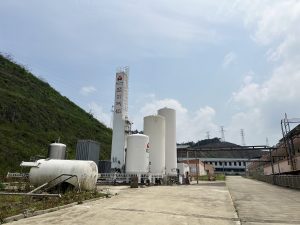
Air separation plants (ASUs) are critical infrastructure in modern steel production, supplying high-purity oxygen, nitrogen, and other gases for key processes. In an integrated steel mill, the blast furnace (BF) and basic oxygen furnace (BOF) consume enormous volumes of oxygen (often >99%) for ironmaking and steelmaking. By contrast, smaller mini-mills or specialty shops often use on-site smaller air separation plants or delivered liquefied gases instead of a large ASU. However, such large air separation plants are energy-intensive (often 10–15% of the mill’s power use), so engineers focus on efficiency and integration. This review examines cryogenic ASU technology and its applications in steelmaking – from furnace oxygen enrichment to casting and heat-treatment atmospheres – and also considers how PSA and membrane systems play complementary roles.
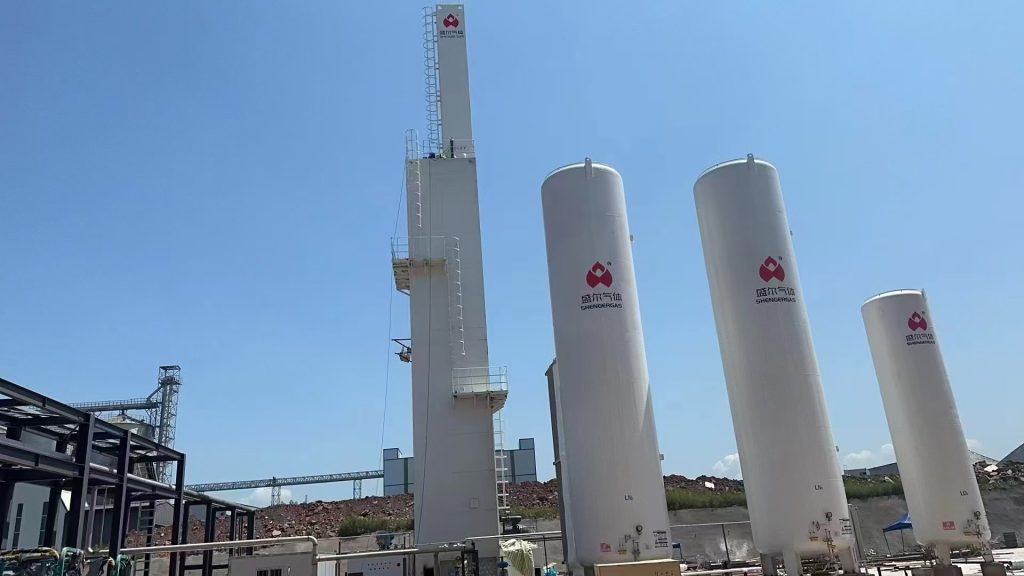
Cryogenic ASUs: Large-scale Gas Supply
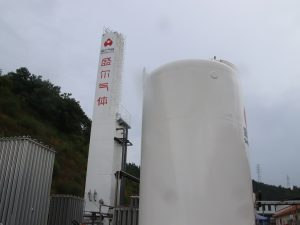
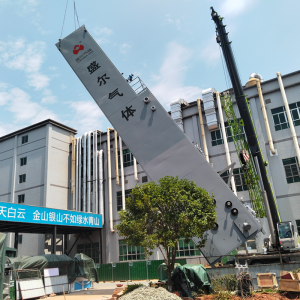
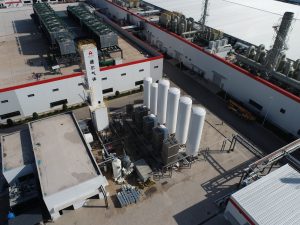
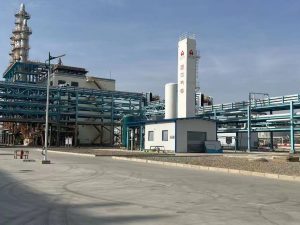
Cryogenic air separation units cool and liquefy atmospheric air, then use distillation columns to separate the components. Oxygen is typically recovered at ≥99.5% purity and nitrogen at ≥99.9%, with argon (about 1% of air) co-produced at ~95% purity. Such multi-product ASUs can produce hundreds to thousands of tons per day of gas. They run continuously in large mills and consume a lot of energy – roughly 10–15% of the plant’s electricity – so steel plants often include heat-recovery and advanced controls to improve ASU efficiency. The advantage of a large ASU is its flexibility: integrated mills may operate multiple ASU trains (or even separate ASU plants) in parallel to meet peak demand and provide redundancy. A central ASU feeds high-pressure O₂ (for blast and converter blowing) and delivers N₂/Ar through the plant’s pipeline network. One drawback is the high capital cost and complexity: cryogenic plants have long startup times and are best suited to steady operation rather than frequent load swings.
Applications of ASU in Steel Production
Blast Furnace Oxygen Enrichment
Blast furnaces produce iron by reducing ore with coke and fuel under a hot air blast. Injecting additional oxygen into the blast increases the flame temperature and combustion efficiency. In practice, blast furnace operators enrich the hot blast to roughly 30–40% O₂ using ASU oxygen, which lowers coke use and increases output. (Experiments with nearly pure O₂ blast have shown dramatic productivity gains, but these require specialized furnace designs and are not widely used.) Supplying this enriched oxygen stream to the BF tuyeres is a key task of the air separation plant.
Basic Oxygen Furnace (BOF) Oxygen Blowing
In a BOF (converter), high-purity oxygen (typically ≥99%) is blown through a water-cooled lance into the molten iron/scrap bath. This oxidizes impurities (carbon, silicon, etc.) and releases heat, which melts the scrap and completes the steel conversion. A typical BOF blow lasts about 15–20 minutes and consumes on the order of 20,000–40,000 Nm³ of O₂ at very high flow rates (several thousand Nm³ per hour). Cryogenic ASUs supply this oxygen via high-pressure pipelines and compressors, enabling the converter to receive a massive O₂ flow on demand. Without the ASU, delivering such large, high-purity oxygen flows would be impossible. (PSA or membrane generators cannot meet this bulk, high-purity demand.)
Continuous Casting and Secondary Metallurgy
After steel is refined in the BOF, it is cast into slabs or blooms via continuous casting. During casting, argon from the ASU is often injected into the molten steel through the submerged entry nozzle. Argon bubbles scour the steel flow, helping to float out non-metallic inclusions and prevent nozzle clogging. This stirring yields cleaner slabs with fewer defects. Nitrogen from the ASU may also be used for roller cooling or as a backup inert gas, but argon is the primary “stirring” gas in casting. (Argon is also used in secondary processes like vacuum degassing and argon-oxygen decarburization for specialty steels.) In all cases, the inert gases used in casting and refining are supplied by the steel mill’s air separation plants.
Protective and Forming Atmospheres
Many finishing processes require non-oxidizing atmospheres. High-purity N₂ from the ASU is used to blanket annealing, normalizing, or tempering furnaces so that steel heats without scaling. For example, steel can be tempered in a pure N₂ (or N₂/H₂) atmosphere with essentially no oxygen present, preventing surface oxidation. (The furnace is kept sealed in N₂ until it cools below ~300–400°C before opening.) ASU nitrogen also provides inerting gas for ladles, pipelines, and tank purges in the plant. In short, 99%+ N₂ from air separation plants is crucial for preventing decarburization or oxidation in heat-treatment and forging. (In smaller operations, on-site PSA N₂ generators are sometimes used as a cost-effective source of high-purity nitrogen for these furnaces.) All of the above uses rely on a steady supply of oxygen, nitrogen, or argon from the mill’s central ASU.
PSA and Membrane Systems in Steel
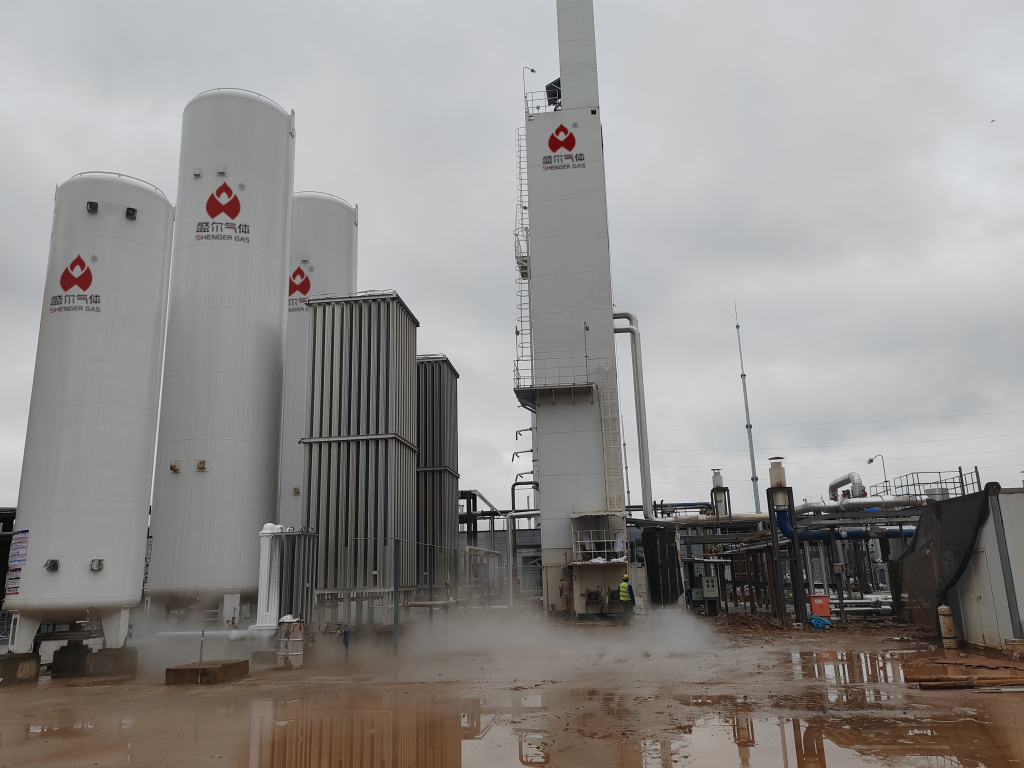
Pressure Swing Adsorption (PSA) and membrane generators are compact on-site alternatives for producing oxygen or nitrogen, but at lower scale and purity. A typical PSA oxygen generator yields about 90–95% O₂, and PSA nitrogen can reach 95–99%. These are suited for small-to-medium flows. For example, a steel plant might use a PSA N₂ generator to supply an annealing furnace or pneumatic controls, instead of routing all N₂ from the ASU. PSA O₂ can serve small oxy-fuel burners or auxiliary furnaces, but not the main BOF. Membrane separators produce enriched air (about 30–40% O₂) or moderate-purity N₂ (~90–98%). They have the advantage of simple operation and quick startup. A membrane oxygen unit might be used to boost combustion air in a reheating furnace, while a membrane N₂ can supply inert gas for cable insulation or small blanketing tasks.
In practice, PSA and membrane units supplement the main ASU but do not replace it. They are often installed near the point of use. For example, a cold-rolling line may have a PSA N₂ generator for its annealing ovens, and a steel ladle burner might use membrane-enriched oxygen. In general, large-volume, high-purity needs (BF and BOF blowing) are met by the cryogenic ASU, while PSA/membrane plants address localized or flexibility needs. By combining a central ASU with these auxiliary systems, steel operations get both massive gas flow and on-demand flexibility.
| System | Purity (O₂ / N₂) | Flow Capacity | Power Consumption | Typical Steel Applications |
|---|---|---|---|---|
| Cryogenic ASU | O₂ ≥99.5%; N₂ ≥99.99%; (Argon produced) | Very high (hundreds to thousands Nm³/hr) | ≈0.3–0.5 kWh per Nm³ O₂ | Bulk O₂ supply for BF/BOF; bulk N₂; argon for degassing; plant inerting |
| PSA Generator | O₂ ~90–95%; N₂ up to ~99% | Medium (tens to ~5,000 Nm³/hr) | Moderate (~0.5–1 kWh/Nm³ O₂) | On-site N₂ for heat-treat ovens and blanketing; small-scale O₂ (burners); backup supply |
| Membrane System | O₂-enriched air (~30–40% O₂); N₂ ~90–98% | Low to moderate (10–1,000 Nm³/hr) | Low to moderate (efficient for these purities) | Point-of-use O₂ enrichment (furnaces, ladles); N₂ for local inerting or instrument air |
This comparison highlights that cryogenic ASUs provide ultra-high purity and huge capacity (at higher cost and energy use), while PSA and membrane systems trade purity/scale for simplicity and modularity.
Conclusion
In practice, steelmakers often run multiple ASU trains or plants in parallel to meet demand and provide redundancy. Air separation plants are the workhorses of the steel industry’s gas supply, so any major increase in BF or BOF capacity must be matched by added ASU capacity. By combining a large cryogenic ASU (for bulk O₂/N₂/Ar) with smaller PSA and membrane units (for supplemental needs), modern mills achieve both scale and flexibility. Continuous improvements in ASU efficiency (for example, by heat recovery or advanced controls) are a constant focus for engineers, since even small efficiency gains at the ASU translate into large energy and cost savings across the plant.
Air separation plants (ASUs) are critical infrastructure in modern steel production, supplying high-purity oxygen, nitrogen, and other gases for key processes. In an integrated steel mill, the blast furnace (BF) and basic oxygen furnace (BOF) consume enormous volumes of oxygen (often >99%) for ironmaking and steelmaking. By contrast, smaller mini-mills or specialty shops often use on-site smaller air separation plants or delivered liquefied gases instead of a large ASU. However, such large air separation plants are energy-intensive (often 10–15% of the mill’s power use), so engineers focus on efficiency and integration. This review examines cryogenic ASU technology and its applications in steelmaking – from furnace oxygen enrichment to casting and heat-treatment atmospheres – and also considers how PSA and membrane systems play complementary roles.
Cryogenic ASUs: Large-scale Gas Supply
Cryogenic air separation units cool and liquefy atmospheric air, then use distillation columns to separate the components. Oxygen is typically recovered at ≥99.5% purity and nitrogen at ≥99.9%, with argon (about 1% of air) co-produced at ~95% purity. Such multi-product ASUs can produce hundreds to thousands of tons per day of gas. They run continuously in large mills and consume a lot of energy – roughly 10–15% of the plant’s electricity – so steel plants often include heat-recovery and advanced controls to improve ASU efficiency. The advantage of a large ASU is its flexibility: integrated mills may operate multiple ASU trains (or even separate ASU plants) in parallel to meet peak demand and provide redundancy. A central ASU feeds high-pressure O₂ (for blast and converter blowing) and delivers N₂/Ar through the plant’s pipeline network. One drawback is the high capital cost and complexity: cryogenic plants have long startup times and are best suited to steady operation rather than frequent load swings.
Applications of ASU in Steel Production
Blast Furnace Oxygen Enrichment
Blast furnaces produce iron by reducing ore with coke and fuel under a hot air blast. Injecting additional oxygen into the blast increases the flame temperature and combustion efficiency. In practice, blast furnace operators enrich the hot blast to roughly 30–40% O₂ using ASU oxygen, which lowers coke use and increases output. (Experiments with nearly pure O₂ blast have shown dramatic productivity gains, but these require specialized furnace designs and are not widely used.) Supplying this enriched oxygen stream to the BF tuyeres is a key task of the air separation plant.
Basic Oxygen Furnace (BOF) Oxygen Blowing
In a BOF (converter), high-purity oxygen (typically ≥99%) is blown through a water-cooled lance into the molten iron/scrap bath. This oxidizes impurities (carbon, silicon, etc.) and releases heat, which melts the scrap and completes the steel conversion. A typical BOF blow lasts about 15–20 minutes and consumes on the order of 20,000–40,000 Nm³ of O₂ at very high flow rates (several thousand Nm³ per hour). Cryogenic ASUs supply this oxygen via high-pressure pipelines and compressors, enabling the converter to receive a massive O₂ flow on demand. Without the ASU, delivering such large, high-purity oxygen flows would be impossible. (PSA or membrane generators cannot meet this bulk, high-purity demand.)
Continuous Casting and Secondary Metallurgy
After steel is refined in the BOF, it is cast into slabs or blooms via continuous casting. During casting, argon from the ASU is often injected into the molten steel through the submerged entry nozzle. Argon bubbles scour the steel flow, helping to float out non-metallic inclusions and prevent nozzle clogging. This stirring yields cleaner slabs with fewer defects. Nitrogen from the ASU may also be used for roller cooling or as a backup inert gas, but argon is the primary “stirring” gas in casting. (Argon is also used in secondary processes like vacuum degassing and argon-oxygen decarburization for specialty steels.) In all cases, the inert gases used in casting and refining are supplied by the steel mill’s air separation plants.
Protective and Forming Atmospheres
Many finishing processes require non-oxidizing atmospheres. High-purity N₂ from the ASU is used to blanket annealing, normalizing, or tempering furnaces so that steel heats without scaling. For example, steel can be tempered in a pure N₂ (or N₂/H₂) atmosphere with essentially no oxygen present, preventing surface oxidation. (The furnace is kept sealed in N₂ until it cools below ~300–400°C before opening.) ASU nitrogen also provides inerting gas for ladles, pipelines, and tank purges in the plant. In short, 99%+ N₂ from air separation plants is crucial for preventing decarburization or oxidation in heat-treatment and forging. (In smaller operations, on-site PSA N₂ generators are sometimes used as a cost-effective source of high-purity nitrogen for these furnaces.) All of the above uses rely on a steady supply of oxygen, nitrogen, or argon from the mill’s central ASU.
PSA and Membrane Systems in Steel
Pressure Swing Adsorption (PSA) and membrane generators are compact on-site alternatives for producing oxygen or nitrogen, but at lower scale and purity. A typical PSA oxygen generator yields about 90–95% O₂, and PSA nitrogen can reach 95–99%. These are suited for small-to-medium flows. For example, a steel plant might use a PSA N₂ generator to supply an annealing furnace or pneumatic controls, instead of routing all N₂ from the ASU. PSA O₂ can serve small oxy-fuel burners or auxiliary furnaces, but not the main BOF. Membrane separators produce enriched air (about 30–40% O₂) or moderate-purity N₂ (~90–98%). They have the advantage of simple operation and quick startup. A membrane oxygen unit might be used to boost combustion air in a reheating furnace, while a membrane N₂ can supply inert gas for cable insulation or small blanketing tasks.
In practice, PSA and membrane units supplement the main ASU but do not replace it. They are often installed near the point of use. For example, a cold-rolling line may have a PSA N₂ generator for its annealing ovens, and a steel ladle burner might use membrane-enriched oxygen. In general, large-volume, high-purity needs (BF and BOF blowing) are met by the cryogenic ASU, while PSA/membrane plants address localized or flexibility needs. By combining a central ASU with these auxiliary systems, steel operations get both massive gas flow and on-demand flexibility.
| System | Purity (O₂ / N₂) | Flow Capacity | Power Consumption | Typical Steel Applications |
|---|---|---|---|---|
| Cryogenic ASU | O₂ ≥99.5%; N₂ ≥99.99%; (Argon produced) | Very high (hundreds to thousands Nm³/hr) | ≈0.3–0.5 kWh per Nm³ O₂ | Bulk O₂ supply for BF/BOF; bulk N₂; argon for degassing; plant inerting |
| PSA Generator | O₂ ~90–95%; N₂ up to ~99% | Medium (tens to ~5,000 Nm³/hr) | Moderate (~0.5–1 kWh/Nm³ O₂) | On-site N₂ for heat-treat ovens and blanketing; small-scale O₂ (burners); backup supply |
| Membrane System | O₂-enriched air (~30–40% O₂); N₂ ~90–98% | Low to moderate (10–1,000 Nm³/hr) | Low to moderate (efficient for these purities) | Point-of-use O₂ enrichment (furnaces, ladles); N₂ for local inerting or instrument air |
This comparison highlights that cryogenic ASUs provide ultra-high purity and huge capacity (at higher cost and energy use), while PSA and membrane systems trade purity/scale for simplicity and modularity.
Conclusion
In practice, steelmakers often run multiple ASU trains or plants in parallel to meet demand and provide redundancy. Air separation plants are the workhorses of the steel industry’s gas supply, so any major increase in BF or BOF capacity must be matched by added ASU capacity. By combining a large cryogenic ASU (for bulk O₂/N₂/Ar) with smaller PSA and membrane units (for supplemental needs), modern mills achieve both scale and flexibility. Continuous improvements in ASU efficiency (for example, by heat recovery or advanced controls) are a constant focus for engineers, since even small efficiency gains at the ASU translate into large energy and cost savings across the plant.