Introduction
In many industrial settings—from large steel mills to chemical plants—the need for high‑purity gases such as oxygen, nitrogen and argon is growing. Among the available technologies, deep cryogenic air separation stands out for its ability to deliver very high purity at very large scales. At the same time, other methods like pressure swing adsorption (PSA) and membrane separation remain relevant because they may offer lower cost or greater flexibility. This article compares deep cryogenic air separation with those alternative methods from the perspective of process engineers and researchers: the technology foundations, performance trade‑offs, and practical selection criteria.
Technology Fundamentals
Deep Cryogenic Air Separation
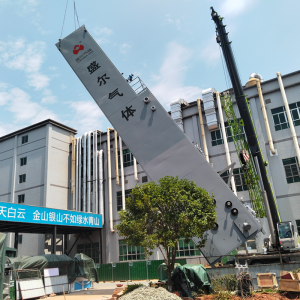
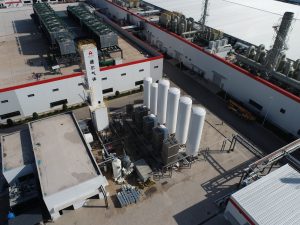
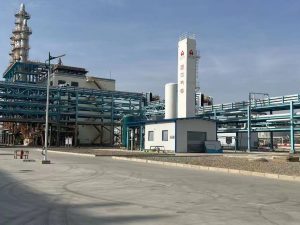
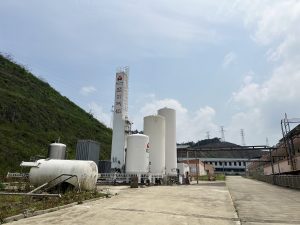
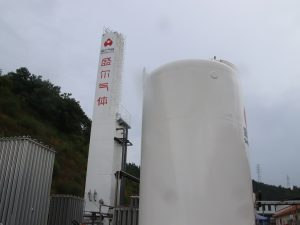
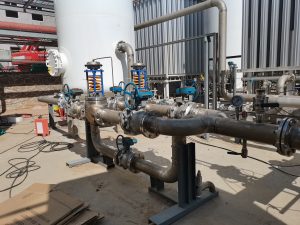
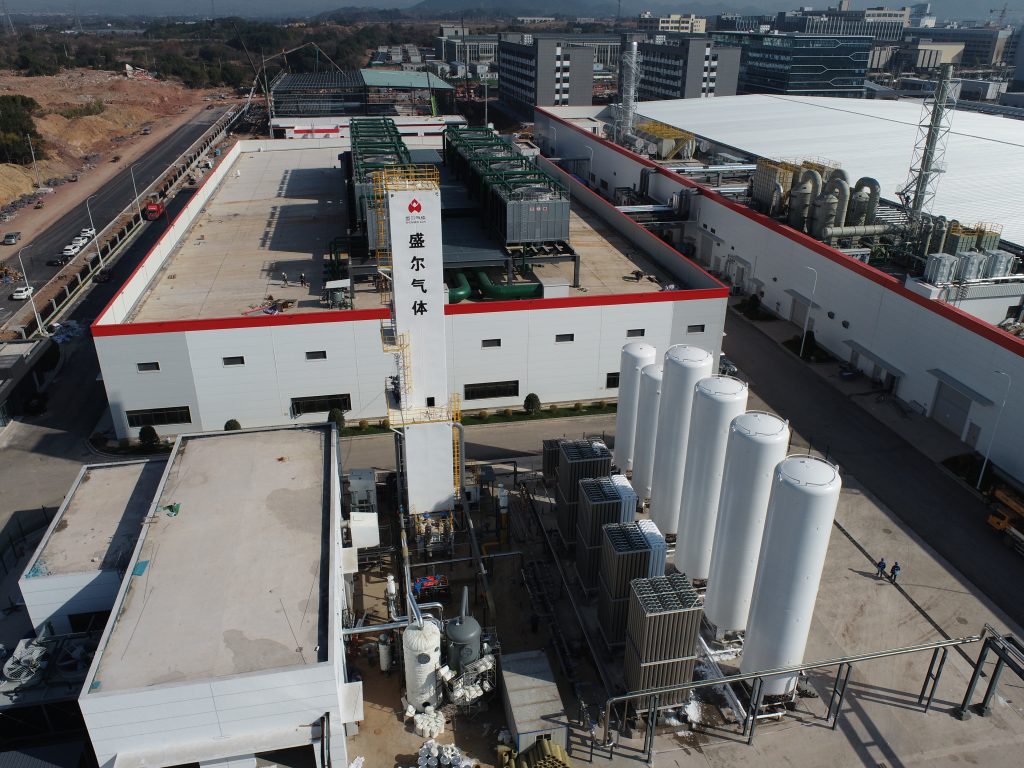
Deep cryogenic air separation is based on cooling air to very low temperatures (often below –150 °C) to liquefy major components and then separate them via distillation columns by exploiting their different boiling points. Cryospain+2erpublication.org+2 For example, nitrogen boils at –196 °C and oxygen at –183 °C, which allows the separation under the right conditions. Cryospain+1 This method has matured over decades and is typically applied for large throughput units with continuous operation. netl.doe.gov+2MDPI+2 The key benefits include the ability to produce very high purity gases (oxygen, nitrogen, even argon) and the possibility of liquid output. On the flip side, the process demands high capital cost, extensive refrigeration/heat‑exchangers, and relatively large footprint and energy demand.
Pressure Swing Adsorption (PSA) & Membrane Separation
PSA uses adsorbent materials (e.g., zeolites, activated carbon) which under pressure preferentially trap one component (e.g., nitrogen) and release it when pressure is lowered. 维基百科+1 PSA is relatively simple, often used for moderate flows and offers good flexibility. Membrane separation relies on selective permeability of membranes to certain gases (or different transport/diffusion rates). Both PSA and membrane technologies tend to have lower purity or liquid output capability compared to cryogenic methods, but they win in cost and agility for smaller‑scale applications. f1000research.com+1
Performance & Application Comparison
Purity, Scale and Output Form
When very high purity is required (for example O₂ ≥ 99.5 % or N₂ ≥ 99.999 %), or when liquid gas production is needed, deep cryogenic air separation is hard to beat. Research indicates that cryogenic systems routinely achieve those purities, especially when integrating advanced heat‑exchange and column arrangements. PMC+1 By contrast, PSA might achieve high gas‑phase purity but is rarely used for large liquid output; membrane systems typically achieve even lower purity and almost never give liquids. f1000research.com For large flows (hundreds to thousands of tonnes/day), cryogenic separation becomes more economically viable; smaller flows may favour PSA or membrane.
Energy Consumption & Cost
One significant trade‑off is energy and cost. Studies show that cryogenic air separation is more energy‑intensive compared to PSA and membrane for similar gas volumes/purities. For example, obtaining nitrogen via cryogenic distillation may require ~2.56 kWh/kg, while PSA might require ~0.31‑0.63 kWh/kg in some cases. f1000research.com On the capital side, cryogenic units demand large refrigeration and column investment; PSA/membrane systems tend to have lower capital cost and simpler operation. Because of this, the economic threshold (flow rate × purity × form‑liquid vs gas) often drives the choice.
Operational Flexibility & Load Variation
In scenarios where load varies, or frequent start/stops are required, PSA and membrane technologies have a clear advantage. They can ramp up/down faster, are more modular, and require less warm‑up time. In contrast, deep cryogenic air separation units are large, often optimized for steady operation, and may take longer to reach full operation. Research into single‑column designs and improved start/stop flexibility is ongoing. 美国能源部开放存取科学与技术信息网站
Integration and Advanced Configurations
Another dimension is integration with other processes. For example, coupling cryogenic separation with LNG regasification or power‑plant waste heat can improve overall system efficiency. ResearchGate+1 Meanwhile, for PSA/membrane, new digital‑twin modelling and advanced controls are enabling better performance under variable loads. arXiv From a research viewpoint, hybrid systems (e.g., cryogenic + PSA or membrane) are emerging to combine strengths of each technique.
Technical Comparison Table
Here is a summary table comparing deep cryogenic air separation with PSA and membrane gas separation on key technical criteria:
| Technical Dimension | Deep Cryogenic Air Separation | PSA (Pressure Swing Adsorption) | Membrane Separation |
|---|---|---|---|
| Typical Product Purity | Very high (O₂ ≥ 99.5 %, N₂ ≥ 99.999 %) | Moderate to high (e.g., N₂ 95‑99.5 %) | Lower to moderate (e.g., O₂ 30‑45 % in some cases) |
| Scale & Output Form | Large scale, gas and often liquid | Medium scale, mostly gaseous output | Small to moderate scale, gaseous output only |
| Capital & Energy Cost | High investment, high energy use | Moderate cost, lower energy than cryogenic | Lower capital cost, lowest energy among the three |
| Load Flexibility & Start/Stop | Less flexible, optimised for steady state | Flexibile, good modularity | Very flexible, good for distributed systems |
| Multi‑Gas / Liquid Output Capability | Strong – can produce O₂, N₂, Ar, liquids | Usually single gas (oxygen or nitrogen) | Usually one gas, rarely liquid |
| Typical Use Case | Major industrial plants (steel, chemicals, LNG) | Medium‑sized plants, medical oxygen, inert gas supply | Small point‑of‑use systems, distributed gas supply |
Practical Selection Guidelines
For engineers and researchers choosing between these technologies, here are some actionable guidelines:
- Define purity and form requirements – If you need liquid output or ultra‑high purity, deep cryogenic air separation is likely required.
- Evaluate flow rate and scale – For high throughput (hundreds of tonnes/day), cryogenic units often offer better economics; for lower flows, PSA or membrane can be more cost‑effective.
- Assess load dynamics – If the process load is steady and continuous, cryogenic is a strong option; if loads vary or rapid startup is needed, PSA/membrane may be more practical.
- Consider integration opportunities – If you can make use of waste heat, cold energy (e.g., from LNG regasification) or synergistic processes, cryogenic units can benefit significantly.
- Operational and maintenance aspects – Cryogenic systems require advanced refrigeration, instrumentation and maintenance; PSA/membrane systems may have simpler operations and lower maintenance burden.
Conclusion
Choosing between deep cryogenic air separation and alternative gas separation methods demands careful balancing of purity, scale, cost, and flexibility. The keyword deep cryogenic air separation represents a mature technology offering very high performance when the requirements justify its complexity and investment. On the other hand, PSA and membrane systems remain very relevant for less demanding output, lower capital cost, or more flexible operation. For research and engineering teams, the future is also leaning toward integrated systems and hybrid configurations that harness the strengths of each technology, while keeping an eye on energy efficiency and operational agility.