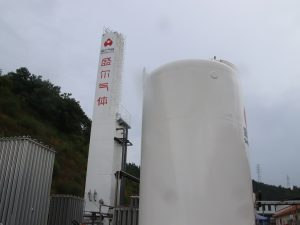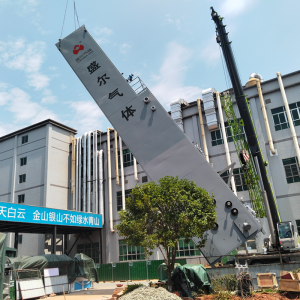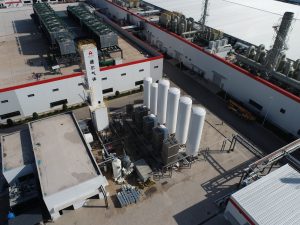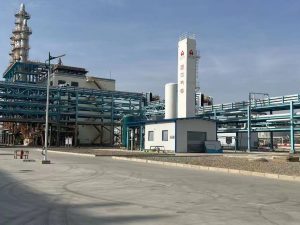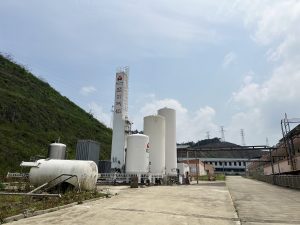
Cryogenic air separation units (ASUs) are large-scale industrial plants that separate atmospheric air into high-purity oxygen, nitrogen, and argon via low-temperature fractional distillationen.wikipedia.org. By compressing ambient air (typically to 5–10 barg) and cooling it to cryogenic temperatures, each gas is liquefied at its boiling point and drawn off as a product streamen.wikipedia.orgen.wikipedia.org. Modern cryogenic ASUs can deliver hundreds to thousands of tons of O₂ per day with purities often exceeding 99.5–99.9% for oxygen and 99.9–99.999% for nitrogenshengerhk.commathesongas.com. These plants are energy-intensive but unmatched in capacity and purity, making them indispensable for sectors like petrochemicals, refining, and especially steelmaking, where very large continuous gas flows are neededuigi.comsiad-americas.com. Cryogenic Air Separation Units are crucial for supporting continuous high-demand gas consumption in these industries.As petrochemical and steel industries expand their operations, demand is rising for new ASUs with advanced, energy-saving designs to reduce power costs and meet stricter efficiency targets.
Principles of Cryogenic Air Separation
The core of cryogenic air separation is fractional distillation of liquefied air based on boiling points: nitrogen (–196 °C), oxygen (–183 °C), and argon (–186 °C) are separated in sequential distillation columnsshengerhk.commathesongas.com. Atmospheric air is first filtered and multi-stage compressed (usually with interstage cooling) to remove dust and wateren.wikipedia.org. A purification step with molecular sieves then scrubs out trace moisture, CO₂, and hydrocarbons that would freeze at low temperatureshengerhk.comen.wikipedia.org. Next, the clean, high-pressure air is cooled in plate-fin heat exchangers by exchanging heat with the outgoing cold product streams. Cooling to cryogenic temperature is achieved by isenthalpic expansion (the Joule–Thomson effect) and turbo-expansion. In a turbo-expander (reverse turbine) a portion of the compressed air expands, dropping in temperature and producing shaft work, which often helps drive the main compressoren.wikipedia.org. This refrigeration cycle provides the <–180 °C temperatures needed to liquefy most of the air stream.Stable operation of cryogenic air separation units depends on precise refrigeration management.
Once cold, the stream enters a coldbox with a dual-column distillation system. A typical configuration uses a high-pressure (HP) column and a low-pressure (LP) column coupled by an internal heat exchanger (condenser–reboiler)shengerhk.comen.wikipedia.org. In the HP column, nitrogen-rich vapor rises to the top (nearly pure N₂ product) while oxygen-rich liquid descends. The LP column, operating near ambient pressure, further refines the products: nearly pure liquid oxygen accumulates at its bottom, and nitrogen-rich vapor exits its top. An intermediate stream between columns circulates: liquid oxygen from the HP bottom flows upward in the LP condenser to reboil oxygen in the LP column, exchanging heat via brazed-plate heat exchangersshengerhk.comen.wikipedia.org. This tight integration (often with only a 1–2 K approach temperature) maximizes efficiencyen.wikipedia.org.This is especially important in Cryogenic Air Separation Units used for large-scale oxygen production.
- Key process steps in a cryogenic ASU include:
- Air intake and compression: Filtered ambient air is compressed to 5–10 bar (gauge), with intercoolers condensing out water between stagesen.wikipedia.org.
- Purification: High-pressure air passes through molecular-sieve beds to remove residual H₂O, CO₂ and hydrocarbonsen.wikipedia.org.
- Heat exchange and expansion: The purified air is pre-cooled by the cold product streams, then expanded (via a turbo-expander or Joule-Thomson valve) to produce the refrigeration needed for liquefactionen.wikipedia.org.
- Cryogenic distillation: The two-column system separates oxygen, nitrogen, and argon. Oxygen (bp –183 °C) remains as a liquid bottom product, while nitrogen (bp –196 °C) vapor exits at the topshengerhk.com. A small side-stream in the LP column is withdrawn for argon recovery (argon’s boiling point is between O₂ and N₂)en.wikipedia.orgshengerhk.com.
- Product draw-off and warming: The separated gases are extracted at design purity (O₂ often ≥99.5%, N₂ up to 99.999%)shengerhk.commathesongas.com, then warmed to ambient temperature through the cold box before delivery.
Each step must be finely balanced: pressure levels, reflux rates, and heat-exchange duties are adjusted to achieve the desired purity and recovery. For example, higher O₂ purity (toward 99.9%) usually means more internal reflux and thus higher energy use. Conversely, lowering purity can save powermathesongas.comshengerhk.com. In practice, optimization and control systems maintain steady operation 24/7, ensuring continuous reliable production at the targeted gas flow rates and specificationsshengerhk.com.
Performance and Product Specifications
Modern Cryogenic Air Separation Units offer exceptionally high oxygen and nitrogen output with reliable high purity. Typical performance parameters are summarized in Table 1. Large industrial units can produce on the order of 10^2–10^3 tons of O₂ per dayshengerhk.commathesongas.com. Oxygen product is usually ≥99.5% pure (sometimes up to 99.95% for medical or combustion uses)shengerhk.commathesongas.com. Nitrogen is recovered at very high yields (~95–99% of the air feed) and purified to ultra-high purity (often 99.9–99.999%)shengerhk.comshengerhk.com. Argon (~0.9% of air) can be recovered via an additional side-column at purities of ~99.9% or better if requiredshengerhk.comen.wikipedia.org.
| Parameter | Typical Range / Value |
|---|---|
| O₂ purity (gas product) | ~99.5–99.9% (high-purity oxygen)shengerhk.com |
| N₂ purity (gas product) | ~99.9–99.999% (ultra-high purity)shengerhk.com |
| Ar purity (product) | ~99.9% (when argon column used)shengerhk.com |
| O₂ production capacity | ~100–5,000+ metric tons per day (per ASU)shengerhk.com |
| Specific power consumption | ~0.3–0.6 kWh per Nm³ O₂ (≈250–500 kWh/ton O₂)shengerhk.com |
| High-pressure column | ~5–10 bar(g) operating pressureen.wikipedia.orgen.wikipedia.org |
| Low-pressure column | ~1.2–1.5 bar(abs) operating pressureen.wikipedia.org |
These values are indicative. For example, large ASUs often achieve the lower specific consumption (~0.3 kWh/Nm³ O₂) through optimized heat integration and modern turboexpanders, whereas older or smaller units may be toward 0.5–0.6 kWh/Nm³shengerhk.comshengerhk.com. In practical terms, a 1,000 TPD O₂ ASU might use on the order of 20–25 MW of electric powershengerhk.com. However, continual design improvements have lowered this requirement: studies report roughly 10–20% gains in energy efficiency over the past decadeshengerhk.comlinde-engineering.com. For instance, Linde notes a 15% reduction in average ASU power use over ten yearslinde-engineering.com, while new plants incorporate advanced heat exchangers and packing to save roughly 5–10% in refrigeration demand.
Table 1: Typical performance parameters of a modern cryogenic ASU (data from industry guides and case studiesshengerhk.comsiad-americas.com). These ranges depend on scale and design; ultra-large plants (>1000 TPD O₂) reach higher efficiency.
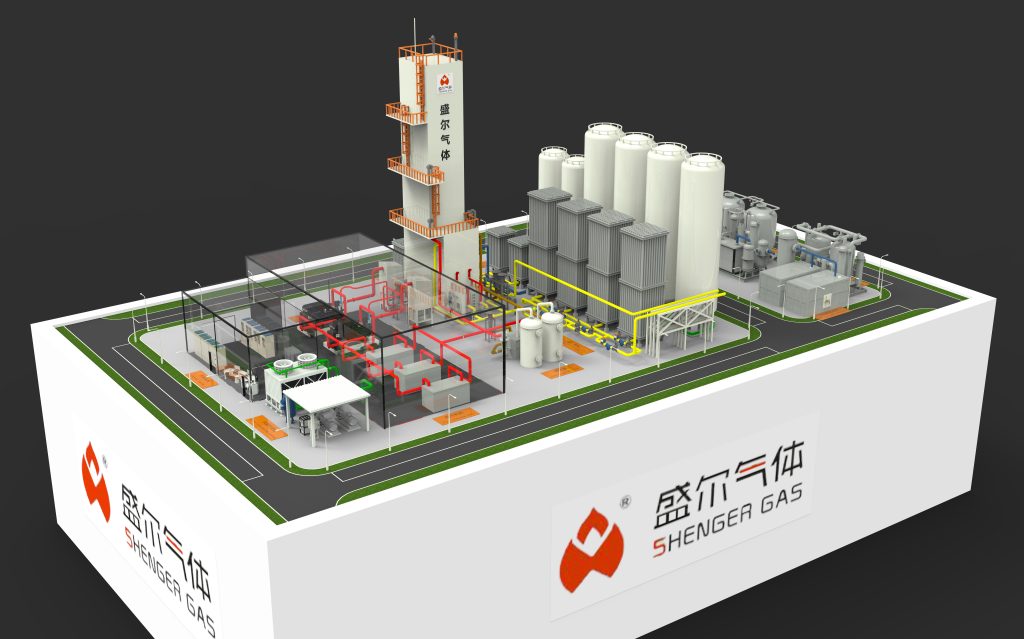
Energy Efficiency and Advanced Design Features
Cryogenic ASUs are inherently energy-intensive because refrigeration to cryogenic temperatures dominates the power budget. Main air compressors consume the largest share of electricityuigi.com. Thus, advanced designs focus on improving compressor efficiency, pressure stages, and drive systems. For example, ASU designs may use multi-shaft compressors, variable-speed drives, or even turbine-driven compressors to optimize part-load performance. Internally, some ASUs use mixed or internally integrated compression cycles: here a fraction of compressed air is expanded in a turbine whose shaft drives a booster, effectively recycling energy back into compressionsiad.comuigi.com. This internal refrigeration (also called external vs. internal loops) reduces overall power draw compared to simple expansion valves.
A key feature of modern ASUs is extensive heat integration. Plate-fin heat exchangers with tiny approach temperatures (<2 K) couple the incoming air and outgoing products, recovering cold as much as possible. Minimizing temperature differences and pressure drops in this cold box saves energyuigi.comuigi.com. This allows Cryogenic Air Separation Units to reduce power consumption while maintaining purity.Advanced column packing and reflux arrangements also improve thermal efficiency. High-performance structured packing or trays increase separation efficiency, meaning less reflux (and less cooling) is needed per unit of product.
Another major energy-saving strategy is the use of expansion turbines instead of throttling valves. In a basic Joule–Thomson (JT) expansion, compressed air cools at constant enthalpy through a valve, but no shaft work is recovered. Modern ASUs therefore employ cryogenic turbo-expander machines: compressed air or liquid expands through a turbine, which produces shaft power. This not only provides refrigeration via the Joule–Thomson effect but also reduces net power consumption by driving compressors or generatorsen.wikipedia.orguigi.com. Optimizing these refrigeration cycles is crucial: industry guides note that careful tuning of expansion turbines and cold-box configurations can “recover energy and stabilize temperatures”uigi.com.
Additional efficiencies come from minimizing losses in auxiliary systems. Pressure drops in piping, valve throttling, and inter-stage coolers all waste energy; engineers trim these where possible. Control systems help, too: by matching compressor output and expansion rates to varying plant loads, the ASU can avoid “pinch” points and run closer to its thermodynamic optimum. Some suppliers now offer advanced ASU automation (sometimes called “smart” ASUs) that dynamically adjust pressures and flows to balance supply with demand, further improving overall exergy utilization.
In recent years, integrated solutions have been explored. For example, designs that use a heat pump to reclaim compression heat for molecular sieve regeneration, or use cold from LNG (liquefied natural gas) regasification as supplemental refrigeration, have been proposed in researchuigi.com. While such innovations are still emerging, they reflect the industry push toward higher efficiency. In practice, well-designed ASUs today consume about 10–20% less energy per ton of O₂ than ten years ago, aligning with data from major suppliersshengerhk.comlinde-engineering.com.
Applications in Petrochemical and Steel Industries
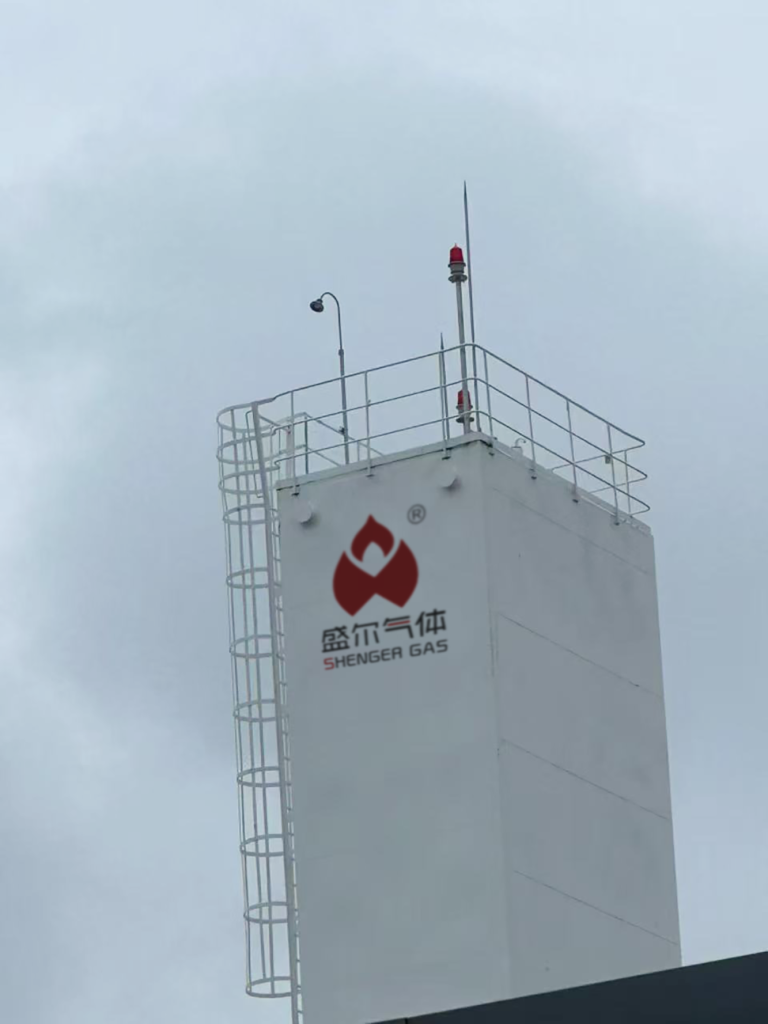
Cryogenic ASUs are deeply embedded in petrochemical, refining, and steel facilities, where large, continuous supplies of O₂ and N₂ are needed. For steelmaking, ASUs are almost ubiquitous. Integrated mills use high-purity oxygen (often 99.0–99.5% O₂) for blast furnace and basic oxygen furnace (BOF) processes. For example, injecting pure oxygen into molten iron reduces carbon much faster than air, cutting conversion time by 25–30% and raising temperatures efficientlyshengerhk.com. Modern oxygen furnaces (BOF) can consume several thousand cubic meters per hour of O₂; large ASUs (thousands of tons/day) are installed on-site to meet this demand. Nitrogen and argon from the same ASU also support steel production: N₂ is used for purging and cooling in continuous casting and heat treatment, while argon (via a side-draw column) is injected into ladles to stir and purify the metalshengerhk.comsiad-americas.com. Because steel plants operate 24/7, cryogenic ASUs must be highly reliable – indeed uptime often exceeds 99%mathesongas.com Therefore, Cryogenic Air Separation Units are a core utility for blast furnace and BOF operations.– and sized for fluctuating loads (steelmaking has variable cycles of high/low O₂ demand).
In the petrochemical and chemical industries, ASUs supply both oxygen and nitrogen for various processes. Oxygen may be used in partial-oxidation reactors (e.g. producing styrene, phthalic anhydride, or syngas), or for oxy-fuel burners to improve furnace efficiency. Nitrogen is even more widespread: it serves as an inert blanket in reactors and storage tanks, as a diluent in certain processes, and for pipeline pressure testing. Large ethylene crackers and refineries often incorporate ASUs onsite. For instance, a steam methane reforming unit (for hydrogen production) can use pure oxygen in the furnace, and nitrogen to carry product gas. ASUs have thus become standard in complex petrochemical clusters. Industry reports note that cryogenic ASUs have been delivered to petrochemical hubs and refineries worldwide, ensuring uninterrupted supply of high-purity gasessiad-americas.com.
The synergy is clear: as petrochemical and metallurgical plants grow, they demand more industrial gas. On-site cryogenic ASUs offer economies of scale that trucked or cylinder supply cannot match above ~200–500 TPD of O₂mathesongas.commathesongas.com. By co-locating an ASU, a steel mill or chemical complex gains an integrated utility – extremely pure O₂, N₂, and Ar at large flow rates – while eliminating dependence on external suppliers. The delivered gases support higher throughput and lower fuel consumption (e.g. oxy-combustion reduces energy use by ~20–25% in some furnacesshengerhk.com).
Table 2 illustrates a few representative ASU production scales for major applications:
| Application | O₂ Output (Nm³/h or tpd) | O₂ Purity | N₂ Output (Nm³/h) | Notes |
|---|---|---|---|---|
| Large Steel Mill (blast furnace, BOF) | ~5,000–20,000 Nm³/h (~150–600 TPD) | ~99–99.5% | ~15,000–60,000 Nm³/h | Continuous supply for furnace and ladle; includes argon side-drawsiad.comshengerhk.com. |
| Petrochemical Complex (SMR + inerting) | ~3,000–10,000 Nm³/h (~90–300 TPD) | ~99.5% | ~9,000–30,000 Nm³/h | O₂ for reforming burners, N₂ for blanketing and purging; often 24/7 operationsiad-americas.com. |
| Gas Processing (hydrogen plant) | ~1,000–5,000 Nm³/h (~30–150 TPD) | ~99.5% | ~3,000–15,000 Nm³/h | Clean oxygen for partial oxidation or oxyfuel; nitrogen is byproduct (use in onsite uses). |
| Electronics/Medical (small to mid ASU) | ~100–1,000 Nm³/h (~3–30 TPD) | up to 99.999% | ~300–3,000 Nm³/h | Requires ultra-high purity; often modular ASU trains with stringent controls. |
Table 2: Sample ASU output ranges and purities for different industries (approximate values). Nm³ refers to standard cubic meters (0 °C, 1 atm); TPD is metric tons per day. Data from industry sourcessiad.comsiad-americas.com.
The exact outputs and capacities vary, but this illustrates that many plant-scale ASUs fall in the 10^2–10^3 TPD oxygen range. Power plants (e.g. oxy-coal boilers), steel smelters, and chemical plants with catalysts are on the upper end, while mid-size d refineries and large city hospitals are on the lower end.
Conclusion
Cryogenic air separation units remain the backbone of industrial gas supply for large-scale applications. Their ability to deliver very high-purity oxygen, nitrogen, and argon in massive quantities makes them essential for modern steel mills, petrochemical refineries, glass plants, and related industries. Contemporary design advances – such as improved heat-exchangers, turbo-expander refrigeration, sophisticated control systems, and optimized column internals – have steadily improved ASU energy efficiencyuigi.comshengerhk.com. As heavy industry expands and energy costs rise, these advanced energy-saving features become ever more critical. A well-designed cryogenic ASU can cut electricity use per ton of O₂, increase gas recovery, and reduce operational cost, thereby supporting both economic and sustainability goals. With growing demand from steelmaking and petrochemical sectors, engineers continue to refine ASU designs to push efficiency higher. In summary, cryogenic air separation units equipped with state-of-the-art energy recovery and control technologies Future Cryogenic Air Separation Units will further reduce energy consumption through smarter controls and advanced heat integration.provide a reliable, large-scale source of industrial gases – now and into the future – for expanding petrochemical and metallurgical industriessiad-americas.comshengerhk.com.