Introduction
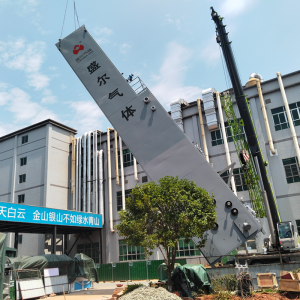
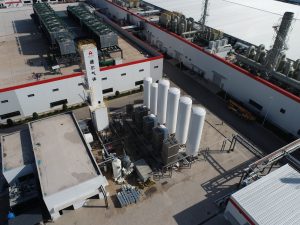
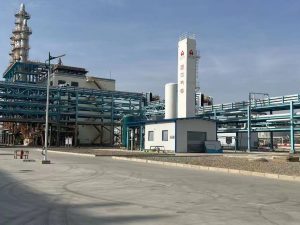
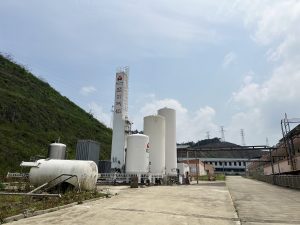
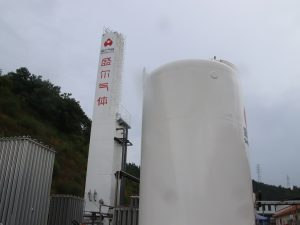
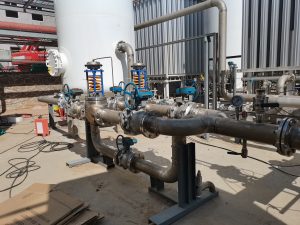
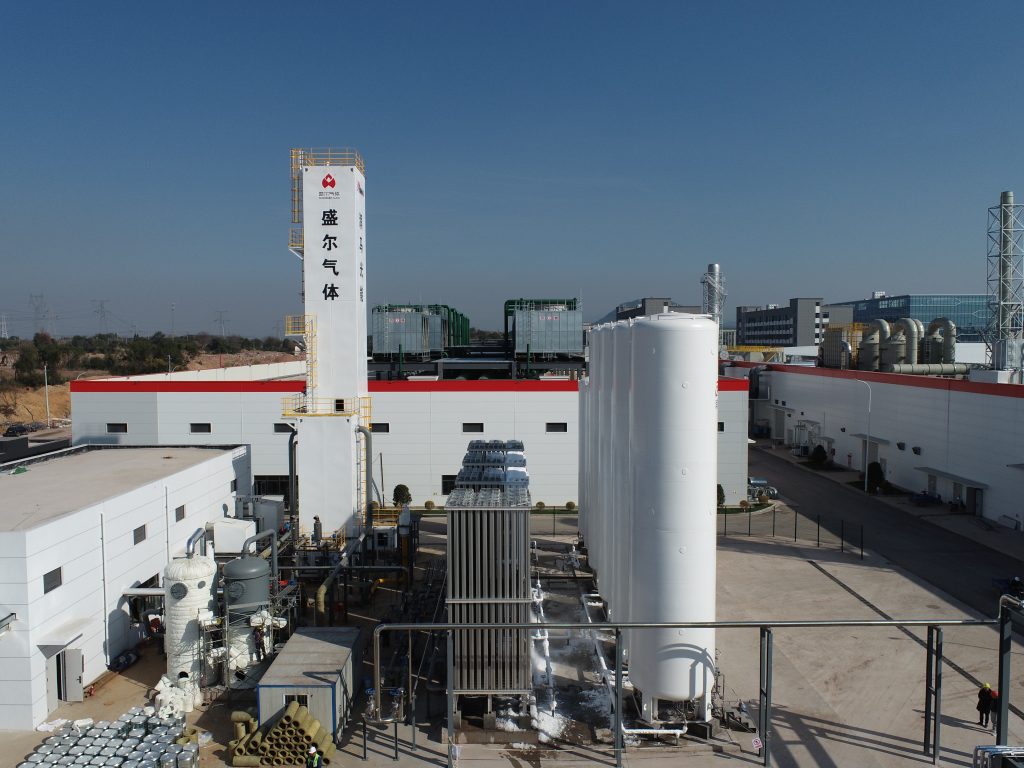
A cryogenic Air Separation Unit (ASU) is a specialized industrial plant that separates air into its primary components—oxygen (O₂) and nitrogen (N₂)—by cooling it to extremely low (cryogenic) temperatures. Cryogenic ASUs are considered the state-of-the-art for producing large volumes of high-purity oxygen and nitrogen. In this white paper, we examine how these systems operate and their critical role in various sectors. We also discuss how a cryogenic ASU for oxygen and nitrogen production in industrial applications underpins processes in steel manufacturing, semiconductor fabrication, and emerging renewable energy systems.
How Cryogenic Air Separation Works
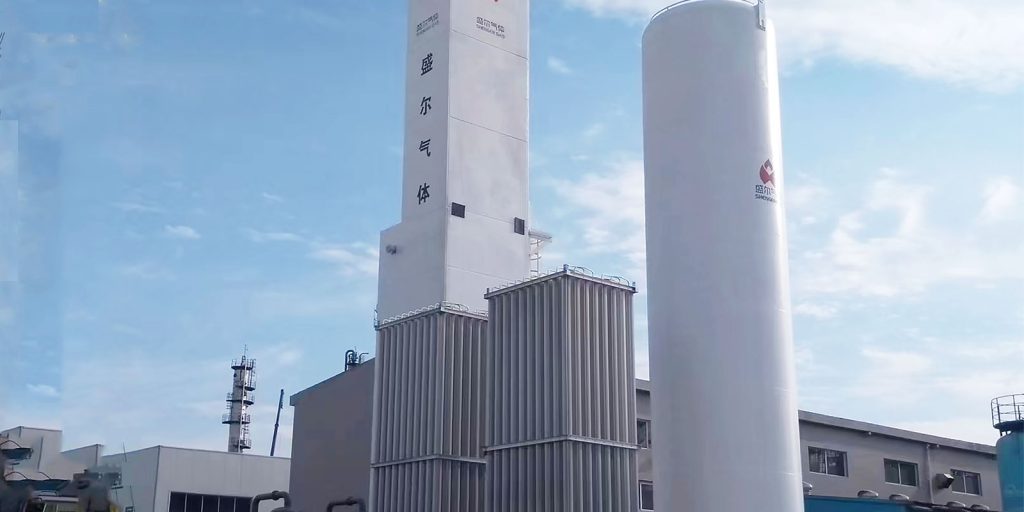
Fundamentally, a cryogenic ASU for oxygen and nitrogen production in industrial applications operates on the principle that different gases liquefy at different low temperatures. Ambient air (about 78% N₂, 21% O₂, plus argon and trace gases) is first filtered and compressed to roughly 6–10 bar. The pressurized air then passes through heat exchangers and expansion turbines to cool it to cryogenic temperatures (around –180 °C), causing most of the air to condense into a liquid-vapor mixture.
This ultra-cold mixture enters a distillation system where separation occurs based on boiling points. Nitrogen (boiling at –196 °C) becomes vapor and rises to the top of the column, while oxygen (boiling at –183 °C) concentrates as a liquid at the bottom. Modern ASU units typically use a double-column design: the high-pressure column produces an oxygen-enriched liquid and nearly pure nitrogen gas, which then feed into a low-pressure column. The low-pressure column yields high-purity (≈99% or higher) liquid oxygen at the bottom and additional pure nitrogen at the top. If argon production is required, a third column can extract argon (boiling at –186 °C) from an intermediate stage. Finally, the separated oxygen and nitrogen are withdrawn, warmed back to ambient temperature, and delivered as gases (or stored as cryogenic liquids) at the desired delivery pressure.
Key Performance Parameters
Each cryogenic ASU is designed to meet specific product requirements. Key performance parameters include product purity, output capacity (flow rate), delivery pressure, and specific power consumption. Table 1 provides typical values for oxygen and nitrogen outputs from a modern large-scale cryogenic ASU for oxygen and nitrogen production in industrial applications:
| Parameter | Oxygen (O₂) | Nitrogen (N₂) |
|---|---|---|
| Purity (vol %) | ~99.5% (high-purity) | ~99.999% (ultra-high) |
| Flow Rate (Nm³/h) | 50,000 (large plant) | 60,000 (large plant) |
| Delivery Pressure (bar) | 5–6 bar (typical) | 5–6 bar (typical) |
| Form of Supply | Gas or Liquid O₂ | Gas or Liquid N₂ |
| Specific Power (kWh/Nm³) | 0.4 (per Nm³ O₂) | 0.3 (per Nm³ N₂) |
Table 1: Typical output specifications for a cryogenic ASU producing high-purity oxygen and nitrogen. (Nm³ = normal cubic meter at standard conditions; bar refers to approximate delivery pressure.)
As shown above, cryogenic ASUs can deliver oxygen at about 99.5% purity (the remaining fraction being mostly argon) and nitrogen at 99.999% purity for sensitive applications. Flow rates reaching tens of thousands of Nm³/h illustrate the massive scale of these plants—on the order of 1,000–2,000 tons per day of oxygen, with proportional nitrogen production. Delivery pressure is usually a few bars above atmospheric pressure for pipeline supply, although higher pressures can be achieved by pumping liquid product and then vaporizing it. The specific power consumption (around 0.3–0.5 kWh per Nm³ of O₂ produced) reflects the significant energy input required. Improving this energy efficiency is a major focus in the design and operation of a cryogenic ASU for oxygen and nitrogen production in industrial applications.
Steel Manufacturing Applications
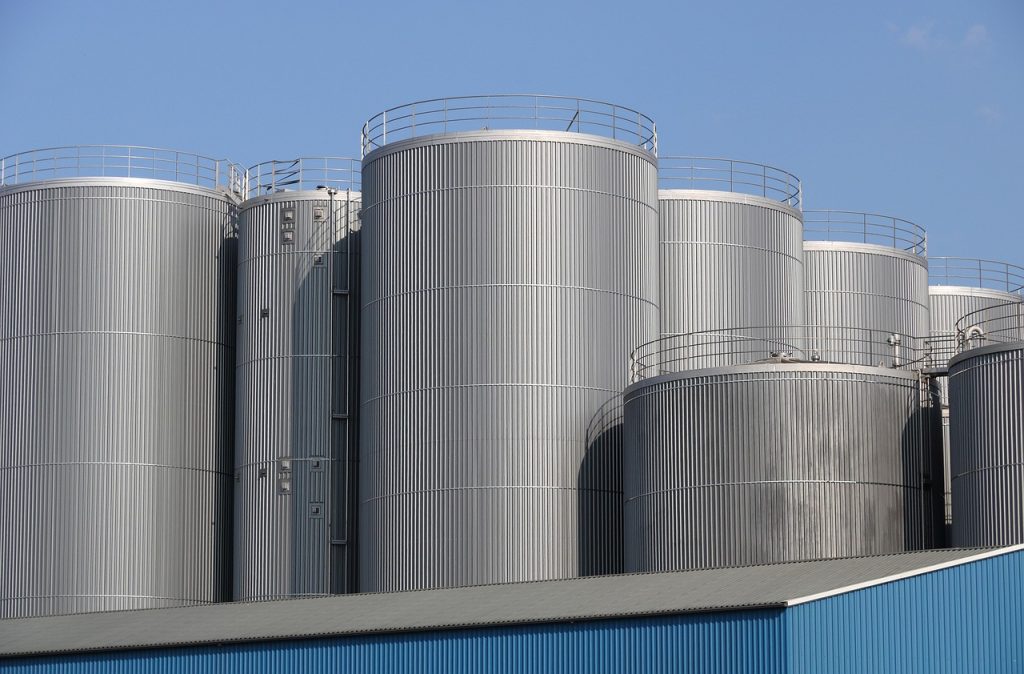
The steel industry is one of the largest consumers of oxygen, and it relies heavily on on-site cryogenic ASU installations. In an integrated steel mill, a cryogenic ASU for oxygen and nitrogen production in industrial applications supplies oxygen for both the blast furnace and the basic oxygen furnace (BOF). Enriching the blast furnace’s hot air blast with pure oxygen raises flame temperatures and boosts combustion, which increases throughput and can reduce the coke needed per ton of iron produced. In the BOF, high-purity oxygen is blown at supersonic speeds into molten iron to oxidize excess carbon and other impurities, turning iron into steel. These oxygen-intensive steps demand a huge, steady flow—large steel plants often require several thousand tons of O₂ per day, which only a cryogenic ASU can economically provide.
For perspective, a single basic oxygen furnace can consume several thousand cubic meters of O₂ per minute during its blow, illustrating why only an on-site ASU can meet this intense demand.
Nitrogen from the ASU is also widely used throughout steel production. Nitrogen is inert, making it ideal for purging and blanketing to protect equipment and materials from oxidation. For example, torpedo ladles that transport molten iron are often filled with nitrogen gas to prevent unwanted reactions during transit. Nitrogen gas is also used to stir and homogenize molten steel in ladle metallurgy (sometimes in combination with argon) and to cool materials or refractory linings. The availability of abundant nitrogen as a co-product of oxygen generation means steelmakers have a convenient supply for these purposes. By using a cryogenic ASU for oxygen and nitrogen production in industrial applications on-site, steel facilities ensure both gases are available at the required rates and purities continuously. Excess production of either gas can be stored as liquid in insulated tanks to handle peak demands or maintenance periods, ensuring that the steelmaking process is never interrupted by gas shortages.
Semiconductor Manufacturing Applications
Semiconductor fabrication plants require extremely pure gases and highly reliable delivery systems. Many fabs leverage a cryogenic ASU for oxygen and nitrogen production in industrial applications to obtain a constant supply of ultra-high-purity nitrogen gas. Nitrogen at 99.999% purity (five nines) is used to purge process chambers, create inert atmospheres for sensitive deposition and etching processes, and to dry wafers, since any trace of oxygen or moisture can destroy delicate microelectronic features. Cryogenic air separation is one of the few technologies capable of producing nitrogen at both the purity and volume that large semiconductor facilities demand. Fabs also use liquid nitrogen (LN₂) from the ASU for tasks such as cooling equipment and maintaining low-humidity, ultra-clean environments.
Although nitrogen is the primary need, oxygen also plays a role in chip manufacturing. High-purity oxygen is used in processes such as thermal oxidation (to grow silicon dioxide layers on silicon wafers) and in certain plasma etching or cleaning steps. These steps may not consume oxygen in bulk quantities like steelmaking does, but they still require consistent purity and availability. An on-site cryogenic ASU allows a semiconductor manufacturer to have both gases on hand: nitrogen for general inerting and purging, and oxygen for specific process steps. The reliability of a cryogenic ASU for oxygen and nitrogen production in industrial applications is a huge benefit here—any disruption in nitrogen supply, for instance, could force a fab to halt production, which would be extremely costly. To mitigate risks, these systems often include backup storage (like liquid nitrogen tanks) and redundancy. In summary, incorporating a cryogenic ASU for oxygen and nitrogen production in industrial applications into a semiconductor facility’s utility systems ensures that these critical gases are delivered ultra-clean and without interruption, supporting high production yields and safe operations.
Renewable Energy and Sustainability Applications
Cryogenic ASU technology is increasingly intersecting with renewable energy and sustainability initiatives. One promising application is in energy storage and grid management. A cryogenic ASU for oxygen and nitrogen production in industrial applications can be operated flexibly to take advantage of surplus renewable electricity. During times of high wind or solar output, an ASU can ramp up production of liquid oxygen and nitrogen, effectively storing excess energy in the form of cryogenic liquids. Later, when the grid is under-supplied, these liquids can be gasified and used—either in industrial processes or even to generate electricity via expansion turbines (an approach known as liquid air energy storage). By adjusting power consumption based on renewable availability, such flexible ASUs can help balance the grid while still producing valuable products. For example, new installations have demonstrated the ability to modulate an ASU in response to wind farm output, showcasing a synergy between industrial gas production and renewable power sources.
Cryogenic ASUs also support the production of cleaner fuels and chemicals. A key example is green ammonia: combining hydrogen produced from water electrolysis (using renewable electricity) with nitrogen from air. A large-scale green ammonia plant will incorporate a cryogenic ASU to supply high-purity nitrogen for the Haber-Bosch synthesis of ammonia. Oxygen is then obtained as a byproduct, which can be sold or used elsewhere (for instance, in gasification of biomass or waste to create syngas for power generation or biofuels). In oxy-fuel combustion and gasification processes, using oxygen from an ASU instead of air allows for higher efficiency and easier CO₂ capture, aiding emissions reduction in power generation. These developments illustrate how a cryogenic ASU for oxygen and nitrogen production in industrial applications is becoming an enabling technology for the energy transition—providing the gases needed for new low-carbon processes, while efforts continue to improve the ASU’s own energy efficiency.
Conclusion
In conclusion, cryogenic ASUs have proven to be a cornerstone of modern industry by supplying massive quantities of oxygen and nitrogen with exceptional purity and reliability. These plants enable higher productivity in steelmaking, ultra-clean environments in semiconductor production, and new possibilities in the energy sector. The technology’s major challenges include high energy usage and significant capital investment, but continuous engineering advancements are steadily mitigating these drawbacks. Efforts such as improving heat exchanger efficiency, compressor performance, and smart process controls are gradually reducing the power consumption per unit of gas produced, while also increasing operational flexibility.
As industrial processes evolve toward greater efficiency and sustainability, the role of cryogenic ASU systems is poised to grow even further. They are extending beyond traditional applications to support renewable energy storage, green hydrogen and ammonia production, and carbon capture initiatives. With its unmatched capacity and purity output, the cryogenic ASU for oxygen and nitrogen production in industrial applications will remain an indispensable asset for years to come.