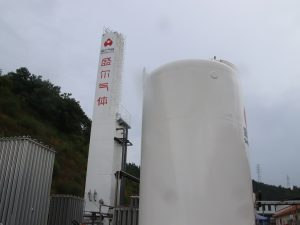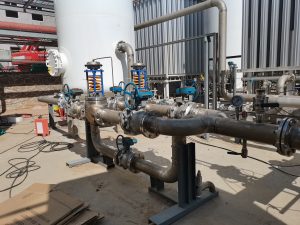
Cryogenic oxygen production is a leading industrial process for generating high-purity oxygen by separating it from air at extremely low temperatures. This method—also known as cryogenic air separation or cryogenic distillation—has been the workhorse of the industrial gas industry for decades. It relies on cooling air to liquefy its components and then distilling the liquid to extract oxygen, nitrogen, and other gases. The result is oxygen with very high purity (often above 99.5%), produced in the large volumes required by industries such as steel manufacturing, chemical processing, and energy production. In this article, we explore the principles of cryogenic oxygen production, compare it with alternative oxygen generation methods like pressure swing adsorption (PSA) and membrane separation, and highlight real-world applications across various sectors.

Principles of Cryogenic Oxygen Production
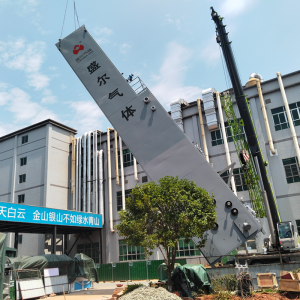
Cryogenic oxygen production works on the principle of separating air by cooling it to cryogenic temperatures. In a typical cryogenic air separation unit (ASU), ambient air is first filtered to remove dust and then compressed to a high pressure (around 5–8 bar). The compressed air is cooled in stages by heat exchangers, often using a refrigeration cycle and expansion turbines to reach cryogenic temperatures (around -180°C). At this point, most of the air condenses into a liquid. The liquefied air, which contains a mixture of liquid nitrogen, oxygen, and argon, is fed into a distillation column system.
Modern cryogenic distillation columns use a double-column design: a high-pressure column and a low-pressure column in tandem. In these columns, the differences in boiling points are exploited to separate the components. Nitrogen (boiling point approx. -196°C) and argon (-186°C) boil at lower temperatures than oxygen (-183°C), so as the liquid air mixture is boiled and re-condensed within the column, oxygen concentrates at the bottom as a liquid while nitrogen rises to the top as vapor. By carefully controlling pressure and reflux within the distillation columns, oxygen of high purity (typically 99–99.9%) can be drawn off. This oxygen may be captured as a gas at near ambient pressure or pumped as a liquid into storage tanks. Cryogenic plants often co-produce high-purity nitrogen and argon as valuable byproducts using additional distillation steps for argon.
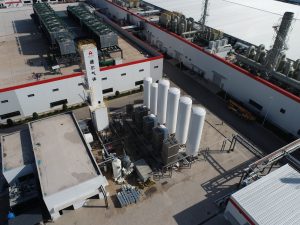
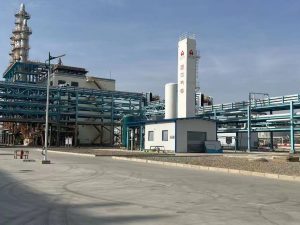
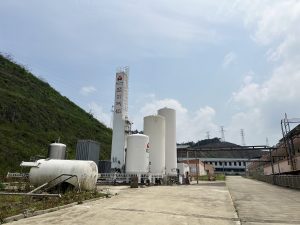
The cryogenic process yields very pure oxygen but comes with significant complexity. An ASU plant includes major equipment like air compressors, cleanup systems (to remove moisture and CO₂ which would freeze), expansive cold-box insulation, distillation towers, heat exchangers, and cryogenic oxygen pumps or vaporizers. The process also consumes a substantial amount of energy, primarily for air compression and refrigeration, and it typically operates continuously. Once running, however, cryogenic oxygen production is highly efficient for large volumes, benefiting from economies of scale. Many large steel mills, refineries, and chemical plants run dedicated cryogenic ASUs on-site to supply thousands of tons of oxygen per day.
Comparison with Other Oxygen Production Methods
While cryogenic oxygen production is ideal for high volumes and purities, there are other methods better suited for smaller scale or lower purity needs. The two main alternatives are Pressure Swing Adsorption (PSA) and membrane separation. Each method has its own principles, advantages, and trade-offs, making them more appropriate in certain scenarios. Below we outline how PSA and membrane oxygen generation work, and how they compare to the cryogenic approach.
Pressure Swing Adsorption (PSA) Oxygen Generation
Unlike cryogenic oxygen production, pressure swing adsorption is a non-cryogenic technique that produces oxygen by filtering out nitrogen from air using specialized adsorbent materials. In a PSA oxygen generator, air (usually at 4–10 bar pressure) is passed through vessels filled with zeolite or other molecular sieves that preferentially adsorb nitrogen. Under high pressure, these adsorbents trap much of the nitrogen while letting oxygen (and argon) pass through. This produces an oxygen-enriched stream at the outlet. The process then “swings” to a low-pressure phase: the adsorber bed is depressurized, releasing the trapped nitrogen (which is vented as waste) and regenerating the sieve for the next cycle. By using twin (or multiple) adsorption towers in alternation, PSA systems provide a near-continuous flow of product gas.
A PSA oxygen plant is relatively simple to operate and can be turned on or off quickly. It is typically built as a modular skid-mounted unit. PSA oxygen purity is lower than cryogenic, usually around 90–95% O₂. (Some PSA systems can reach ~99% with additional polishing steps, but not the ultra-high purities and liquid output that cryogenic units provide.) PSA capacity is also more limited. Individual PSA generators might produce from a few cubic meters per hour up to a couple thousand Nm³/h of oxygen (on the order of tens of tons per day at most). This makes PSA well-suited for small to medium applications — for example, supplying oxygen at hospitals, wastewater treatment plants, or small-scale industrial processes. The capital cost and energy usage of PSA units are generally lower than a comparably sized cryogenic plant. However, the specific energy consumption per unit of oxygen can actually be higher for PSA at large scales, because the efficiency doesn’t improve as much with size. PSA units also have the limitation that they cannot easily co-produce liquid oxygen or other gases like argon, and the spent adsorbent needs periodic replacement over the system’s life.
Membrane Oxygen Separation
Membrane separation is another alternative for oxygen generation, relying on selective permeation of gases through a membrane. In this method, compressed air is fed through modules containing polymeric hollow-fiber membranes. These membranes allow certain gases to diffuse through faster than others. Oxygen tends to permeate through the membrane more readily than nitrogen, so the gas stream that emerges on the low-pressure permeate side is enriched in oxygen. The degree of enrichment depends on the membrane properties and operating conditions such as pressure and flow rate. Commercial membrane generators for oxygen typically deliver only oxygen-enriched air rather than high-purity oxygen. For instance, a single-stage membrane might produce an oxygen concentration of ~30–40% (from 21% in air). Higher purity can be achieved with multiple membrane stages, but efficiency drops and costs rise sharply, making it impractical for producing high-purity O₂ in large quantities.
Membrane systems are very simple with no moving parts, which gives them an advantage in reliability and maintenance. They also have a smaller footprint and lower upfront cost. Membrane oxygen units can be useful for applications requiring moderate oxygen enhancement at relatively low flow rates (e.g. oxygen-enriched air for combustion in boilers or for fish farming aeration). However, because they cannot reach anywhere near pure oxygen levels with current technology, membranes are not typically used when high-purity or high-volume oxygen is needed. In those cases, cryogenic oxygen production or PSA is chosen instead. Research is ongoing into advanced membranes (including ceramic ion-transport membranes at high temperature) that might achieve higher purities in the future, but these are not yet commercially widespread.
Performance Comparison of Cryogenic vs PSA vs Membrane Methods
Each oxygen production method has distinct performance characteristics. Key differences include achievable oxygen purity, production capacity, energy efficiency, flexibility, and cost. The table below provides a comparative overview of cryogenic oxygen production alongside PSA and membrane separation:
| Aspect | Cryogenic Oxygen Production | PSA Oxygen Generation | Membrane Oxygen Separation |
|---|---|---|---|
| O₂ Purity | 99–99.9% (high purity; can produce liquid O₂) | ~90–95% (medium purity) | ~30–40% (oxygen-enriched air) |
| Typical Capacity | Large scale (50 to >1000 tons O₂ per day) (~5000+ Nm³/h) | Small to medium (0.2 to 50 tons per day) (~10–1500 Nm³/h) | Small scale (up to ~10–25 tons per day as enriched air) (limited Nm³/h) |
| Operating Pressure | Air feed at ~6 bar; distillation at ~1–6 bar Product O₂ often delivered near 1 bar (gas) or as liquid | Air feed ~5–10 bar; product at ~1 bar (gaseous) | Air feed ~5–13 bar; product at ~1 bar (enriched gas) |
| Energy Consumption | ~200 kWh per ton O2 (for ~95% O2 gas) Higher if producing liquid or 99.9% O₂ | ~240–400 kWh per ton O2 (varies with scale and purity) | Lower per unit O2 for modest enrichment; not economical for high purity |
| Capital & Equipment | High initial cost; complex plant with compressors, cold box, distillation columns | Moderate cost; modular skids with compressors and absorber vessels | Low cost; simple modules (membrane bundles) plus compressor |
| Start-up/Response | Slow start (many hours); best for continuous 24/7 operation at steady load | Quick start (minutes); handles on-off cycling and load changes well | Immediate response; very easy to turn on/off, suitable for variable demand |
| Co-production | Can produce N₂, argon and liquid products concurrently (added value) | Produces only one gas (O₂ or N₂) at a time; cannot produce argon | Produces only oxygen-enriched air (nitrogen-rich exhaust as byproduct) |
Table: Comparison of oxygen production methods and their typical performance parameters.
In summary, cryogenic oxygen plants dominate when ultra-high purity and very large throughput are required – for example, a single cryogenic ASU can supply hundreds or even thousands of tons of oxygen per day to a large steelworks or petrochemical complex. PSA systems fill the niche for on-site medium-scale oxygen needs (tens of tons per day or less), where 90–95% purity is sufficient and simplicity and flexibility are priorities. Membrane systems serve small-scale and specialized cases where a moderate oxygen increase is needed with minimal complexity. In terms of energy efficiency, cryogenic oxygen production becomes more favorable at scale (per-unit energy use drops for big plants), whereas PSA is often more energy-efficient for smaller installations. For instance, modern cryogenic ASUs employ advanced plate-fin heat exchangers and may use liquid-oxygen pumps instead of gas compressors for high-pressure oxygen delivery to minimize energy per ton of O2. Membranes offer the lowest energy and maintenance burden for slight oxygen enrichment, but cannot achieve the high purity levels that many industrial processes demand.
Real-World Applications of Cryogenic Oxygen Production
Cryogenic oxygen production plays a crucial role in numerous industries by providing reliable supplies of high-purity oxygen. Some notable applications include:
- Steel and Metal Production: The steel industry is one of the largest consumers of oxygen. Blast furnaces and basic oxygen furnaces use oxygen to combust coke and remove impurities from molten iron, significantly reducing production times and fuel consumption. Oxygen lances are also used in electric arc furnaces and in cutting/welding operations, increasing temperature and productivity. Cryogenic oxygen plants located at steel mills supply the massive volumes (often thousands of tons per day) needed for these processes.
- Chemical Manufacturing: Many chemical processes require oxygen as a reactant. For example, production of ethylene oxide, propylene oxide, and other oxidation reactions use high-purity oxygen to achieve better yields. Ammonia and methanol plants, coal gasification units, and petrochemical facilities often rely on cryogenic oxygen production on-site to feed synthesis gas (syngas) generation or oxidation reactors. The ability of cryogenic units to also supply nitrogen and argon is a bonus for integrated chemical complexes that need multiple gases.
- Energy and Power Generation: In power plants and energy applications, oxygen is used for processes like oxy-fuel combustion (burning fuel in oxygen to produce a CO₂-rich flue gas for easier carbon capture) and integrated gasification combined cycle (IGCC) systems that gasify coal or biomass with oxygen. These applications require very large oxygen flow rates that only cryogenic oxygen production can economically provide. Additionally, rocket launch systems in the aerospace sector depend on liquid oxygen (LOX) as the oxidizer for liquid-fuel rockets — LOX is produced by cryogenic distillation and stored for use in spaceflight.
- Medical and Aviation Oxygen Supply: Bulk oxygen for hospitals and field medical facilities is often produced at industrial gas plants via cryogenic methods, then distributed in liquid tankers or as filled cylinders. Cryogenically produced liquid oxygen is converted to gaseous medical oxygen for patients through evaporators at the point of use. (For smaller or remote facilities, on-site PSA oxygen concentrators are also utilized, but high-demand central pipelines rely on cryogenic production.) Aircraft and submarine life-support systems similarly require oxygen supplies, which may be sourced from cryogenically produced oxygen stored on board or generated in-flight for crew and passengers.
- Environmental and Water Treatment: Some wastewater treatment plants use pure oxygen (instead of air) in aeration tanks to improve the efficiency of aerobic digestion; this oxygen is typically supplied from cryogenic oxygen plants or delivered as liquid from an off-site plant. Likewise, aquaculture (fish farming) operations sometimes enrich water with oxygen to sustain higher stocking densities, using liquid oxygen or PSA systems depending on scale and location.
Overall, these diverse applications underscore the critical role of large-scale oxygen supply technologies in modern industry.
Conclusion
Cryogenic oxygen production remains the predominant method for producing large quantities of industrial oxygen at high purity, essential for heavy industries and advanced chemical processes. Its capability to generate oxygen, nitrogen, and argon simultaneously at scale makes it indispensable for integrated industrial operations. While newer and smaller-scale technologies like PSA and membrane separation have carved out their own niches — offering flexibility, lower upfront costs, or energy savings at smaller capacities — they complement rather than replace cryogenic plants. In practice, the choice between cryogenic oxygen production and other methods comes down to the required oxygen purity, volume, and specific application. Researchers and engineers continue to innovate across all these technologies, seeking improvements such as lower energy consumption for cryogenic ASUs or higher-performance adsorbents and membranes. Ultimately, understanding the comparative strengths of each oxygen production method enables industry professionals to select the most suitable technology for their needs, ensuring a reliable and efficient oxygen supply.