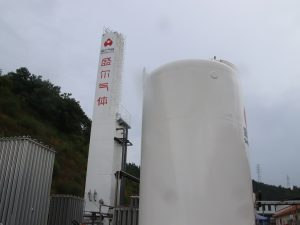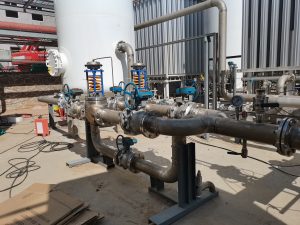
Cryogenic air separation is the workhorse technology for producing high-purity oxygen at industrial scale. By cooling air to extremely low temperatures and distilling its components, cryogenic air separation plants (often called air separation units, or ASUs) can generate massive quantities of oxygen along with co-products like nitrogen and argon. Industries such as steelmaking, chemical processing, and medical gas supply rely heavily on this method to meet their oxygen demands. In this article, we explore how cryogenic air separation works, its key applications in these sectors, and recent design improvements that are boosting efficiency and sustainability in the 2020s.
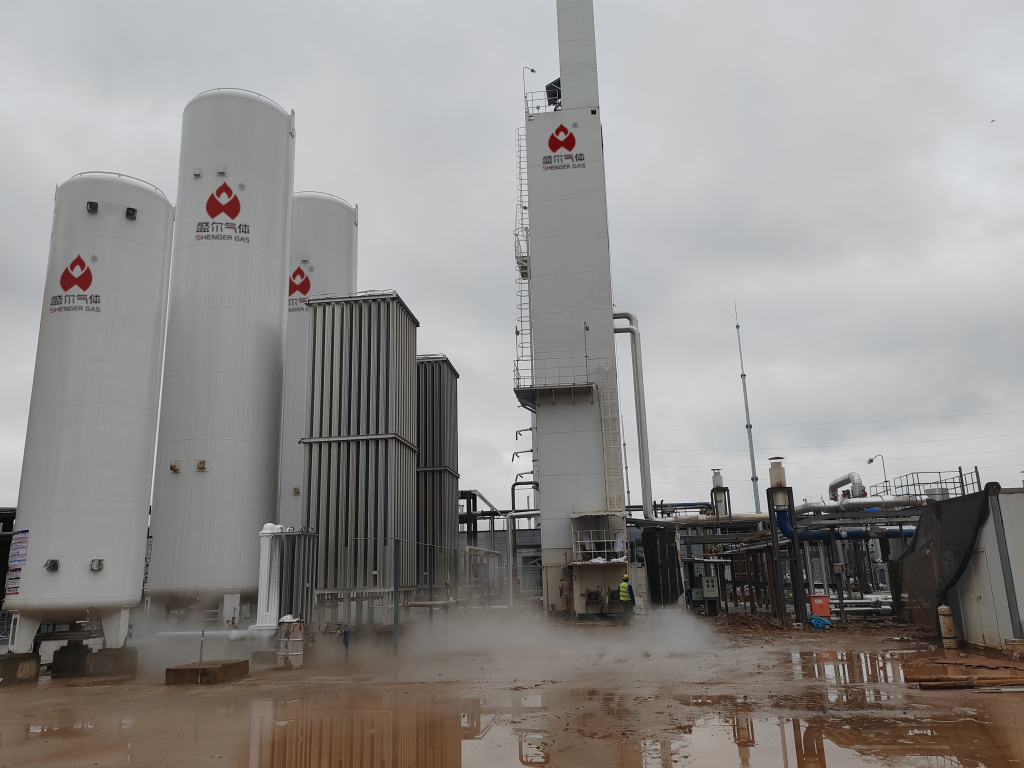
How Cryogenic Air Separation Works
Cryogenic air separation is based on the principle that each component of air has a different boiling point. By liquefying air and performing fractional distillation, oxygen can be separated from nitrogen and argon. The process follows a few fundamental steps:
- Air Compression and Purification: Ambient air is first compressed to a high pressure (typically 5–10 bar) and passed through filters and molecular sieves to remove water, carbon dioxide, and other impurities. This pre-purification is critical, since impurities like moisture or CO₂ would freeze later in the process and clog equipment.
- Cryogenic Cooling: The clean, pressurized air is then cooled to cryogenic temperatures (around –180 °C or –292 °F) by passing it through a heat exchanger (cold box) and expanding part of the air in a turbo-expander. This cooling causes most of the air to condense into a liquid–vapor mixture.
- Distillation in Double Columns: The cold mixture is fed into a two-column distillation system operating at different pressures. In the high-pressure column (around 5–6 bar), the air separates into an oxygen-enriched liquid at the bottom and nearly pure nitrogen vapor at the top. This oxygen-rich liquid is then fed to a low-pressure column (~1.2 bar), where it is distilled further. Nitrogen (with a lower boiling point) boils off and exits the top of the low-pressure column, while liquid oxygen collects at the bottom. By interconnecting the condensers and reboilers of these two columns, the cold nitrogen from one provides refrigeration (reboil) for oxygen in the other, greatly improving energy efficiency.
- Product Extraction: The result is high-purity oxygen (typically 99–99.5% O₂) at the bottom of the low-pressure column. Nitrogen gas of high purity (often 99.9% or higher) is taken from the top. Many ASUs also include a third argon distillation column to extract argon (which boils at −186 °C, between oxygen and nitrogen) from the intermediate stages of the low-pressure column. The separated oxygen, nitrogen, and argon are then warmed back to ambient temperature and delivered as gases or stored as cryogenic liquids, depending on the end use. Liquid oxygen (LOX) can be pumped and vaporized to supply high-pressure gaseous oxygen, while liquid nitrogen (LIN) and liquid argon are stored for transport or on-site use.
This cryogenic distillation process is highly effective at producing oxygen with purity levels of 99% or more, which is essential for most industrial and medical applications. Co-product gases (nitrogen and argon) also come out at high purities and can be used or sold for other purposes. The trade-off is that cryogenic air separation is energy-intensive – it requires significant electricity for air compression and refrigeration. Modern ASUs mitigate this by using efficient compressors, brazed plate-fin heat exchangers, and careful heat integration to approach thermodynamic limits. In steady operation, a large cryogenic ASU might consume on the order of 200 kWh of electricity per ton of O₂ produced (several times the theoretical minimum, but much improved by recent technology, as discussed later).
Steelmaking: Oxygen’s Crucial Role
The steel industry is one of the largest consumers of industrial oxygen, and cryogenic air separation is indispensable in this sector. In integrated steel mills, on-site ASUs supply oxygen for both the blast furnace and the basic oxygen furnace (BOF) processes:
- Blast Furnace Oxygen Enrichment: In a blast furnace, oxygen-enriched air is blown in to aid the combustion of coke and increase the furnace temperature. Enriching the air blast with pure oxygen boosts efficiency, allowing more iron to be produced with less coke.
- Basic Oxygen Furnace: The BOF (or converter) is where molten pig iron is refined into steel. High-purity oxygen is blown at supersonic speed into the molten iron to burn off carbon and impurities in a matter of minutes. This oxidation reaction produces intense heat and reduces carbon content, turning iron into low-carbon steel. A single BOF heat can consume an enormous volume of oxygen – on the order of thousands of cubic meters per minute during the oxygen blow. Steelmaking is thus an oxygen-intensive operation by nature.
Large steel plants often require several thousand tons of O₂ per day, which only cryogenic air separation can economically supply. It is common for a steel mill to have its own dedicated ASUs on-site, or to source oxygen via pipeline from a nearby industrial gas company’s ASU facility. In fact, some of the world’s largest air separation units have been built to support steel production. For perspective, an oxygen plant of 2,000–4,000 tons per day capacity might be needed to keep up with a major steel mill’s demands. The ability of cryogenic ASUs to produce oxygen at this scale (while also co-producing high volumes of nitrogen) makes them the default choice for steelmakers. The co-produced nitrogen is not wasted either – steel plants use nitrogen for purging and blanketing operations, such as stirring molten steel in ladles or protecting molten iron in transfer ladles from oxidation. By having an on-site cryogenic ASU, a steel facility ensures a continuous, reliable supply of both oxygen and nitrogen. Excess production can be stored as liquid in insulated tanks to buffer against peak demands or maintenance downtime, so that the steelmaking process is never interrupted by gas shortages.
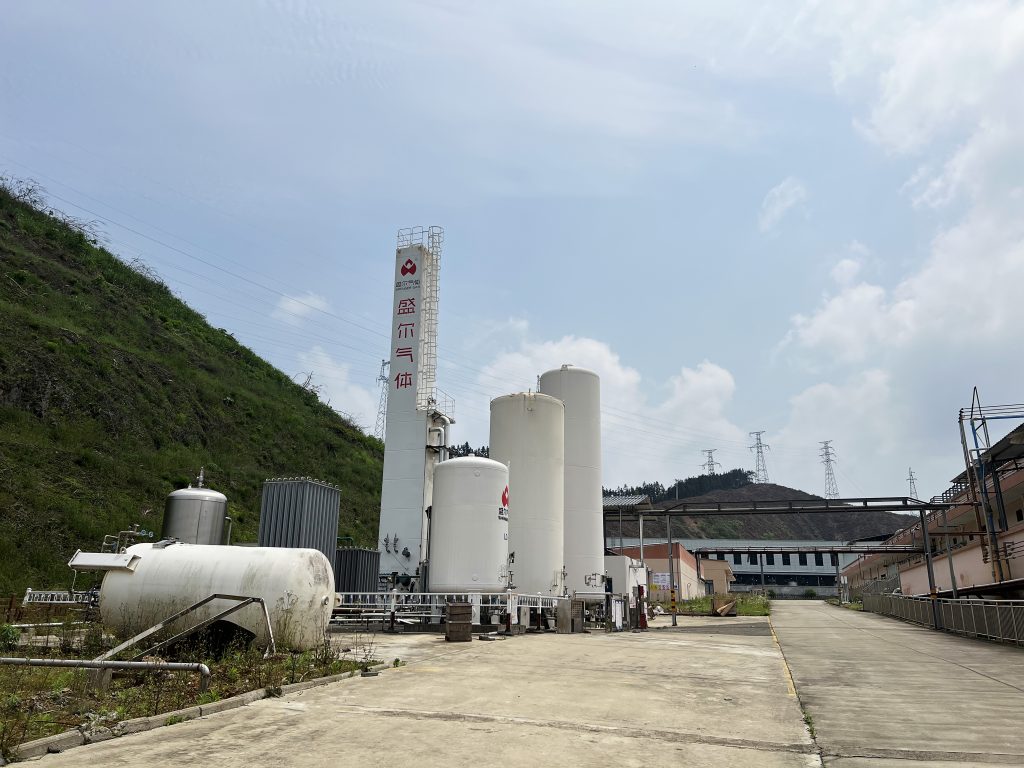
Chemical Processing: Oxygen for Fuels and Chemicals
Many segments of the chemical and energy industries depend on large quantities of oxygen, and here again cryogenic air separation is the primary source. Chemical processing applications for oxygen include everything from petrochemical manufacturing to energy production and emissions control:
- Syngas and Gasification: Oxygen is a key reactant for producing synthesis gas (syngas), a mixture of hydrogen and carbon monoxide used to create fuels and chemicals. In processes like coal gasification or heavy oil partial oxidation, pure oxygen from an ASU is fed into gasifiers or reformers to react with hydrocarbon feedstocks. Using pure oxygen (instead of air) avoids introducing nitrogen into the process, which boosts efficiency and yields a cleaner, CO₂-rich stream that can be captured. Large gas-to-liquids and coal-to-chemicals plants often run huge cryogenic ASUs to feed their gasifiers. For example, an oxygen plant supplying a Fischer-Tropsch synfuel facility or an ammonia plant’s gasifier might be of similar scale to those for steel—producing on the order of thousands of tons of O₂ per day.
- Petrochemicals and Oxidation Reactions: Oxygen is used in many oxidation reactions in the chemical industry. One notable example is ethylene oxide production, where ethylene is oxidized to ethylene oxide (a precursor for glycols and plastics). Modern ethylene oxide plants often use high-purity oxygen from an air separation unit, which allows for higher reaction rates and avoids the dilution that comes with air. Similarly, processes like propane oxidative dehydrogenation or the production of nitric acid (ammonia oxidation) benefit from concentrated oxygen feeds. Cryogenic air separation provides the required purity and volume of O₂ to make these processes efficient.
- Refining and Clean Fuels: Oil refineries and clean fuel production also utilize oxygen. Oxy-fuel combustion is being explored in power generation and cement production to enable easier CO₂ capture – these systems require a large oxygen supply. In refineries, units like the Claus plant for sulfur recovery can be oxygen-enriched to increase capacity. All these applications often source oxygen from cryogenic ASUs, given the large scale needed.
In chemical plants, reliability and purity of oxygen are critical since any interruption can upset continuous processes. Industrial gas companies (like Linde, Air Liquide, and Air Products) frequently build on-site ASUs at large chemical complexes or supply oxygen via pipeline networks. The cryogenic method’s ability to also produce nitrogen is a bonus; many chemical processes use nitrogen for inert blanketing and purging. Overall, for high-volume oxygen needs in the chemical sector, cryogenic air separation remains the go-to solution due to its combination of scale, purity, and economic efficiency for continuous operation.
Medical and Healthcare Oxygen Supply
Medical-grade oxygen is literally a life-saving product, and cryogenic air separation plays a behind-the-scenes role in virtually all major medical oxygen supply chains. Hospitals, emergency services, and healthcare facilities require high-purity oxygen (typically ≈99% purity for United States Pharmacopeia [USP] medical oxygen) for patients. While small-scale oxygen concentrators (using pressure swing adsorption) can produce oxygen at ~93% purity for individual patients or remote clinics, the bulk of medical oxygen is produced centrally by large cryogenic ASUs and then distributed in liquid or gaseous form.
Key aspects of medical oxygen production and supply include:
- Bulk Liquid Oxygen Production: Large industrial gas plants use cryogenic air separation to produce liquid oxygen in bulk. The liquid is stored in insulated tankers and transported to hospitals and pharmacies. At the point of use, this liquid oxygen is evaporated into gas and supplied through a hospital’s pipeline network to ventilators, anesthesia machines, and oxygen masks. Cryogenic production ensures that this oxygen meets medical purity standards and is free of contaminants.
- Reliability and Peak Demand: Medical facilities cannot afford oxygen shortages, so reliability is paramount. Cryogenic ASUs run 24/7 to keep up with base demand, and liquid oxygen storage provides a buffer for peak usage or supply interruptions. For example, during the COVID-19 pandemic, many hospitals saw surges in oxygen demand for ventilated patients – the industrial gas sector responded by ramping up cryogenic oxygen production and deploying more tanker deliveries. The ability to store liquid oxygen from cryogenic plants helped meet these sudden spikes in consumption.
- On-Site Oxygen Generation vs. Delivered Oxygen: Some large hospitals or remote healthcare centers install their own small ASUs or oxygen generators, but these are still often cryogenic in nature if high flows are needed. In most cases, it’s more practical for hospitals to rely on delivered liquid oxygen produced at a regional cryogenic plant, due to economies of scale. One large cryogenic ASU can fill thousands of cylinders or dozens of tanker trucks with medical oxygen daily, which are then dispatched to healthcare facilities. This centralized production ensures consistent quality and lowers cost per unit by leveraging the efficiency of a big plant.
In summary, cryogenic air separation underpins the medical oxygen supply by providing a stable source of ultra-pure oxygen. Every time you see a hospital’s white oxygen tank or a cylinder labeled “Medical O₂”, there’s a high chance that oxygen came from a cryogenic ASU. This method remains the gold standard for medical oxygen due to its purity and volume capabilities, ensuring patients have the life-sustaining oxygen they need.
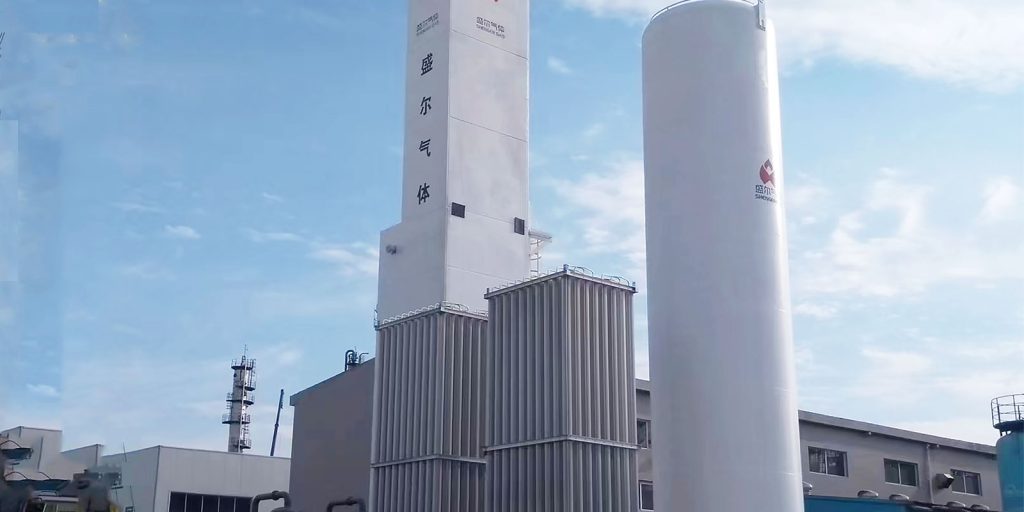
Advances in ASU Design and Efficiency
Cryogenic air separation is a mature technology, but the past decade has seen notable design improvements that enhance efficiency, flexibility, and output. Engineers have focused on reducing the energy consumption of ASUs and increasing their operational flexibility, given the high electricity costs and evolving industrial needs. Table 1 highlights some performance metrics for different generations of cryogenic ASU designs, illustrating how newer designs significantly outperform older ones in efficiency and capability:
| ASU Design Configuration | Specific Power (kWh per ton O₂) | Argon Recovery (%) | Notable Features / Era |
|---|---|---|---|
| Classic double-column (pre-2020) | ~350 kWh/t O₂ | ~90% | Traditional tray columns, older compressors (legacy plants) |
| Modern energy-optimized (2020s) | ~270 kWh/t O₂ | ~95% | High-efficiency compressors, structured packing in columns, VFD drives |
| Heat-pump assisted ASU (mid-2020s) | ~230 kWh/t O₂ | ~96% | Integration of refrigeration cycles (vapor recompression) for energy savings |
| Next-gen “LEC-ASU” (pilot) | ~200 kWh/t O₂ | 97%+ | Low-Energy ASU with cold energy storage, advanced automation (late 2020s) |
Table 1: Performance comparison of cryogenic air separation unit designs. “Specific Power” is the electrical energy required to produce one metric ton of oxygen (gaseous, ~99.5% purity). Newer designs achieve lower energy use and higher argon co-recovery than older ones.
Several innovations contribute to these improvements:
- Advanced Distillation Technology: Older ASUs often used conventional distillation trays, whereas newer units increasingly employ structured packing inside columns. Modern high-capacity packings increase surface area for contact and reduce pressure drop, allowing shorter columns with better separation efficiency. This leads to energy savings and higher recovery of oxygen and argon. Some state-of-the-art plants can achieve >95% O₂ recovery and produce >97% pure argon without a separate argon column, thanks to improved internal designs.
- Efficient Turbomachinery: Compressors and expanders have become more efficient through better aerodynamic design and materials. Today’s large air compressors might reach 90–95% polytropic efficiency, significantly cutting power requirements versus older machines. Cryogenic expanders now often use magnetic bearings (eliminating oil contamination risks and reducing maintenance), and they recover more work from the cold gas expansion. These gains directly lower the kilowatt-hours needed per ton of oxygen.
- Heat Integration and Refrigeration Cycles: Innovative process cycles are being adopted to reclaim cold energy and flatten electrical loads. One example is the Low-Energy Cryogenic ASU (LEC-ASU) concept, which uses a supplemental heat-pump cycle and liquid air storage tanks. Essentially, it liquefies extra air when power is cheap (or when excess renewable electricity is available) and stores that cold liquid. During peak power periods, the stored liquid is used to produce oxygen without running compressors at full load. This kind of load shifting and heat integration has demonstrated oxygen production with under 200 kWh/ton – a breakthrough in efficiency.
- Automation and Smart Controls: Modern ASUs are equipped with advanced control systems, including AI-driven and model-predictive controls. These systems continuously tune variables like column pressure, reflux ratio, and compressor settings to minimize energy consumption while maintaining product purity. Digital twin simulations allow operators to optimize the process for varying conditions. Such digitalization efforts have already shown energy reductions on the order of 5–10% in large plants by eliminating inefficiencies.
The net effect of these improvements is that new cryogenic air separation plants built in the 2020s can produce oxygen at a much lower energy cost than earlier generations. Many recent large ASUs report specific power figures in the low 200s kWh/ton O₂ (or around 0.25 kWh per cubic meter of O₂ gas at standard conditions), whereas older designs from a couple decades ago were in the 300–400 kWh/ton range. At the same time, production capacity per unit has grown – single train ASUs with 5,000+ tons per day oxygen output have been commissioned, and modular designs allow multiple smaller trains to be combined for huge complexes. These advances ensure that cryogenic air separation remains economically competitive and capable of meeting growing oxygen demand.
Emerging Trends and Future Outlook
As industries evolve and global priorities shift toward efficiency and sustainability, cryogenic air separation technology is also adapting. Some emerging trends and future directions for industrial oxygen production via cryogenic ASUs include:
- Integration with Renewable Energy Grids: Traditionally, ASUs run continuously at steady load for optimal efficiency. Now, there is increasing interest in flexible operation to take advantage of fluctuating renewable energy. New large ASUs are being designed to ramp between ~30% and 100+% capacity on short notice. During periods of surplus solar or wind power, the ASU can increase output and store extra product as liquid (oxygen or nitrogen). During high electricity price periods, it can throttle down, using stored liquid to supply customers. In effect, the ASU and its liquid storage tanks act as a giant “battery” (known as liquid air energy storage) while still providing oxygen for industrial use. This grid-responsive mode of operation is already being demonstrated in some regions, helping stabilize the grid and reduce operating costs.
- Support for Hydrogen Economy and Clean Steel: The drive for green hydrogen and cleaner steel production is actually increasing the need for large-scale oxygen. For example, green hydrogen projects (using electrolysis) often find it more economical to pair with a cryogenic ASU to supply pure oxygen, rather than venting or compressing the low-pressure byproduct oxygen from electrolyzers. Supplying oxygen at 30–40 bar from an ASU can be half the cost of boosting electrolyzer O₂, and the cold from the ASU can assist in cooling or liquefying hydrogen. In direct-reduced iron (DRI) steelmaking (a cleaner alternative to blast furnaces) and in carbon capture for hydrogen (blue hydrogen), cryogenic units are being used not only for oxygen but also to separate and liquefy carbon dioxide from process gas streams. This hints at a future where ASUs serve a dual role: providing oxygen and capturing CO₂, thus directly enabling lower emissions in industry.
- Materials and Construction Improvements: The physical design of ASUs is seeing incremental upgrades. Lighter and stronger materials (like aluminum alloys in cold boxes and piping) are reducing construction time and costs. Improved insulation techniques for cryogenic equipment (vacuum-perlite insulation with multi-layer shields) further cut down thermal losses. These changes make new ASUs more efficient and faster to deploy, with some modular designs drastically shortening installation schedules.
- Scale and Modularization: We are witnessing both ends of the spectrum – world-scale ASUs for mega projects, and modular smaller ASUs for quick deployment. On one hand, companies are building the largest oxygen plants ever (5,000+ TPD O₂ in a single train) to achieve economies of scale for huge complexes. On the other hand, standardized modular ASU packages (e.g. 500 TPD units) can be shipped and installed in parallel to reach the needed capacity with lower project risk. Modular ASUs also lend themselves to being fabricated in factories, improving quality and reducing cost. This trend will likely continue, giving end-users flexible options to scale their oxygen supply.
- Continued Efficiency Gains: The R&D in cryogenic separation is ongoing. Researchers and engineers aim to push specific power consumption even lower – potentially into the range of ~150 kWh/ton O₂ for next-generation plants through better heat integration and novel cycles. Every percentage point of efficiency counts, both for operating cost and for reducing the indirect carbon footprint (since power generation often has associated emissions). The goal is to bring ASU efficiency closer to the theoretical minimum by 2030, which could mean another ~25% reduction in energy use compared to today’s best practices. Additionally, if renewable electricity and carbon capture are fully integrated, future air separation plants could operate with near-zero net carbon emissions.
In summary, cryogenic air separation has a strong future as a cornerstone of industrial gas production. It is a proven, robust technology that continues to be refined rather than replaced. Alternatives like pressure swing adsorption (PSA) or membrane oxygen generators serve niche roles at smaller scales, but they cannot match cryogenic ASUs when it comes to the combination of high purity, large volume, and co-production of multiple gases. As the world economy moves toward cleaner processes and higher demand for oxygen (whether for treating patients, making greener steel, or producing hydrogen), cryogenic air separation will remain indispensable. The ongoing innovations ensure that these plants are becoming more energy-efficient, flexible, and integrated with the needs of modern industry.
Conclusion
Cryogenic air separation is the benchmark technology for industrial oxygen production, enabling essential processes in steel manufacturing, chemical production, and healthcare. By liquefying air and distilling its components, a single ASU can supply hundreds or thousands of tons of oxygen per day at >99% purity – a feat unmatched by any other technology at that scale. While energy usage and capital cost are significant, continuous improvements in design have driven efficiencies higher and costs relatively lower. Today’s cryogenic ASUs are more efficient and smarter than those of the past, and they are being deployed in ever more creative ways (from load-following to hybrid systems) to meet the needs of a changing energy landscape.
For researchers and engineers, cryogenic air separation remains a dynamic field. The 2020s have brought new breakthroughs in packing materials, process cycles, and automation that are pushing performance boundaries. Yet, the fundamental physics of separating air by cooling and condensation remain the same – a reliable and well-understood foundation. As long as industries require large volumes of high-purity oxygen (and nitrogen/argon), cryogenic air separation will continue to be the backbone of supply. In a world striving for efficiency and sustainability, this proven technology is evolving to deliver oxygen more economically and cleanly, securing its role in the industrial ecosystem for decades to come.