Introduction
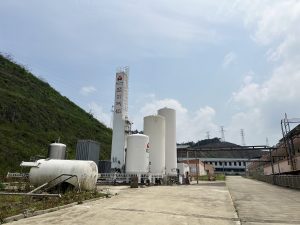
Cryogenic air separation is the predominant method for large-scale oxygen production, yielding ultra-pure oxygen along with co-products like nitrogen and argon. By cooling ambient air to cryogenic temperatures and distilling its components, an ASU (air separation unit) produces high-purity oxygen for industrial use. This process is fundamental to industries requiring stringent oxygen quality. Modern ASUs also emphasize energy efficiency through heat integration and advanced expanders, helping to manage the high power consumption of the process. This report reviews the cryogenic oxygen production process, discusses performance and efficiency considerations, and explores the diverse applications of high-purity oxygen produced by cryogenic air separation.Cryogenic air separation remains the most mature route for high-volume oxygen generation, especially when purity above 99.5% is required.
Cryogenic Air Separation Technology
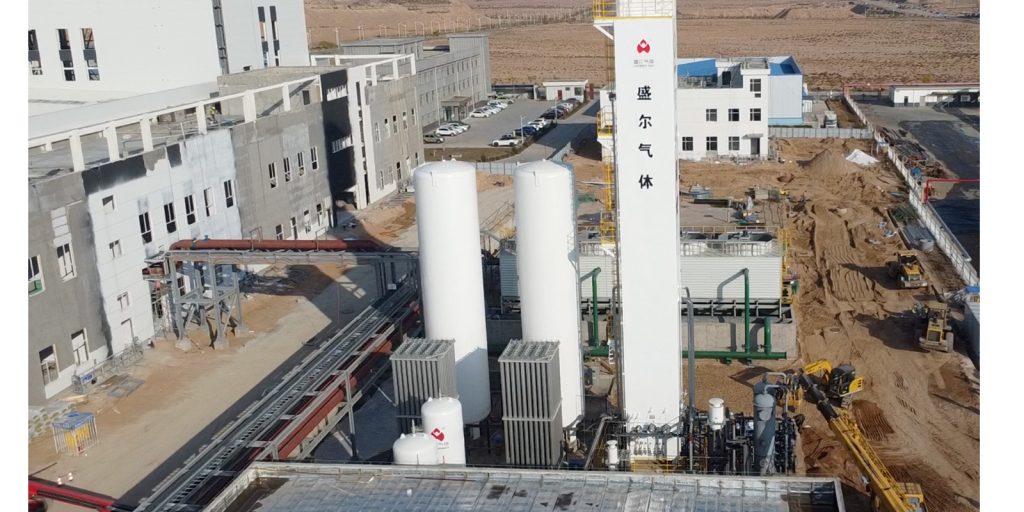
Cryogenic air separation units operate on the principle of fractional distillation of liquefied air. The process begins with ambient air intake and purification. Compressed air is passed through filters and molecular sieve or desiccant beds to remove particulates, moisture, and carbon dioxide (which would otherwise freeze). The cleaned air is then compressed to high pressure (often 5–8 MPa) in multiple stages. After each compression stage, the air is cooled in intercoolers or ambient heat exchangers to remove the heat of compression before entering the main cryogenic system.
Within the cold box, the compressed air is further cooled by countercurrent heat exchange with returning cold product streams. A key refrigeration step is provided by a turboexpander (expansion turbine), which expands a portion of the high-pressure air toward vacuum. The expansion produces the refrigeration necessary to reach cryogenic temperatures (around –170 °C or lower). At these temperatures, the air is partially liquefied. The cold, high-pressure mixture then flows into a high-pressure distillation column.During steady-state operation, cryogenic air separation relies on balanced reflux flows inside the rectification columns to maintain product specifications.
Distillation columns are at the heart of the ASU. In the high-pressure column, nitrogen (boiling point –196 °C) and oxygen (–183 °C) are separated by repeated vaporization and condensation. Nitrogen, being more volatile, rises to the top of the column and is withdrawn as a gaseous product, while an oxygen-enriched liquid collects at the bottom. This liquid may be fed to a second, low-pressure column to further concentrate the oxygen. High-purity liquid oxygen is ultimately withdrawn from the bottom of the low-pressure column, and gaseous oxygen can be drawn off as needed.
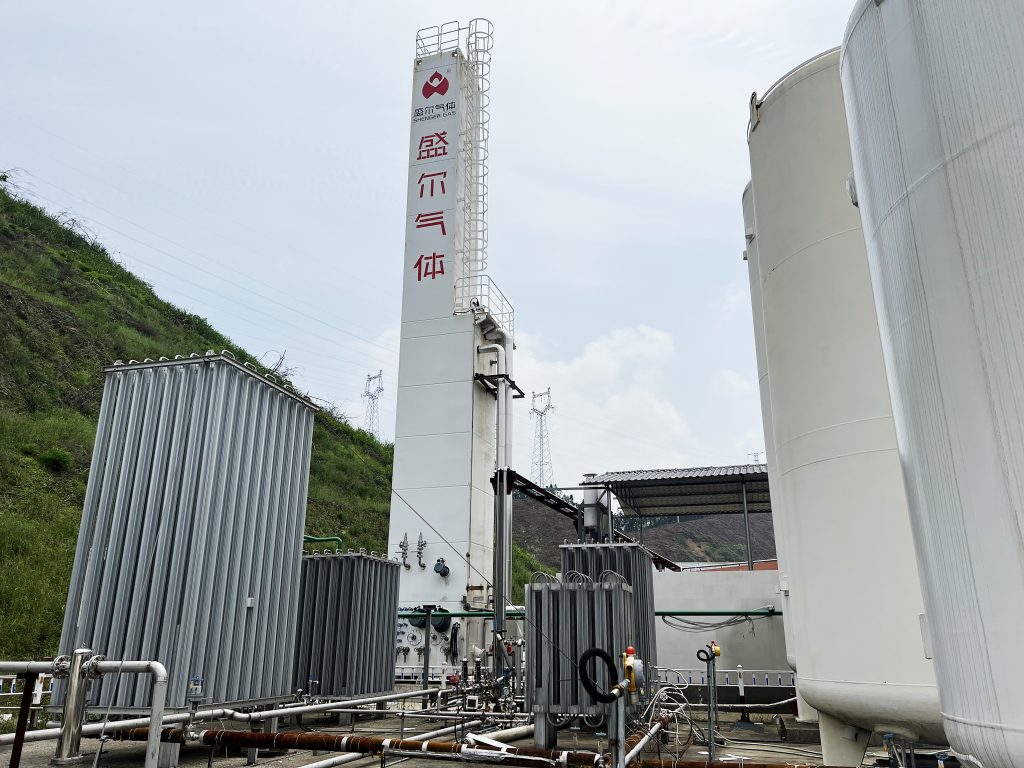
Modern ASUs also include additional purification and storage components. Downstream of compression, cryogenic heat exchangers pre-cool the air using waste cold from the product streams. Residual trace impurities are removed by molecular sieve beds just before the cold box. The resulting liquid oxygen (LOX) is stored in insulated vacuum-jacketed tanks or vaporized on demand, and gaseous oxygen can be held in high-pressure cylinders or delivered by pipeline. The entire process relies on highly efficient plate-fin heat exchangers and precise control of pressures and flows. In practice, engineers balance the reflux and throughput to trade between higher oxygen purity and lower energy use, depending on demand.
Efficiency and Performance of Cryogenic Air Separation
Cryogenic air separation is inherently energy-intensive due to the need to refrigerate and liquefy large volumes of air. Thermodynamically, the ideal work to separate oxygen from air is on the order of 50–60 kWh per ton of O₂, but real-world ASUs use several times this amount. A typical modern ASU might consume roughly 400–600 kWh of electricity per ton of O₂ produced (approximately 0.6–0.8 kWh per normal cubic meter of O₂), although exact values depend on operating pressures, recovery rates, and purity. In large units running continuously, even a few percent gain in cycle efficiency can translate to substantial energy savings over time.The efficiency of cryogenic air separation strongly depends on the heat-exchange network and the isentropic performance of the expansion turbine.
Several factors influence overall efficiency. The turboexpander, which provides the primary refrigeration, is a critical component. Higher expander isentropic efficiency directly reduces net power consumption; for example, improving expander efficiency by a few percentage points yields roughly proportional savings in electricity per ton of oxygen. Many ASUs employ turboexpander-compressors, where the cold discharged gas drives an additional compressor stage and returns to the cycle. This energy recovery design reduces net power needs. Heat integration is also important for efficiency. For example, waste cold from warm product streams can pre-cool incoming air, and compressor intercooling can be done using ambient or refrigerant circuits to recover heat.
Operational strategies further affect performance. By adjusting column reflux ratios and pressures, operators can favor either higher throughput or higher purity.Cryogenic air separation offers a stable and predictable process window, allowing operators to fine-tune column pressures and reflux ratios to meet varying purity and capacity demands. For instance, lowering the column reflux will increase oxygen production rate and reduce energy use per unit of O₂, at the expense of some purity. Advancements in expander design continue to reduce the specific energy consumption of cryogenic air separation systems.Conversely, achieving ultra-high purity (e.g. 99.9+%) requires more complex column internals and higher reflux, consuming additional energy. In large continuous ASUs, control systems tune these parameters to optimize net efficiency for the targeted output.
Importantly, cryogenic ASUs exhibit economy-of-scale advantages. A single large ASU producing hundreds to thousands of tons of oxygen per day typically has a lower specific energy consumption (kWh per ton) than several smaller units, due to more efficient expanders and reduced relative heat losses. In fact, virtually all large-scale industrial oxygen production (hundreds of TPD and above) worldwide is done by cryogenic plants, as PSA or membrane systems become impractical at that scale. Compared with adsorption-based systems, cryogenic air separation maintains tighter purity control across varying production loads.For very large throughput demands, cryogenic air separation units are built as centralized industrial plants. PSA or membrane systems are generally used only for much smaller-scale or supplemental oxygen supply.
Comparison with Alternative Separation Methods
Cryogenic ASUs can be compared to other oxygen generation technologies such as pressure swing adsorption (PSA), vacuum PSA (VPSA), and membrane separation. Each method has different strengths in purity, energy consumption, capital cost, and scale:
| Method | O₂ Purity | Energy Intensity | Production Scale | Relative Cost |
|---|---|---|---|---|
| Cryogenic ASU | Very high (≥99.5%) | High (≈420–560 kWh/ton) | Very large (hundreds to thousands TPD) | High |
| PSA (Adsorption) | Medium (90–95%) | Medium (≈300–450 kWh/ton) | Small–Medium (≤500 TPD) | Low |
| VPSA | Medium–High (93–96%) | Lower (≈210–320 kWh/ton) | Medium (≈100–1000 TPD) | Medium |
| Membrane Separation | Low–Moderate (≈30–50% O₂) | Low (≈100 kWh/ton for moderate enrichment) | Small (tens of TPD) | Low |
Table: Comparison of oxygen generation methods by typical purity, energy consumption, scale, and cost.
In the table, TPD stands for tons of O₂ per day.
PSA systems use adsorbent beds (zeolites or molecular sieves) to capture nitrogen from compressed air. One bed is pressurized so that nitrogen adsorbs to the material, and oxygen passes through; then the bed is depressurized to release the nitrogen. PSA units are relatively simple and have rapid startup, making them well-suited for smaller-scale or modular oxygen production (up to a few hundred TPD) with purity around 90–95%. VPSA adds a vacuum step during desorption to improve output and purity compared to PSA, enabling medium-scale operation (up to ~1000 TPD) with O₂ purities in the mid-90%s.
Membrane modules use gas-permeable polymer films to separate oxygen and nitrogen without refrigeration. They require low capital cost and are compact, but each stage typically only enriches the oxygen concentration to around 30–50%. Achieving higher purities would require multiple stages or hybrid systems, which becomes impractical. Therefore, membranes are mainly used for low-flow, low-to-moderate-purity oxygen (or for nitrogen generation). Their energy consumption per unit oxygen can be low, but they cannot reach the high purities of cryogenic or PSA processes.
Cryogenic ASUs, by contrast, achieve the highest oxygen purities and largest capacities. They typically produce oxygen above 99.5% purity and can co-produce other products (ultra-pure nitrogen, liquid argon, etc.) in the same plant. The trade-off is that cryogenic plants require substantial capital investment (large cold boxes, compressors, and expanders) and more power per unit oxygen. However, when demand exceeds a few hundred tons per day, cryogenic plants become more efficient per ton and more cost-effective on a unit basis due to scale. In large facilities (e.g. steel mills or chemical complexes), a central ASU often handles the bulk oxygen and nitrogen requirements, while PSA units may serve smaller onsite needs or backups. In summary, cryogenic air separation yields very high purity but at higher energy and capex, whereas PSA/VPSA and membrane trade off purity for flexibility, lower cost, and suitability at smaller scales.
Applications of Cryogenic Oxygen
Cryogenic-produced oxygen is indispensable in many industries and applications due to its high purity and bulk availability. Key application areas include:
- Healthcare and Medical: Medical-grade oxygen (≥99.5% purity) is critical for patient care. Hospitals and clinics rely on cryogenic oxygen for ventilators, anesthesia, and life support in surgery and intensive care. Bulk oxygen is supplied to medical facilities through pipeline networks or by delivery of liquid oxygen in tankers. Portable cylinders (used in ambulances and field hospitals) are refilled from these cryogenic sources. The recent global health challenges underscored the need for reliable, large-scale oxygen supply. These needs highlight critical oxygen applications in medicine, from chronic care to emergency response.
- Aerospace and Defense: Liquid oxygen (LOX) is the oxidizer of choice for rocket propellants. Space launch vehicles and ballistic missiles use LOX combined with fuels (liquid hydrogen, kerosene, etc.) to achieve the high thrust required for lift-off. National space programs and private launch providers depend on ASUs to produce and store LOX with the needed purity and reliability. In aviation and manned spaceflight, aircraft and spacecraft carry liquid or gaseous oxygen for cabin pressurization and emergency breathing systems. High-performance military jets and submarines also rely on stored oxygen for life support. Cryogenic air separation meets these propulsion and life-support requirements.
- Environmental and Water Treatment: High-purity oxygen is used to accelerate biological wastewater treatment and pollution control. Oxygen-enriched aeration processes are applied in municipal and industrial sewage plants to boost microbial breakdown of organic waste, allowing smaller reactors and faster treatment times. Pure oxygen can be injected into groundwater or soil to support bioremediation of contaminants. In pollution control, oxygen is used in flue gas treatment and waste incineration to enhance combustion efficiency and produce a concentrated CO₂ stream (beneficial for carbon capture). Oxygen is also used to produce ozone (from O₂) for advanced oxidation of pollutants in water. These environmental applications benefit from the stable supply of pure oxygen.
- Chemical and Petrochemical Industries: Many chemical syntheses require oxygen as a feedstock or oxidant. For example, oxidation reactions in the production of ethylene oxide, propylene oxide, methanol, acetic acid, and nitric acid rely on high-purity O₂ to drive reactions efficiently. Refineries and petrochemical plants use oxygen-enriched combustion in process heaters and furnaces to achieve higher flame temperatures and reduce fuel consumption. Large processing complexes often integrate an ASU on-site: for instance, an ammonia plant may draw oxygen (and co-produced argon) from the air separation unit to support downstream oxidations. In all these cases, the high purity and continuous supply of ASU-derived oxygen improve yields and safety.
- Manufacturing and Metal Processing: Beyond iron/steelmaking, other manufacturing processes use oxygen. In glass and ceramic furnaces, oxy-fuel firing raises furnace temperature and lowers fuel use, increasing throughput. Oxygen is used in welding and cutting torches to produce hotter flames and cleaner cuts. Pulp and paper mills employ oxygen delignification as an alternative to chlorine bleaching, improving pulp brightness while reducing harmful effluents. These high-throughput processes often consume large volumes of oxygen, which cryogenic plants can supply continuously and cost-effectively.
- Food and Beverage: Oxygen has niche applications in food processing and biotechnology. Breweries and fermentation facilities inject oxygen to maximize yeast or bacterial growth rates, improving yields. Modified-atmosphere packaging uses controlled levels of oxygen to preserve the color of meats. While liquid nitrogen is more common for freezing, liquid oxygen can be used in specialized cryogenic freezing processes or in making dry ice (solid CO₂) through interactions with CO₂ sources. The food industry values the controlled and pure oxygen supply provided by ASUs for these processes.
- Emerging Energy and Technology Applications: Cryogenic oxygen production is increasingly linked to clean energy and advanced technologies. In hydrogen production (especially with carbon capture), ASUs supply oxygen for autothermal reformers and partial-oxidation reactors. Gasification of coal, biomass, or waste into synthesis gas requires pure oxygen to avoid diluting the syngas with nitrogen. In power generation research, oxy-fuel combustion (burning fuel in pure oxygen) is studied as a way to produce a near-pure CO₂ exhaust for capture. Novel energy storage concepts, such as liquid-air energy storage, rely on separating and re-liquefying air gases, and pure oxygen plays a role in those cycles. Even emerging fields like electrochemical manufacturing and artificial photosynthesis could depend on high-purity oxygen from ASUs.Emerging clean-energy projects increasingly depend on cryogenic air separation to supply oxygen for gasification, oxy-fuel combustion, and hydrogen production.
- Other Applications: Numerous specialized uses rely on cryogenic oxygen’s purity. Submarines and underwater habitats use stored liquid oxygen for long-duration breathing gas. Medical research labs use oxygen for cell cultures and analytical instruments. Environmental sensing and industrial safety systems calibrate oxygen sensors with pure O₂. Even electronics fabs, which use ozone or pure oxygen in cleaning steps, may draw on ASU oxygen indirectly (through ozone generators). In short, cryogenic plants supply the oxygen for virtually every major oxygen-dependent process.
Each of the above applications exploits the core advantages of cryogenic oxygen: very high purity, high capacity, and continuous availability. Industries that demand life-critical reliability or precision rely on the cleanest possible oxygen. Industries with enormous demand exploit the economies of scale of large ASUs to keep oxygen costs reasonable. As technology advances, new applications continue to appear—for example, future deep-space habitats and advanced life-support systems may require on-site cryogenic oxygen generation. Overall, cryogenic air separation provides the backbone of the oxygen supply chain across all these sectors.
Conclusion
Cryogenic air separation remains the cornerstone of industrial oxygen production. This mature technology delivers the highest oxygen purities (often >99.5%) and the greatest output volumes of any conventional method. Though inherently energy-intensive, modern ASUs achieve improved efficiency through advanced turboexpanders, heat recovery, and optimized controls. As a result, large cryogenic plants can produce oxygen more effectively per unit output than smaller systems, making them the default choice for bulk oxygen supply. Continued refinement of equipment and processes is steadily enhancing overall efficiency, narrowing the gap toward the theoretical limits.
The applications of cryogenic oxygen extend far beyond traditional industries. From life-saving medical therapy and precision manufacturing to space exploration and next-generation energy systems, high-purity oxygen is a critical enabler. In each of these sectors, cryogenic ASUs meet the most demanding oxygen requirements. As global demand grows and new oxygen-dependent technologies emerge, cryogenic air separation will continue to be a critical supplier. In practice, cryogenic plants underpin virtually all major oxygen-consuming applications in industry and research. These trends illustrate that cryogenic oxygen production will remain integral to meeting the world’s diverse oxygen needs for decades to come.