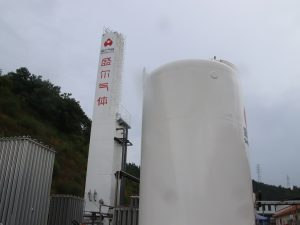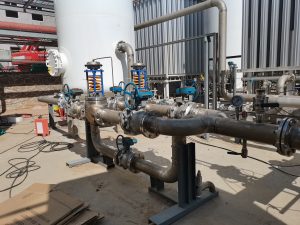
In industries that demand extremely pure oxygen or nitrogen – from steelmaking and chemical production to semiconductor fabrication and medical applications – cryogenic air separation has long been regarded as the gold standard due to its ability to produce oxygen and nitrogen at purities and scales unattainable by any other method. While alternative technologies like Pressure Swing Adsorption (PSA), Vacuum Pressure Swing Adsorption (VPSA), and membrane-based separation offer advantages in certain niches, cryogenic air separation remains the benchmark when high purity and large volume output are required. The following sections provide a technical overview of cryogenic air separation units (ASUs), compare them with non-cryogenic alternatives, and explain why cryogenic technology continues to lead for high-purity oxygen and nitrogen production.As demand for cleaner and larger industrial gas supply grows, cryogenic air separation remains central to modern gas infrastructure.
Cryogenic Air Separation: Fundamentals and Advantages
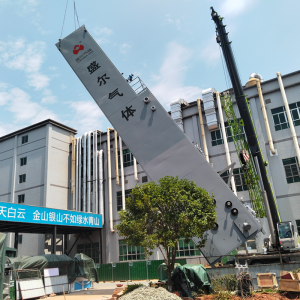
Cryogenic air separation is the benchmark for producing ultra-pure oxygen and nitrogen, and the process begins by liquefying atmospheric air at extremely low temperatures.The process exploits the different boiling points of the major atmospheric gases: nitrogen liquefies at about –196°C and oxygen at around –183°C. In a typical cryogenic ASU, ambient air is first filtered to remove impurities (like moisture and CO₂) and then compressed and cooled via heat exchangers. The purified, chilled air is fed into a distillation column system (often a double-column design) and further cooled until it liquefies. Through staged fractional distillation, high-purity oxygen is drawn from the bottom of one column and high-purity nitrogen from the top of another. This well-established method yields product purities that can reach 99–99.9% O₂ and up to 99.999% N₂, far above what non-cryogenic methods typically achieve.
Key advantages of cryogenic air separation include:
- Ultra-High Purity Output: Cryogenic systems routinely produce extremely pure gases. For oxygen, standard systems provide 99%+ purity (and specialized plants >99.9%), and for nitrogen they can achieve 99.999% (essentially oxygen-free nitrogen). Such purity levels are critical in electronics manufacturing, aerospace propulsion testing, certain medical applications, and other processes where even trace contaminants are unacceptable. Alternative methods generally cannot reach these purity extremes.
- Large Production Volumes: Cryogenic ASUs excel at high throughput. Industrial-scale plants can supply hundreds or thousands of tons per day of oxygen and nitrogen. This capacity is unmatched by PSA or membrane units. Indeed, the economics of cryogenic air separation improve with scale – larger plants benefit from better heat integration and economies of scale, making them more efficient (per unit of gas) when operating at very high flow rates.
- Liquid Products and Storage: A unique feature of cryogenic air separation is the ability to produce liquid oxygen (LOX) and liquid nitrogen (LIN) in addition to gaseous outputs. Liquefying the gases enables on-site storage in cryogenic tanks and transport of product off-site via tanker trucks. Many industries and hospitals rely on delivered liquid O₂ or N₂, and these come exclusively from cryogenic plants. Non-cryogenic systems (PSA, VPSA, membranes) cannot produce liquid products – they supply gas only – which limits their use in distribution and backup storage applications.
- Multi-Gas Recovery: Cryogenic plants can be configured to co-produce multiple gases. For example, a single ASU can output high-purity oxygen, nitrogen, and argon simultaneously, by adding additional distillation steps for argon extraction. Argon (used in welding, lighting, and electronics) is usually recovered as a valuable co-product in large ASUs. By contrast, PSA or membrane systems are typically designed to produce one primary gas (either oxygen or nitrogen), and other components of air are not captured (often vented back to the atmosphere).
Despite these advantages, cryogenic air separation comes with significant complexity and cost. Building and operating a cryogenic plant involves a high capital investment in equipment like compressors, expanders, distillation columns (cold boxes), and elaborate heat exchange networks. The process is energy-intensive due to the work required for air compression and refrigeration; electricity consumption per cubic meter of gas is higher for cryogenic production than for simpler methods at small scale. Moreover, cryogenic ASUs are less flexible in operation – they are generally designed to run continuously at steady load, and startup or shutdown can take several hours to carefully cool down or warm up the equipment. These factors mean that cryogenic plants are most justified when ultra-high purity or very large volumes are needed continuously. In those scenarios, the superior performance of cryogenic separation outweighs the costs.
Large-Scale Industrial Cryogenic Air Separation Units
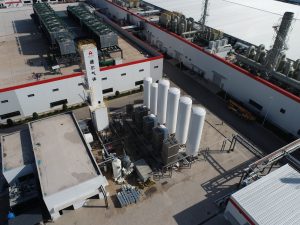
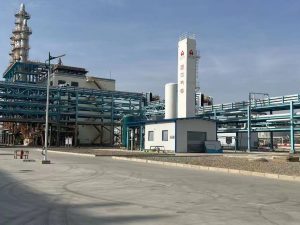
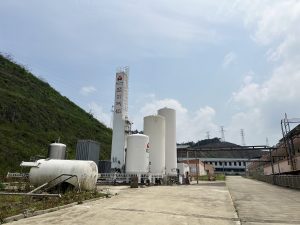
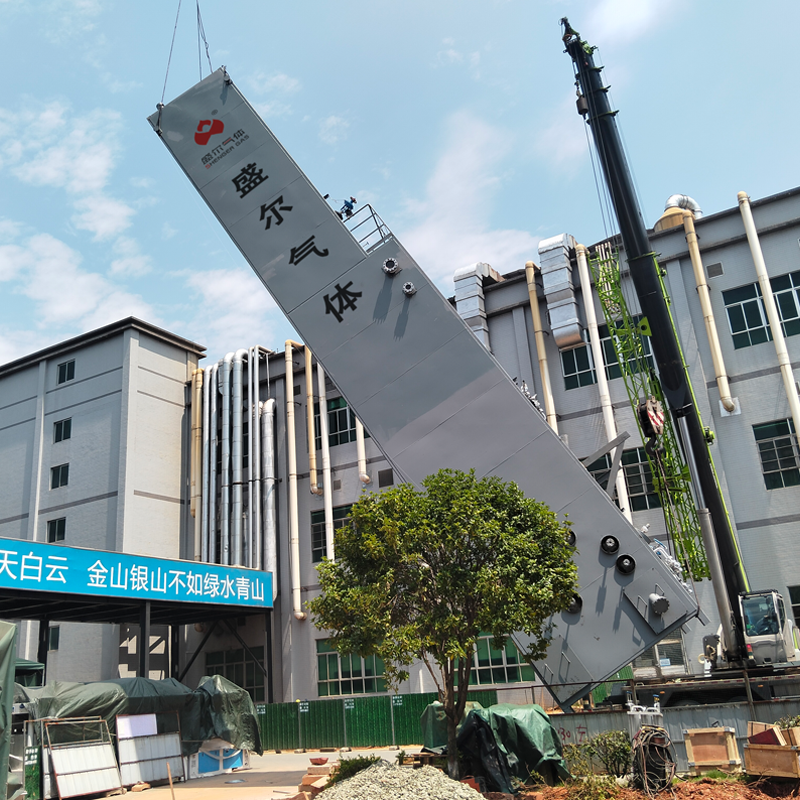
Most cryogenic air separation plants are found in large industrial complexes where demand for oxygen and nitrogen is massive and constant. For example, a big steel mill’s basic oxygen furnace may consume oxygen at tens of thousands of cubic meters per hour, and petrochemical facilities or gasification plants might require similarly large nitrogen or oxygen flows. To meet such needs, a large-scale ASU may produce 5,000 to 20,000+ Nm³/h of oxygen (hundreds of tons per day). These installations often feature multiple tall distillation columns and extensive heat recovery systems to maximize efficiency.Such large cryogenic air separation facilities are optimized for continuous, stable operation at massive scale. They capitalize on economies of scale – the energy required per unit of gas is lower at high throughputs than it would be for a small plant producing the same amount. Large ASUs typically deliver gaseous oxygen via pipelines directly to nearby processes (for instance, feeding a steel furnace or an ethylene oxide reactor), while simultaneously filling on-site storage tanks with liquid oxygen and liquid nitrogen for backup supply or distribution to other customers.
Modern cryogenic air separation plants incorporate heat integration and advanced process controls to optimize energy use, but they remain substantial power consumers. Such facilities are usually engineered for uninterrupted operation with high reliability. Many incorporate backup systems or multiple production trains for critical applications, ensuring that even if one train is taken down for maintenance, others can pick up the load. When ultra-high purity and reliability are required on a large scale, these cryogenic ASUs are the technology of choice. The ability to produce vast quantities of product continuously, with built-in backup and storage, is a cornerstone of industrial gas supply chains worldwide.
Compact and Lab-Scale Cryogenic Air Separation Units
While cryogenic air separation is most often associated with large plants, the technology has also been adapted to smaller, compact units for specialized uses. These miniaturized or modular cryogenic air separation units serve situations where moderate amounts of high-purity gas or liquid are needed on-site and a large ASU or regular deliveries are impractical. For example, some research laboratories and medical facilities use small-scale liquid nitrogen generators that produce on the order of a few liters of LN₂ per hour (or tens of liters per day). Such devices, which often employ a compact cryocooler and distillation column, allow labs to have their own supply of liquid nitrogen for cooling and storage purposes without relying on deliveries. Similarly, there are small cryogenic oxygen generators that can produce a continuous flow of high-purity O₂ (99% or above) at rates of only tens of Nm³/h – suitable for a mid-sized hospital or a remote installation that requires oxygen for support but is too far from suppliers.
These compact cryogenic ASUs use the same underlying principle (liquefying air and distilling it), but on a scaled-down basis. They are often pre-packaged, skid-mounted systems with automated controls, aiming to make operation as simple as possible. Even so, they are more complex and maintenance-intensive than non-cryogenic alternatives of similar capacity. It’s important to note that the energy consumption per unit of gas for small cryogenic systems is relatively high; they don’t benefit from the thermodynamic efficiencies that large plants achieve. Therefore, small cryogenic units tend to be justified only when the application absolutely requires cryogenic-level performance – be it the production of cryogenic liquids or ultra-high gas purity – on a limited scale. In scenarios where a purity of 90–99% is acceptable, or where only gaseous product is needed, often a PSA or membrane system is chosen instead for cost-efficiency. Nonetheless, the availability of compact cryogenic units broadens the reach of cryogenic air separation technology, allowing even modest operations (or isolated locations) to access high-purity gases without a full-scale plant.
Non-Cryogenic Air Separation Methods (PSA, VPSA, Membranes)
To supply oxygen and nitrogen at lower purities or smaller scales more economically than cryogenic air separation, a range of non-cryogenic air separation technologies is available. These approaches avoid the need for cryogenic air separation, operating at ambient temperature and trading off some purity for simplicity. The two most common categories are adsorption-based systems and membrane-based systems. They require no cryogenic refrigeration and instead use other physical mechanisms to separate air. While they cannot match the highest purity or volume capabilities of cryogenic plants, they offer significant benefits in ease of use, energy savings for moderate outputs, and faster startup. Below, we examine the leading non-cryogenic methods and how they compare.
Pressure Swing Adsorption (PSA and VPSA)
Pressure Swing Adsorption is a widely used method for on-site gas generation that avoids cryogenic cooling by utilizing selective adsorption at ambient temperature. A PSA system separates gases by passing compressed air through vessels filled with an adsorbent material (such as zeolite molecular sieve or activated carbon) that has an affinity for one component of air. In a typical PSA oxygen generator, air is compressed to a moderate pressure and fed into a bed of zeolite. The zeolite preferentially adsorbs nitrogen from the air, so the gas exiting the vessel is enriched oxygen. After a short period, the adsorbent bed becomes saturated with captured nitrogen. The system then switches to a second bed (allowing the first to regenerate). The first bed is depressurized, releasing the trapped nitrogen to the atmosphere. By alternating between adsorption (at higher pressure) and desorption (at low pressure) in two or more beds, the PSA unit produces a near-continuous flow of product gas.
PSA oxygen generators typically deliver oxygen at about 90–95% purity. The remaining 5–10% of the product is mostly argon (which is not captured by the zeolite and thus stays with the oxygen) plus a small fraction of nitrogen that isn’t adsorbed. This purity is sufficient for many purposes: for instance, wastewater treatment aeration, certain glass and metal production processes, pulp and paper bleaching, and medical oxygen in regions where ~93% O₂ is accepted by regulators. PSA systems are popular in these applications because they are relatively simple and turnkey. A PSA unit can be started and stopped in minutes, requires only electricity (primarily to run the air compressor), and needs routine maintenance like filter and sieve replacement but no complex cryogenics.
For nitrogen production, PSA units are configured with adsorbents (often carbon molecular sieves) that capture oxygen instead, so the product gas is nitrogen. PSA nitrogen generators can achieve higher nitrogen purities than oxygen PSAs achieve for oxygen. It is common to see 95–99.9% N₂ from a well-designed PSA system, because oxygen is preferentially removed. These nitrogen generators are widely used for providing inert atmospheres – examples include food packaging and preservation, electronics manufacturing (to prevent oxidation), laser cutting, and tank inerting for flammable liquids. By adjusting the cycle parameters and using multiple beds, PSA nitrogen systems can be tuned to higher purity at some cost to efficiency (higher purity N₂ means more of the air feed is rejected to remove that last bit of O₂).
A variation of the technology, Vacuum Pressure Swing Adsorption (VPSA), is used mostly for oxygen generation at larger scales. VPSA follows the same principle of adsorption, but the process operates closer to ambient pressure during adsorption and then applies a vacuum pump to the bed during regeneration to pull off the desorbed gas. In practical terms, a VPSA system uses blowers instead of high-pressure compressors, and a vacuum is used to regenerate the sieve more fully. The result is improved energy efficiency for O₂ production in the range of, say, 10–100 tons per day. VPSA oxygen units still produce ~90–95% O₂ (they are subject to the same argon limitation), but they typically consume less power per unit of oxygen than a comparably sized high-pressure PSA. Many industrial on-site oxygen plants in the tens of tons-per-day capacity range use VPSA technology for this reason. Aside from the different pressure regime and some equipment variations, a VPSA is operationally similar to a PSA (the two terms are often mentioned together since their delivered product qualities are alike).
In summary, PSA/VPSA systems offer:
- Lower upfront cost and complexity compared to cryogenic ASUs (they don’t require tall distillation columns, cryogenic exchangers, or elaborate insulation).
- Fast startup and responsiveness, making them well-suited to operations with intermittent or variable demand. They can produce usable product within minutes of power-up, and can be turned down or cycled off as needed without extensive procedures.
- Moderate energy use for the purity provided. For example, a mid-sized PSA might consume on the order of 0.3–0.6 kWh of electricity per Nm³ of O₂ produced (mostly for air compression), which is very efficient for 93% oxygen. There is no refrigeration penalty as in cryogenic plants.
- Modular scalability at small-to-medium scales. Need more capacity? Additional PSA units can be added in parallel. The modular nature also means shorter manufacturing and installation times, and many systems are available in containerized or skid-mounted packages.
On the downside, PSA and VPSA cannot reach the extreme purities that cryogenic distillation can. If >99% oxygen is required, these adsorption methods simply aren’t sufficient because of argon and residual nitrogen breakthrough. They also cannot produce liquid oxygen or nitrogen; the output is always a gas (typically delivered at a few bar of pressure, suitable for piping into a process or filling cylinders). Additionally, while PSA units can be modularly scaled up, beyond a certain point the economics may favor a single large cryogenic plant instead of many small PSA units. In cases where ultra-high purity or liquefied product is needed, cryogenic air separation is generally the only viable option.
Membrane-Based Air Separation
Membrane separation technology provides another non-cryogenic route to obtaining oxygen-enriched or nitrogen-enriched air. These systems use hollow-fiber membrane modules made from specialized polymers that selectively permit one gas to pass through faster than others. Compressed air is introduced into the membrane module, and due to differences in gas diffusivity and solubility in the membrane material, one component of the air permeates through the membrane wall more readily.
For nitrogen production, membrane generators are configured so that oxygen (along with water vapor and CO₂) is the “fast” gas that permeates out of the fibers, leaving an oxygen-depleted, nitrogen-rich stream as the primary product at the end of the module. By the time the air has passed through the membrane unit, the product gas can reach around 95–99% N₂ purity, depending on design. However, there is a trade-off: pushing for higher nitrogen purity (toward the upper end of that range) means a larger portion of the air feed must be vented as waste, which lowers overall recovery and increases the cost per unit. In practice, many membrane nitrogen systems are set for around 95–98% N₂, which is sufficient for applications like tank inerting, fire suppression systems, and food processing, where ultra-high purity isn’t necessary. Membrane N₂ generators are especially popular for remote or mobile applications (such as offshore oil platforms or maritime inerting units) because they are compact, rugged (no glass vessels or delicate cold machinery), and can run as long as there is a supply of compressed air.
For oxygen enrichment, the roles are reversed: oxygen is the faster gas. A membrane setup for oxygen will take air and produce an oxygen-enriched permeate stream. Due to limitations of membrane selectivity, the O₂-enriched output is typically only 30–40% oxygen (with the balance being mostly nitrogen that also slips through). This level of enrichment can be useful for certain combustion processes or feeding bioreactors, and it has seen niche use in medical oxygen concentrators in some scenarios. But membrane systems cannot economically produce medical-grade 90%+ oxygen – achieving that would require multiple stages and still falls short of PSA performance. Thus, for producing high-purity oxygen, membranes are not generally competitive with PSA; instead, their niche for oxygen is modest enrichment tasks or where a small boost in O₂ concentration is helpful.
The benefits of membrane-based systems lie in their simplicity and reliability. There are no moving parts in the separation modules themselves – the system mainly consists of an air compressor, some filters, and the membrane bundle. Maintenance is minimal (mostly keeping the compressor running and replacing filters). Membrane units are highly compact and often modular; for example, a unit producing a few hundred Nm³/h of nitrogen can be the size of a refrigerator, and larger systems are still significantly smaller and lighter than equivalent PSA or cryogenic plants. They also offer instantaneous start-stop capability – if compressed air is available, the desired product gas starts flowing immediately, and if demand stops, the system can be idled just by venting or stopping the air supply. This makes membranes ideal for on-demand uses or operations that require frequent on/off cycling.
On the downside, membrane separation cannot achieve the highest purities or complete separation of gases. As noted, oxygen-enriched streams from single-stage membranes max out around 40% O₂, and even nitrogen product is typically limited to the high 90s in purity with diminishing returns beyond that. Additionally, like PSA units, membrane systems only produce gas phase product and have no capability to liquefy the output. If an application grows to require very high-purity nitrogen (e.g. 99.99% for electronics) or large volumes of oxygen, a cryogenic air separation unit would be chosen instead. Membranes fill important roles for small and mid-scale needs, but they complement rather than replace cryogenic plants when it comes to the upper end of purity and volume requirements.
Performance Comparison of Air Separation Technologies
To highlight why cryogenic air separation remains the preferred choice for high-purity oxygen and nitrogen, it is useful to compare the key performance metrics of the major technologies side by side. The table below summarizes several important characteristics across cryogenic, PSA/VPSA, and membrane-based air separation:
| Characteristic | Cryogenic ASU (Distillation) | PSA / VPSA (Adsorption) | Membrane Separation |
|---|---|---|---|
| Max. Oxygen Purity | ~99–99.9% O₂ (ultra-high purity) | ~90–95% O₂ (limited by argon presence) | ~30–40% O₂ (enriched air) |
| Max. Nitrogen Purity | ~99.999% N₂ (ultra-high purity) | ~95–99.9% N₂ (high purity possible) | ~95–99% N₂ (moderate-high purity) |
| Typical Capacity Range | Large scale: 500 to 10,000+ Nm³/h per train (scalable to thousands of tons/day) | Small–medium: 1 to 1,000 Nm³/h per unit (modular expansion possible) | Small scale: up to a few hundred Nm³/h per unit (typically <500 Nm³/h) |
| Specific Energy Use | High: includes refrigeration load (most energy-intensive, but better per-unit efficiency at very large scale) | Moderate: primarily compressor power (efficient for mid-scale output) | Low: just air compression (no phase-change energy penalty) |
| Start-Up Time | Long: hours for cool-down; best for continuous 24/7 operation | Short: minutes for start/stop; suited for intermittent use | Very short: essentially on-demand; instantaneous flow with air supply |
| Product Form | Gas and Liquid: can deliver gaseous product and store liquid O₂/N₂ | Gas only: no liquefied product (on-site use or cylinder filling) | Gas only: no liquefied product (on-site use only) |
| Multi-Gas Capability | Yes: one plant can produce O₂, N₂, Ar concurrently (with added equipment) | No: typically dedicated to one gas (either O₂ or N₂ at a time) | No: each system targets one product (either N₂ or O₂-enriched air) |
| Footprint & Size | Large: requires significant space (tall distillation towers, cooling systems) | Moderate: compact skids or containers (small footprint for given output) | Small: very compact and lightweight units available |
(Nm³/h = Normal cubic meters per hour at standard conditions)
From the comparison above, one can see that cryogenic air separation outperforms PSA and membrane systems in achievable purity and maximum throughput by a wide margin. When ultra-pure oxygen or nitrogen is needed, cryogenic is the only technology that can consistently deliver at the required specs. Likewise, for very large volume production (hundreds of thousands of cubic meters per day), a cryogenic plant is essentially the only practical choice.
In terms of energy efficiency, the picture is context-dependent. At smaller scales and lower purities, cryogenic plants are less energy-efficient – they expend a lot of energy in refrigeration that PSA or membrane systems don’t require. For example, generating a tonne of 99.5% O₂ via a cryogenic ASU can consume on the order of 200–250 kWh, whereas producing a tonne of ~93% O₂ via PSA might consume only a fraction of that (since only compression work is involved). However, cryogenic air separation units become more competitive in energy efficiency at very large scales or when producing liquid products. By leveraging process integrations and economies of scale, modern cryogenic facilities have driven down the kWh per unit gas for big plants. PSA systems have a relatively low energy cost per Nm³ for moderate purity gas, making them extremely attractive for small to mid-range outputs. Membrane systems often have the lowest energy per unit for modest enrichment (since they avoid both high compression and cryogenic cooling), but they are limited in how much separation they can accomplish.
Another important differentiator is operational flexibility. Cryogenic plants are engineered for steady, continuous operation – they do not handle rapid changes or frequent on-off cycles gracefully. If a cryogenic ASU is shut down, it may take many hours to cool it back down and resume product supply, so these plants run most efficiently at constant load. PSA and membrane units, on the other hand, excel in situations with variable demand. A PSA can ramp its production up or down by adjusting cycle timing and can be completely turned off nightly or on weekends with minimal wear. Membrane generators can be throttled or stopped almost instantaneously since the separation is passive; operators can produce just as much gas as needed at any given moment by controlling the inlet air. This makes non-cryogenic methods ideal for intermittent or backup use, whereas cryogenic is ideal for base load, continuous supply.
Why Cryogenic Air Separation Is the Gold Standard
Considering the above factors, it becomes clear why cryogenic air separation remains the gold standard for producing high-purity oxygen and nitrogen. The foremost reason is purity: many critical applications simply cannot tolerate the lower purity levels provided by PSA or membrane systems. For example, semiconductor fabrication plants require nitrogen that is 99.999% pure to avoid contaminating sensitive processes, and pharmaceutical manufacturers often need oxygen with virtually no impurities for oxidation reactions. Cryogenic distillation is the only industrial technology that can routinely achieve these ultra-high purities at scale. It inherently removes not just the bulk of the unwanted component (be it O₂ or N₂), but also other trace gases (argon, neon, helium, moisture) that remain mixed in smaller-scale methods.
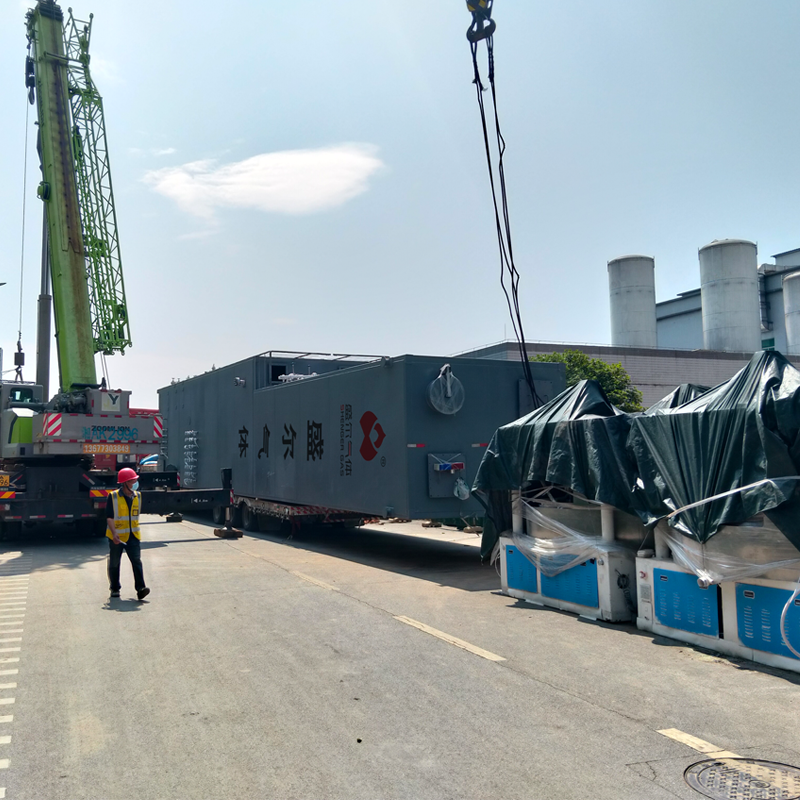
Another decisive factor is scale and throughput. When supplying an entire industrial complex or region with oxygen or nitrogen, the volumes involved are enormous – potentially millions of cubic meters of gas per day. Cryogenic ASUs are proven to handle such demands: the largest plants in operation can each produce on the order of 2,000–4,000 tons of oxygen per day (alongside coproducing nitrogen and argon). Attempting to meet a similar output with dozens of PSA units or membrane modules would be impractical and inefficient, both in terms of operation and maintenance. One large cryogenic plant can often replace what would otherwise be a vast network of smaller generators, offering better control, reliability, and economy of scale. The centralized production model enabled by cryogenic plants also means that gas companies can efficiently produce liquid products for distribution, something a scattered set of PSA units could never do.
The versatility of cryogenic air separation in providing multiple products (O₂, N₂, Ar, and sometimes others like krypton/xenon in specialized setups) and both gaseous and liquid forms is a strategic advantage. Industrial gas suppliers rely on cryogenic plants as the backbone of their supply chain – they can pipe gaseous product directly to large nearby consumers while simultaneously filling liquid tankers to service customers at a distance. Hospitals, for instance, might generate some oxygen on-site with a PSA for economy, but they still require a backup supply of liquid oxygen delivered from a cryogenic plant to ensure security of supply. In aerospace or rocket launch facilities, often only cryogenic systems can provide the massive oxidizer quantities needed (and in liquid form for storage). These examples underline that cryogenic ASUs occupy an irreplaceable niche at the high-performance end of the spectrum.
That said, PSA, VPSA, and membrane technologies have become invaluable complements to cryogenic plants. They offer more affordable and convenient solutions for lower-volume and lower-purity needs. In practice, many industries deploy a combination of technologies: for routine inerting or small oxygen demands, an on-site PSA or membrane unit might be used, but for the highest-purity or bulk supply, cryogenic-sourced liquid and gases are brought in. This hybrid approach ensures cost-effectiveness without compromising on quality where it matters. Non-cryogenic systems continue to improve (for example, better adsorbents and membrane materials are pushing their performance higher), but their inherent limitations mean they are unlikely to fully displace cryogenics at the top end.
In conclusion, cryogenic air separation remains the gold standard for high-purity oxygen and nitrogen production because it delivers capabilities that other methods cannot fully match. When a process demands oxygen or nitrogen of the absolute highest purity, or when the required volume is gigantic, cryogenic technology stands out as the reliable solution. Its ability to produce liquid products and multiple gases in one operation further cements its central role in the industrial gas industry. For researchers and technical professionals evaluating air separation options, cryogenic ASUs continue to set the benchmark for performance – defining what is achievable in terms of purity and scale. While non-cryogenic methods will continue to serve important roles and evolve in efficiency, cryogenic air separation retains its preeminent status for delivering ultra-pure oxygen and nitrogen on a large scale, ensuring it will remain a cornerstone of high-purity gas supply for the foreseeable future.