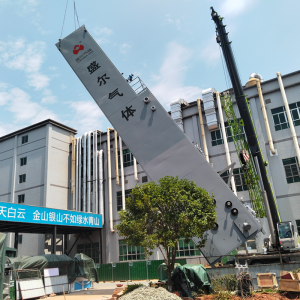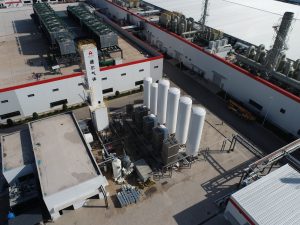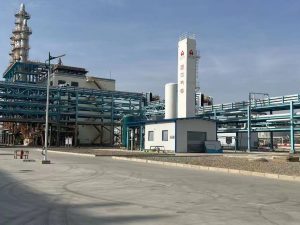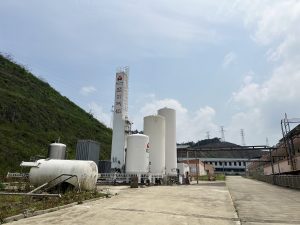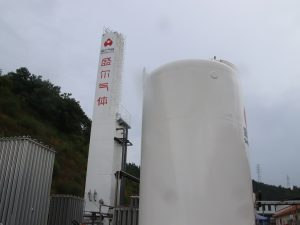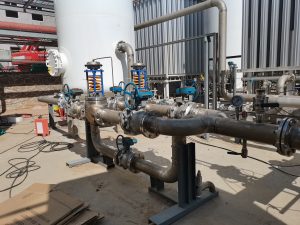
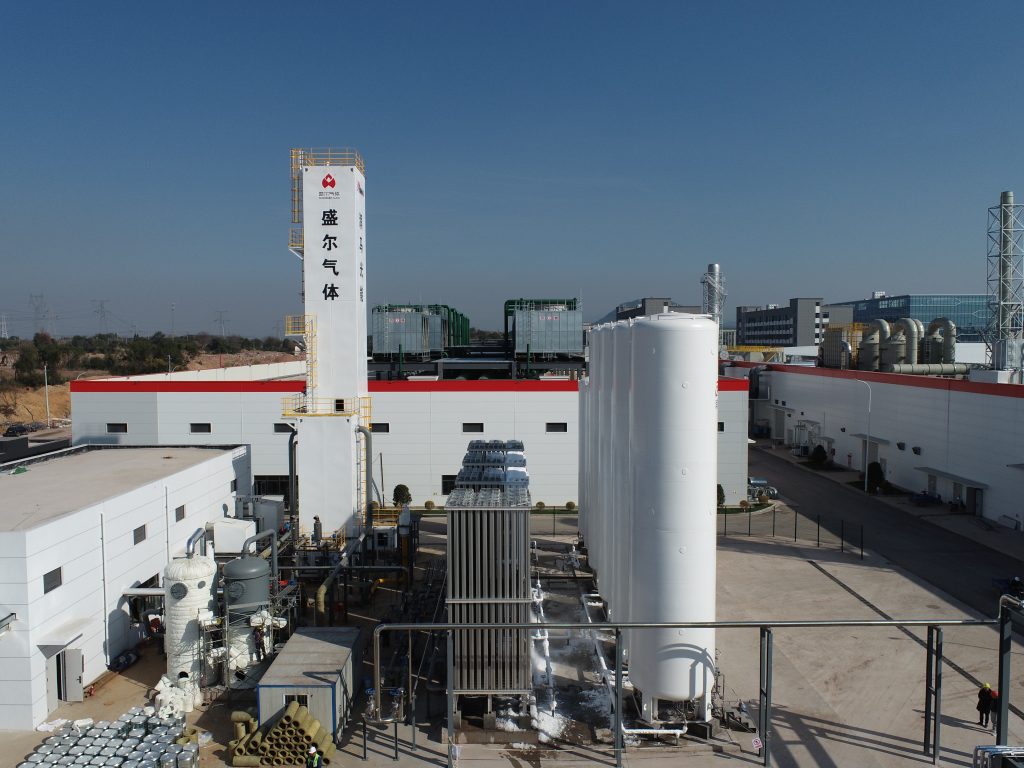
Cryogenic air separation is the primary technology behind producing oxygen on an industrial scale. How cryogenic air separation produces oxygen for industrial applications can be understood by examining its key steps. In summary, ambient air is first drawn in, compressed, and purified. It is then cooled to cryogenic temperatures until it liquefies, and finally separated by distillation into oxygen, nitrogen, and other gases. This process, carried out in large facilities known as air separation units (ASUs), yields high-purity oxygen (typically ~99.5%) along with co-products like nitrogen and argon. Industries such as steel manufacturing, petrochemicals, and energy rely on cryogenic ASUs for a continuous oxygen supply. While alternative technologies like pressure swing adsorption (PSA) or membrane separation exist for smaller-scale or lower-purity needs, cryogenic distillation remains the method of choice for high-volume, high-purity oxygen due to its efficiency and ability to produce multiple gases.
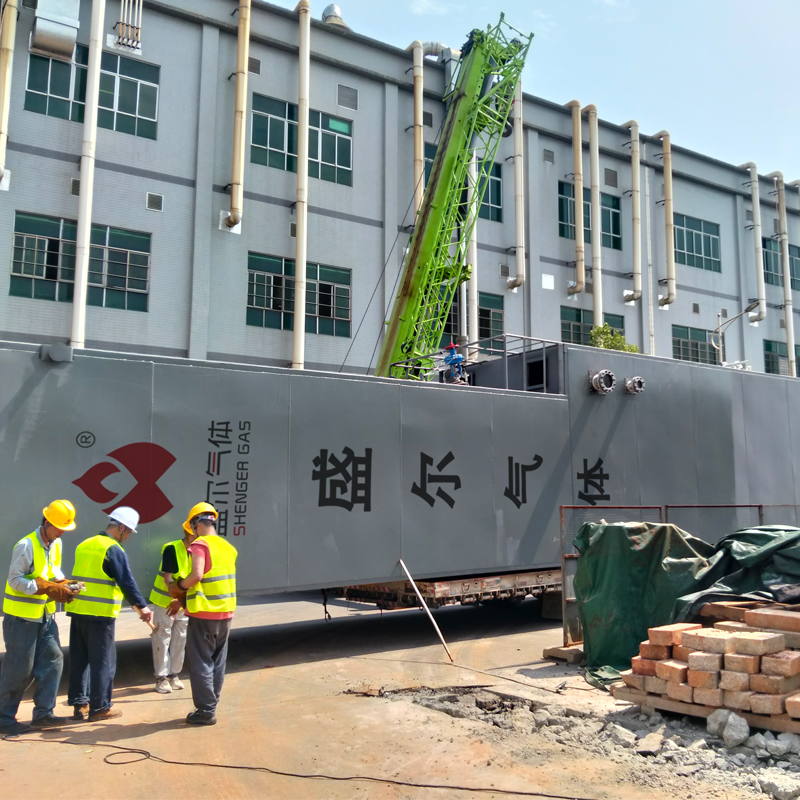
How Cryogenic Air Separation Works
To understand how cryogenic air separation produces oxygen for industrial applications, it helps to break down the process into a series of stages. Each stage plays a crucial role in extracting oxygen from air at the required purity and volume:
- Air Compression: Ambient air is drawn into the ASU and compressed to a moderate pressure (typically around 5–10 bar) using multi-stage compressors with intercoolers. Compressing the air increases its pressure and density, which makes the subsequent cooling and liquefaction more efficient. During this stage, some heat is removed via intercoolers, and water vapor begins to condense out.
- Air Purification: The compressed air is then purified to remove impurities like moisture (water vapor), carbon dioxide, and hydrocarbons. These contaminants must be eliminated to prevent ice or solid CO₂ from forming in the cold later stages. Purification is usually done by passing the air through molecular sieve adsorbers or driers that trap water and CO₂. Clean, dry air ensures that downstream cryogenic equipment operates without freezing or fouling.
- Cryogenic Cooling (Refrigeration): Next, the dry, clean air is cooled to extremely low temperatures using a heat exchanger system (often called the “cold box”). The air passes through a series of regenerative heat exchangers where it is cooled by outgoing cold product streams. A portion of the air may be expanded through a turbo-expander (a turbine that provides refrigeration by cooling the gas upon expansion) or through Joule–Thomson expansion valves. This cooling process brings the air down to cryogenic temperatures (around –180 °C or lower), causing most of the air to condense into a liquid. The result is a mixture of liquid oxygen–rich and nitrogen–rich fluid, at about the boiling points of nitrogen (−196 °C) and oxygen (−183 °C).
- Fractional Distillation: The cold liquefied air is fed into a distillation system to separate oxygen from nitrogen (and argon if needed). In a typical large ASU, this happens in two linked distillation columns. The high-pressure column (at ~5–6 bar) receives the feed; as the mixture boils, nitrogen (with the lower boiling point) becomes vapor and rises to the top, while oxygen-enriched liquid collects at the bottom. This oxygen-rich liquid is then transferred to a second low-pressure column (near 1 atm). In the low-pressure column, it boils at a lower pressure, allowing high-purity liquid oxygen to collect at the bottom and pure nitrogen gas to rise to the top. An internal condenser-reboiler between the columns facilitates heat exchange: boiling oxygen-rich liquid in the low-pressure column provides reflux cooling to condense nitrogen in the high-pressure column. Through this two-column fractional distillation, oxygen is concentrated to the desired purity. If argon production is required, a side draw from the low-pressure column (where argon concentration peaks) is fed to a third column to extract argon (~98–99% purity), with the remaining oxygen returned to the system.
- Product Collection and Delivery: The separated oxygen is withdrawn from the bottom of the low-pressure column, usually as a cold liquid at about 99.5%–99.9% purity. Similarly, high-purity nitrogen gas is taken from the top of the low-pressure or high-pressure column. The oxygen (and any liquid argon produced) is then pumped and vaporized through heat exchangers back to ambient temperature. Finally, the products are delivered to end use points: gaseous oxygen can be sent via pipelines to nearby processes or compressed into cylinders, whereas liquid oxygen is stored in insulated tanks for later use or trucking. The entire system is highly insulated to maintain cryogenic temperatures, and modern ASUs operate continuously with automated controls to keep the output specifications within target ranges.
Typical Operating Parameters of a Cryogenic ASU
Cryogenic oxygen plants are engineered to meet specific needs, but they tend to operate within common parameter ranges. Below is a table of typical operating parameters for a medium-to-large cryogenic ASU producing industrial oxygen:
| Parameter | Typical Value / Range |
|---|---|
| Oxygen Purity (volume) | ~99.5% (can achieve 99.9% in many cases) |
| Oxygen Production Rate | Hundreds to several thousand tons per day (TPD) |
| Main Air Feed Pressure | ~6 bar (usually 5–10 bar range before expansion) |
| Specific Power Consumption | ~0.3–0.6 kWh per Nm³ O₂ (approx. 250–500 kWh per ton O₂) |
Table: Typical purity, capacity, pressure, and energy consumption for cryogenic air separation units. Actual values vary with plant size and design.
Large modern ASUs exhibit high energy efficiency for their scale – for example, a 1000 TPD oxygen plant might consume on the order of 20 MW of electric power. In practice, cryogenic ASUs are often run 24/7 to maximize efficiency, since cooling down and restarting these plants can be time-consuming. Engineers optimize parameters like pressure levels and heat exchanger configurations to reduce energy use per unit of oxygen produced, as shown by the specific power consumption figures in the table. The delivered oxygen can be gaseous at near-ambient conditions or pumped as a liquid, depending on the requirements of the industrial application.
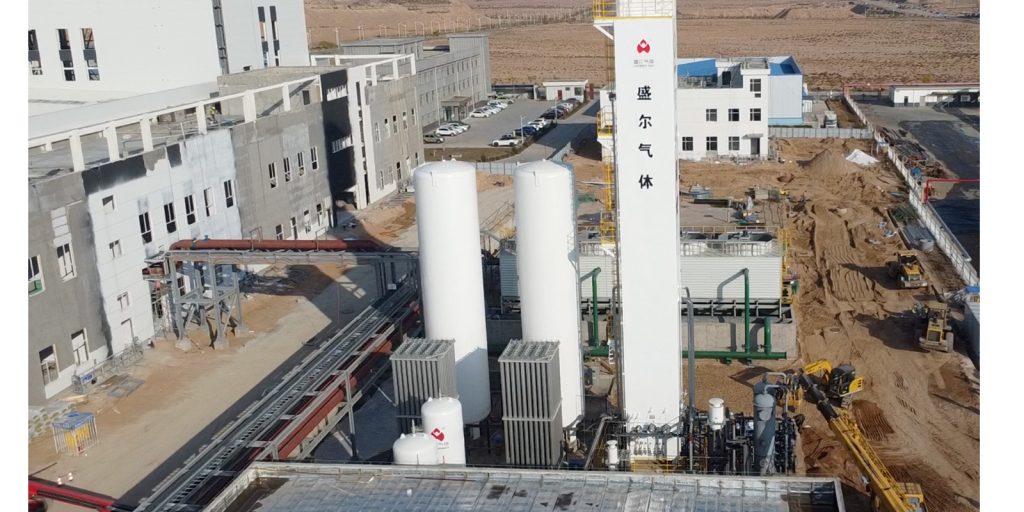
Industrial Applications of Cryogenic Oxygen
One reason how cryogenic air separation produces oxygen for industrial applications so widely is the broad spectrum of industries that depend on large volumes of oxygen and nitrogen. Some key commercial applications include:
- Steel and Metals Production: The steel industry is the single largest consumer of oxygen from ASUs. Blast furnaces and basic oxygen furnaces use high-purity oxygen to enrich air blast or to decarburize molten iron, significantly increasing production efficiency. Oxygen from cryogenic plants enables higher flame temperatures and faster reactions in steelmaking. Other metal processes like copper smelting or welding and cutting operations also use oxygen at industrial scales.
- Petrochemicals, Chemicals, and Refining: Refineries and chemical plants often require oxygen for processes such as partial oxidation, gasification of coal or heavy hydrocarbons, and synthesizing fuels or chemicals. For example, gas-to-liquids (GTL) plants and ammonia/fertilizer production may use oxygen in gasification to create syngas. Oxygen-enriched combustion in furnaces and steam boilers helps increase energy efficiency and reduce emissions. The high-purity nitrogen co-produced by cryogenic ASUs is also invaluable for inerting storage tanks, purging reactors, and blanketing flammable liquids in these facilities.
- Energy and Environment: High-volume oxygen is increasingly used in energy applications like integrated gasification combined cycle (IGCC) power plants and oxy-fuel combustion for carbon capture. In wastewater treatment, oxygen can be injected to accelerate biological processes or to generate ozone for water disinfection. These applications benefit from the reliable, on-demand oxygen supply that cryogenic ASUs provide.
- Glass and Cement Industries: Glass manufacturers use oxygen-fired furnaces to achieve higher flame temperatures than air-fuel combustion, improving melting efficiency and product quality while lowering NOx emissions. Cement kilns may also enrich combustion air with oxygen to boost throughput. Cryogenic oxygen is often supplied to these sites in liquid form and evaporated as needed.
- Healthcare and Laboratories: Bulk oxygen for hospitals and medical facilities is often produced via cryogenic air separation (at a large plant) and delivered as liquid oxygen in tankers. Hospitals then store and vaporize it for patient use (e.g. ventilators, anesthesia). While on-site generators (like PSA systems) are also used in healthcare for smaller needs, cryogenic production ensures a high-purity, high-reliability source for regional medical oxygen supply. Research laboratories and biomedical facilities likewise rely on ultra-high purity gases from cryogenic producers.
These examples illustrate how cryogenic air separation produces oxygen for industrial applications that demand reliable large-scale supply. In each case, the availability of high-purity oxygen (and co-product nitrogen or argon) enables processes that would be less efficient or impossible using air or lower-purity oxygen sources.
Advantages of Cryogenic Separation over Alternative Methods
Given the above uses, it’s important to consider why industries choose cryogenic air separation instead of other oxygen generation methods. The advantages of cryogenic ASUs become clear when comparing how cryogenic air separation produces oxygen for industrial applications versus the alternative technologies:
- High Purity and Multiple Products: Cryogenic distillation can produce oxygen at 99.5–99.9% purity routinely, which is higher than most non-cryogenic methods. Pressure swing adsorption (PSA) systems, for instance, typically produce ~90–95% purity oxygen (with the rest being argon and nitrogen) and struggle to reach the ultra-high purities needed for certain processes. Cryogenic plants also co-produce high-purity nitrogen (99.9% or more) and argon, which PSA or membrane units cannot easily provide. For industries needing argon or very pure nitrogen alongside oxygen, a cryogenic ASU is the only comprehensive solution.
- Large-Scale Production Efficiency: For large oxygen demands (hundreds or thousands of tons per day), cryogenic ASUs are far more economical. They exhibit economies of scale – the specific energy consumption (kWh per unit of O₂) tends to be lower for big cryogenic plants than what multiple smaller PSA units would consume to produce the same amount. Alternative methods are generally favored for smaller capacities (e.g. a few tons per day or supplying a single facility) because they have lower upfront cost, but they become inefficient or impractical at high volumes. In contrast, cryogenic ASUs readily supply entire industrial complexes or multiple users from one central plant.
- Liquid Oxygen and Storage Capability: Cryogenic oxygen production can directly create liquid oxygen, which can be stored in large tanks and transported in bulk. This is a major advantage for backup supply and distribution logistics—liquid product from an ASU can be delivered by tanker trucks to sites that don’t have their own plant. Non-cryogenic generators (PSA or membranes) only output gas at near ambient temperature and cannot easily fill liquid storage. The ability to produce liquid O₂ also means a cryogenic ASU can handle peak demands by drawing on liquid reserve, and can continue supplying even if a compressor or train is down temporarily.
- Reliability and Continuous Operation: Industrial cryogenic plants are built for continuous 24/7 operation with high uptime (often >99% reliability). They are robust systems with backup units or parallel trains and can run for years with carefully planned maintenance. PSA units, while simpler, may require more frequent cycling, maintenance of adsorbent, and have shorter operational lifespans before replacement. When considering how cryogenic air separation produces oxygen for industrial applications where an interruption of supply can halt production (as in a steel mill or large chemical plant), the proven reliability of cryogenic ASUs is a decisive factor.
On the other hand, it should be noted that cryogenic ASUs have high capital costs and power requirements, so for smaller scale needs or moderate purities, technologies like PSA, VPSA (vacuum PSA), or membrane systems can be more cost-effective. Those methods boast quicker start-stop capability and lower power usage for small plants. However, when it comes to the combination of high purity, large volume, and co-product flexibility, cryogenic air separation is unrivaled. This explains how cryogenic air separation produces oxygen for industrial applications in a way that meets the most demanding requirements of modern industry.
Conclusion
Cryogenic air separation has proven itself as a workhorse for the industrial production of oxygen and other gases. By leveraging ultra-cold temperatures and distillation, it can supply extremely pure oxygen at massive scales – a feat unmatched by alternative technologies. From enhancing blast furnace efficiency in steelmaking to enabling clean combustion in power plants, how cryogenic air separation produces oxygen for industrial applications underpins many advancements in industrial processes. The technology continues to evolve with improvements in energy efficiency and plant design, but its core principle remains the same: cooling air until it liquefies and separating its constituents. In summary, cryogenic air separation is a foundational process that ensures industries have the oxygen they need, whenever and wherever high-performance applications demand it.