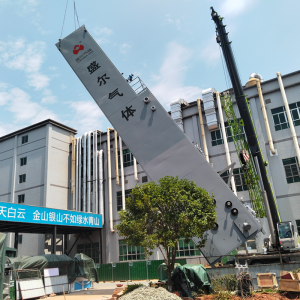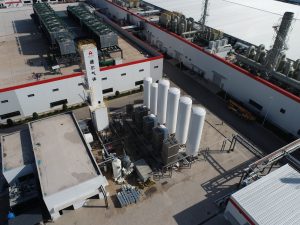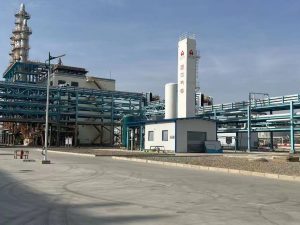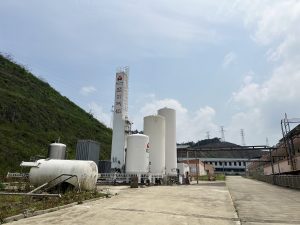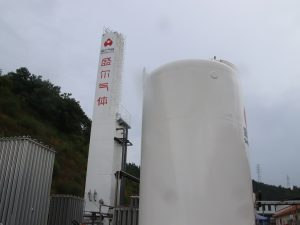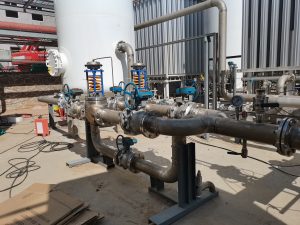
This article focuses on the design and operation of a Cryogenic Air Separation Unit serving large petrochemical and syngas complexes.Cryogenic air separation units are critical infrastructure in large petrochemical and syngas facilities, providing high-purity oxygen, nitrogen, and other gases. By cooling and distilling atmospheric air to cryogenic temperatures, these units reliably produce gas streams to support processes such as reforming, gasification, and petrochemical synthesis. Advanced cryogenic ASUs typically deliver 95–99.5% pure oxygen in gaseous form (and sometimes liquid oxygen or argon byproduct) at controlled pressures for downstream use, while also generating high-purity nitrogen. In modern integrated complexes, cryogenic ASUs are often multi-train installations with combined capacity ranging from a few hundred to several thousand tons of oxygen per day, accompanied by sophisticated controls and energy recovery.
Cryogenic ASUs are widely applied in refining and petrochemical plants to supply oxygen for processes like partial oxidation or steam reforming, and nitrogen for inerting and synthesis. In syngas plants (e.g. coal-to-gasification or oil-pit gasification facilities), the ASU provides pure oxygen to the gasifier and nitrogen for diluent or purge. For example, recent Middle Eastern complexes with integrated refineries and gasifiers incorporate huge cryogenic ASUs that output oxygen at multiple pressures to feed gasifiers and sulfur recovery, while also delivering nitrogen to turbines and processing units. In ammonia and hydrogen plants, nitrogen from the ASU is used to synthesize ammonia with “green” hydrogen, while the oxygen may be used in furnaces or directed to purge systems. Across these industries, ASUs may also yield argon and other rare gases as byproducts, either as liquid or concentrated vapor streams, depending on design.A well-specified Cryogenic Air Separation Unit delivers high-purity O₂ and N₂ to reforming, gasification, and synthesis units.
Typical applications of cryogenic ASUs include:
- Syngas and gasification: Supplying high-purity oxygen (often ~95% or higher) to entrained-flow gasifiers in coal, gas-to-liquids (GTL), or refinery residue gasification processes, enabling partial oxidation to produce syngas (CO + H₂). Pure oxygen eliminates nitrogen dilution, improving syngas quality.In oxygen-blown gasifiers, a modern Cryogenic Air Separation Unit minimizes nitrogen dilution and stabilizes syngas quality.
- Steam reforming and hydrogen production: Providing low-oxygen feed (and pure N₂) for processes that synthesize hydrogen and synthesis gas. For hydrogen and ammonia chains, the Cryogenic Air Separation Unit supplies nitrogen for synthesis loops and inerting.In autothermal reforming units, a combination of oxygen (from the ASU) and steam reforms hydrocarbons into syngas. In steam methane reformers (SMR), the ASU may not supply oxygen directly but delivers nitrogen for ammonia synthesis or for creating inert atmospheres.
- Refining and petrochemicals: Supplying oxygen to fuel-gas combustion or heavy-oil partial oxidation, and nitrogen for inert blanketing, heat-exchanger purging, or as feed to processes like urea or methanol synthesis. Nitrogen from the ASU can also drive hydraulic and pneumatic systems or dilute high-wattage process heaters.With proper turndown, the Cryogenic Air Separation Unit tracks refinery load changes without purity excursions.
- Steel, metallurgy, and other industries: Beyond petrochemicals, cryogenic ASUs serve steel mill converter oxygen and inert gas needs. However, this article focuses on petrochemical/syngas contexts.
Table 1. Key parameters of a Cryogenic Air Separation Unit (large petrochemical duty)
The key process parameters of a large cryogenic air separation unit are summarized in Table 1. These plants are custom-designed, but typical performance ranges are given.
| Parameter | Typical Specification |
|---|---|
| Oxygen purity (gaseous O₂) | 95–99.5% (by volume) |
| Oxygen production capacity | ~50–5,000+ tons/day (approx.) |
| Nitrogen production (Gaseous N₂) | Balanced proportion (~80% of air stream output) |
| Oxygen delivery pressure | ~3–8 bar gauge (often up to ~15–30 bar with boosting) |
| Nitrogen delivery pressure | ~5–15 bar gauge |
| Specific energy consumption | ~170–220 kWh per ton of O₂ (0.17–0.22 kWh/kg) |
| Operating temperatures | ~78 K at the reboiler bottom; ~90–100 K in exchangers |
| Number of distillation columns | Typically 2–3 per train (additional for argon recovery) |
| Cold box design | Plate-fin exchangers or tubular; multi-column tower |
Table 1: Key process parameters for a large cryogenic air separation unit. Oxygen and nitrogen outputs are interdependent (air is ~21% O₂, 78% N₂); argon (~0.9% of air) can be extracted if required. Modern ASUs operate at moderate pressures (typically 5–10 bar after compression) to improve heat exchange and throughput, with final product outputs often recompressed or stored under pressure. Specific power consumption is on the order of 0.17–0.22 kWh per kilogram of O₂ produced (roughly 170–220 kWh/ton), depending on oxygen purity and plant efficiency.
Cryogenic ASUs are designed around low-temperature rectification. Ambient air is first filtered and compressed (typically to ~5–10 bar), then purified to remove water, CO₂ and other impurities. It is then progressively cooled to cryogenic temperatures using integrated heat exchangers and expanders. The liquefied air feeds a distillation column train: a high-pressure column and a low-pressure column (reboiler) are common. Cryogenic distillation exploits the boiling points of nitrogen (–196°C) and oxygen (–183°C), with argon collected from an intermediate point if needed. Cooled gaseous nitrogen is drawn from the top of the high column, while liquid oxygen is drawn from the bottom. For high-purity oxygen, multiple column stages or reflux arrangements are used. The separated oxygen and nitrogen products may be taken off either as gas (via vaporization of liquid product) or as liquid for storage, depending on downstream needs.
Pressure levels for the products vary by application. In many petrochemical plants, gaseous oxygen is delivered at moderate pressure (e.g. 3–8 barg), but larger complexes often boost oxygen to higher pressures (10–30 bar) for pipeline distribution or multi-stage feeding (e.g. one pressure level to a gasifier, another to a sulfur recovery unit). Gaseous nitrogen is usually delivered at several bar (commonly 5–15 bar) to support processes like purge and flaring or to feed turbines as inert diluent. Excess heat from compression is often recovered in combined cooling circuits or feedwater systems in integrated plants. Some ASUs incorporate multiple turbine expanders or generators to recover cold energy and improve overall plant efficiency.
Integration with Reforming and Gasification Processes
n integrated complexes, the Cryogenic Air Separation Unit is synchronized with reformers, POX units, and IGCC turbines.In petrochemical and syngas plants, cryogenic ASUs are fully integrated with primary process units. For example, in a coal or heavy oil gasification plant, the ASU supplies the necessary oxygen flow to the gasifier burners. The oxygen flow rate is controlled to match the feedstock input and desired syngas composition (CO/H₂ ratio). The off-gases from the cryogenic refrigeration system (cold boxes) can be used to provide process refrigeration or even drive auxiliary turbine expanders. In integrated gasification combined cycle (IGCC) plants, the ASU is often linked with the gas turbine: a portion of compressor air may bypass the ASU to pre-cool feed air, and exhaust heat from gas turbines can be used in the ASU’s heat exchangers. In fact, many integrated refining-cogeneration projects (such as a refinery co-located with an IGCC) use a single multi-train ASU to service both the refinery’s hydrogen plant and the IGCC’s gasifier simultaneously.
When linked to reforming units (such as autothermal reformers or partial-oxidation reactors), the ASU provides oxygen to maintain the high-temperature reforming reactions. The purified gas stream from the reformer may then flow to shift converters, with water-gas shift catalysts producing hydrogen; in such cases the ASU may also supply nitrogen used in ammonia or methanol synthesis loops. Because reformers operate continuously, the ASU is designed for high reliability and on-line adjustments. Part of the nitrogen product from the ASU is commonly used to purge exchangers and provide inert gas to prevent flammable mixtures.
In these integrated settings, the ASU design often includes multiple parallel trains or large single trains to allow maintenance without shutdown of the entire complex. Typical design variations include: double-column vs. triple-column systems (triple-column is often used when argon recovery is a requirement), single-column designs for smaller flows, and hybrid configurations that use mixed refrigerants. Many modern ASUs use advanced coldbox designs (such as plate-fin heat exchangers) to maximize efficiency. Some designs incorporate vapor-recompression cycles or turbo-expanders to lower power use. The layout must also consider turbomachinery (air compressors, vacuum pumps) and safety equipment (e.g. nitrogen inerting systems to prevent air ingress during shutdown).
Cryogenic ASUs require careful balancing of flows and controls. The operating pressures of columns are typically controlled by pressure sensors and valves, while temperature control (particularly in the reboiler bottoms and reflux drum) is critical for product purity. Many plants include online oxygen and nitrogen analyzers to ensure product meets specification. Advanced process control algorithms (including Model Predictive Control) are sometimes applied to optimize energy usage. Since cryogenic units must handle very low temperatures, instrumentation (pressure transmitters, thermometers, liquid level sensors) is specialized for cryogenic operation and tight gas-tightness is imperative.
Regional Deployment: Middle East, United States, and China
Middle East: This region hosts some of the world’s largest integrated oil refining and gasification projects, driving demand for mega-scale cryogenic ASUs. Companies in the Middle East often invest in multi-train, 1,000+ tpd oxygen units to supply remote petrochemical complexes and LNG/GTL plants. For example, a notable Gulf ASU installation delivers 200 tons per day of oxygen (with high purity) plus nitrogen and argon to a UAE industrial gas company, and features remote monitoring and control to cope with its harsh environment. In Saudi Arabia, a landmark project includes a giant ASU feeding both a 400,000-barrel/day refinery and a 4,000 MW IGCC power plant; this unit delivers oxygen at multiple pressure levels and includes liquid storage cushions to handle peak loads. The Middle East’s hot climate and limited cooling water availability make efficiency and seawater cooling important considerations. Suppliers tailor ASUs here for high ambient conditions and often incorporate seawater-cooled heat exchangers. In addition, many regional plants have integrated steam turbines in the ASU to export power. Regulatory support for low-carbon hydrogen in some Gulf countries is also spurring new ASU investments (often low-carbon or hydrogen-ready designs).
United States: U.S. petrochemical and refining complexes typically employ large cryogenic ASUs as well, though often with different process emphases. American plants supply oxygen for refinery processes (such as catalytic cracker regeneration or partial oxidation to make hydrogen), and increasingly for low-carbon energy projects (e.g. hydrogen production and CO₂ capture schemes). The U.S. has many on-site ASUs for bulk nitrogen supply in electronics manufacturing, chemicals, and metals – for instance, a recent ASU in Arizona serves a large electronics hub with 20,000 SCFH of high-purity oxygen and 2 million SCFH of nitrogen. Natural gas feedstock availability in the U.S. means steam methane reforming is common for hydrogen, but ASUs provide nitrogen needed for ammonia production. Regulations on emissions drive some projects to improve ASU energy efficiency or recover more waste heat. Unlike the Middle East, cooling water is often more plentiful, and ambient temperatures are milder in many industrial areas. However, U.S. ASU projects can be very large; one ongoing example is a multi-train oxygen plant (several thousand tpd) planned in the Mississippi River corridor to serve an advanced chemical complex.
China: China’s market for cryogenic ASUs is vast and growing, driven by coal-to-syngas and steel industries. Chinese plants often adopt oxygen-blown coal gasification for chemicals and power, requiring ASUs that produce very large oxygen flows. State-owned gasification projects frequently use domestic ASU designs sized in the range of hundreds to thousands of tons per day. For example, China’s OMB (Opposed Multi-Burner) coal slurry gasifiers burn pure oxygen and slurry feed, so local ASUs supply all that oxygen; the largest of these ASUs rival or exceed Western units in capacity. In the steel sector, on-site ASUs provide converter oxygen and external nitrogen. Chinese climate (hot summers, cold winters) influences material choices and insulation. Domestic suppliers (e.g. Hangzhou Fortune Gas, Qianjiu Cryogenic) have built many of the plants, often in multi-train configurations to ensure reliability. Environmental policies in China also push for better efficiency and lower NOₓ emissions, so ASUs may be equipped with waste heat recovery or integrated with carbon capture systems (given that ASUs can leverage low-temperature cooling for CO₂ condensation in advanced processes). In recent years, foreign engineering firms have also built large ASUs in China under EPC contracts, reflecting global technology transfer.
Across all regions, the fundamental ASU technologies are similar, but site-specific factors (fuel type, altitude, ambient conditions, utility infrastructure) drive design choices. The Middle East and U.S. projects tend to follow international engineering standards and often integrate with combined-cycle power. Chinese projects may favor standardized multi-train blocks and focus on cost optimization. Nevertheless, the global trend is toward larger single-train capacities (multi-thousand ton/day) and higher automation.
Design Variations and Control Systems
Control philosophy for a Cryogenic Air Separation Unit centers on column pressure, reboiler duty, and online purity analyzers.Cryogenic ASUs come in a variety of designs to suit different scale and duty. Small on-site plants (for example, supporting a single refining unit) might use a single double-column assembly or even modular packaged ASUs. In contrast, world-scale complexes use multi-column cold-boxes with separate high-pressure and low-pressure columns. When an ASU must produce liquid argon, a third column (or an argon prepurifier column) is included to isolate argon via an intermediate draw. Another design variation is the expansion system: some ASUs use simple throttling expansion for refrigeration, while more advanced designs include one or more Brayton-cycle turbines (expander-compressors) to generate power and deepen refrigeration, improving energy efficiency. A few plants even use mixed-refrigerant systems or additional reboilers.
Materials and equipment choices also vary. Internals (trays or packing) are selected for low pressure drop and tight separation. Heat exchangers may be brazed aluminum plate-fin or stainless steel spiral-weld types, depending on scale. Vacuum pumps and refrigerant condensers (for the reboiler) are sized for the extreme cryogenic operating conditions. The size and height of columns are driven by required separation duty; typical O₂ purity requirements (e.g. 99%+ for specialty uses, ~95% for bulk syngas feed) influence the number of theoretical stages.
Control systems for cryogenic ASUs are highly automated. Plants use distributed control systems (DCS) or programmable logic controllers (PLC) with dedicated process control loops. A control strategy often uses cascade loops: the inner loop might maintain the reboiler liquid level, while an outer loop adjusts a reflux or boil-off valve to meet purity setpoints. Column pressures are regulated via compressor recycle or vent valves. Safety interlocks ensure that if air or moisture enters the cold box, the unit is warmed up or purged. During startup, the ASU must be carefully warmed and purged (often with nitrogen) before cooling and charging. Modern ASUs may include dynamic simulations or offline optimizers to tune operation, reducing energy consumption. Instrumentation includes cryogenic pressure transducers (handling up to ~100 bar in compressors), temperature sensors down to the –200°C range, and level sensors in separators. Because a malfunction could cause rapid boil-off, strict safety protocols (pressure relief, inert blanketing) are integral.
The human-machine interface allows operators to adjust flows for changing plant demands. For instance, if a refinery increases hydrogen production, the ASU control system automatically ramps up oxygen output and adjusts nitrogen. Continuous monitors for product purity (O₂ analyzers in the nitrogen line, and vice versa) feed back to control loops. Overall, the automated controls ensure stable, quality outputs even as upstream processes (like a gasifier or reformer) ramp up or down.
In summary, cryogenic air separation units for petrochemical and syngas plants are complex cryogenic refrigeration systems tailored to industrial demands. They are characterized by high-capacity distillation columns, stringent purity specifications (often >95% O₂), and substantial energy use (on the order of hundreds of kWh per ton of O₂). Design choices differ by application and region: Middle Eastern and Chinese projects often push ASU capacity to megascale with integrated multi-pressure outputs, whereas U.S. deployments emphasize energy efficiency and integration with power and hydrogen networks. All such units incorporate advanced control systems to manage the delicate low-temperature processes and to interface with reformers, gasifiers, and production units. As the petrochemical and syngas industries evolve (including shifts toward cleaner fuels and hydrogen), cryogenic ASUs will continue to be pivotal components, enabling large-scale separation of air into its constituent gases for diverse industrial uses.