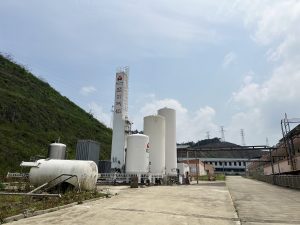
Industrial cryogenic separation sits at the core of the modern industrial gas supply chain, providing large volumes of oxygen, nitrogen and argon to steel, chemical, energy and electronics plants worldwide. Unlike smaller on-site PSA or membrane units, industrial cryogenic separation is typically selected when very high purity, multi-product flexibility and low unit cost at scale matter more than simplicity. For process engineers and researchers, understanding how these plants are designed, optimized and integrated with downstream units is now a prerequisite rather than a niche specialty.
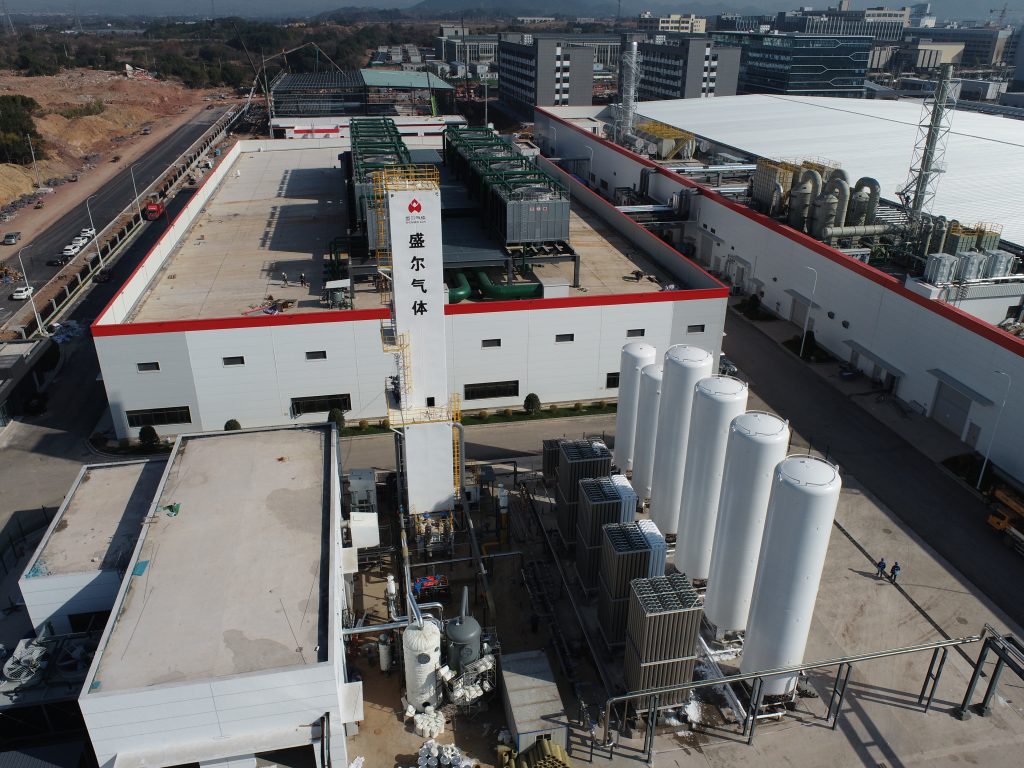
1. Role of Industrial Cryogenic Separation in Gas Supply
The main function of an air separation unit (ASU) is straightforward: take atmospheric air and separate it into oxygen, nitrogen and, where needed, argon and rare gases. In practice, industrial cryogenic separation covers a wide operating envelope:
- Capacity: from several hundred Nm³/h up to >120 000 Nm³/h of oxygen. 浙江大学学报
- Products: gaseous O₂ / N₂ to pipelines, liquefied products to tank trucks, and sometimes high-purity argon or rare gases.
- Purity: oxygen typically 99.5–99.8 % for pipeline supply; nitrogen down to ppm-level O₂ for semiconductor or specialty uses. delion+1
Because fixed costs and power consumption scale favourably with plant size, industrial cryogenic separation becomes the economic benchmark wherever demand is continuous and measured in hundreds of tons per day. Smaller PSA or membrane systems then fill niche or distributed loads.
2. Process Fundamentals of Industrial Cryogenic Separation
At its heart, industrial cryogenic separation exploits the difference in normal boiling points of oxygen (–183 °C), argon (–186 °C) and nitrogen (–196 °C). The process can be divided into three main sections: front-end air preparation, cold-box and distillation, and product conditioning.
2.1 Air Compression and Purification
Ambient air is first compressed, typically to 5–10 bar(a), in an integrally geared or centrifugal compressor. Downstream of the compressor, the air must be cleaned of any impurities that would freeze or react at cryogenic conditions:
- After-cooling and condensate removal to knock out bulk water.
- Molecular sieve purification to reduce H₂O and CO₂ to <1 ppmv and remove traces of hydrocarbons. This prevents ice and dry-ice formation in plate-fin heat exchangers, which would quickly increase pressure drop and force a shutdown. jgt.irangi.org+1
The front-end purification system is usually a dual-bed, regenerative design. While one bed adsorbs, the other is regenerated by depressurisation and a heated waste gas stream, automated via a valve sequencing program.
2.2 Heat Exchange, Liquefaction and Distillation
Purified air is cooled close to its dew point in a multi-stream plate-fin heat exchanger. Cold product and waste streams warm up in counter-current, recovering refrigeration and minimising exergy losses. The coldest end of the exchanger often runs within a few degrees of the pinch, so thermal design and fouling control are critical.
In a conventional double-column arrangement:
- High-pressure (HP) column: incoming cold air is fed to the bottom. As it ascends, nitrogen-rich vapour is produced, while oxygen-rich liquid collects at the bottom.
- Low-pressure (LP) column: operates at lower pressure to improve separation. Condensing nitrogen from the HP column provides reflux for the LP column via a condenser-reboiler pair.
By carefully balancing reflux flows, pressure levels and tray or packing design, the ASU achieves the specified purities for gaseous oxygen, nitrogen and optionally argon. High-purity argon production requires a dedicated argon column attached to an intermediate draw from the LP column.
2.3 Refrigeration and Energy Integration
Industrial cryogenic separation plants rely on two main mechanisms for refrigeration:
- Isentropic expansion in a turbo-expander, where a portion of compressed air is expanded to lower temperature and pressure.
- Joule–Thomson throttling across valves for liquid production and control.
Modern cycles favour low-pressure operation and high recuperative heat-exchange effectiveness to reduce compressor power. Reported specific power for large, optimized ASUs is around 0.35 kWh/Nm³ O₂, with older or less optimized units falling in the 0.5–0.7 kWh/Nm³ range depending on product mix and liquid load. delion+3jgt.irangi.org+3engj.org+3
3. Industrial Cryogenic Separation vs PSA and Membrane Systems
Process engineers rarely evaluate industrial cryogenic separation in isolation; they compare it to PSA and membrane technologies for given capacity, purity and pressure. The table below summarises typical ranges seen in practice.
Table 1 – Typical Operating Ranges of Air Separation Technologies
| Parameter | Industrial Cryogenic Separation (ASU) | PSA Nitrogen Generator | Membrane Nitrogen System |
|---|---|---|---|
| Typical capacity (N₂ or O₂)* | 5 000–120 000 Nm³/h | 50–1 500 Nm³/h (higher with modules) applications.messergroup.com+1 | 15–5 000 Nm³/h (application-dependent) samgasindia.com+1 |
| Main products | O₂, N₂, Ar (gas & liquid) | N₂ gas | N₂ gas |
| Typical purity range | O₂: 99.5–99.8 %; N₂: up to ppb O₂ delion+1 | 95–99.999 % N₂ applications.messergroup.com+2berg-gasetech.de+2 | 95–99.5 % N₂ mvsengg.com+2samgasindia.com+2 |
| Delivery pressure (gas) | 3–35 bar(g) with booster | Up to ~8 bar(g) typical | 6–12 bar(g) typical |
| Specific power (indicative)** | 0.35–0.70 kWh/Nm³ O₂ delion+3jgt.irangi.org+3engj.org+3 | 0.20–0.60 kWh/Nm³ N₂ applications.messergroup.com+2OXYMAT+2 | Often 30–50 % lower than PSA at ≤99.5 % N₂ THOMASMADE+1 |
| Capex per Nm³/h (relative) | High | Medium | Low–medium |
| Response to load swings | Slow–moderate | Fast | Very fast |
* Capacity ranges are indicative; large bespoke PSA or membrane systems can exceed these values.
** Based on published plant data and vendor information; actual values depend on pressure, purity and design.
In short, industrial cryogenic separation dominates at high capacity and high purity, especially where multiple products (including liquid) are required. PSA is competitive at medium scale with high N₂ purity, while membranes offer simple, low-maintenance solutions where 95–99 % N₂ is sufficient.
4. Design and Scale-Up Considerations
From a design standpoint, industrial cryogenic separation is a multi-variable optimisation problem. Key decisions include:
- Product portfolio and ratios. Required O₂/N₂/Ar split has a direct impact on column configuration, argon side-column design and compressor sizing.
- Liquid vs gaseous products. Adding liquid production for backup or merchant sales increases refrigeration duty and specific power but improves flexibility.
- Operating pressure levels. Lower column pressures reduce compression energy but increase column height and tray counts; optimal pressure is found via process simulation and exergy analysis. 西格德·斯科格达斯+1
- Materials and fabrication. Aluminium plate-fin heat exchangers and stainless steel or aluminium columns must meet strict cleanliness and welding quality, as any contamination can trigger polymerisation or plugging at low temperature.
Scale-up is usually based on proven reference designs. Engineers adjust diameters, tray numbers and packing heights but maintain column internals and distributor geometries within validated hydraulic limits.
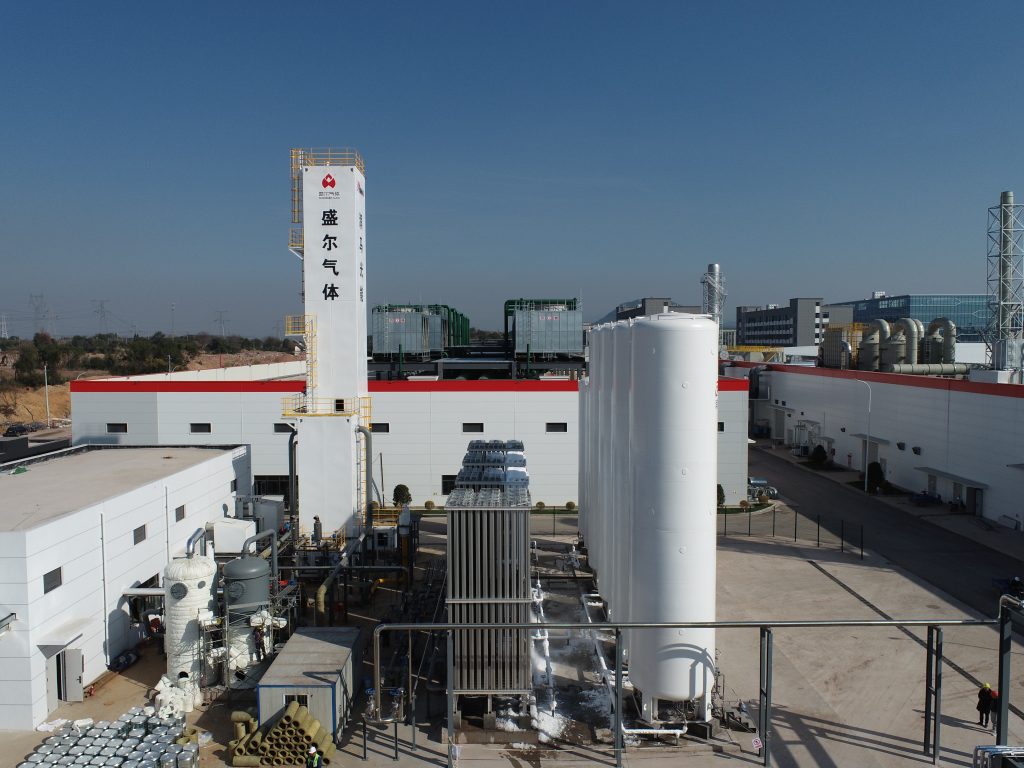
5. Energy Efficiency and Optimization Strategies
Energy cost dominates the life-cycle cost of industrial cryogenic separation. Consequently, much engineering effort focuses on reducing kWh per Nm³ of oxygen or nitrogen.
Common measures include:
- Low-pressure cycle design. Modern plants operate at lower column pressures and use highly efficient plate-fin exchangers, reducing compressor discharge pressure and power.
- Turbo-expander optimisation. Matching expander flow, pressure ratio and inlet conditions to the duty profile can significantly affect refrigeration efficiency.
- Integrated drives and variable-speed control. Variable-speed main air compressors and booster compressors help align power consumption with actual demand and electricity prices.
- Heat-leak minimisation. Cold-box insulation (perlite or vacuum panel), careful sealing of penetrations and control of ambient airflow around the cold-box reduce boil-off and off-design losses.
- Advanced process control. Model-based control and online optimisation can adjust column reflux, expander load and product withdrawal to maintain purity at minimum specific power under varying ambient and load conditions.
Recent studies show that when exergy analysis is applied to industrial cryogenic separation, the cold-box and compression train emerge as the largest contributors to exergy destruction, highlighting where future research and incremental design changes should focus. 西格德·斯科格达斯+1
6. Reliability, Operation and Maintenance
For many end users, the most important attribute of industrial cryogenic separation is not the last percentage point of energy efficiency, but the ability to run continuously for 2–3 years between planned shutdowns.
Operational reliability depends on:
- Stable front-end purification. Breakthrough of moisture or CO₂ will rapidly manifest as increased pressure drop in the main exchanger. Regular monitoring of bed temperature profiles and breakthrough curves is essential.
- Cleanliness and filtration. Oil carry-over, particulates or compressor breakdown debris can accumulate in the cold-box. Fine coalescing filters and strict oil management regimes are mandatory.
- Rotating-equipment health. Main air compressors and expanders require vibration monitoring, lube-oil analysis and condition-based overhauls to avoid unplanned outages.
- Instrumentation and safety systems. Reliable oxygen analysers, pressure and level transmitters, plus tested safety interlocks, are crucial for safe upset handling, especially during start-up and load changes.
In well-designed plants, many cold-box internal components are essentially “life-of-plant”, with maintenance focused upstream (compression, purification) and downstream (pipeline networks, filling stations).

7. Application Context and Future Directions
Industrial cryogenic separation is evolving alongside its main end-use sectors:
- Steel and non-ferrous metallurgy: higher blast-furnace and basic-oxygen-furnace oxygen demands, plus oxy-fuel reheating, favour large pipeline-connected ASUs.
- Chemicals and refining: integration with syngas, partial oxidation and oxidative processes is pushing toward closer thermal and power integration with the host plant.
- Semiconductor and electronics: tighter specifications for N₂ and O₂ purity, as well as rare gas recovery, are influencing argon column design and off-gas treatment.
- Energy transition: blue hydrogen, CCS and oxy-fuel combustion concepts often assume reliable access to large volumes of oxygen, keeping industrial cryogenic separation central even in decarbonised scenarios. Thunder Said Energy+1
At the same time, improvements in PSA and membrane technologies are nibbling at the lower end of the capacity range, pushing ASUs further toward large-scale, network-connected roles rather than isolated “one-off” units.