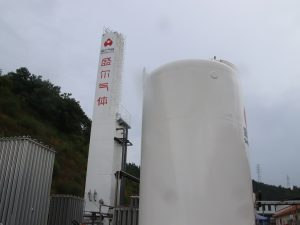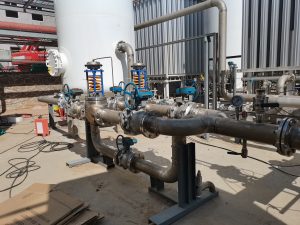
Air separation is essential for supplying high-purity industrial gases like oxygen and nitrogen. The main techniques for producing these gases from ambient air include cryogenic air separation units (ASUs), pressure swing adsorption (PSA) systems, and polymeric membrane separators. Each technology employs a different physical principle and has unique advantages and drawbacks. In this article, we present a detailed comparison of cryogenic air separation compared with PSA and membrane technologies, examining how they differ in gas purity, energy consumption, typical applications, capital/operating costs, and scalability.
Cryogenic Air Separation (Distillation Technology)
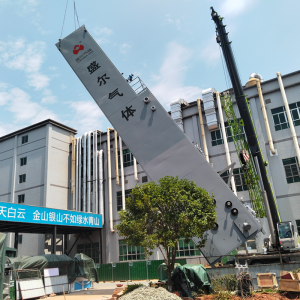
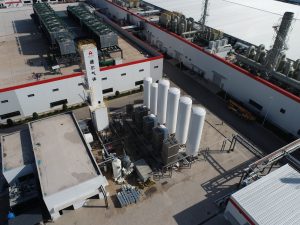
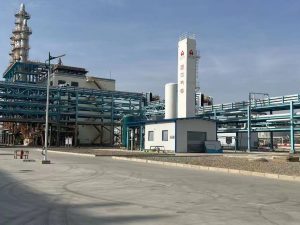
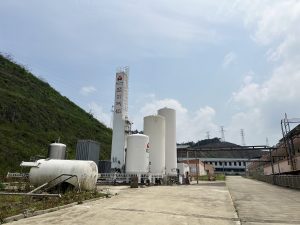
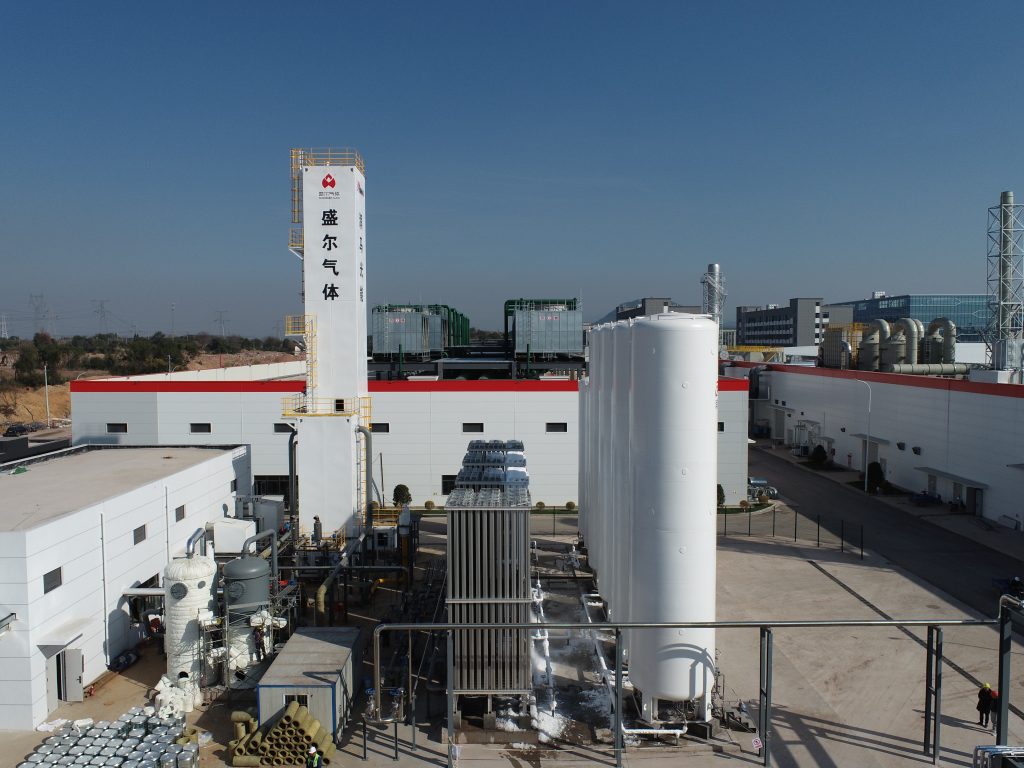
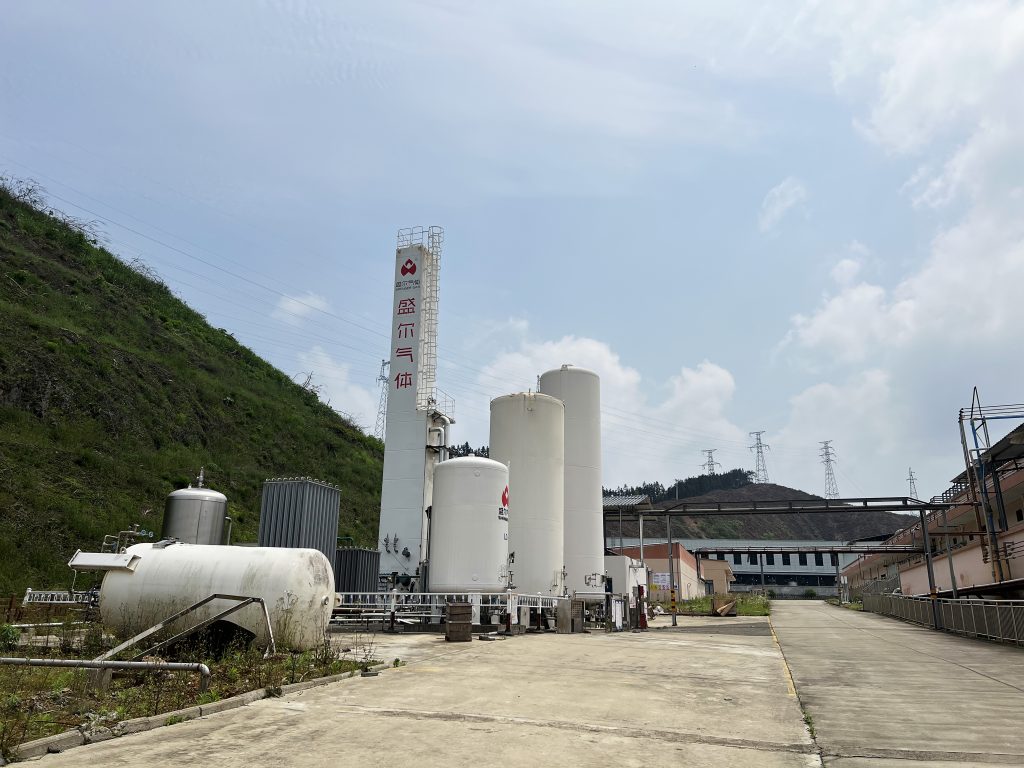
Cryogenic air separation is the most established method for large-scale oxygen and nitrogen production. An ASU cools air to extremely low temperatures (around –180 °C) until it liquefies, then separates the liquid air via fractional distillation into its components. This process yields very high-purity products – oxygen can reach ~99.5% purity and nitrogen up to 99.999% in industrial designs. Argon is also co-produced as a valuable byproduct in cryogenic plants. Cryogenic ASUs are characterized by substantial equipment: multistage compressors, heat exchangers, distillation columns, and cryogenic storage tanks. They require significant energy input for refrigeration and compression, resulting in high power consumption per unit of gas produced. However, at large scales the energy efficiency improves, and the unit cost of production drops due to economies of scale.
In terms of operations, cryogenic plants run continuously 24/7 with steady output. They have long start-up times (several hours to cool down) and are not designed for frequent on-off cycling. The capital expenditure (CAPEX) for a cryogenic ASU is high – these plants involve complex infrastructure and often cost millions of dollars to build. Operating expenses (OPEX) include electricity for compressors and cooling, as well as skilled personnel for maintenance. Despite the cost, cryogenic technology is indispensable when ultra-high purity or very large gas volumes are required. Common applications include steel mills and large chemical refineries needing huge oxygen supply, electronics and semiconductor factories requiring ultra-pure nitrogen (99.99%+), and any facility that consumes liquid oxygen or nitrogen delivered by tanker. For demands that push the limits of purity and volume, any evaluation of cryogenic air separation compared with PSA and membrane technologies will justify a cryogenic ASU despite its greater cost, because neither alternative can achieve similar output. Cryogenic ASUs also remain the only option if a facility needs both oxygen and nitrogen (and argon) in significant quantities or in liquid form.
变压吸附(PSA)系统
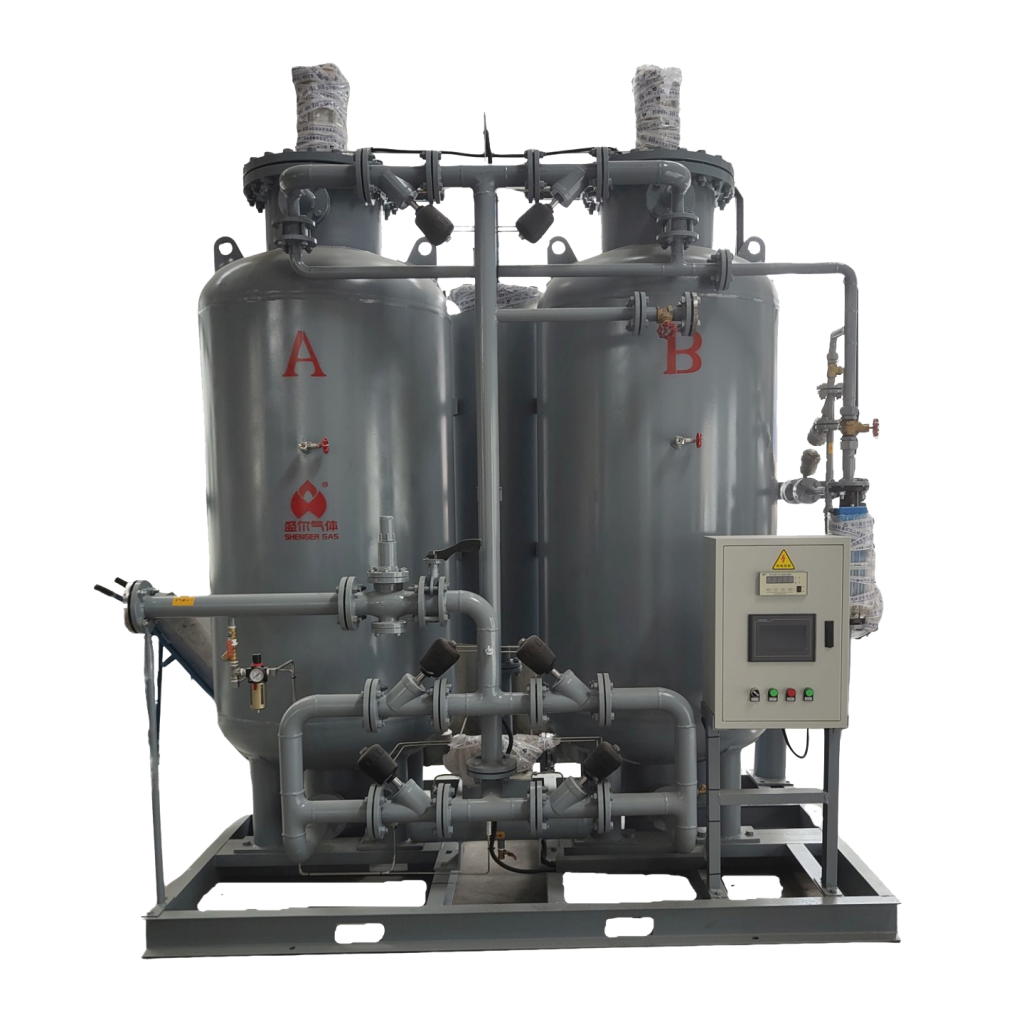
Pressure swing adsorption uses high-pressure adsorbent materials to separate gases at ambient temperature. In a PSA system, air is first compressed and passed through vessels filled with adsorbent beds (such as zeolite or carbon molecular sieve). These materials preferentially trap one component of air: for example, a PSA oxygen generator uses zeolite to adsorb nitrogen, allowing an oxygen-enriched stream (~90–95% O₂) to exit as the product. A PSA nitrogen generator uses carbon molecular sieve to capture oxygen, yielding high-purity nitrogen at the outlet (typically 95–99% N₂). When the adsorbent becomes saturated, the pressure is lowered (swinging to a vacuum or ambient pressure) to desorb the trapped gas and regenerate the bed. PSA systems alternate between twin (or multiple) beds so that one is always producing while the other regenerates.
PSA offers a modular, easy-to-install solution with relatively fast start-up (usually within minutes) and straightforward automation. The equipment is generally skid-mounted, compact, and does not require cryogenic piping or cold boxes. PSA units have moderate energy consumption: the primary power draw is the air compressor, so energy use scales with production volume and desired purity. Achieving higher purities (especially for nitrogen above ~99.9%) can sharply raise energy use and reduce output because the PSA cycle must be slowed to allow more complete adsorption. In terms of purity, PSA oxygen generators typically provide 90–95% O₂ (suitable for medical and industrial use), while PSA nitrogen generators can reach 99–99.999% N₂ depending on design. However, PSA systems cannot readily produce argon or other rare gases from air, and pushing them to ultra-high purity tends to erode their economic advantage.
The CAPEX for PSA is lower than for cryogenic ASUs, especially at small and medium scales. PSA units are often purchased as packaged systems, resulting in shorter lead times and installation within weeks. OPEX is also generally lower – maintenance mainly involves periodic replacement of the adsorbent (every few years) and upkeep of valves and filters. No highly specialized cryogenic knowledge is needed to operate a PSA, which is appealing for remote or decentralized sites. Typical applications of PSA technology include on-site oxygen generation for hospitals and wastewater treatment (where ~93% O₂ is sufficient), nitrogen generators for food packaging, beverage bottling, or electronics factories (needing nitrogen in the 95–99% purity range), and other scenarios where a moderate volume of gas with mid-range purity is needed reliably on-site. In short, when considering cryogenic air separation compared with PSA and membrane technologies for mid-range gas requirements, PSA often provides the most economical and convenient solution as long as ultra-high purity is not needed.
Membrane Separation Technology
Membrane air separation employs semipermeable hollow-fiber membranes to divide air by the differential diffusion rates of gases. Compressed air is fed into a bundle of polymer membrane fibers; “fast” gases like oxygen, carbon dioxide, and water vapor permeate through the fiber walls, while “slow” gases like nitrogen remain in the high-pressure stream. In a typical membrane nitrogen generator, the oxygen-enriched permeate stream is vented, and the nitrogen-rich retentate comes out as product gas. By adjusting the flow and pressure, one can control the residence time of air in the membranes to achieve the desired nitrogen purity. Membrane units operate at ambient temperature (no cryogenics) and have virtually no moving parts in the separation process. Start-up is almost instantaneous – a membrane system can produce on-spec gas within seconds to a few minutes of powering on.
Membrane separators are valued for their simplicity and reliability. Maintenance is minimal, typically involving only air pre-treatment (to remove oil, moisture, and particulates that could foul the membranes) and eventual replacement of the membrane cartridges after several years of use. Energy consumption for membrane systems is considered low, as it mainly requires an air compressor to maintain feed pressure. However, like PSA, membranes sacrifice some efficiency at higher purities: to get more nitrogen purity, a larger fraction of air (the oxygen-rich portion) must be vented, which means more compressed air input per unit of product. In practice, commercial membrane generators usually deliver nitrogen purities from about 95% up to around 99% in a single stage. Achieving above ~99.5% N₂ via membranes often isn’t economical without multi-stage setups. For oxygen, membranes are generally limited to producing only oxygen-enriched air (around 30–40% O₂), because nitrogen permeates slower; truly high-purity oxygen is not feasible by membrane separation alone.
The cost profile of membrane technology is the lowest of the three for small systems. A membrane module skid has low CAPEX and can be easily scaled by adding more modules in parallel. OPEX is mainly electricity for the compressor and occasional module replacements. Membrane units shine in applications where moderate purity is acceptable and simplicity is paramount. They are popular for inerting and blanketing operations – for example, generating 95–98% nitrogen to inert fuel tanks, chemical storage, or oil/gas pipelines. Membranes are also used for shipboard or mobile nitrogen generators (due to their compact, robust nature) and in producing instrument air or fire suppression atmospheres. Anytime a quick-start, portable source of nitrogen is needed without extreme purity requirements, membrane systems are often the technology of choice. Thus, if an engineer weighs cryogenic air separation compared with PSA and membrane technologies for a project with relatively low gas demand and moderate purity needs, the membrane approach will often emerge as the preferred choice for its sheer simplicity and speed.
Comparative Analysis of Key Factors
When evaluating cryogenic air separation compared with PSA and membrane technologies, it is crucial to consider the specific performance attributes and project requirements:
Gas Purity: Purity demands often dictate the choice of technology. Cryogenic ASUs clearly outperform the others on achievable purity – they are the go-to solution for ultra-high purities such as 99.99% N₂ or 99.5% O₂. Neither PSA nor membranes can easily reach those levels. PSA is generally limited to about 95% O₂ for oxygen generators and up to 99–99.9% N₂ for nitrogen generators (some PSA systems can produce 99.999% nitrogen, but only with larger, slower cycles). Membrane systems, meanwhile, top out around 99% N₂ in practical applications and cannot produce high-purity oxygen at all (only enriched air). Additionally, only cryogenic distillation can co-produce argon and other rare gases present in air, a necessity for industries that require those gases. Thus, for stringent purity specifications – for example, semiconductor-grade nitrogen or medical-grade liquid oxygen – cryogenic technology is usually the only viable choice.
Energy Consumption: Energy requirements differ markedly among these technologies. Cryogenic separation is energy-intensive due to the refrigeration cycle; it consumes the most power per unit gas, especially at lower scales. PSA and membrane systems operate at ambient temperature and primarily use electricity for air compression, making them more energy-efficient for small and medium outputs. PSA’s energy use is moderate – efficient at ~95% purity but rising as higher purity or pressure output is needed. Membrane units often have the lowest energy usage at moderate purities since they have no regenerating equipment and waste heat; however, if pushing for very high purity nitrogen, membranes become less efficient due to the greater loss of permeate (oxygen) requiring extra compressor work. In general, for a given oxygen or nitrogen output at modest purity, a PSA or membrane will consume less power than a cryogenic ASU. The equation reverses at large scale: a well-optimized cryogenic plant supplying thousands of cubic meters per hour can actually achieve lower kilowatt-hours per Nm³ than multiple smaller PSA/membrane units. Therefore, the breakeven point in energy efficiency often correlates with scale and purity – larger continuous demands favor the cryogenic process, whereas intermittent or smaller demands favor PSA/membrane.
Typical Applications: Each technology has carved out niches based on the above technical differences. Cryogenic air separation is preferred in large, centralized industrial gas production – for example, air separation plants at steelworks, large fertilizer or petrochemical complexes, and gas suppliers that produce liquid oxygen/nitrogen for distribution. These scenarios require both high volumes and high purities (and sometimes multiple products like argon), aligning with cryogenic capabilities. In contrast, PSA systems serve onsite gas needs in the mid-range: hospitals use PSA plants for medical oxygen (where ~93% purity is acceptable for patient use), manufacturing plants use PSA for inert atmospheres or combustion oxygen, and food processing facilities generate nitrogen via PSA for packaging and storage. The common theme is a need for a reliable supply of one primary gas in the 90–99% purity range. Membrane technology finds its sweet spot in smaller scale and portable applications. It is commonly employed for creating inert environments – such as onboard ship inerting systems, emergency nitrogen units for oil & gas fields, maintaining tire inflation with nitrogen, or any use case that values a compact, turnkey nitrogen generator. Membranes are less common for oxygen production (aside from enriching air for medical or combustion support in remote areas), given their limited O₂ purity capability. Overall, cryogenic, PSA, and membrane systems are each used in distinct contexts: from big industry (cryo) to medium-scale on-site supply (PSA) to specialized mobile or low-maintenance needs (membrane).
CAPEX and OPEX: Costs are often the deciding factor once technical feasibility is established. Cryogenic ASUs entail the highest CAPEX – they are major projects with heavy equipment, civil construction, and long commissioning periods. A new cryogenic plant is justified economically only by large, continuous demand or by the ability to sell excess liquid products. PSA and membrane units, conversely, have much lower upfront costs. A PSA skid for a small plant or a membrane module assembly can be ordered and delivered relatively quickly, and installed without extensive infrastructure. For this reason, companies needing fast deployment or limited budgets often choose PSA or membrane technology. Operating costs follow a similar trend. A cryogenic plant’s OPEX includes significant electricity usage, specialized operators, and periodic overhauls (e.g. rotating machinery and cryogenic equipment maintenance). PSA has moderate OPEX: electricity for compression and periodic adsorbent replacement are the main contributors, and the systems can often be monitored automatically with minimal labor. Membrane systems typically have the lowest OPEX: aside from compressor power and routine air filter changes, they have few consumables (membranes last multiple years before replacement). When comparing cryogenic air separation compared with PSA and membrane technologies on cost, one must also consider scale and lifecycle. At very large scales (thousands of tons per day of gas), cryogenic plants actually offer lower cost per unit of gas than an equivalent output delivered by many smaller PSA units. But at modest scales, the simpler PSA or membrane will be far more economical. Thus, CAPEX/OPEX favor PSA or membrane for small-to-medium applications, while cryogenic shines for big volumes.
Scalability and Flexibility: Cryogenic, PSA, and membrane technologies also differ in their scalability and operational flexibility. Cryogenic ASUs are highly scalable on the upper end – there is virtually no limit to how large a distillation-based air separation plant can be built, and modern ASUs can supply tens of thousands of Nm³/h of gaseous product. However, cryogenic units do not scale down well; below a certain flow rate (on the order of a few hundred Nm³/h), a cryogenic plant is uneconomical to build and operate. PSA and membrane systems excel at the lower scales: they can be designed for as little as a few Nm³/h output if needed, making them suitable for small workshops, labs, or remote facilities. They are inherently modular – capacity can be increased by adding additional adsorber towers or membrane modules in parallel. This modularity also gives PSA and membrane units an advantage in flexibility: they can operate part-time or handle varying demand by cycling on/off or adjusting flow, with minimal efficiency loss or wear. Cryogenic ASUs, in contrast, prefer steady continuous operation near their design capacity; significant turndown or frequent starts/stops can reduce efficiency and put thermal stress on the equipment. Start-up times illustrate this difference: a cryogenic plant may take 6–12 hours to fully start and stabilize, whereas a PSA plant can start in 30 minutes and a membrane system in just a few minutes. For industries with fluctuating or seasonal demand, PSA or membrane solutions offer far greater operational agility. On the other hand, when planning for long-term, ever-growing demand, cryogenic systems can be engineered in large sizes that would be impractical for PSA or membrane (imagine trying to run an entire steel mill’s oxygen needs on hundreds of small PSA units). In summary, cryogenic technology scales to very large throughputs but is inflexible at small scale, while PSA and membrane cover the span from tiny to medium installations with ease, though they eventually plateau in economic viability for huge requirements.
The following table provides a concise comparison of cryogenic air separation compared with PSA and membrane technologies across the major criteria discussed:
| Criteria | 低温空气单元 (Distillation) | PSA (Adsorption) | 膜分离 (Permeation) |
|---|---|---|---|
| Gas Purity | Very high: O₂ ≥99.5%; N₂ 99.9–99.999% (ultra-pure); argon and rare gases can be co-produced. | Moderate to high: O₂ ~90–95%; N₂ ~95–99.9% (up to 99.999% with special design); no argon production. | Moderate: N₂ ~95–99% (practical max ~99% in single stage); O₂ enrichment only (max ~40% O₂); cannot produce argon. |
| 能源消耗 | High per unit (due to cryogenic cooling); better efficiency at large scale but generally highest energy use among the three. | Medium: mainly consumed by air compression; energy use increases for higher purity or pressure. | Low to medium: efficient at moderate purities (just compressor work); efficiency drops if trying for higher purities (more waste gas lost). |
| 典型应用 | Large industrial gas supply (steel mills, large chemical plants, refineries); situations requiring ultra-high purity gases or liquid products (liquid O₂/N₂ for storage and transport); co-production of multiple gases (O₂, N₂, Ar). | On-site generation for mid-sized needs: e.g. hospital oxygen systems, glass and welding industries, food packaging (N₂ inerting), wastewater treatment aeration; any use case needing a steady medium-purity gas supply at point of use. | Decentralized and mobile applications: oil & gas field nitrogen units, marine and aviation inerting systems, fuel tank blanketing, tire inflation, fire suppression systems; ideal when simplicity, portability and quick start-up are prioritized over purity. |
| CAPEX/OPEX | Highest CAPEX – complex plant with long construction; significant OPEX (power intensive, requires skilled operation). Economies of scale can yield low cost per unit at high volumes. | Lower CAPEX – delivered as turnkey skids; moderate OPEX (electricity for compressor, periodic adsorbent replacement). Generally cost-effective for small to medium outputs. | Lowest CAPEX – simple, compact units; very low OPEX (few moving parts, minimal maintenance). However, cost per unit gas can rise at larger scales or higher purity due to diminishing returns. |
| Scalability | Best for large scale: Highly scalable to huge plants (thousands of Nm³/h). Inefficient at very small scale; designed for continuous operation at steady load (limited flexibility for rapid changes). | Flexible modularity: Available in a wide range of sizes (from ~10 Nm³/h to several thousand Nm³/h by combining units). Capacity can be expanded incrementally; handles partial-load operation and on-off cycling reasonably well. | Modular: Easy to scale up by adding membrane modules for small and medium demands. Practical upper capacity is limited – less viable for extremely large requirements as many parallel modules would be needed. Extremely quick response and turndown capability. |
结论
In conclusion, no single technology is “better” in all aspects. Any analysis of cryogenic air separation compared with PSA and membrane technologies must account for the user’s specific purity, volume, and operational needs. Cryogenic air separation remains unmatched for producing very large quantities of ultra-high-purity oxygen and nitrogen, and for supplying liquid products or argon. PSA technology is ideal for on-site gas generation at moderate purities and flow rates, offering a balanced mix of efficiency and convenience. Membrane systems excel in agility and simplicity, making them perfect for smaller-scale and mobile applications where a fast, hassle-free nitrogen source is needed and purity requirements are modest. Ultimately, when considering cryogenic air separation compared with PSA and membrane technologies, one should weigh factors like required gas purity, daily consumption, energy cost, and deployment speed. By aligning the choice of technology with these requirements, industries can ensure a reliable and cost-effective gas supply tailored to their operations.