介绍
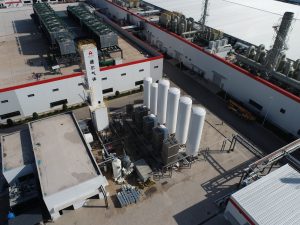
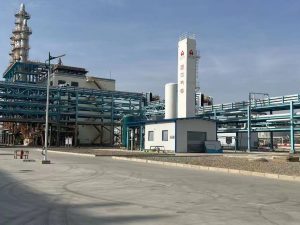
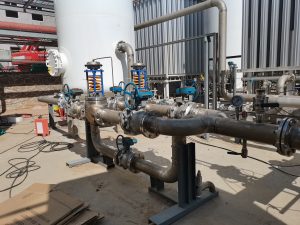
低温空气分离 is the cornerstone technology for producing industrial oxygen and nitrogen at large scales. In this process, the components of air are separated at extremely low temperatures, yielding high-purity gases that meet demanding industrial requirements. From the steel mills of the United States to the chemical plants of Europe, air separation units (ASUs) supply the continuous flow of oxygen and nitrogen that modern manufacturing and energy sectors depend on. This article explores how this cryogenic process works, its applications in key industries such as steel, chemicals, and new energy, and how it compares with alternative technologies like pressure swing adsorption (PSA) and membrane separation. The tone is technical yet accessible, aiming to inform researchers, process engineers, and industry professionals about the current practices and market relevance of this vital technology in the U.S. and EU.
低温空气分离的工作原理
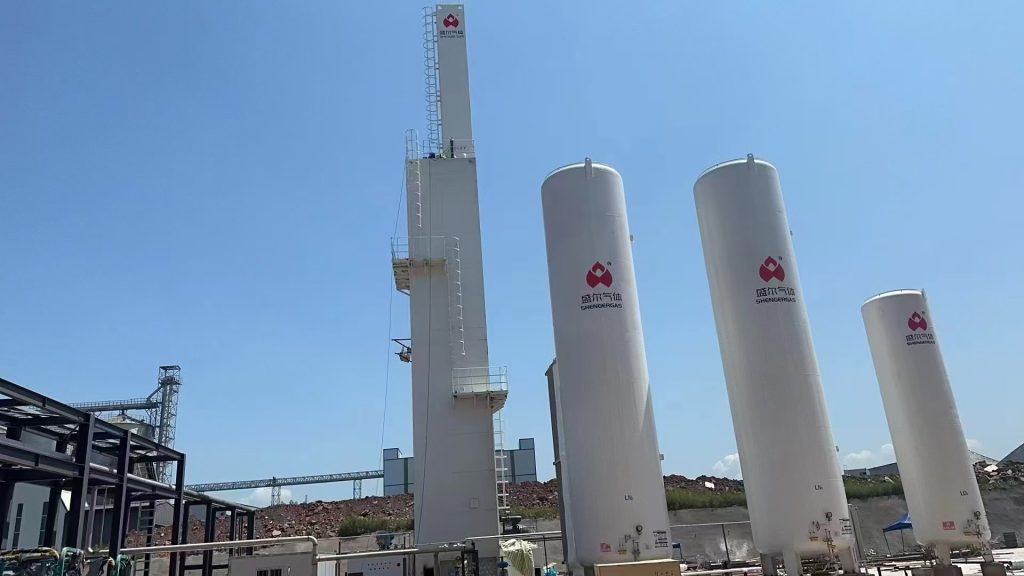
Understanding the working principle of this process helps appreciate why it delivers unmatched purity and volume. Cryogenic air separation involves cooling air to cryogenic temperatures and using distillation to separate its components. The typical steps in a large-scale cryogenic air separation unit are:
- Air Compression and Filtration: Ambient air is first drawn in and compressed to high pressure using multi-stage compressors. Filters and molecular sieve beds (pre-purification units) remove water vapor, carbon dioxide, and other contaminants to prevent ice formation or clogs in later stages.
- Cooling and Liquefaction: The clean, high-pressure air is cooled in heat exchangers by counter-flowing cold product streams. It is then expanded through an expansion turbine or Joule-Thomson valve, causing a portion of the air to liquefy at around –180 °C. This produces a mixture of liquid and vapor air at cryogenic conditions.
- Distillation in Cold Columns: The cold air mixture is fed into a distillation column system (often a double-column design with high-pressure and low-pressure columns). By capitalizing on slight boiling point differences (nitrogen boils at –196 °C, oxygen at –183 °C), the columns separate the mixture: nitrogen concentrates at the top as a gas, while oxygen-rich liquid collects at the bottom. A connected lower-pressure column further refines the separation to produce >99.5% pure oxygen at the bottom and >99.9% pure nitrogen at the top. An argon side-arm column can extract argon (≈99.9% pure) from intermediate liquid streams.
- Reboilers and Condensers: Integrated heat exchangers (reboiler-condenser units) at the interface of the columns facilitate heat transfer. Boiling oxygen in the low-pressure column provides vapor that reboils nitrogen in the high-pressure column, while condensing nitrogen helps reflux the low-pressure column. This energy integration is key to efficiency.
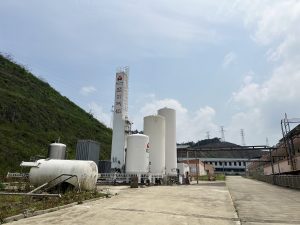
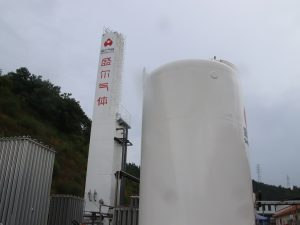
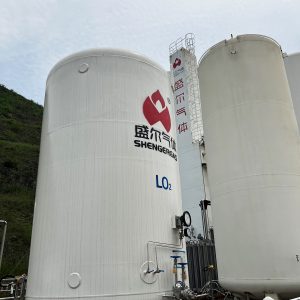
- Product Withdrawal and Storage: The separated oxygen and nitrogen are drawn off. Oxygen is typically sent out as a gas at ~99.5% purity to pipelines or processes, or stored as liquid (LOX) in tanks. Nitrogen can be delivered as gas (often 99.9–99.999% purity for electronics and chemical use) or kept as liquid (LIN) for storage and transport. Many large ASUs also co-produce liquid argon (LAR) and other rare gases as valuable by-products. The ability to produce liquid products provides backup supply (for example, during maintenance) and additional revenue via merchant sales.
This cryogenic distillation process requires significant refrigeration energy but yields extremely high purity and large volumes. Modern ASUs in advanced economies employ efficient turbo-expanders, structured packing in columns, and smart control systems to minimize energy consumption per unit of gas produced. Although these units are complex and capital-intensive, their operation is well-understood and reliable, making them the default choice for supplying oxygen and nitrogen in bulk.
Applications in Major Industries
Cryogenic air separation plays a pivotal role across several industries, particularly in the steel sector, chemical manufacturing, and emerging energy fields. In the U.S. and Europe, thousands of air separation plants produce the gases that keep these industries running. Below we highlight key applications and practices in each sector:
Steel Industry
The steel industry is one of the largest consumers of industrial oxygen produced by cryogenic air separation. Modern steelmaking relies on oxygen at high purity to enhance combustion and remove impurities from molten iron:
- Basic Oxygen Furnaces (BOF): In integrated steel mills, BOFs use a high-volume blast of ~99.5% pure oxygen to convert pig iron into steel. Each ton of steel can require dozens of cubic meters of oxygen, so on-site cryogenic ASUs are installed to deliver a continuous oxygen flow. U.S. and EU steel plants often have dedicated ASUs producing thousands of tons of O₂ per day, ensuring a stable supply for steel converters.
- Electric Arc Furnaces (EAF): Even mini-mills and recycled steel operations use oxygen lancing in EAFs to increase heat and improve efficiency. Cryogenic oxygen allows higher furnace temperatures and faster melting of scrap. Many steel facilities in Europe and America supplement their EAFs with on-site or nearby ASUs for this purpose.
- Cutting and Heating: Oxygen from cryogenic plants is also used for torch cutting of steel, heating ladles, and other metallurgical processes. The high purity prevents introducing nitrogen or moisture that could affect metal quality.
- Industry Trends: In Europe, initiatives to decarbonize steel (such as using hydrogen-based direct reduced iron) still depend on oxygen for processes like furnace heating and downstream refining. Cryogenic air separation remains critical in these new configurations. Across the U.S. and EU, steelmakers emphasize energy-efficient ASU operations and often integrate ASU output with gas pipelines that supply clusters of mills.
Chemical Manufacturing
Chemical and petrochemical industries in the U.S. and EU are another cornerstone for cryogenic air separation applications. These sectors need both nitrogen and oxygen in large quantities and at high purities:
- Ammonia and Fertilizer Production: Ammonia plants require a constant feed of high-purity nitrogen to synthesize ammonia (NH₃) from hydrogen. Large cryogenic ASUs are commonly tied into ammonia facilities to produce nitrogen (and byproduct oxygen). For example, along the U.S. Gulf Coast and in Europe’s chemical clusters, cryogenic units supply nitrogen feedstock to big ammonia and fertilizer complexes.
- Oxidation Processes: Many chemical processes use pure oxygen to drive reactions efficiently. Ethylene oxide, propylene oxide, and other oxide chemicals are produced by reacting hydrocarbons with oxygen in the presence of catalysts. Using 95–99.9% pure O₂ from a cryogenic plant improves yield and reduces unwanted byproducts. European chemical manufacturers and U.S. refineries often rely on on-site oxygen plants to support such oxidation reactions (for example, in making ethylene oxide or in sulfur recovery units).
- Refining and Gas Processing: Refineries use large quantities of nitrogen for inerting, purging, and blanketing of flammable chemicals. Cryogenic ASUs in refinery complexes provide nitrogen to prevent fires and explosions, as well as oxygen for processes like gasification of heavy residues or regenerative catalytic processes. In natural gas processing and liquefied natural gas (LNG) facilities, cryogenic nitrogen is used for pipeline purging and as a refrigerant in some liquefaction cycles.
- Industrial Gas Distribution: Both Europe and the U.S. have extensive pipeline networks and bulk delivery systems for oxygen and nitrogen. Centralized cryogenic plants produce these gases for distribution to various smaller chemical manufacturers, pharmaceuticals, food processors, and electronics fabs. The reliability and purity from cryogenic production underpin safety and quality in these industries.
New Energy and Clean Technology Sectors
In emerging energy and clean-tech applications, cryogenic air separation is gaining renewed importance:
- Hydrogen Production (Blue Hydrogen): Blue hydrogen projects (producing H₂ from natural gas or coal with carbon capture) often require large volumes of oxygen. Processes like autothermal reforming or coal gasification use pure oxygen (instead of air) to avoid nitrogen dilution in syngas. Cryogenic ASUs have been built alongside gasifiers in the U.S. and Europe to supply O₂ for hydrogen production while the resulting CO₂ is sequestered. Even as green hydrogen (via electrolysis) grows, the byproduct oxygen from electrolyzers is usually not enough to replace dedicated ASUs for large-scale continuous operations.
- Carbon Capture and Oxy-fuel Combustion: Power plants and industrial furnaces are experimenting with oxy-fuel combustion—burning fuels in pure oxygen to generate a CO₂-rich exhaust for easier carbon capture. This technique, applied in pilot projects like advanced cement kilns and power stations in Europe, depends on cryogenic air separation to provide the required oxygen. New oxy-combustion projects in the EU pair state-of-the-art cryogenic units with carbon capture systems to reduce emissions in industries like cement and steel.
- Energy Storage and Battery Manufacturing: Novel energy storage systems such as liquid air energy storage (LAES) use cryogenic processes to liquefy air during off-peak times and release energy upon regasification. These systems incorporate small cryogenic air separation cycles. Additionally, the growth of battery gigafactories (for electric vehicles) in the U.S. and Europe has increased demand for high-purity nitrogen for moisture-free, inert environments. Cryogenic or advanced PSA plants supply these facilities with nitrogen, highlighting how even new energy industries rely on air separation technology.
Advantages of Cryogenic Air Separation
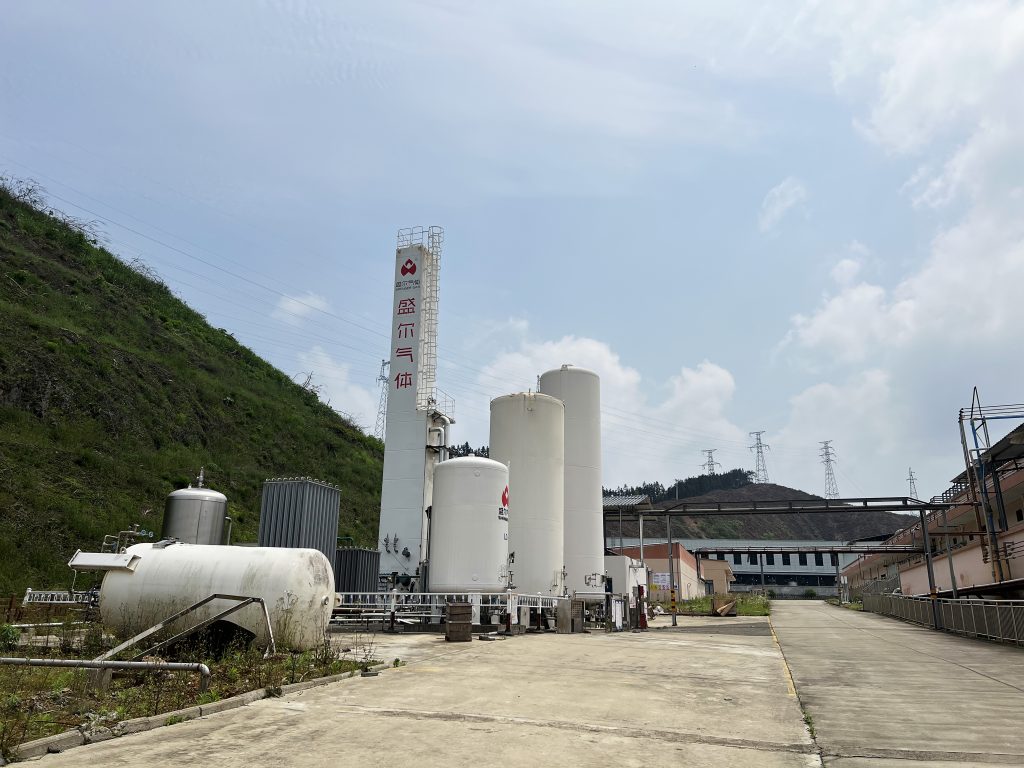
Cryogenic air separation offers distinct advantages for producing oxygen and nitrogen at scale, especially when compared to non-cryogenic methods such as PSA and membrane separation. The key benefits stem from its ability to achieve high purity and volume simultaneously:
- Ultra-High Purity: Cryogenic distillation can achieve oxygen purities of 99.5% (and above in some designs) and nitrogen purities of 99.999% (five nines) if needed. This far exceeds the typical purity limits of PSA or membrane systems and is crucial for applications like electronics manufacturing, pharmaceuticals, and any process where inert or oxidizing gases must be extremely pure.
- Large Production Capacity: Cryogenic ASUs are economically favored at large scales. They can produce hundreds to thousands of tons per day of oxygen or nitrogen, supporting entire industrial complexes. In contrast, PSA and membrane units are usually practical only up to medium scales. For continuous demands above a certain threshold (on the order of hundreds of cubic meters per hour and upwards), cryogenic plants provide a lower cost per unit of gas and a more dependable supply.
- Multiple Products (Argon and Liquids): Only cryogenic systems easily allow co-production of argon and other rare gases present in air (neon, krypton, xenon in specialized setups). Argon, for instance, is a valuable by-product that is recovered via an additional distillation step in many large ASUs—important for welding and electronics markets. Cryogenic units also produce liquid oxygen and nitrogen, which can be stored as backup inventory on-site or transported to off-site customers. PSA and membrane systems cannot produce liquid products or recover noble gases.
- Energy Efficiency at Scale: While cryogenic units have high power requirements, at very large outputs they often become more energy-efficient per unit of gas than operating many smaller PSA or membrane units to deliver the same volume. Modern cryogenic plants in the U.S. and EU are frequently integrated with efficiency measures—such as waste heat recovery, advanced process controls, and sometimes integration with LNG terminals or renewable power—reducing the net energy impact.
- Reliability and Stability: Industrial cryogenic ASUs are built for continuous 24×7 operation with high reliability (often >99% uptime). They handle steady baseload demand exceptionally well. PSA and membrane generators, with their rapid cycling and dependency on filter/adsorbent health, typically require more frequent maintenance relative to an ASU serving an equivalent output. Large cryogenic plants, managed by experienced operators or industrial gas companies, offer long-term stable supply contracts that big industries trust for uninterrupted operations.
To illustrate how cryogenic air separation compares with PSA and membrane technologies, consider several key factors side by side:
| Factor | 低温空气分离 | PSA(变压吸附) | 膜分离 |
|---|---|---|---|
| 纯度(O₂) | Up to ~99.5% (high-purity O₂ suitable for medical/steel) | Up to ~95% (90–93% common for PSA O₂) | ~40% O₂ max (oxygen-enriched air, not full purity) |
| 纯度 (N₂) | Up to 99.999% (ultra-high purity N₂ achievable) | Up to 99.9% (high purity with larger PSA systems) | ~95–99% (moderate purity N₂ output) |
| Best Scale Range | Large-scale (≥ 500 Nm³/h and above); best for very high volumes and continuous supply | Small to medium (tens to hundreds of Nm³/h); modular units added as needed | Small to medium (dozens up to ~1000 Nm³/h); modular (stack additional membrane modules for more flow) |
| Start-Up Speed | Slow (hours to cold-start and cool down) | Moderate (15–30 minutes to reach spec purity) | Very fast (almost instantaneous; <5 minutes) |
| Capital & Equipment Cost | High (major infrastructure with compressors, cold box, distillation columns) | Low to moderate (skid-mounted units, simpler setup) | Low (few moving parts; mainly compressors and membrane modules) |
| Operating Cost (Energy) | High per unit gas (significant power for refrigeration, though economies of scale apply at large sizes) | Low to moderate (mostly compressor work; energy use rises as purity nears upper limit) | Low (mostly compressor work; energy use rises if pushing for higher purity or pressure) |
| 维护复杂性 | High (requires expert maintenance for compressors, turbines, cryogenic equipment) | Moderate (valves and adsorbent beds need periodic service; keep feed air clean) | Low (membranes have no moving parts but gradually lose performance and require replacement every few years) |
| Key Advantages | Highest purity and very large output; can produce liquid products & recover argon; well-proven for base loads | Simple operation; quick to install; good for on-site mid-size needs or fluctuating demand | Extreme simplicity; compact footprint; immediate start/stop capability; low maintenance requirements |
| Limitations | High CAPEX and power use; not economical at small scale; slow ramp-up and inflexible if demand swings | Limited oxygen purity (~95% max); not efficient beyond mid-scale flows; cannot produce liquids or argon | Limited maximum purity; product pressure is low; membranes can be sensitive to humidity and need clean, dry air feed |
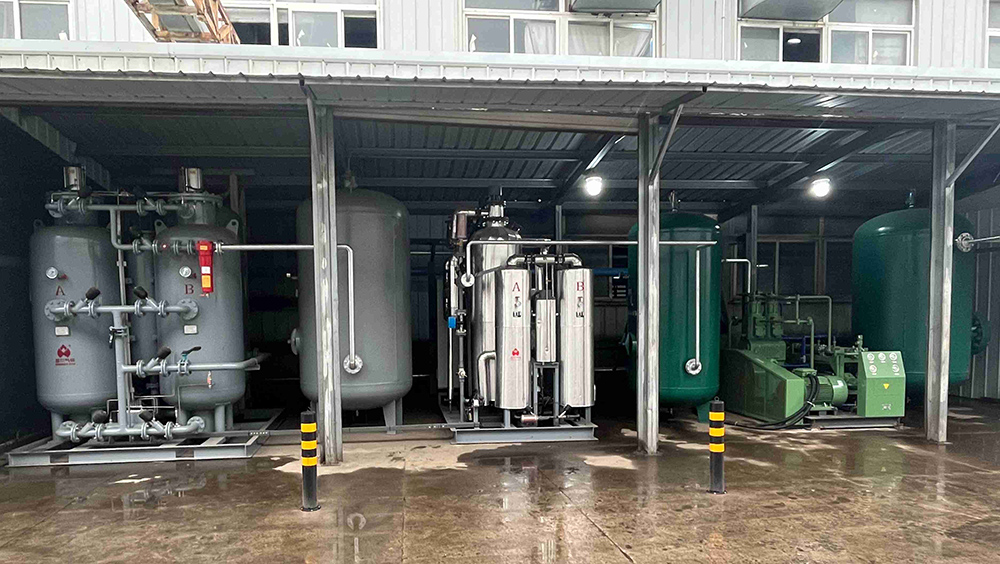
In practice, these technologies are often complementary. Many companies use PSA generators or membrane systems for small, intermittent, or lower-purity needs because of their lower upfront cost and flexibility, while relying on cryogenic plants for the bulk of high-purity, high-volume oxygen and nitrogen. Notably, in the U.S. and Europe, industrial gas suppliers often provide a mix of solutions: massive central cryogenic production for pipeline networks and liquid distribution, alongside smaller on-site generators for clients with specialized or modest-volume requirements.
结论
Cryogenic air separation remains the gold standard for large-scale oxygen and nitrogen production, combining proven engineering with continuous innovation. In sectors like steelmaking, chemical manufacturing, and energy in the U.S. and EU, cryogenic ASUs form an invisible backbone—quietly separating air into the gases that keep furnaces hot, reactors running, and products moving. The technology’s ability to deliver very high purities and tonnage volumes securely is unmatched by alternative methods.
At the same time, today’s market demands efficiency and sustainability. The industrial gas industry in Europe and America is actively upgrading cryogenic plants with greener practices: leveraging renewable electricity contracts, adding heat integration and storage to shave peak power loads, and embracing digital controls (even digital twins and AI-based optimizers) for optimal performance. These improvements reduce the environmental footprint of air separation even as output grows. Meanwhile, PSA and membrane systems have carved out their own niche for decentralized and small-scale supply, ensuring that each application can get the most appropriate solution.
In summary, cryogenic air separation technology stands as a critical enabler for heavy industry and emerging energy applications alike. Its dominance in large-scale oxygen and nitrogen production is well-earned through technical advantages in purity and capacity. As the U.S. and EU industries continue to evolve—pursuing lower carbon emissions, new energy systems, and advanced manufacturing—the role of cryogenic air separation is set to remain central, supported by continual innovation to meet the next generation of challenges.