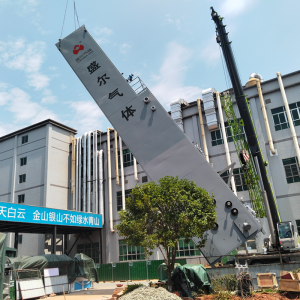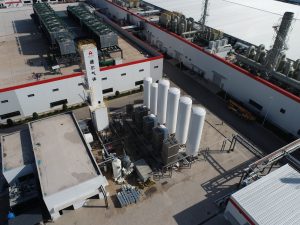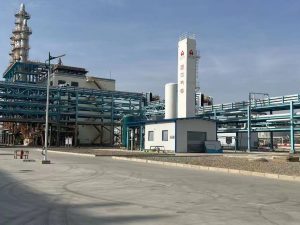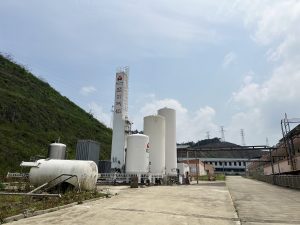
In today’s industrial gas landscape, the demand for ultra‑high purity oxygen (O₂), nitrogen (N₂) and argon (Ar) is rising steadily — driven by sectors such as steel‑making, petrochemicals, lithium‑battery gigafactories, glass production, electronics and wastewater treatment. Among the available technologies, the cryogenic air separation process — and in particular the so‑called deep cryogenic air separation variant — stands out as the benchmark for large‑scale, high‑purity gas production. This article examines the technical fundamentals, process innovations, performance metrics and future trends of deep cryogenic air separation, targeting research and engineering professionals.
1. Technical Fundamentals of Deep Cryogenic Air Separation
At its core, deep cryogenic air separation involves drawing atmospheric air, compressing it, purifying it, cooling it to very low temperatures (typically < −150 °C), liquefying the components and then fractionating by distillation to recover oxygen, nitrogen and argon. netl.doe.gov+3hznuzhuo.com+3MATHESON+3
Key stages include:
- Compression & pre‑cooling: Ambient air is filtered and compressed (often in the range of 5–10 bar) then cooled via heat exchangers to bring the feed close to liquefaction temperatures. Cryospain+1
- Purification: Removal of moisture, CO₂, hydrocarbons and other trace impurities is essential, since they would freeze and block cryogenic equipment. Multi‑bed molecular sieve systems (TSA/PSA) are standard. process-insights.com+1
- Liquefaction and heat exchange: The purified air passes through high‑efficiency plate‑fin or spiral wound heat exchangers, then undergoes expansion (via turbine or throttle) to achieve cryogenic conditions. cryomade.com+1
- Fractional distillation (cold box): A classic double‑column system separates nitrogen at −196°C from oxygen at −183°C, with argon extracted as a side‑stream in advanced plants. hznuzhuo.com+1
- Product collection & storage: Gases are either shipped as compressed/cryogenic liquids or piped into the industrial user’s system. The process is continuous and optimized for large throughput with high reliability. MATHESON
Table 1 summarises key typical parameters for a modern large‑scale deep cryogenic air separation unit (ASU):
| Parameter | Typical Value | Notes |
|---|---|---|
| Feed air pressure | ~5–6 MPa (gauge) | depends on unit design and refrigeration cycle hznuzhuo.com+1 |
| Feed air cooling to cryogenic | < −150 °C | prepares liquefaction and distillation step hznuzhuo.com+1 |
| Oxygen boiling point | −183 °C | separation basis hznuzhuo.com |
| Nitrogen boiling point | −196 °C | separation basis Cryospain |
| Energy consumption (O₂) | ~0.40 – 0.60 kWh/Nm³ O₂ | recent large units report ~0.38 kWh/Nm³ O₂. Indico+2Journal of Zhejiang University-SCIENCE+2 |
| Purity of N₂ and O₂ | N₂ up to 99.999% ; O₂ > 99.5% | common in deep cryogenic plants – Minnuo+1 |
2. Why Deep Cryogenic Processing is the Future
2.1 Scale and Purity
When large volumes (hundreds to thousands of Nm³/h) of gas are required, cryogenic separation remains the most economical and technically sound route. For example, cryogenic methods can simultaneously produce high‑purity O₂, N₂ and co‑produce Ar, which non‑cryogenic methods (membranes, PSA) cannot as economically. MATHESON+1
2.2 Energy Efficiency Improvements
Over the past decades, innovations in heat‑exchange, turbines, controls, and low‑pressure designs have driven down specific power consumption. Recent publications indicate large units achieving ~0.38 kWh/Nm³ O₂. Journal of Zhejiang University-SCIENCE Exergetic and energy‑gap analyses emphasise that further reductions are possible via improved expanders, integrated energy recovery, and smart process controls. PMC+1
2.3 Integration with Advanced Applications
The push for high‑capacity lithium‑battery manufacturing, hydrogen energy, green steel, and semiconductor fabrication means demand for pure oxygen/nitrogen/argon is growing. Deep cryogenic units offer the flexibility of co‑product argon, high purity nitrogen for inerting, and large‑scale oxygen for combustion or reaction.
2.4 Modular & Turn‑key Solutions
Modern engineering firms offer modular cold‑boxes, plug‑and‑play ASUs, digital monitoring, remote diagnostics, all of which align with the “one‑stop EPC turnkey” model that is rapidly becoming standard in global markets from China, Middle East to South‑East Asia — a factor favouring companies capable of delivering these large systems.
3. Practical Considerations & Key Design Parameters
3.1 Cold Box & Plate‑Fin Heat Exchanger Design
Plate‑fin or spiral‑wound heat exchangers are the heart of the cryogenic process. Minimising temperature approach, reducing pressure drop, and optimising fin geometry are crucial. Pinch points of 1–3 K may be achieved in modern units. – Minnuo+1
3.2 Compressor & Expanders
Feed‑air compressors account for ~70‑80% of power consumption; similarly, turbo‑expanders or turbines (or Joule–Thomson valves in small units) provide efficient cooling. Design optimisation here drives the largest gains in kWh/Nm³. ResearchGate
3.3 Purification / Adsorbent Systems
Ensuring that CO₂, H₂O, hydrocarbons are removed to parts‑per‑million levels is essential. Impurity freeze‑ups at cryogenic temperatures can shut down operations. Advanced real‑time analyzers (CRDS) are increasingly used. process-insights.com
3.4 Argon Recovery
For markets with noble‑gas demand, an argon recovery section may be added (side‑column extraction, additional distillation) to produce high‑purity argon. The economics of argon co‑production improve overall project viability.
3.5 Operational Flexibility & Remote Monitoring
Modern units include DCS/PLC integration, remote IoT monitoring, digital twins and predictive maintenance to reduce downtime and OPEX — aligning with the “digital monitoring, remote O&M” marketing messages of companies in the sector.
3.6 Energy & Grid Interaction
Given the large electrical loads, ASUs can be used as flexible loads for grid balancing, or designed for off‑peak operation (valley‑filling) to reduce electricity cost per ton O₂/N₂. Research shows specific power consumption as low as ~0.47 kWh/Nm³ O₂ under such operation. Indico
4. Case Performance Table
The following table illustrates performance data and design targets for a “deep cryogenic” ASU suitable for large gigafactory or steel‑mill application.
| Metric | Target / Value | Commentary |
|---|---|---|
| Oxygen production capacity | 5,000 Nm³/h O₂ | Example large‑scale unit |
| Nitrogen co‑production | 10,000 Nm³/h N₂ | Typical N₂ ratio ~2× O₂ in many designs |
| Ar co‑production | ~50 Nm³/h Ar | Value depends on feed air composition & market |
| Specific energy (O₂ basis) | ≤ 0.40 kWh/Nm³ O₂ | Modern benchmark Journal of Zhejiang University-SCIENCE+1 |
| Purity (O₂) | ≥ 99.5 vol% | Suitable for combustion, medical, industrial |
| Purity (N₂) | ≥ 99.999 vol% | For electronics, inerting applications |
| Start‑up time | 24–36 hours cold start | Typical for large ASU – Minnuo |
| Footprint reduction | 10‑20% vs older designs | Through modular cold‑box integration |
5. Trends & Future Outlook
- Energy‑consumption reduction: Further gains via waste‑heat recovery, advanced expanders, variable speed compressors and integration with other cryogenic systems (e.g., LNG regasification) are under active research. ResearchGate+1
- Digitalisation: Use of digital twins, ML‑based predictive maintenance and remote analytics will further reduce OPEX and downtime.
- Modularisation: Smaller modular deep cryogenic ASUs (containerised cold‑boxes) for projects in remote or challenging locations are increasingly viable.
- Environmental footprint: With rising focus on energy transition, ASU electricity consumption will be judged against CO₂ footprint and renewable integration.
- Market shifts: Growing demand from battery manufacturing (nitrogen inerting), hydrogen production (oxygen for SMR/ATR/DAC) and LNG (liquid N₂ / O₂) will continue to drive deep cryogenic plant uptake.
- Hybrid process integration: Coupling ASUs with downstream processes (e.g., argon recovery, rare gas extraction, CO₂ capture) will improve overall economics and industrial symbiosis.

Conclusion
For researchers and engineers working in the industrial‑gas, petrochemical, metallurgical or battery manufacturing sectors, deep cryogenic air separation represents the future‑proof pathway to large‑volume, high‑purity oxygen, nitrogen and argon supply. The technical fundamentals are well‑understood, but the competitive edge lies in optimised design (heat‑exchanger, compressor/expander), smart controls, modular engineering and energy‑efficient operation. With specific energy consumption targets reaching the 0.38 kWh/Nm³ O₂ range, and with co‑production of nitrogen and argon, deep cryogenic ASUs deliver both scale and flexibility.