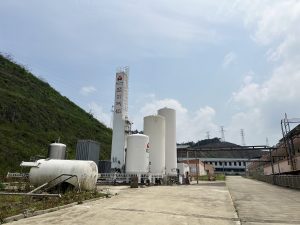
Cryogenic air separation units (ASUs) form the heart of high‑purity gas supply for many large‑scale industries, delivering oxygen, nitrogen and argon at purities and flow rates unattainable by alternative technologies. In this guide, we explore the underlying principles, engineering design factors, operational optimisation, modular plant considerations and practical tables of key performance parameters — all with a view toward technical professionals and research‑oriented readers.
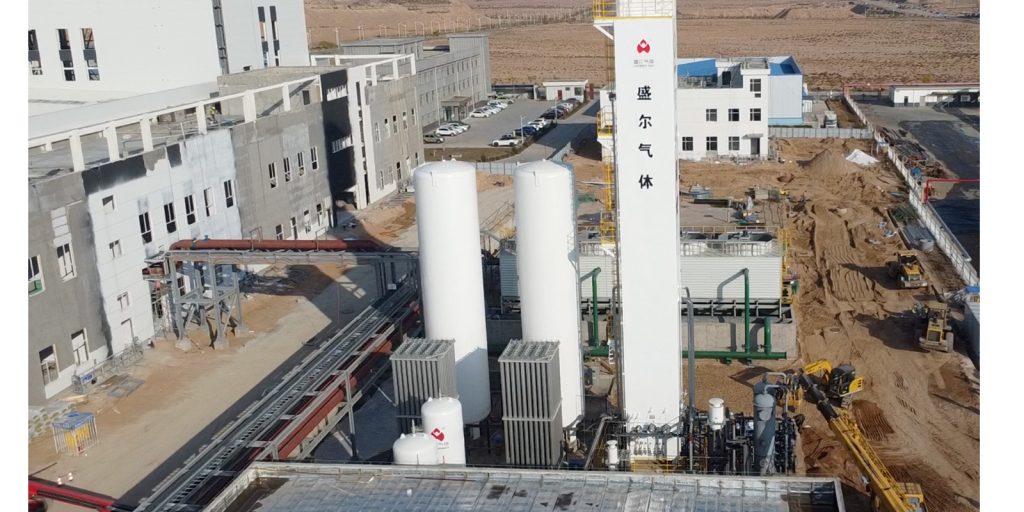
1. Fundamentals of Cryogenic Air Separation
The term “cryogenic air separation” refers to the process of cooling ambient air to very low temperatures (typically around ‑180 °C or lower) in order to liquefy major constituents of air and then separate them by fractional distillation. In practical terms, after compression and purification of the ambient air to remove water vapour, CO₂ and hydrocarbons, the air is cooled in efficient heat‑exchangers and fed into a distillation train (often including a high‑pressure and a low‑pressure column) where oxygen (boiling point ‑183 °C), argon (‑186 °C) and nitrogen (‑196 °C) are separated based on relative volatilities and vapour‐liquid equilibrium behaviour. netl.doe.gov+2科学直通车+2
This process remains the predominant technology for large‑capacity gas production because it offers high recoveries, multiple product streams (O₂, N₂, Ar) and compatibility with both gaseous and liquid output. 科学直通车+1
Key subsystems include:
- Compression & purification of feed air
- Multi‑stage heat‑exchanger network (cold box)
- Distillation columns (HP and LP) plus argon extraction section if required
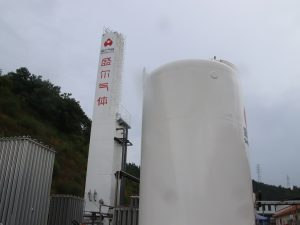
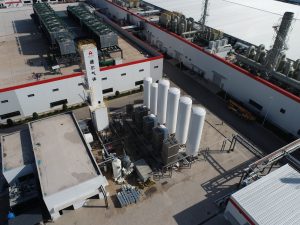
- Product vapourisers/liquid storage and distribution
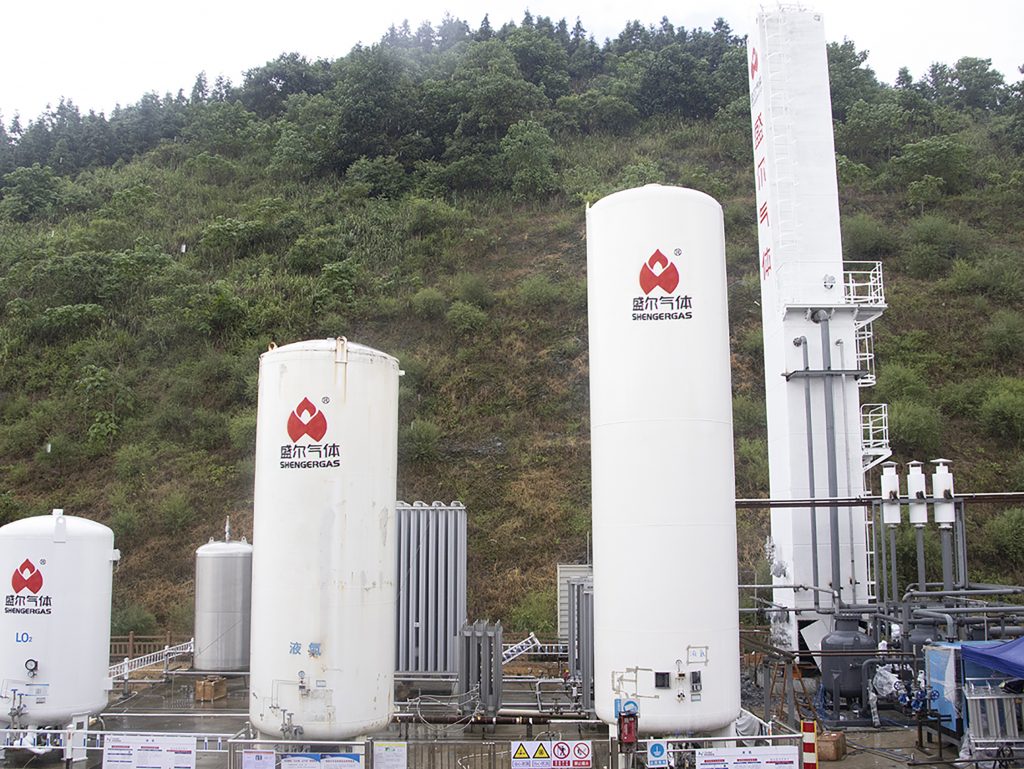
2. Engineering Design and Performance Parameters
When specifying a cryogenic air separation unit for industrial applications, several design parameters and trade‑offs dominate:
| Parameter | Typical Range | Significance |
|---|---|---|
| Feed air flow rate | hundreds – thousands of Nm³/h | Determines plant scale, compressor size |
| Feed air pressure | ~4 – 8 bar(g) typical; up to 10–15 bar for large trains | Higher pressure reduces refrigeration load but increases compression cost |
| Product oxygen purity | 95 % to > 99.5 % O₂ | Higher purity often required for steel‑making, glass, petrochemical oxy‑fuel |
| Product nitrogen purity | 95 % up to 99.999 % N₂ | Purity choice depends on inerting, shielding, electronics applications |
| Argon recovery/purity | Up to 99.999 % Ar (for speciality uses) | Adds complexity (argon column) but provides by‑product revenue |
| Specific power consumption | ~0.45‑0.70 kWh/Nm³ O₂ (varies widely) | Key metric for operational cost & energy efficiency |
| Modular train size | Single train upto several thousand tons O₂/day | Larger trains yield lower cost per ton but increased risk/complexity |
Table: Key design and performance parameters for typical cryogenic ASU.
(Note: The values are indicative and will vary depending on contractual scope, ambient conditions, integration, and modularisation.)
Performance optimisation means reducing power consumption per unit of gas produced, increasing product recovery, reducing downtime, and integrating effectively with the host industrial plant (for example using waste heat or rejecting cooling load). Recent exergetic analyses show that well‐designed units can approach higher efficiency through improved cold‑box design and column internals. PMC
3. Optimising Oxygen, Nitrogen and Argon Production
3.1 Oxygen
Oxygen is often the primary product in large ASUs serving steel mills (oxy‑fuel combustion), petrochemicals, glass, and wastewater treatment. For example, producing 99.5 %+ oxygen enables higher flame temperatures, reduced fuel consumption, and lower off‑gas volumes. Optimisation involves:
- Column internals design that minimise pressure drop and maximise separation efficiency
- Heat exchanger effectiveness (cold‑box) to reduce external refrigeration load
- Integrating oxygen compression for delivery pressure (if required) rather than off‑site supply
3.2 Nitrogen
Nitrogen from cryogenic ASUs enjoys the benefit of being a by‑product (in many cases) of the oxygen train. By adjusting the distillation conditions and purge/recycle streams, nitrogen of various purity grades can be delivered. Key points:
- Lower purity (95 %) may suffice for bulk inerting or blanketing; higher purity (99.999 %) may serve semiconductor or food packaging sectors
- Economies of scale: incremental incremental cost to produce nitrogen is often low once the oxygen train is operating
3.3 Argon
Argon production adds value but also complexity. A dedicated argon extraction column (or side stream) is required when purity & recovery are significant. Conditions to optimise argon:
- Use of a side‑column or extractive section to separate argon from oxygen stream
- Cooling and liquefaction of the argon stream (if required)
- If argon is a commercial product, ensure that the plant layout accommodates vacuum or low‑pressure argon column, appropriate storage, and shipping logistics
4. Modular, Turnkey and Scalability Considerations
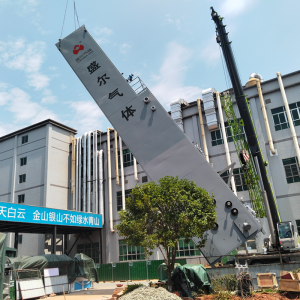
Modern industrial users demand flexible solutions: modular ASUs, prefabricated cold‑boxes, standardised skid packages, and shorter site installation times. Benefits of modular cryogenic ASUs include:
- Reduced on‑site construction and commissioning time
- Easier expansion by adding additional module(s) as demand grows
- Lower risk of design errors as modules are factory tested
From an engineering perspective, the vendor must coordinate cold‑box manufacturer, distillation column supplier, control system (PLC/IoT) integration and commissioning. Integration with the customer’s plant (power supply, cooling water, flue‑gas interface) further affects uptime and lifetime cost. For your engineering brand, emphasising “one‑stop EPC turnkey” and “digital monitoring/remote O&M” aligns with current market expectations.
5. Energy & Environmental Performance
Cryogenic air separation remains an energy‑intensive process, primarily due to the refrigeration required to condense and separate the air components. According to industry data, producing one cubic metre of liquid O₂ or N₂ may consume around 1 kWh or more depending on conditions. eiga.eu
To improve environmental and energy performance:
- Recuperative heat‑exchange networks within the cold‑box minimise external refrigeration load.
- Use of expanders (turbine expansion) instead of simple throttling to generate cold and recover some work.
- Integration with waste heat streams of host plant or using advanced inter‑column integration.
- Optimised control systems to manage part‑load performance (variability in demand) and maintain high efficiency.
- Site selection for ambient conditions (lower ambient temperature helps).
Environmentally, cryogenic ASUs generate minimal direct emissions (they handle only atmospheric air), but indirect emissions from electricity consumption and water usage (for cooling) must be addressed. Good design incorporates water‑efficient cooling towers and noise/vibration mitigation. eiga.eu
6. Practical Selection Criteria & Challenges for Technical Teams
When a technical procurement team (engineers and researchers) selects a cryogenic ASU, the following checklist is helpful:
- Required output capacities (O₂, N₂, Ar) with expected duty cycles
- Desired top purities and acceptable recovery rates
- Feed air quality (temperature, humidity, dust, contaminants) and pretreatment scope
- Ambient conditions (temperature, elevation, cooling water availability)
- Power supply and utility integration (electricity cost, cooling water, site footprint)
- Expandability and modularisation potential
- Operator interface, digital monitoring, remote diagnostics, maintenance philosophy
- Supplier certifications (ISO 9001, ASME, CE, NB) and global service network
- Total life‑cycle cost: CAPEX, OPEX (especially power consumption), maintenance, downtime risk
Challenges specific to cryogenic ASUs:
- High CAPEX and long lead times compared to PSA/VPSA systems
- Efficiency drop at part‑load or varying demand profiles
- Careful maintenance of cold‑box internals, heat‑exchanger fouling, column internals wear
- Logistics of liquid storage and handling (especially argon and oxygen)
7. Case Study and Technical Table
Let’s consider a conceptual ASU specification suited for a steel mill site with the following outline:
| Parameter | Specification | Notes |
|---|---|---|
| Oxygen flow (gaseous) | 800 Nm³/h | Purity ≥ 99.5 % O₂ |
| Nitrogen flow (gaseous) | 350 Nm³/h | Purity ~99 % N₂ |
| Argon flow (liquid) | 6 t/day | Purity ≥ 99.9 % Ar |
| Specific power consumption | ~0.52 kWh/Nm³ O₂ | Based on modern optimised design |
| Feed air temperature | 25 °C ambient | Adapt design for local ambient |
| Feed air pressure | 7.5 bar(g) | Helps reduce refrigeration duty |
| Modular train size | 1‑module + expansion ready | Future demand growth accounted |
| Dew point of feed air | ‑70 °C | Ensures proper CO₂ / H₂O removal |
This table provides a realistic engineering specification that a technical team would use as a basis for vendor RFQs, equipment sizing and budget estimation.
8. Future Trends & Research Directions
Moving forward, key research and industrial trends in cryogenic air separation include:
- Single‑column or reduced‑column train designs to lower CAPEX and footprint. OSTI
- Integration of energy storage (e.g., liquid nitrogen storage) to buffer variable demand or couple with renewable energy. 科学直通车
- Digital twins and advanced process control (AI/ML) for predictive maintenance, part‑load optimisation and remote O&M.
- Greater use of modular factory‑skidded cold boxes and standardised interfaces to reduce site risks and schedules.
- Sustainability improvements: lower specific power consumption, use of greener refrigerants, waste‑heat recovery, carbon‑neutral power supply.
For the industrial gas equipment supplier, these trends signal a shift from simply delivering “big iron” to offering smart, flexible, high‑efficiency systems with service continuity, life‑cycle optimisation and global support.
9. Conclusion
In the evolving landscape of industrial gases, cryogenic air separation units remain the gold standard when high‑purity oxygen, nitrogen and argon are required at large scale. By understanding the thermodynamics, design trade‑offs, operational metrics and future trends, technical teams and research professionals can select, optimise and engage with ASU vendors in a more informed and strategic way.
Ensuring that your specifications address not only capacity and purity but also modular growth, energy consumption, digital monitoring and global service support will ensure that your next cryogenic ASU stands the test of both process performance and long‑term reliability.
With rigorous engineering, clear performance targets, and alignment with industry best‑practice, cryogenic air separation continues to deliver reliable and efficient supply of industrial gases to the most demanding sectors.