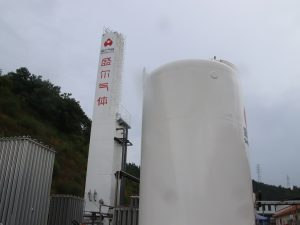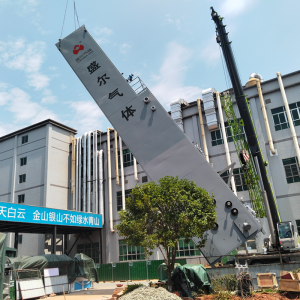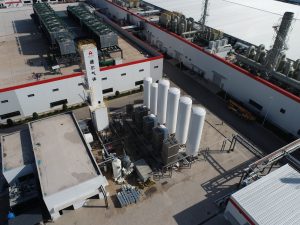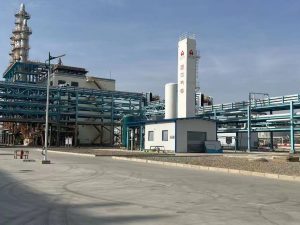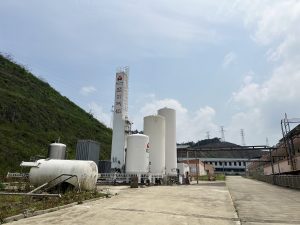
Cryogenic air separation is a cornerstone technology for producing large volumes of high-purity nitrogen gas from air. Air is composed of around 78% nitrogen, making it an abundant raw material. In the cryogenic air separation nitrogen production process, atmospheric air is cooled to extremely low temperatures until it liquefies, then distilled to separate nitrogen from oxygen and other components based on their different boiling points. This process has become vital in industry because it yields nitrogen with very high purity levels and in quantities sufficient for demanding applications. The following sections provide a detailed look at how the cryogenic air separation nitrogen production process works, the key equipment involved, the advantages of cryogenic production, common uses of the nitrogen produced, and how it compares to alternative production methods.
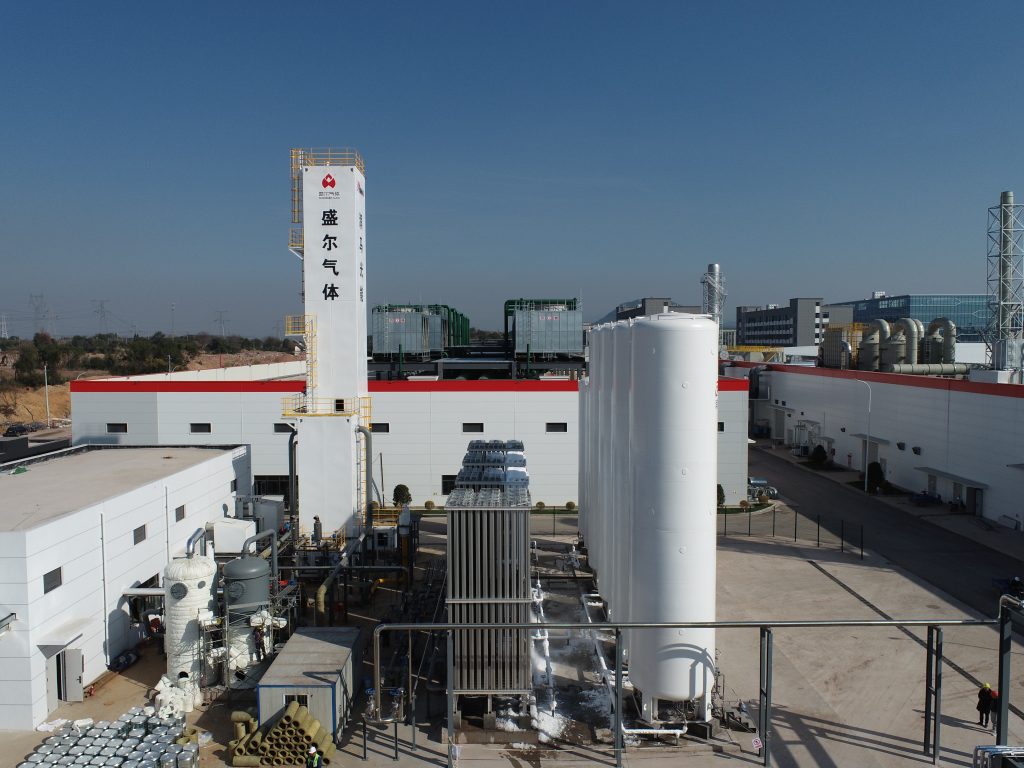
Step-by-Step Cryogenic Air Separation Nitrogen Production Process
Producing nitrogen via cryogenic air separation involves several stages. The key steps in this process are as follows:
- Air Compression: Ambient air is first drawn in and compressed by a large air compressor to a higher pressure (typically around 6–8 bar). Compressing the air not only increases its pressure but also raises its temperature; therefore, intercoolers are used between compression stages to remove the heat of compression. The pressurized air provides the necessary driving force for downstream purification and cooling steps, essentially initiating the cryogenic air separation nitrogen production process.
- Pre-Cooling and Purification: The compressed air then passes through a pre-cooling unit and purification system. In the pre-cooling stage, the air is cooled to near normal ambient temperature (for example, around 10 °C) using cooling water or refrigeration, which condenses out most of the moisture. Next, the air flows through molecular sieve adsorbers (often called a Pre-Purification Unit, PPU) that remove residual water vapor, carbon dioxide, and any hydrocarbons. Removing these impurities is essential in the cryogenic air separation nitrogen production process; otherwise, they would freeze into ice or dry ice in later cryogenic steps and block equipment. By the end of this purification stage, the air is clean and dry (with a very low dew point), making it ready for cryogenic cooling.
- Cryogenic Cooling and Liquefaction: Next, in the cryogenic air separation nitrogen production process, the purified, pressurized air enters a heat exchanger system within a thermally insulated cold box. Here it is progressively cooled by exchanging heat with returning cold nitrogen and oxygen streams from the distillation columns. As the air flows through multiple stages of heat exchangers, its temperature drops dramatically. Eventually it reaches cryogenic temperatures (on the order of -170 °C to -190 °C) and begins to liquefy. In many systems, an expansion turbine (turbo-expander) contributes additional cooling: a portion of the high-pressure air (or nitrogen) is expanded through the turbine, lowering its temperature further and producing the refrigeration needed to achieve and maintain liquefaction. By the end of this step, the air is a mixture of liquid and cold gas at cryogenic conditions.
- Fractional Distillation in Columns: In the cryogenic air separation nitrogen production process, the cold liquefied air is fed into a distillation column system for separation. Most cryogenic air separation plants use a double-column setup. The first is a high-pressure distillation column (operating at roughly 5–8 bar) where the incoming liquid air starts to separate. Nitrogen, having a lower boiling point (-196 °C) than oxygen (-183 °C), vaporizes and rises toward the top, while oxygen-rich liquid collects at the bottom. The nitrogen vapor from the top of the high-pressure column (which still contains some oxygen and argon impurities) is then directed into a second low-pressure distillation column (operating near ambient pressure, ~1.2 bar). In the low-pressure column, further refinement occurs: high-purity nitrogen gas is obtained at the top of this column, and oxygen (along with argon, if the plant is configured to recover it) is concentrated at the bottom. A heat exchanger unit called a reboiler-condenser thermally links the two columns: it condenses nitrogen vapor from the high-pressure column to provide liquid reflux, while evaporating oxygen-rich liquid to feed the low-pressure column. Through this continuous reflux and boil-up process, the rising vapor and falling liquid achieve an increasingly pure separation. The nitrogen is progressively purified to the desired level (often 99.9% to 99.999% purity) by the top of the low-pressure column.
- Product Collection and Delivery: By the end of the cryogenic air separation nitrogen production process, the high-purity nitrogen is collected from the top of the low-pressure column. Depending on the plant design and end-use requirements, this nitrogen may be drawn off as a gas or as a liquid. Gaseous nitrogen is warmed back to ambient temperature through heat exchangers (recovering cold energy) and then routed to a storage vessel or pipeline for use. If ultra-cold liquid nitrogen (LIN) product is desired, some of the nitrogen is kept in liquid form and sent to insulated cryogenic storage tanks. Similarly, oxygen and argon byproducts (if recovered) are drawn from their respective points in the column system. Finally, the nitrogen product — whether delivered as gas at pressure or as a cryogenic liquid — is ready to be distributed to end users or utilized in downstream processes.
This multi-step cryogenic air separation nitrogen production process is highly energy-intensive but very effective. By leveraging thermodynamic principles and precise control of temperature and pressure, it cleanly separates air into nitrogen and other constituents. The result is a stream of nitrogen gas that can reach extremely high purity and is available in large volume.
Key Components of a Cryogenic Air Separation System
A cryogenic air separation plant (often called an Air Separation Unit, ASU) is built from several integrated components, each playing a critical role in producing nitrogen:
- Main Air Compressor: A powerful compressor draws in atmospheric air and elevates it to the required high pressure (around 6–10 bar) to initiate the cryogenic air separation nitrogen production process. Multi-stage compressors with intercooling are common to achieve the necessary pressure while managing temperatures. The compressor is typically one of the largest power consumers in the system, supplying the compressed air that drives the entire cryogenic process.
- Pre-Purification Unit (PPU): Before air enters the cold box, it passes through a purification system. Modern ASUs use a PPU with one or more vessels filled with adsorbent material (molecular sieves) to remove moisture (H₂O), carbon dioxide (CO₂), and hydrocarbons from the intake air. This prevents ice or CO₂ solid from forming in cryogenic equipment. The PPU usually includes a chiller to precool the air to around 5–10 °C and knock out most water via condensation, and twin adsorption beds that alternate between processing air and regenerating (using heated waste nitrogen) to provide a continuous clean air feed.
- Heat Exchangers: Cryogenic plate-fin or coil-wound heat exchangers cool down the incoming air by transferring heat to the cold gaseous products leaving the distillation columns. They operate in a near counter-flow arrangement, bringing the pressurized air feed close to its liquefaction temperature by recuperating refrigeration from the outgoing cold streams. Efficient heat exchangers are central to the process, ensuring that cold energy from the products and waste streams pre-cools the incoming air with minimal losses.
- Expansion Turbine (Expander): To reach the lowest temperatures needed for liquefying air, an expansion turbine is employed. This turbo-expander takes a portion of the high-pressure stream (which could be air or nitrogen) and expands it to a lower pressure. As the gas expands, it performs work (often used to drive an attached generator or another compressor stage) and in doing so the gas temperature drops significantly. The expander thus provides the necessary refrigeration effect to supplement what is achieved by heat exchangers alone. Without the expander, the process would struggle to attain deep cryogenic temperatures efficiently.
- Distillation Columns: The core of the ASU is the distillation column system, typically comprising two vertical columns housed together in the cold box. The high-pressure column handles the initial separation of liquefied air under elevated pressure, and the low-pressure column further refines the separation at near-atmospheric pressure. Inside these columns are multiple trays or packing materials that facilitate contact between rising vapors and descending liquid, enabling fractional distillation. At the top of the low-pressure column, a condenser liquefies nitrogen vapor to provide reflux, and at the bottom of the high-pressure column a reboiler vaporizes oxygen-rich liquid — these integrated components help transfer heat between the columns. The distillation columns ensure that nitrogen, oxygen, and argon (if recovered) are separated based on their boiling points to the required purities.
- Cryogenic Cold Box: The above components – especially the heat exchangers, distillation columns, and associated valves and piping that operate at cryogenic temperatures – are enclosed in an insulated cold box. This is a large, sealed container (often filled with perlite insulation) that keeps the internal equipment at very low temperatures and shields it from external heat. The cold box prevents ice or frost from forming on the equipment and conserves the refrigeration within, making the cryogenic process more thermally efficient.
- Product Storage and Vaporization: Once air has been separated and nitrogen extracted, the product gas or liquid is typically fed to storage and supply systems. For gaseous nitrogen, booster compressors may be used to increase the pressure of the product gas to meet pipeline or end-user requirements (since the nitrogen emerging from the low-pressure column is near ambient pressure). For liquid nitrogen output, insulated storage tanks are used to hold the LIN at -196 °C. Often, evaporators or vaporizers are installed to convert liquid nitrogen back to gaseous form on demand, supplying customers with gas at the desired pressure and temperature. While not part of the distillation process itself, these storage and delivery components ensure the nitrogen product is provided to users in the required state.
Each component in the cryogenic air separation nitrogen production process must be carefully designed and maintained. The interplay of compression, heat exchange, expansion, and distillation makes this a highly synchronized operation. Even minor issues (such as a valve leak or a heat exchanger fouling) can affect purity or efficiency, so robust design and controls are essential.
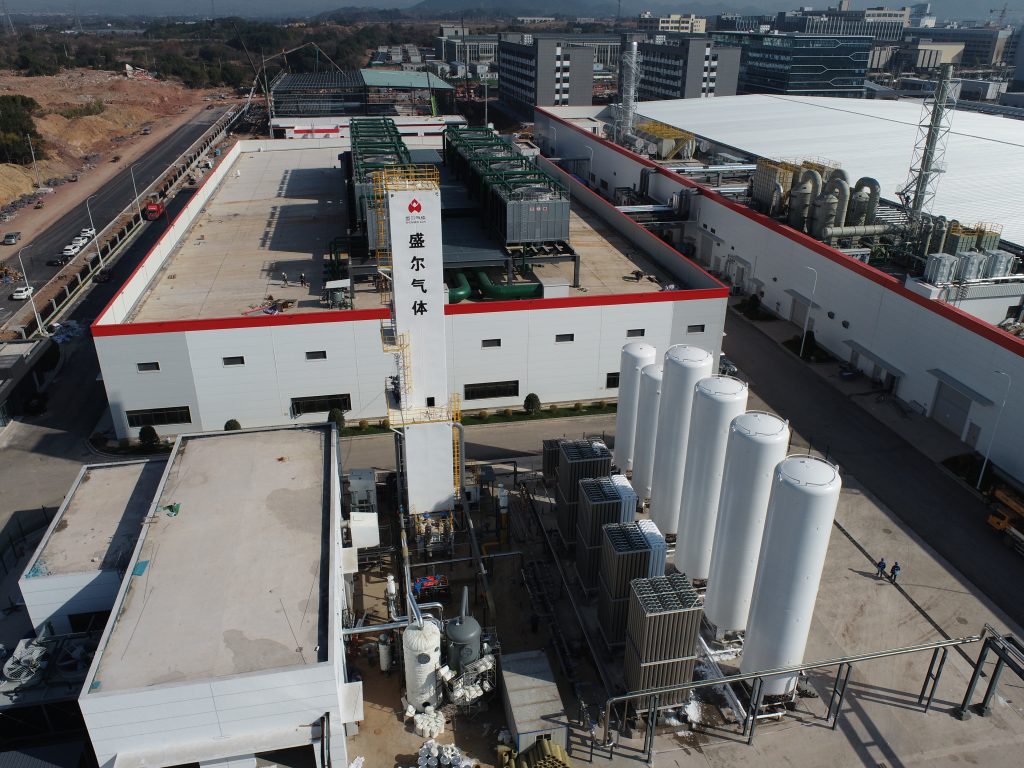
Advantages of Cryogenic Nitrogen Production
The cryogenic air separation nitrogen production process offers several notable advantages for industrial and research applications:
- Ultra-High Purity: The cryogenic air separation nitrogen production process can achieve extremely high nitrogen purities (99.99% up to 99.999% or higher). This level of purity is very difficult to obtain with non-cryogenic methods. The cryogenic distillation inherently removes not just oxygen but also other trace gases, yielding nitrogen suitable for semiconductor manufacturing, aerospace applications, and other ultra-clean processes.
- High Volume Production: The cryogenic air separation nitrogen production process is the go-to choice for large-scale nitrogen needs. It can generate thousands to tens of thousands of cubic meters of nitrogen per hour. For example, a single large air separation unit can produce 10,000 Nm³/h or more of nitrogen gas, enough to supply a major steel mill or petrochemical complex. The capacity of cryogenic systems far exceeds the typical outputs of alternative technologies, making them ideal for industrial gas suppliers and large factories.
- Cost Efficiency at Scale: Although implementing the cryogenic air separation nitrogen production process requires significant capital investment, it benefits from economies of scale — as production capacity increases, the cost per unit of nitrogen decreases. For industries that require a constant, high-volume supply of nitrogen, a large cryogenic plant often proves more economical in the long run than operating many smaller generators.
- Co-Production of Other Gases: A significant advantage of the cryogenic air separation nitrogen production process is the ability to co-produce other valuable gases like oxygen and argon. The same process that provides nitrogen will also yield oxygen (used in hospitals, welding, combustion processes) and argon (used in welding, lighting, and electronics) as separate product streams. This multi-product output can improve overall economics, as a single plant can meet diverse gas demands or allow sale of the additional gases to other markets.
- Reliability for Continuous Operation: In practice, the cryogenic air separation nitrogen production process is operated continuously around the clock, and these systems are highly automated to run with minimal shutdowns. This is important for industries that cannot afford supply interruptions. Once cooled down and running, an ASU can operate steadily with consistent product quality. The robust design and advanced control systems allow stable long-term performance, which is a key advantage for critical applications that require an uninterrupted inert gas supply.
Industrial Applications of Cryogenic Nitrogen
Nitrogen obtained from the cryogenic air separation nitrogen production process is used in a wide range of industries. Some common industrial applications include:
- Chemical and Petrochemical: High-purity nitrogen from the cryogenic air separation nitrogen production process is used extensively for inerting and blanketing in chemical plants and oil refineries. It displaces oxygen and moisture in reactors, storage tanks, and pipelines, preventing unwanted reactions, oxidation, fires, or explosions. For example, during oil refining and petrochemical processes, nitrogen purges ensure a safe, oxygen-free environment to protect volatile compounds.
- Metallurgy and Steel Manufacturing: Steel mills and metal processing facilities consume large volumes of nitrogen. In steelmaking, nitrogen shields molten metal from air to prevent oxidation and is used to purge or flush oxygen from converters and casting equipment. Nitrogen gas also pressurizes and cools high-temperature processes, improving quality in heat treatment furnaces and metal fabrication. These applications require a reliable supply of nitrogen gas, often provided by on-site cryogenic air separation units.
- Electronics and Semiconductor Manufacturing: The electronics industry relies on ultra-pure nitrogen for creating controlled, contamination-free atmospheres. Semiconductor fabrication uses nitrogen to purge process equipment and transport wafers, as any oxygen or water vapor could damage sensitive electronic components. The cryogenic air separation nitrogen production process provides the required purity levels for these precise tasks, ensuring an inert atmosphere during the production of microchips, LEDs, and other semiconductor devices.
- Food and Beverage: Food processors use nitrogen for both packaging and freezing applications. In modified atmosphere packaging, nitrogen is flushed into food packages (e.g., snacks, coffee, fresh produce) to displace oxygen and extend shelf life by slowing oxidation and microbial growth. Liquid nitrogen is also used for flash-freezing foods – its extremely low temperature can freeze products rapidly, preserving texture and nutritional quality. Breweries and beverage producers may use nitrogen to purge storage tanks and lines, as well as to carbonate or pressurize beverages (in the case of nitrogen-infused drinks).
- Healthcare and Laboratories: Hospitals and labs often use nitrogen from the cryogenic air separation nitrogen production process for various purposes, such as powering medical devices, preserving biological samples, or serving as a carrier gas in analytical instruments. Liquid nitrogen from cryogenic plants is crucial for cryopreservation – it is used to freeze and store biological specimens (like blood, tissues, or reproductive cells) at ultra-low temperatures. The high purity and ready availability of nitrogen via cryogenic production make it suitable for these sensitive uses.
These examples illustrate how vital cryogenic nitrogen is across many sectors. Wherever an inert atmosphere or extreme cold is required, nitrogen from cryogenic air separation underpins those processes.
Comparison with Other Nitrogen Production Methods
For completeness, it is useful to compare the cryogenic air separation nitrogen production process with other common nitrogen generation methods, namely Pressure Swing Adsorption and membrane separation:
- Pressure Swing Adsorption (PSA): PSA systems produce nitrogen by passing compressed air through adsorbent beds that trap oxygen and allow nitrogen to flow through. PSA nitrogen generators are popular for on-site supply at small to medium scales (from a few dozen up to a couple thousand Nm³/h). They offer lower upfront cost, simpler operation, and quick startup (nitrogen can be generated within minutes). However, PSA typically delivers nitrogen at purities of about 95% to 99.9%. Achieving ultra-high purity (99.99% or above) with PSA is possible but becomes inefficient and expensive, often requiring multiple adsorption stages and significantly more power. In contrast, the cryogenic air separation nitrogen production process reliably produces higher-purity nitrogen and handles much larger volumes, albeit with higher energy usage and complexity. PSA is often chosen for moderate purity needs or backup supply, whereas cryogenic shines when extremely high purity or large continuous output is required.
- Membrane Separation: Membrane nitrogen generators use hollow-fiber polymer membranes that allow oxygen to permeate out faster than nitrogen, thus enriching the nitrogen content of the product stream. Membrane units are compact, with virtually immediate startup, and are well-suited for lower purity requirements (generally 90–99% N₂) at small to mid-range flow rates. They are common in applications like inerting storage tanks, providing nitrogen for oil and gas operations, laser cutting machines, or other situations where portability and simplicity are important. Membrane systems have low maintenance and no complex moving parts, but they cannot reach the very high purities or volumes that cryogenic and PSA systems can. If high purity (>99.9%) or large scale supply is needed, membranes become impractical. Thus, membrane generators fill a niche for moderate purity and decentralized needs, while the cryogenic process remains the preferred choice for ultra-high purity and bulk production.
In summary, non-cryogenic methods (PSA and membrane) are well-suited to smaller scale or lower purity requirements due to their convenience and lower capital cost. When extremely high purity or very large quantities of nitrogen are required continuously, cryogenic air separation is the technology of choice despite its higher energy consumption and complexity. In practice, many industrial gas setups use a combination: a cryogenic plant for base-load high-purity production, supplemented by PSA or membrane units for peak demand or specific lower-purity needs.
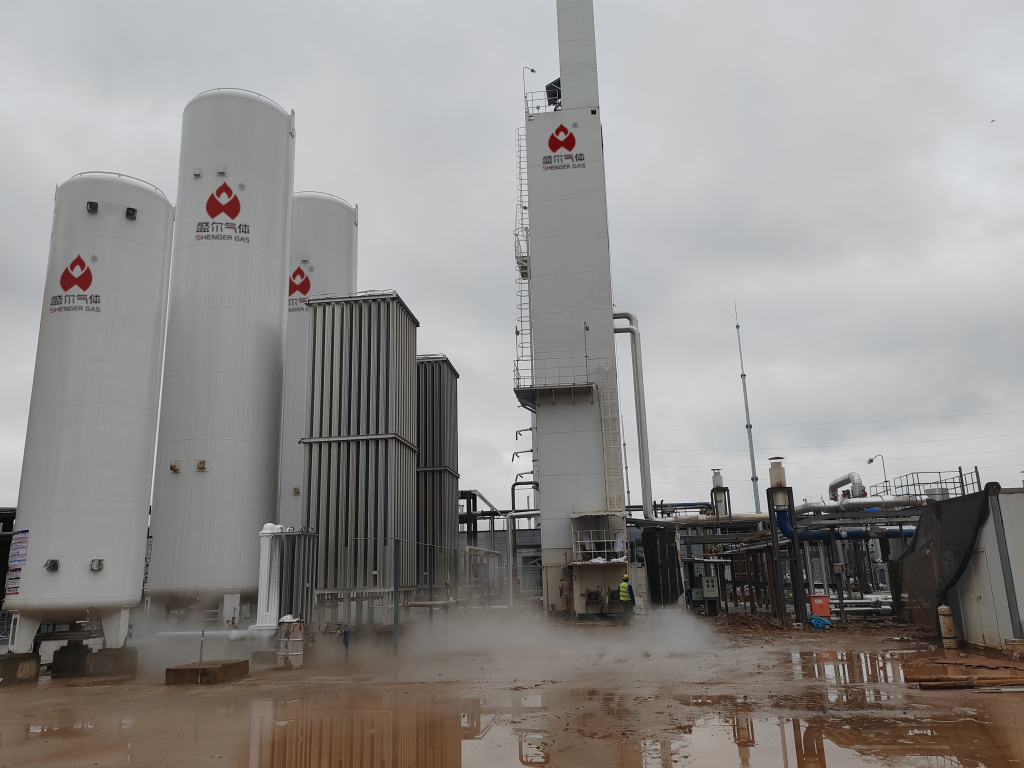
Typical Parameters of a Cryogenic Nitrogen Production System
The following table provides typical design and operating parameters for the cryogenic air separation nitrogen production process:
| Parameter | Typical Value/Range |
|---|---|
| Nitrogen Purity (Product) | 99.9% to 99.999% (up to 5.0–6.0 N grade) |
| Production Capacity | Hundreds to tens of thousands of Nm³/h (scalable) |
| Feed Air Pressure | ~6–8 bar (after compression stage) |
| Distillation Temperature | Cryogenic range, approx. -180°C to -196°C |
| Specific Power Consumption | ~0.5–0.7 kWh per Nm³ of N₂ produced |
| Startup Time | Several hours for cool-down (6–24+ hours for large plants) |
Nm³/h = Normal cubic meters per hour at standard conditions. The values above can vary based on plant size, desired product purity, and design specifics. Large, state-of-the-art plants tend to be more energy-efficient per unit of product than smaller or older designs.
Conclusion
The cryogenic air separation nitrogen production process is a proven and highly effective method to generate nitrogen with unmatched purity and in massive quantities. By leveraging low-temperature distillation and sophisticated engineering, cryogenic air separation plants can meet the most demanding industrial requirements for nitrogen gas and liquid products. While the infrastructure and power requirements are significant, the benefits include reliable bulk production, cost efficiency at scale, and the flexibility to co-produce oxygen and argon. This scalability — from supplying a moderate manufacturing facility to an entire steel mill — makes cryogenic technology integral to the industrial gas supply chain. In an era of growing technological and industrial demands, the cryogenic air separation nitrogen production process remains the gold standard for providing a stable, high-purity inert gas essential to countless processes worldwide.
Cryogenic air separation is a cornerstone technology for producing large volumes of high-purity nitrogen gas from air. Air is composed of around 78% nitrogen, making it an abundant raw material. In the cryogenic air separation nitrogen production process, atmospheric air is cooled to extremely low temperatures until it liquefies, then distilled to separate nitrogen from oxygen and other components based on their different boiling points. This process has become vital in industry because it yields nitrogen with very high purity levels and in quantities sufficient for demanding applications. The following sections provide a detailed look at how the cryogenic air separation nitrogen production process works, the key equipment involved, the advantages of cryogenic production, common uses of the nitrogen produced, and how it compares to alternative production methods.