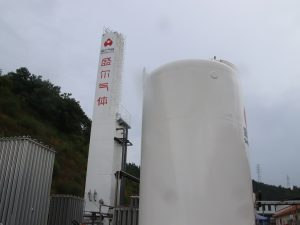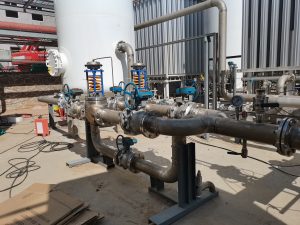
Industrial oxygen generation systems produce oxygen on-site for use in metal fabrication, chemical processing, healthcare, and environmental applications. These systems have grown in importance as industries seek a reliable, continuous oxygen supply without relying on delivered liquid or bottled gas. Major technologies include pressure swing adsorption (PSA), vacuum pressure swing adsorption (VPSA), and cryogenic air separation. PSA and VPSA systems separate oxygen from air using molecular sieve adsorbents, while cryogenic distillation liquefies air and then boils off oxygen. This article reviews the underlying technologies, compares their performance, surveys key industrial uses (such as steelmaking, petrochemicals, and medical support), and analyzes capital (CAPEX) and operating (OPEX) costs for various system types.As an industrial oxygen generation system, on-site production reduces dependency on delivered oxygen while improving supply reliability and cost control.
Modern industrial plants often incorporate industrial oxygen generation systems to support processes like metal cutting, glass melting, and chemical synthesis. By generating oxygen on-site, factories avoid the logistical issues and recurring expense of delivered cylinders or liquid tanks. On-site PSA and VPSA generators can provide continuous oxygen at purities around 90–95%, while large-scale cryogenic air separation units produce ultra-high-purity oxygen (>99%). All systems require clean, compressed air and include equipment such as compressors, dryers, filters, storage tanks, and in the case of cryogenic units, refrigeration and distillation columns. The choice of system depends on the required flow rate, purity, and economics. In the following sections, we detail each technology, list typical uses, compare PSA, VPSA and cryogenic systems in a technical table, and outline CAPEX/OPEX considerations for industrial oxygen generation systems.
Pressure Swing Adsorption (PSA) Technology
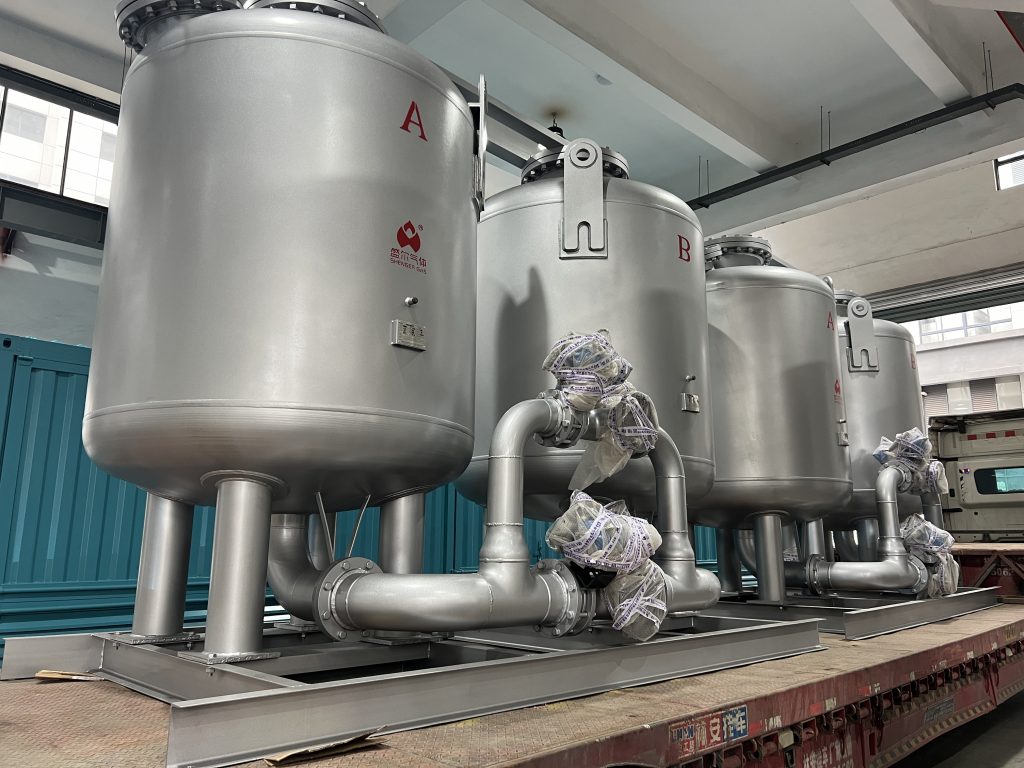
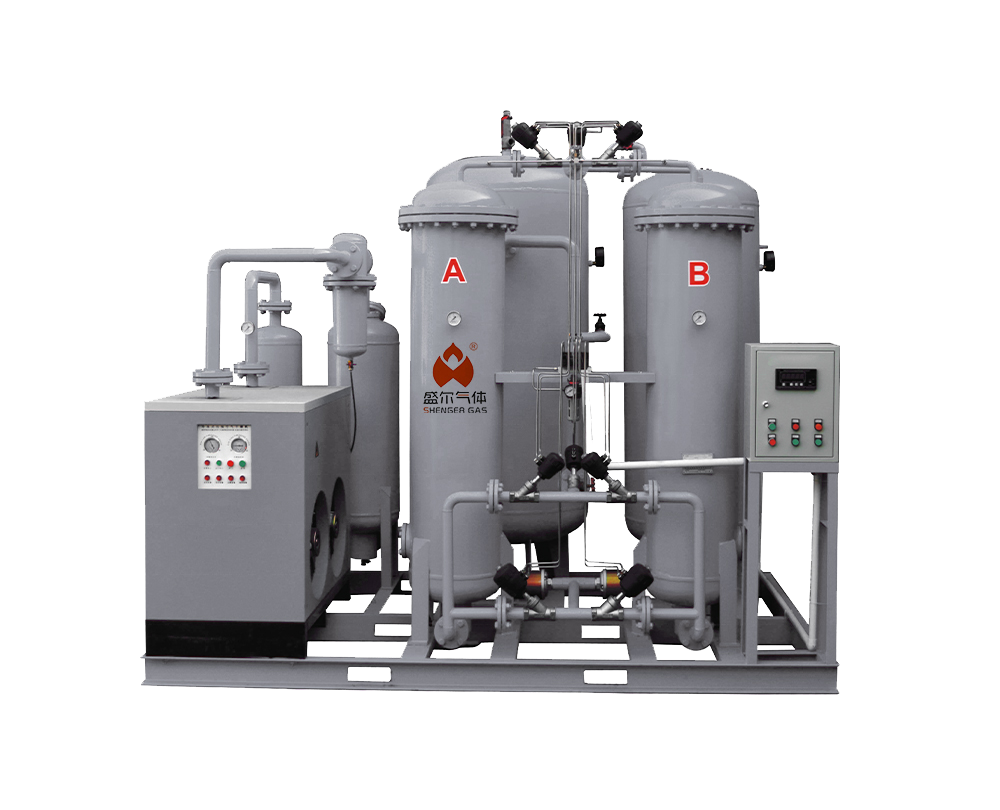
In an industrial oxygen generation system based on PSA technology, oxygen purity and capacity are optimized through cyclic adsorption and regeneration.Pressure Swing Adsorption is a non-cryogenic method that produces oxygen by alternately pressurizing and depressurizing two or more adsorbent beds. In a PSA oxygen generator, filtered compressed air is fed into a vessel containing a molecular sieve (often zeolite) that preferentially adsorbs nitrogen. Oxygen-enriched gas (typically 90–95% O₂) passes through as product. When the sieve becomes saturated with nitrogen, the feed switches to a second vessel while the first is depressurized to atmospheric pressure. The drop in pressure causes the adsorbed nitrogen to desorb, regenerating the sieve for the next cycle. PSA systems are known for their simplicity and rapid startup/shutdown.
PSA oxygen generators typically deliver oxygen at about 90–95% purity, meeting standards like the United States Pharmacopeia’s 93%±3% specification for medical use. They are modular and skid-mounted, with capacities ranging from small units (<10 Nm³/h) to larger multi-unit plants (hundreds of Nm³/h). PSA units have relatively low footprint and capital cost for small-to-medium demands. Since PSA oxygen production runs on compressed air, the main operating cost is electricity for the air compressor and occasional replacement of filters or sieve beds. PSA systems can be automated and remote-monitored; they require regular maintenance of valves and pre-filters but have no rotating cryogenic equipment. Typical characteristics of PSA systems include:
- Capacity range: Tens to a few thousand normal cubic meters per hour (Nm³/h) when using parallel modules.
- Oxygen purity: ~90–95% (standard PSA; optional polishing stages can raise purity to ~99%).
- Energy consumption: Moderate (roughly 0.3–0.6 kWh per Nm³ of O₂, depending on pressure and flow).
- Footprint: Compact and skidded; often containerized or small modules.
- Applications: Small-to-medium industrial uses, laboratory/hospital backup, aquaculture, wastewater aeration, glass and ceramics, metal cutting/welding (oxy-fuel), and other processes where ultra-high purity is not required.
PSA is well-suited for decentralized or phased deployment because units can be scaled out modularly. Its advantages include minimal moving parts and ease of control. However, PSA oxygen purity and capacity are limited compared to cryogenic units, and its relative energy efficiency declines for very large flow rates.
Vacuum Pressure Swing Adsorption (VPSA) Technology
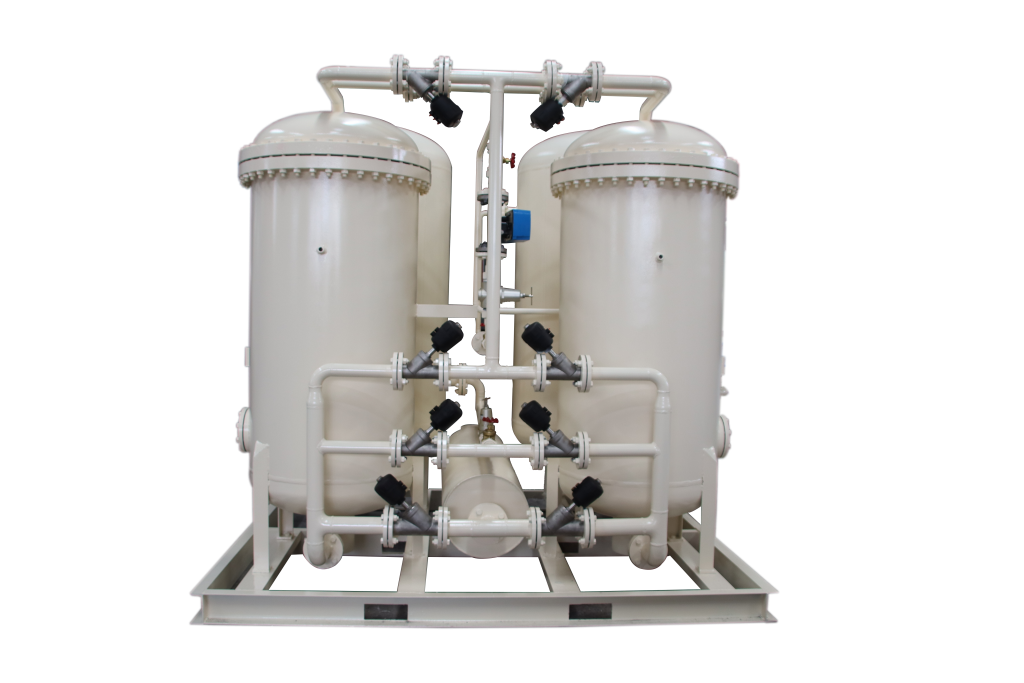
VPSA is a variant of PSA that uses vacuum draw during the desorption (purge) phase to recover the adsorbent. Instead of simply depressurizing to atmospheric pressure, a VPSA system applies a vacuum to further lower the pressure in the adsorbent bed and purge out the trapped nitrogen. This can reduce the residual oxygen left in the bed and improve overall oxygen recovery and efficiency. In practice, VPSA units are similar to PSA systems but include vacuum pumps or blowers and may operate at lower pressure on the adsorption step.
Typical VPSA oxygen purity is also in the 90–95% range. Because of the vacuum regeneration step, VPSA systems can achieve lower energy consumption per unit of oxygen than conventional PSA, especially for large flow rates. VPSA plants are often designed for higher capacities than standard PSA modules – for example, modern VPSA systems can handle from a few hundred up to tens of thousands of Nm³/h of oxygen production. However, VPSA plants are more complex due to the need for vacuum equipment. Key attributes of VPSA systems include:
- Capacity range: Hundreds to several thousand Nm³/h (scale typically larger than single PSA units).
- Oxygen purity: ~90–95% (adjustable based on adsorbents and cycle design).
- Energy consumption: Comparable or somewhat lower than PSA (vacuum pumping reduces wasted purge gas, but vacuum pumps add power usage). In aggregate, VPSA can use on the order of 0.3–0.5 kWh/Nm³.
- Footprint: Larger than a compact PSA skid due to vacuum pumps and piping, but still significantly smaller than cryogenic plants.
- Applications: Medium-to-large industrial oxygen needs where PSA capacity is insufficient, such as steel plants’ basic oxygen furnaces, large-scale aquaculture, mining/milling flotation (oxide leaching), pulp and paper bleaching, and municipal wastewater aeration.
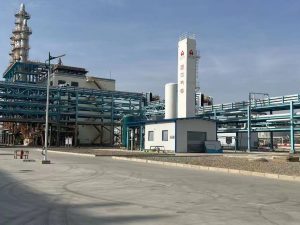
In summary, VPSA systems are more energy-efficient and can handle higher flows than PSA, at the expense of higher complexity and maintenance (vacuum pumps, more complex control). They still do not produce liquid oxygen, so they supply gaseous O₂ on-demand directly to process piping. VPSA is often chosen for high-purity needs where PSA cannot economically reach the required capacity or efficiency.Compared with conventional PSA units, a VPSA-based industrial oxygen generation system is better suited for medium to large facilities with continuous oxygen demand.
Cryogenic Distillation (Air Separation)
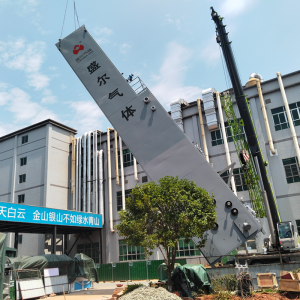
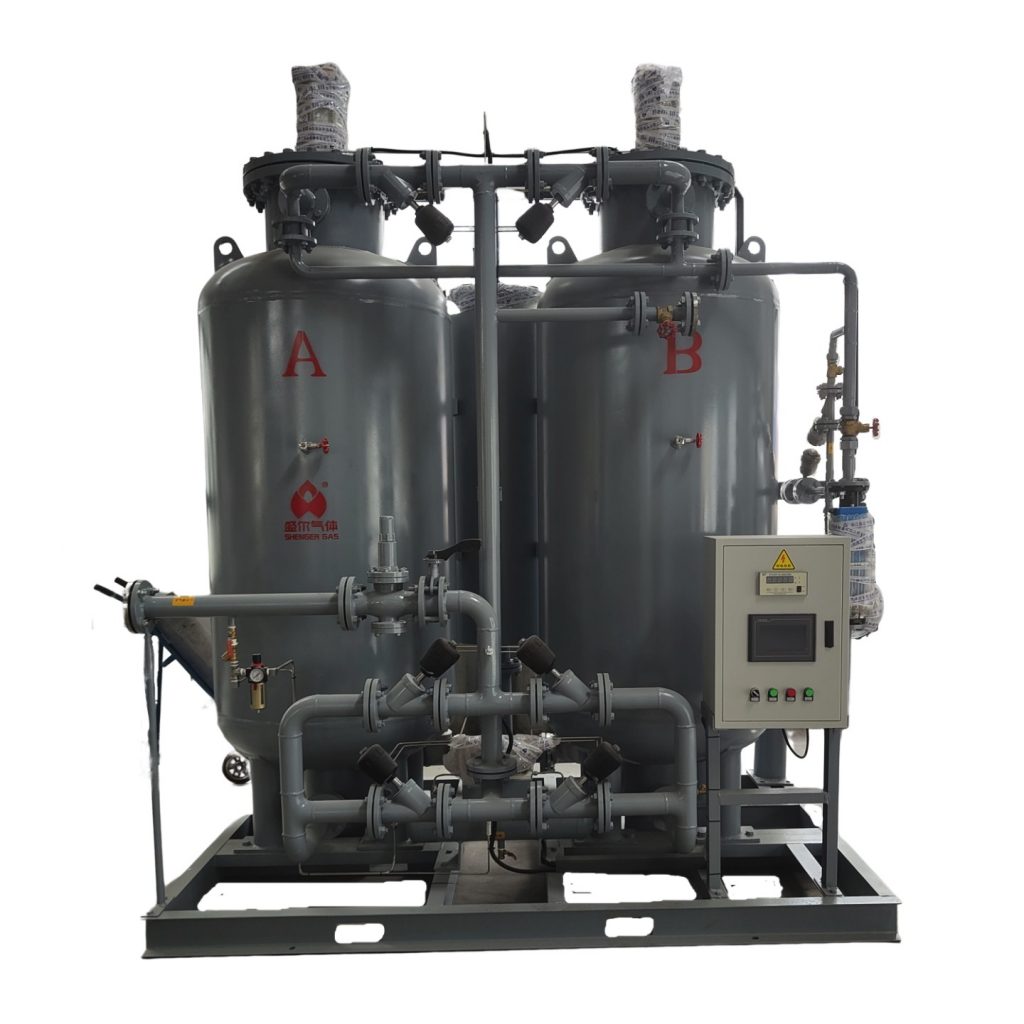
Cryogenic oxygen generation, also known as cryogenic air separation, produces oxygen by cooling air to very low temperatures (-200°C) to liquefy its components and then using fractional distillation. In a typical air separation unit (ASU), ambient air is filtered and compressed, then cooled in heat exchangers to cryogenic conditions. In the distillation columns (often configured as a double column), nitrogen boils off at -196°C and oxygen boils off at -183°C under controlled conditions, allowing high-purity oxygen to be separated. Cryogenic plants routinely deliver oxygen at 99–99.5% purity (and can be designed for >99.9% for specialized uses)newtekgas.com.
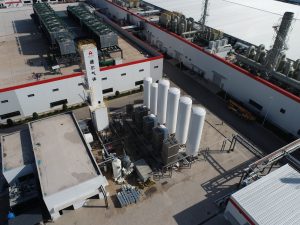
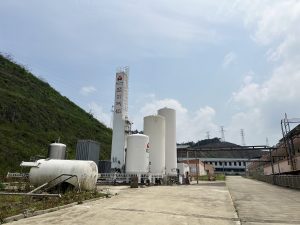
Cryogenic ASUs are capital-intensive and intended for very large flows. Their capacity ranges from a few hundred Nm³/h for small ASUs up to 10,000–20,000 Nm³/h or more for large industrial facilitiesnewtekgas.com. Because these plants include compressors, refrigeration (cooling turbines or Joule-Thomson loops), tall insulated columns, and storage vessels for liquid oxygen, their footprint is large and construction takes months. Operating costs are dominated by high energy use for refrigeration (typically hundreds of kWh per ton of O₂ producedthundersaidenergy.com) and continual maintenance of complex cold-box equipment. However, cryogenic systems can co-produce nitrogen and argon, and they are usually the only source of liquid oxygen (LOX) if needed.
Typical features of cryogenic oxygen systems:
- Capacity range: Hundreds to tens of thousands of Nm³/h (well beyond the practical limit of PSA/VPSA in a single unit).
- Oxygen purity: 99–99.7% (standard), with the option for >99.9%. Very high purity is needed for electronics, pharmaceuticals, or medical markets demanding 99%+.
- Energy consumption: High (on the order of 150–800 kWh/ton of O₂, i.e. ~0.2–1.0 kWh/Nm³, depending on scale and recovery)thundersaidenergy.com.
- Footprint: Large cryogenic plant footprint due to distillation columns, cold boxes, and insulation. Installation requires significant infrastructure.
- Applications: Large-scale steel mills (blast furnace/BOF oxygen lancing, basic oxygen process), petrochemical refineries (oxy-fuel burners, chemical oxidation), large glass or ceramic furnaces, any operation needing multi-thousand-Nm³/h flows, and industries requiring liquid oxygen or ultra-pure O₂ (medical supply for hospitals in regions mandating >99%, semiconductor manufacturing, high-end aerospace).
Cryogenic plants have high CapEx (in the multi-million USD range for large units) but gain economies of scale at very high production rates. They run continuously (24/7) and have slower response times and longer startup delays than PSA/VPSA. Because of these factors, the choice of cryogenic vs. PSA/VPSA often hinges on whether purity and flow requirements justify the higher cost and complexity.A cryogenic industrial oxygen generation system is typically selected when very high oxygen purity or large production capacity is required.
Technical Comparison of PSA, VPSA, and Cryogenic Systems
To summarize the key differences, the table below compares PSA, VPSA, and Cryogenic oxygen generation methods across critical parameters. This helps guide selection based on required capacity, purity, energy footprint, and application.
| Technology | Capacity Range | Oxygen Purity | Energy Use | Footprint | Typical Applications |
|---|---|---|---|---|---|
| PSA | ~1–1000+ Nm³/h (modular) | ~90–95% (95% max typical) | Moderate (~0.3–0.6 kWh/Nm³) | Small/modular containers | Small-to-medium oxygen demand: – Hospitals/clinics (backup) – Wastewater aeration – Aquaculture – Glass heating (non-critical) – Metal cutting/welding – Small chemical plants |
| VPSA | ~100–5000+ Nm³/h (large) | ~90–95% | Moderate-to-Low (~0.3–0.5 kWh/Nm³) | Medium (larger skid + vacuum) | Medium-to-large demand: – Steel mill oxygen lancing – Pulp and paper bleaching – Large wastewater treatment – Mining (leaching) – Medium chemical plants – Refineries (medium-scale) |
| Cryogenic Distillation | ~300–20,000+ Nm³/h | 99–99.7% (up to 99.9%+) | High (~0.5–1.0+ kWh/Nm³) | Large (plant site) | Very large/high-purity needs: – Steelmaking (BOF/EAF) – Large petrochemical refineries – Medical (99+%) – Pharmaceuticals/electronics – Any application needing LOX |
In practice, the “break-even” point often cited is around a few hundred to a thousand Nm³/h of oxygen: below that range, PSA/VPSA is generally more economical; above it, cryogenic air separation tends to win on a $/Nm³ basisnewtekgas.com. (This threshold depends on local energy prices and purity requirements.) The table also highlights that PSA and VPSA cannot produce liquid oxygen, whereas cryogenic plants can provide LOX or high-pressure oxygen through additional equipment.
Industrial Applications
Industrial oxygen generation systems support a wide range of processes where enriched or pure oxygen improves efficiency, reaction rates, or product quality. Some typical applications include:
- Steel Manufacturing: Oxygen is used in blast furnaces and basic oxygen furnaces (BOF) to intensify combustion and metallurgical reactions. On-site oxygen supply (often via cryogenic or large VPSA systems) can substitute or supplement traditional oxygen lancing, boosting melt rates and energy efficiency.
- Petrochemical and Chemical Processing: High-purity oxygen enhances oxidation reactions (e.g. reactor feed, fuel oxidation) and combustion in refineries and chemical plants. For example, oxy-fuel burners in cracking furnaces or boilers improve thermal efficiency and reduce flue volume. PSA/VPSA units may serve medium-scale refineries, while large facilities use cryogenic oxygen.
- Medical and Healthcare: Hospitals require a reliable supply of respiratory-grade oxygen. On-site PSA or VPSA generators are often installed as backup or primary supply in medical centers. These systems deliver oxygen at pharmacopeia grades (~93%) directly to the facility’s pipeline, reducing dependency on cylinder deliveries. Hospitals also use oxygen-enriched air for certain therapies and equipment.
- Wastewater Treatment: Oxygen is sparged into aeration basins to boost the growth of aerobic bacteria, improving the breakdown of organic waste. On-site oxygen generators (typically PSA) enable cost-effective, continuous aeration without handling bulk oxygen tanks.
- Glass and Ceramic Production: Oxy-fuel burners increase flame temperature and reduce fuel usage in glass melting. By replacing air with oxygen in combustion, plants achieve higher furnace efficiency and cleaner exhaust. Both medium and large glass plants use on-site oxygen (PSA or cryogenic) for this purpose.
- Metal Fabrication (Cutting/Welding): Many metal cutting and welding operations use oxy-fuel torches that consume pure oxygen to achieve high-temperature flames. Industrial workshops may use PSA generators for welding oxygen if their demand justifies it, eliminating the need for frequent cylinder orders.
- Pulp & Paper Bleaching: Oxygen-based bleaching of pulp reduces chemical usage and effluent loads. Large paper mills use oxygen (from VPSA or cryogenic units) injected into pulp digesters to aid delignification.
- Mining and Mineral Processing: In processes like cyanide leaching, oxygen-enriched air or pure oxygen speeds up gold extraction. Some mines install VPSA oxygen plants on-site to oxygenate slurry or enriched air.
- Aquaculture: Fish farms and hatcheries sometimes use oxygen generators to maintain high dissolved oxygen levels in tanks or ponds, improving fish health and growth rates.
- Other Sectors: Many specialty uses exist, such as ozone production (oxygen feedstock), semiconductor manufacturing (ultra-pure O₂), and glass tube forming for neon signs. In each case, the on-site industrial oxygen generation system is matched to the required purity and scale of the operation.
In summary, wherever a steady, high-volume oxygen supply is needed on-site—whether for combustion, oxidation, or environmental benefits—industrial oxygen generation systems provide a convenient solution. They eliminate cylinder handling, improve safety, and can be more cost-effective than purchasing delivered oxygen in large quantities.
Cost Analysis: CAPEX and OPEX
Capital Expenditure (CAPEX): The upfront cost of an industrial oxygen generation system includes equipment purchase and installation, foundations, utility tie-ins, and commissioning. PSA systems generally have lower CAPEX than cryogenic plants. For example, small PSA skids (tens Nm³/h) can cost on the order of $10–$50K, whereas large PSA modules (hundreds Nm³/h) may run into hundreds of thousands. By comparison, cryogenic air separation units often exceed $100K even for relatively modest sizesminnuogas.com, and multi-million-dollar budgets for plants producing thousands of Nm³/h are common. Key CAPEX drivers include:
- Plant Capacity: Larger flow rates require bigger compressors, more adsorber beds or larger columns, and often multiple units, which raises costs roughly with scale (though economies of scale can reduce cost per unit capacity).
- Purity Requirements: Achieving higher oxygen purity (e.g. 99% instead of 95%) typically necessitates additional stages or higher-grade adsorbents, roughly doubling cost when purity increases from ~95% to 99%minnuogas.com.
- Infrastructure: Civil works, power supply upgrades, and safety systems (ventilation, explosion protection for oxygen) are non-trivial costs. Remote or high-altitude locations can further increase costs due to special equipment (e.g. cold-climate packages or altitude compensation for compressors)minnuogas.com.
- Auxiliary Equipment: Compressors (for air supply) are a major cost component ($2K–$15K for moderate sizesminnuogas.com), as are air dryers, filters, oxygen storage tanks, and control systems. High-quality compressors and redundant systems add to initial investment but improve reliability.
- Technology Type: PSA/VPSA modules are factory-built and require minimal on-site assembly, keeping installation costs lower. Cryogenic plants involve on-site assembly of columns, cold boxes, and storage vessels, requiring longer timelines and specialized construction.
Operational Expenditure (OPEX): After installation, major ongoing costs include energy, maintenance, and consumables. Oxygen generation is energy-intensive, so electricity is often the largest expense:
- Energy Consumption: PSA/VPSA systems require electricity mainly for air compression (and vacuum pumping for VPSA). Typical PSA units consume roughly 0.3–0.6 kWh per Nm³ of O₂; VPSA may be slightly lower on a per-Nm³ basis due to improved recoveryjalonzeolite.com. Cryogenic units consume more energy overall (combining compression and refrigeration) – often on the order of 150–800 kWh per ton of O₂ produced (0.2–1.0 kWh/Nm³)thundersaidenergy.com, which can be 2–3 times higher than PSA at comparable scales. The difference is especially pronounced at very high purities and continuous operation.
- Maintenance: Routine replacement of filters, air dryers, lubricants, and worn valves is required in all systems. PSA/VPSA plants also require periodic replacement of molecular sieve beds (every few years) and maintenance of pneumatic valves. Cryogenic plants demand maintenance of compressors, turbines, and cold boxes, as well as vigilant monitoring of any hydrocarbon contamination (which can freeze out). In general, PSA/VPSA maintenance is simpler and cheaper, whereas cryogenic plants often need skilled technicians and can have longer downtime for repairs.
- Labor and Compliance: Skilled operators may not be required for small PSA systems, but large cryogenic ASUs typically have full-time operating staff. Oxygen plants must comply with safety regulations (for example, preventing oil or moisture in oxygen), which can incur costs for sensors and safety checks.
- Consumables and Ancillaries: Costs also arise from water consumption (for cooling), replacement parts (compressor filters, vacuum pump seals), and potential catalysts if any co-generation is used. If multiple units are used for redundancy, the capital and maintenance of spares or backup modules should be considered.
In practical terms, a plant that uses a large volume of oxygen continuously (e.g. a steel mill) will find cryogenic OPEX significant but manageable due to scale. A smaller user (e.g. a hospital or small factory) will find PSA/VPSA more economical in both CAPEX and OPEX. Importantly, one must consider total cost of ownership: a slightly higher CAPEX PSA system might have lower annual energy bills than a cheaper but less efficient alternative. Conversely, oversizing a plant can waste money, just as undersizing can force reliance on delivered oxygen with much higher unit cost. A correct sizing and technology choice, possibly aided by an ROI analysis, ensures the most cost-effective solution.
Conclusion
Selecting the right industrial oxygen generation system requires balancing oxygen purity, flow rate, and total cost of ownership.
A properly designed industrial oxygen generation system can deliver long-term operational stability, predictable operating costs, and reliable oxygen supply.
Decision-makers should evaluate CAPEX versus OPEX trade-offs, factoring in local electricity prices, required uptime, and maintenance capabilities.
By comparing the technologies (as outlined above) and understanding typical uses—steelmaking, petrochemicals, medical backup, and more—engineers and managers can design oxygen supply systems that maximize reliability and efficiency. A well-chosen industrial oxygen generation system will yield long-term savings and stable operation, as facilities shift away from purchased cylinders toward modern on-site generation.