Introduction
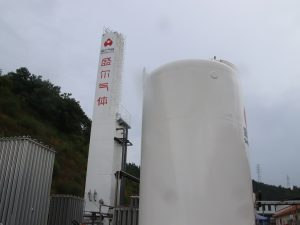
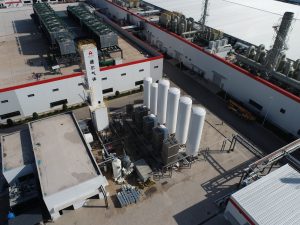
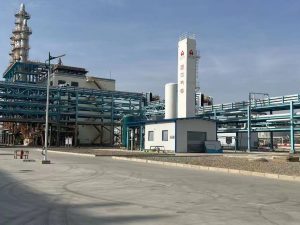
Cryogenic oxygen production is the leading technology for extracting oxygen from air on a large scale. It involves cooling atmospheric air to extremely low temperatures until it liquefies, then separating the liquid air into its components (primarily oxygen and nitrogen) by fractional distillationmedia.path.org. This cryogenic process can produce very high-purity oxygen (often ~99.5% by volumemathesongas.com) in massive quantities—industrial air separation plants (or ASUs, Air Separation Units) can output on the order of hundreds to thousands of tons of oxygen per daymathesongas.com. Such capacity and purity are well beyond what alternative technologies (like pressure swing adsorption or membrane separation) can achievethechemicalengineer.comthechemicalengineer.com. As a result, cryogenic oxygen production is the method of choice whenever industries require a reliable bulk oxygen supply. Modern ASUs also co-produce nitrogen (and sometimes argon) to take advantage of separating the full air mixture in one facility, improving overall efficiency.

Principles of Cryogenic Oxygen Production
The basic principle behind cryogenic oxygen production is that the main constituents of air have different boiling points. Nitrogen boils at about –196 °C, oxygen at –183 °C, and argon at –186 °Ccryospain.com. By liquefying air and carefully warming it through a distillation process, these components can be isolated based on their phase change temperatures. In practice, a cryogenic air separation unit carries out this process through several key steps:
- Air Compression: Ambient air (which is ~78% N₂, 21% O₂, plus argon and trace gases) is drawn into the ASU and compressed to a higher pressure, typically around 5–10 barcryospain.com. Multi-stage turbocompressors with intercoolers are used to minimize the work input. Compressing the air not only raises its pressure but also facilitates more effective cooling in subsequent steps.
- Purification: Before cooling, the pressurized air is passed through purification units to remove water vapor, carbon dioxide, and any hydrocarbons or particulates. These impurities must be removed (usually by molecular sieve adsorbers) to prevent freezing or blockages in the cryogenic equipmentcryospain.com. By the end of this stage, the air entering the cold box is clean, dry, and mostly composed of O₂, N₂, and argon.
- Cooling and Liquefaction: The purified air is next cooled to cryogenic temperatures (around –175 to –190 °C) using a heat exchange and refrigeration cycleshengerhk.com. The air flows through a brazed aluminum plate-fin heat exchanger, where it is chilled by counter-flowing cold streams (oxygen, nitrogen, and waste gases exiting the distillation columns). Often, a portion of the air is diverted through an expansion turbine (turboexpander) to produce additional refrigerationthechemicalengineer.comthechemicalengineer.com. By the time the air is fully cooled, most of it has condensed into a liquid (with some remaining vapor), creating a cold liquid-air mixture ready for separation.
- Fractional Distillation: The cold liquefied air enters a distillation system to separate oxygen from nitrogen (and argon). Modern cryogenic ASUs typically use a double-column arrangement operating at different pressuresshengerhk.com. In the higher-pressure column (at ~5–6 bar), the mixture begins to separate: oxygen-enriched liquid collects at the bottom, while nearly pure nitrogen gas rises to the topthechemicalengineer.com. This nitrogen gas is then condensed against boiling oxygen in a heat exchanger called a condenser-reboiler, and the resulting liquid nitrogen provides reflux for both columnsassets.linde.com. The oxygen-enriched liquid from the high-pressure column is fed into the low-pressure column (just above 1 bar) for further refinement. In the low-pressure column, the remaining separation occurs: high-purity oxygen (≈99%–99.5%) is obtained at the bottom as a liquid, and high-purity nitrogen gas (typically 99.9%+ O₂-free) is taken from the topassets.linde.comassets.linde.com. Argon, if needed, is extracted via an intermediate draw into a separate argon distillation column where it can be refined into crude and then pure argon productassets.linde.com. Throughout this distillation, the differing boiling points ensure that oxygen concentrates in the lower portions (since it has the higher boiling point of the major components), while nitrogen concentrates at the top.
- Product Withdrawal and Warming: Once separated, the oxygen product can be drawn from the low-pressure column. In many ASUs, the oxygen is removed as a liquid (low-temperature liquid oxygen, LOX) from the column sumpthechemicalengineer.com. This LOX may be pumped to high pressure if gaseous oxygen delivery is required at pressure (pumping a liquid is energetically cheaper than compressing gas), and then evaporated by warming it in heat exchangersassets.linde.comassets.linde.com. Alternatively, in some configurations oxygen is taken directly as a gas from the column if only low-pressure gaseous oxygen is needed. In either case, the final oxygen product is warmed back to ambient temperature (e.g. by heat exchange with incoming air) and delivered to users at the specified pressure. Nitrogen product is typically drawn as a gas from the top of the low-pressure column (or stored as liquid nitrogen if needed for portability), and any argon product is also stored or pressurized as required. The end result is a stream of high-purity oxygen ready for industrial use, often ~99.5% O₂ with the main impurity being argonshengerhk.com. All the remaining gases (unneeded nitrogen or argon-depleted waste) are routed out of the cold box, warming up and often being used to regenerate the air purification system in a continuous cyclethechemicalengineer.com.
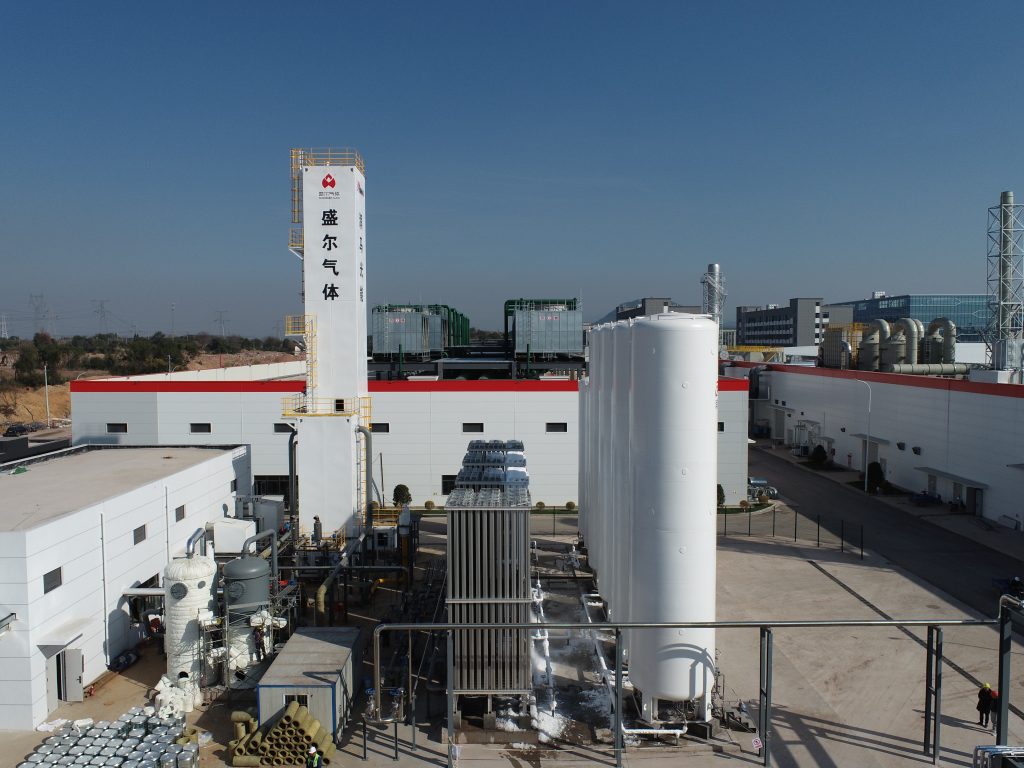
This multi-step cryogenic process is highly energy-intensive but very effective. The cryogenic distillation method described above is the foundation of virtually all large industrial oxygen plants today. Its ability to co-produce multiple products (oxygen, nitrogen, argon) at high purity makes it extremely economical for bulk gas supply despite the power costs. Modern designs incorporate many efficiency measures, such as heat integration between the columns and the heat exchangers, to recover as much cold energy as possible.
Performance and Output Characteristics
Every industrial air separation plant is designed to meet specific output requirements, but there are common performance benchmarks for cryogenic oxygen production. Table 1 below summarizes typical product specifications for a large modern ASU serving general industrial needs:
| Parameter | Oxygen (O₂) | Nitrogen (N₂) |
|---|---|---|
| Purity (vol %) | ~99.5% (high-purity)mathesongas.com | ~99.999% (ultra-high) |
| Flow Rate (Nm³/h) | ~50,000 (large plant)shengerhk.com | ~60,000 (large plant) |
| Delivery Pressure (bar) | 5–6 (typical pipeline)shengerhk.com | 5–6 (typical pipeline) |
| Supply form | Gas or liquid (LOX) | Gas or liquid (LIN) |
| Specific power usage (kWh per Nm³) | ~0.4 (per Nm³ O₂)shengerhk.com | ~0.3 (per Nm³ N₂) |
Table 1: Typical output specifications for a large cryogenic air separation unit. (Nm³ = normal cubic meter at standard conditions).
As shown above, cryogenic oxygen production easily achieves ~99.5% purity oxygenmathesongas.com, which is sufficient for almost all industrial and medical applications. In fact, many plants produce higher purity oxygen (99.8–99.9%) when needed by adding an extra polishing step or simply because argon is also being captured (removing argon from oxygen pushes O₂ purity toward 99.9%). Nitrogen, produced as a co-product, can reach ultra-high purities (up to “five nines” 99.999% N₂) via cryogenic distillation, far cleaner than what non-cryogenic methods can typically provide. The flow rates indicate the immense scale of these ASUs: a single large plant can output on the order of 1,000–2,000 tons of O₂ per day, alongside a similar or greater quantity of N₂shengerhk.com. For example, an oxygen flow of 50,000 Nm³/h corresponds to roughly 1,700 tons of O₂ per day, illustrating how an ASU can meet the demands of giant consumers like steel mills or petrochemical complexes. Delivery pressure for the gaseous products is usually a few bar above atmospheric pressure (to feed pipelines or process equipment); higher pressures are achievable by using liquid pumps and vaporizers if needed (some designs deliver O₂ at 30–60 bar for direct use in high-pressure reactors). Power consumption, often in the range of 0.3–0.5 kWh per Nm³ of oxygen producedshengerhk.com, is a critical operating parameter. This translates to tens of megawatts of electricity for a large ASU running continuously. Consequently, improving energy efficiency is a major focus in cryogenic oxygen plant design. Engineers employ strategies like heat exchangers with better recuperation, advanced process controls, and efficient compressors and expanders to reduce the kilowatt-hours needed per unit of oxygen. Even so, cryogenic oxygen production remains an energy-intensive process, and operators continuously balance output purity against power consumptionmathesongas.com to optimize costs.
Applications Across Industries
One reason cryogenic oxygen production is so prevalent is its broad applicability across industries. Oxygen (as well as nitrogen) produced from air separation underpins countless industrial processes and services. Below are a few of the major sectors that rely on cryogenic oxygen production for their operations:
- Steel and Metals: The steel industry is one of the largest consumers of oxygen. Integrated steel mills use huge quantities of oxygen in blast furnaces (to enrich the air blast and increase combustion temperature) and in basic oxygen furnaces, where high-purity O₂ is blown into molten iron to refine it into steelshengerhk.com. These processes can require thousands of tons of oxygen per day at a single site, a demand that only on-site cryogenic ASUs can economically satisfy. Non-ferrous metal smelting and welding/cutting operations also use oxygen to improve energy efficiency and flame temperatures.
- Chemical & Energy: Many chemical processes and energy systems depend on large oxygen supplies. For example, gasification plants (converting coal, biomass, or waste to syngas) use pure oxygen instead of air to enable higher efficiency and cleaner outputs (since using oxygen avoids the dilution of nitrogen and eases CO₂ capture)shengerhk.com. Refineries and petrochemical plants may use oxygen for processes like partial oxidation of hydrocarbons or for producing ethylene oxide, requiring consistent oxygen flow. Additionally, emerging energy technologies integrate cryogenic oxygen production in novel ways: oxy-fuel combustion power plants burn fuel in oxygen to simplify carbon capture, and concepts like liquid air energy storage use liquefied gases from ASUs to store and release energy as part of renewable power managementshengerhk.comshengerhk.com. In all these cases, the ability of cryogenic plants to provide oxygen at high purity and in bulk makes new process configurations feasible.
- Healthcare and Medicine: Medical-grade oxygen (typically >99% purity) for hospitals and healthcare facilities is generally produced via cryogenic separation at large plants, then delivered to end users in liquid tankers or high-pressure cylinders. The reliability of cryogenic oxygen production ensures a continuous supply of this life-saving gas for ventilators, anesthesia, and other medical applications. Even though hospitals use much less oxygen than an oil refinery or steel mill, the strict purity and cleanliness standards are readily met by cryogenic distillation. During the COVID-19 pandemic, for instance, many regions ramped up output from cryogenic ASUs to meet surges in medical oxygen demand, highlighting the importance of this technology in the medical sector.
- Electronics and Semiconductor Manufacturing: Semiconductor fabrication requires ultra-high-purity gases. Cryogenic air separation is used to produce large volumes of nitrogen gas (often 99.999% pure) for purging and blanketing in chip fabsshengerhk.com. While nitrogen is the primary gas for inert environments, semiconductor plants also use high-purity oxygen for oxidation processes (such as growing silicon dioxide layers on wafers) and for certain etching and cleaning stepsshengerhk.com. An on-site cryogenic ASU thus provides a steady supply of both nitrogen and oxygen for these sensitive processes. The extreme purity levels and reliability of supply help maintain the ultra-clean conditions required in electronics manufacturing – any interruption or contamination could halt production, so the dependability of cryogenic oxygen and nitrogen production is a big advantageshengerhk.com.
- Other Industries: Numerous other sectors benefit from cryogenic oxygen production. In the food and beverage industry, cryogenic nitrogen (from an ASU) is used for freezing and packaging, while oxygen can be used in ozone generation for water treatment. The glass and cement industries use oxygen-enriched combustion to boost furnace temperatures and efficiency. Water treatment facilities may employ oxygen for ozone production or to enhance wastewater processing. Even the aerospace field relies on cryogenic production of liquid oxygen as rocket propellant oxidizer – although rocket-grade LOX has its own handling specifics, it is produced by the same fundamental distillation process. Across all these examples, cryogenic air separation technology provides the necessary gases at scale, with the flexibility to serve diverse applications.
Conclusion
Cryogenic oxygen production through air separation has become a cornerstone of modern industry. It enables the economical supply of large volumes of oxygen, nitrogen, and argon with exceptionally high purity and reliability. By exploiting the fundamental physics of air components at cryogenic temperatures, engineers have developed robust systems to fuel steelmaking, chemical synthesis, healthcare, electronics, energy production and more. The technology is mature and dependable – many large ASUs boast on-stream factors above 99% uptime – yet it continues to evolve and improve. Today’s designs are far more energy-efficient than those of past decades, thanks to advances in heat exchanger design, process integration, and equipment efficiency. Ongoing research is focused on reducing the substantial power consumption that cryogenic oxygen production requiresmathesongas.com, as well as increasing operational flexibility (for example, ramping production up or down quickly to align with renewable energy availabilityshengerhk.com).
In summary, cryogenic oxygen production works by refrigerating air to liquid form and separating it via distillation – a process that, while energy-intensive, yields unparalleled purity and volume of oxygen for industrial use. Its cross-industry relevance and proven performance ensure that this technology will remain indispensable for years to come, even as new innovations and sustainability initiatives influence its future development. The ability to deliver massive amounts of high-purity oxygen on demand is a foundational capability underpinning many of the things we take for granted in modern society, from strong steel and clean chemicals to advanced electronics and quality healthcare. By continuously refining cryogenic air separation, industries are not only meeting current demands but also opening doors to more efficient and greener operations in the future.