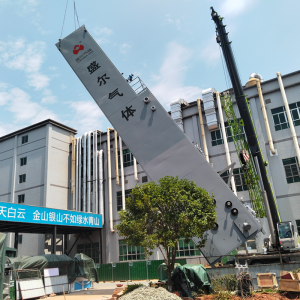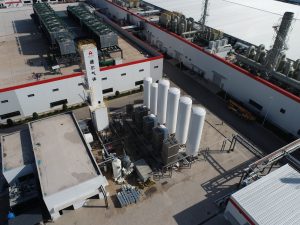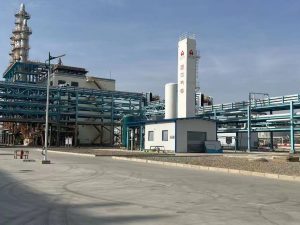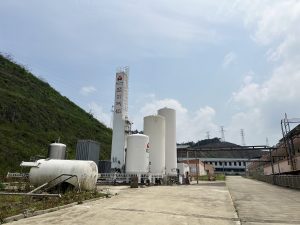
Introduction
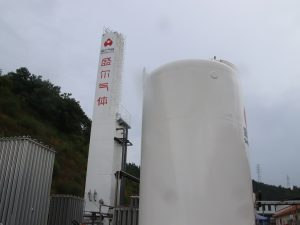
Cryogenic air separation for nitrogen production is the primary industrial method for producing large volumes of high-purity nitrogen gas. Ambient air (about 78% N₂ and 21% O₂) is first filtered and compressed (typically to 5–10 bar) to improve refrigeration efficiency. The compressed air is then purified to remove carbon dioxide and moisture, and finally cooled to cryogenic temperatures (around –180 to –190 °C) so that oxygen and argon liquefy. Fractional distillation columns exploit the different boiling points of the components (–196 °C for N₂, –183 °C for O₂, –186 °C for Ar) to separate the gases. The result is a continuous output of gaseous nitrogen (typically 99.5–99.99% purity) from the top of the column, with liquid oxygen (and argon) collected as byproducts.
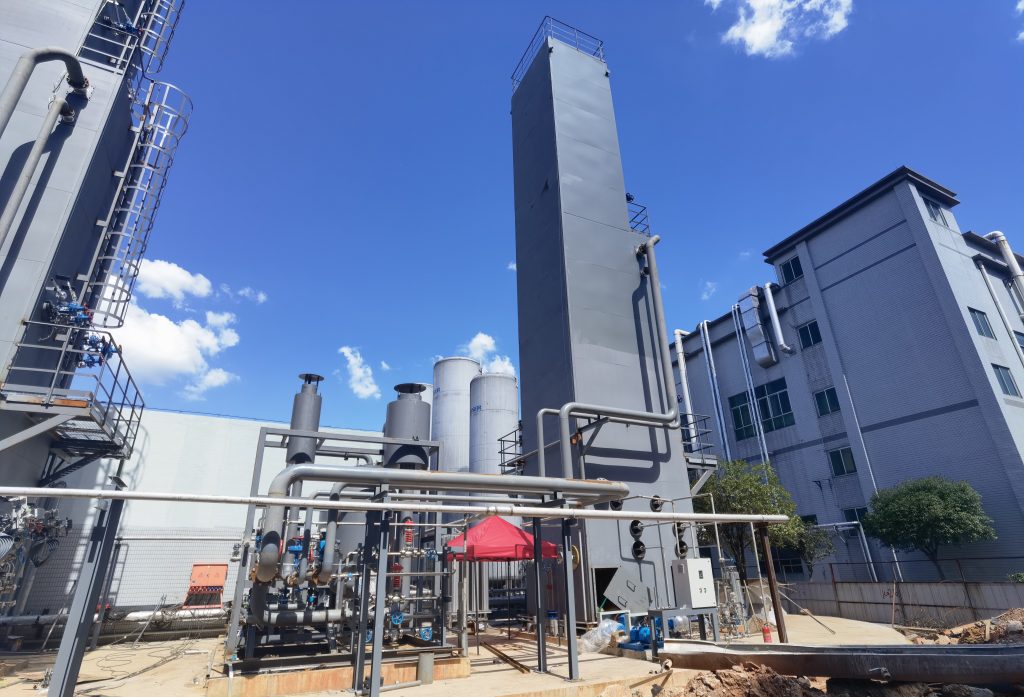
In operation, a cryogenic air separation unit (ASU) for nitrogen production runs continuously with stable controls. The purified, high-pressure air enters a cold box of multi-stream heat exchangers where it is progressively cooled by outgoing cold streams. Expansion turbines or Joule–Thomson valves provide additional refrigeration to fully liquefy part of the air. The cold, partially-liquefied air is fed into a high-pressure distillation column (around 5–8 bar). In this column, oxygen-rich liquid collects at the bottom and nitrogen-enriched vapor rises to the top. The oxygen-rich liquid is then routed to a lower-pressure column (near 1–2 bar) for further purification, while the high-purity nitrogen vapor is drawn from the top of the column train. A portion of the nitrogen product (typically 5–10%) is intentionally liquefied (LN₂) and stored, which helps maintain refrigeration balance and meet peak demand, while the rest is delivered as gas.
Process Steps
In a cryogenic air separation for nitrogen production facility, the following sequence of steps is followed:
- Compression: Ambient air is drawn in and compressed in multiple stages (with intercooling) to a higher pressure (typically 5–10 bar gauge). Compressing the air before cooling is more energy-efficient than compressing cold gas.
- Purification: The high-pressure air flows through adsorbers (molecular sieves and activated alumina) to remove water, carbon dioxide, and hydrocarbons. Removing these impurities prevents freezing and blockages in the cold box.
- Pre-Cooling and Refrigeration: The purified air passes through a cold box of heat exchangers, where it is progressively cooled by outgoing cold product streams. Expansion turbines or Joule–Thomson valves provide additional refrigeration to fully liquefy part of the air.
- Fractional Distillation: The cold, partially-liquefied air enters the distillation columns. In the high-pressure column (around 5–8 bar), oxygen-rich liquid collects at the bottom and nitrogen-enriched vapor rises to the top. The liquid oxygen is sent to a low-pressure column (near 1–2 bar) for further purification, while nitrogen vapor is taken off the top of the column train as product.
- Product Recovery: The nitrogen gas (usually 99.5–99.99% purity) is warmed to ambient temperature. The majority leaves as gas; a portion (about 5–10%) is liquefied (LN₂) for storage and to provide refrigeration via flash vaporization. Oxygen and argon are collected as bottom or side streams and sent out as co-products or disposed of according to plant design.
A well-designed ASU can achieve high uptime and precise control over gas purity. Operators adjust reflux ratios and column pressures to meet the specified nitrogen purity. For example, raising reflux in the low-pressure column increases nitrogen purity but requires additional reboil and refrigeration duty.
Key Equipment and Design Considerations
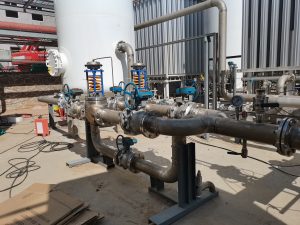
Major equipment in a cryogenic air separation for nitrogen production unit includes:
- Air Compressors: Multi-stage centrifugal or reciprocating compressors (oil-free or oil-lubricated) that raise ambient air to the design pressure (usually 5–8 bar). Higher discharge pressure improves refrigeration efficiency but increases power consumption.
- Purification System: Adsorption beds of molecular sieve or alumina remove moisture, carbon dioxide, and hydrocarbons to very low levels to avoid freezing in the cryogenic sections.
- Cold-Box Heat Exchangers: High-effectiveness plate-fin or tubular heat exchangers where the warm compressed air is cooled by outgoing cold product streams. The cold-end of the exchanger typically reaches around –180 °C.
- Expansion Refrigeration: Turbo-expander turbines or Joule–Thomson valves supply additional cooling. In many designs, a portion of the high-pressure nitrogen is expanded through turbines to generate cold and often to drive a compressor (turbo-expander work recovery).
- Distillation Columns: Usually a high-pressure column (operating around 5–8 bar) and a low-pressure column (near 1–2 bar), each containing trays or structured packing. These columns perform the separation, producing nitrogen vapor at the top and liquid oxygen (and argon) at the bottom.
- Product Compressors and Pumps: After separation, nitrogen gas is often compressed for delivery to pipeline or process pressure. Liquid products (LN₂, LOX) are pumped to storage tanks if produced.
Operating pressures and temperatures are chosen for optimal efficiency. For example, a typical design might use a high-pressure column at ~6 bar and a low-pressure column at ~1.2 bar. The cold-box outlet temperature is usually around –185 °C. All equipment must withstand these low-temperature and high-pressure conditions. In cryogenic air separation for nitrogen production units, designers must ensure each component is rated for the extreme operating conditions. The following table summarizes key design parameters.
| Parameter | Typical Range / Value |
|---|---|
| Feed air pressure (compressor discharge) | 5–10 bar (gauge) |
| Cold box outlet (cold end) temperature | –170 to –190 °C |
| Nitrogen purity (product gas) | 99.5–99.99% (by volume) |
| Nitrogen production rate (gas) | ~100–1500+ tons/day (per unit) |
Table 1. Typical operating parameters for cryogenic air separation units (ASUs) producing nitrogen.
The table above summarizes typical values. These ranges are crucial for equipment sizing and design. For example, a large plant might compress air to ~6 bar, cool it to –185 °C, and produce on the order of 1000–1500 tons/day of nitrogen at ~99.5% purity, along with liquid oxygen. Smaller units deliver proportionally less nitrogen. Engineers use such parameters to size the columns, heat exchangers, and compressors during the design stage.
Energy Use and Efficiency
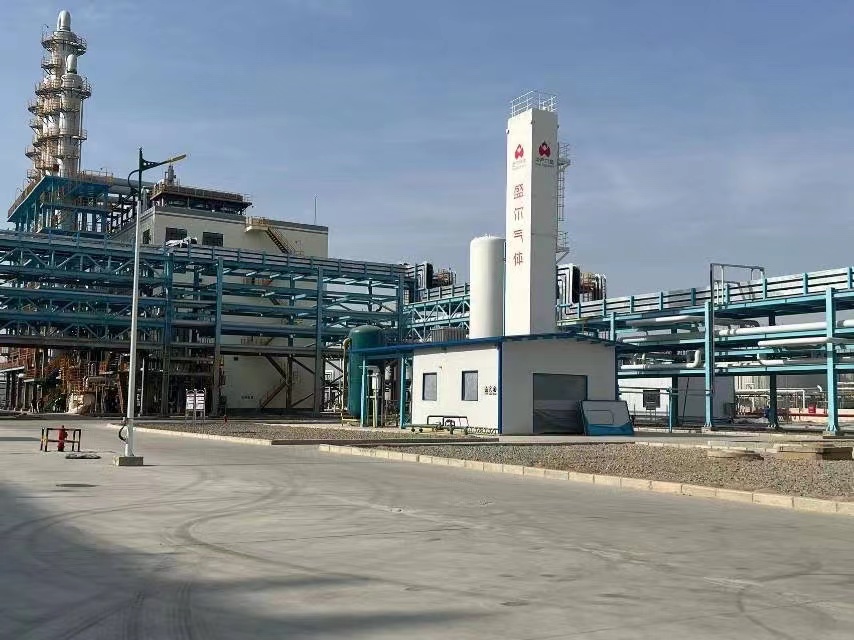
Cryogenic air separation for nitrogen production is inherently energy-intensive due to the work needed for compression and refrigeration. Modern plants typically require around 0.3–0.5 kWh of electricity per normal cubic meter (Nm³) of N₂ delivered as gas. (Equivalently, producing one ton of oxygen requires on the order of 150–200 kWh.) Efficiency improvements include high-effectiveness heat exchangers and multiple expansion stages. For example, large systems often expand a portion of the high-pressure nitrogen through a turbine to generate refrigeration. Designers must balance the high-pressure column setting: running at 6–8 bar improves refrigeration efficiency but increases compression work. By tuning these pressures and using plate-fin exchangers with countercurrent flow, most of the cold from product streams is recovered. In practice, a well-designed cryogenic ASU can achieve nitrogen purities above 99.5% with high recovery, and power consumptions on the order of 0.3–0.5 kWh/Nm³ of N₂.
Industrial Applications
Cryogenic air separation for nitrogen production is indispensable in many industries requiring large volumes of high-purity nitrogen. Key applications include:
- LNG (Liquefied Natural Gas) Facilities: Large LNG plants rely on cryogenic air separation for nitrogen production to supply both gaseous and liquid nitrogen. Gaseous nitrogen is used for purging and inerting pipelines and storage tanks, while liquid nitrogen (LN₂) provides refrigeration in closed-loop cycles (such as Brayton refrigerators).
- Chemical and Petrochemical Plants: Many chemical plants (e.g. ammonia synthesis, fertilizers, petrochemicals) require nitrogen for inerting, blanketing, and purging on a large scale. These facilities often rely on cryogenic air separation for nitrogen production to meet their high-purity demand on-site.
- Semiconductor and Electronics Manufacturing: Semiconductor fabrication demands ultra-high-purity nitrogen (often 99.999% or better) for processes like wafer annealing and equipment inerting. Cryogenic nitrogen plants can achieve these purity levels and deliver nitrogen free of moisture and hydrocarbons.
- Food and Beverage: Nitrogen is used for packaging, preservation, and inerting in food processing. While smaller producers may use PSA generators, large-scale operations may install cryogenic nitrogen plants (or purchase LN₂) to obtain the needed volumes and quality.
- Metallurgy and Materials: Processes such as metal heat treating, welding, and metal production often operate under nitrogen atmospheres to prevent oxidation. Cryogenic nitrogen provides the bulk supply for these operations, ensuring consistent gas quality.
- General Industrial Use: Many industries use nitrogen for stripping, drying, and pressure transfer. Cryogenic air separation for nitrogen production assures a steady, clean supply of nitrogen for such purposes.
Cryogenic ASUs are engineered for continuous operation (often exceeding 8000 hours/year) with high reliability. They can produce both gaseous and liquid nitrogen, which distinguishes them from PSA or membrane systems when liquid product or very high purity is needed.
Conclusion
Cryogenic air separation for nitrogen production provides a robust solution for industrial nitrogen needs. By compressing and liquefying air and using fractional distillation columns, these plants continuously deliver large volumes of ultra-pure nitrogen. Key design factors include feed-air pressure (typically 5–8 bar), cold-box temperature (around –180 °C), and column reflux settings to achieve the target purity (often 99.5% or higher). Typical large-scale units produce hundreds to thousands of tons of nitrogen per day at high purity.
In summary, cryogenic air separation for nitrogen production remains the industry standard when very high purity or large volumes of nitrogen are required. Its maturity and ability to generate both gaseous and liquid nitrogen on-site make it essential for LNG plants, chemical complexes, electronics manufacturing, and many other applications worldwide. This technology ensures that industrial processes have a steady, high-quality supply of nitrogen to meet their inerting, refrigerating, and processing requirements.