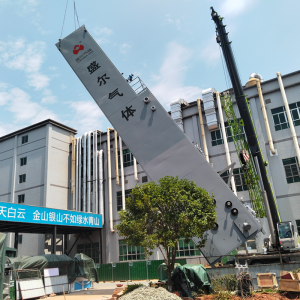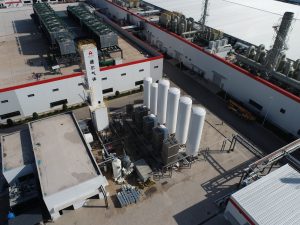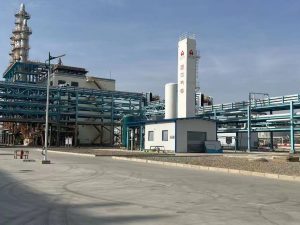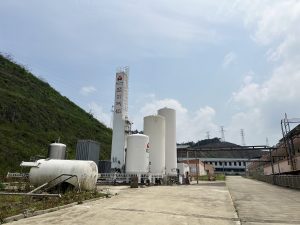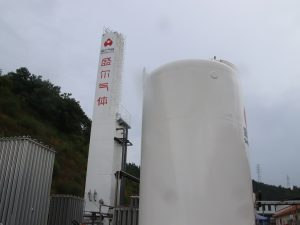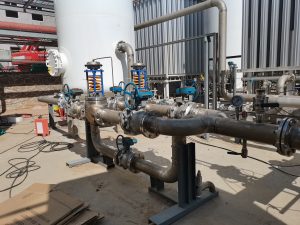
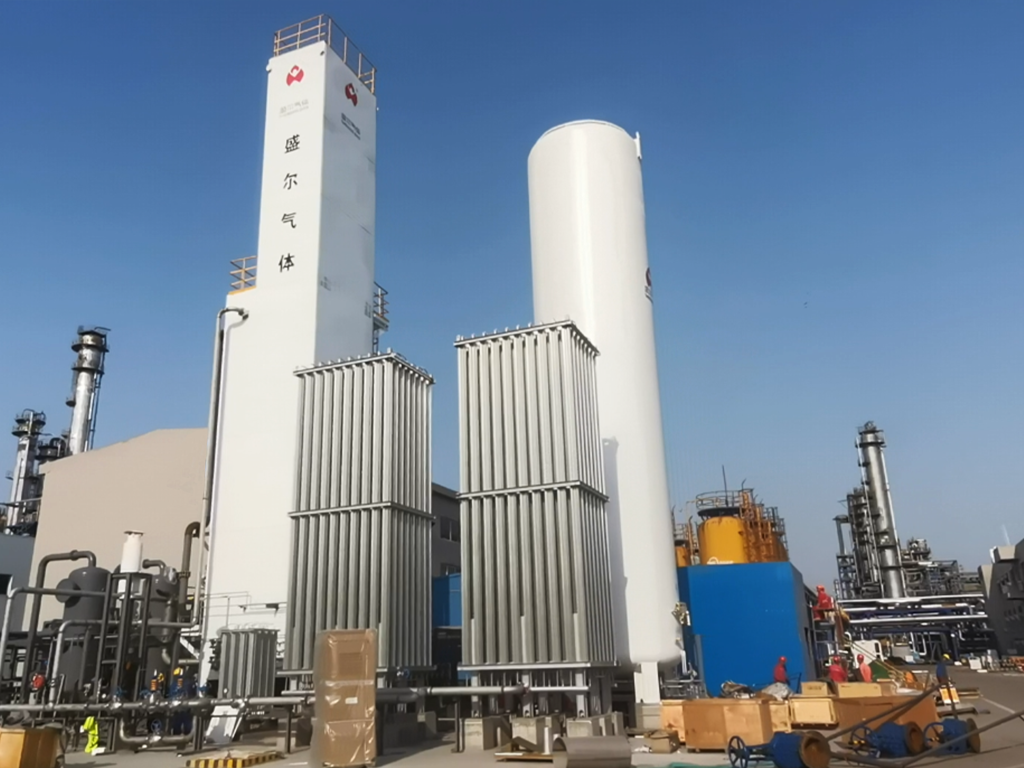
An air separation unit (ASU) is a critical component in modern petrochemical and syngas production facilities. By cryogenically separating atmospheric air into oxygen, nitrogen, and argon, an ASU enables on-site supply of high-purity gases for industrial processes. For large-scale gasification or cracking operations, having an air separation unit on site provides a continuous, reliable gas supply independent of external sources. Each ASU must be engineered for local conditions: for example, an air separation unit in a desert climate requires greater refrigeration capacity than one in temperate regions. In applications such as hydrocarbon gasification, oxidative cracking furnaces, and emissions abatement, large-scale ASUs achieve oxygen purities often exceeding 99% while maintaining efficient energy consumption. Simultaneously, the nitrogen co-produced by the ASU provides inerting, stripping, and pressure control in reactors and pipelines.
This article reviews the principles, performance parameters, and operational considerations of cryogenic ASUs specifically tailored for petrochemical and syngas plants around the world, with a focus on oxygen purity, energy consumption, and process integration.This makes the air separation unit a strategic backbone of gas logistics in petrochemical sites.
Operating Principles of a Cryogenic ASU
A modern ASU operates on the principle of cryogenic fractional distillation of air. Key steps in a typical ASU process include:
- Compression: Atmospheric air is compressed to 6–10 bar gauge to increase pressure before cryogenic cooling.
- Purification: Compressed air is purified to remove moisture and carbon dioxide, preventing freezing in cold equipment and ensuring product purity.
- Cryogenic Cooling: The purified air is cooled in multistage heat exchangers down to cryogenic temperatures (around -180 to -200 °C), often using expansion turbines or Joule–Thomson valves to provide refrigeration.
- Distillation: In cryogenic distillation columns, air separates by boiling point. Nitrogen (bp –196 °C) and oxygen (bp –183 °C) form distinct liquid and vapor phases. Liquid oxygen is drawn from one column, while gaseous nitrogen emerges from the top of another. Argon (bp –186 °C) may be extracted in an intermediate column if high-purity argon is required.
- Product Extraction: High-purity gaseous oxygen and nitrogen (and liquid O₂/N₂, if produced) are collected at specified pressures. Oxygen purity typically ranges from 99.5% to 99.9% for chemical applications. The outlet streams are then compressed or expanded to the required delivery pressure.
This cryogenic air separation unit cycle ensures a continuous supply of industrial gases.For example, the air separation unit’s piping and cryogenic vessels are heavily insulated to minimize heat ingress and preserve process efficiency. The design must balance flow rates, purity specifications, and energy usage according to each plant’s needs.The overall efficiency of an air separation unit is closely tied to its insulation, expansion control, and energy recovery systems.
ASU Applications in Petrochemical and Syngas Plants
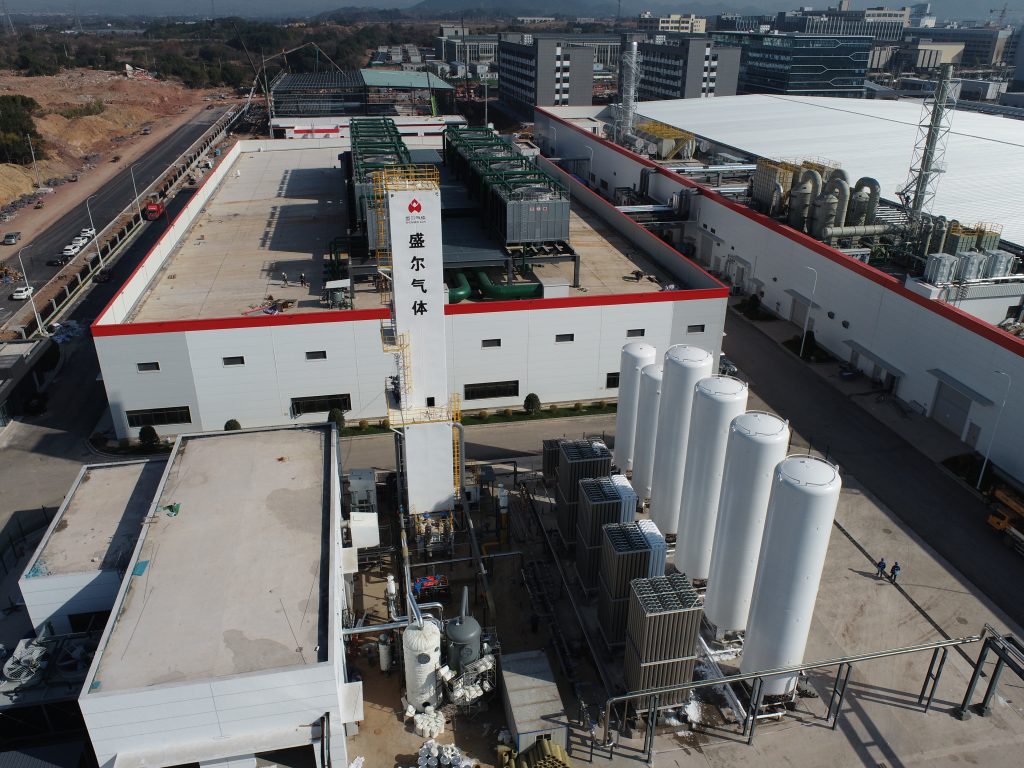
Air separation units serve multiple critical functions in petrochemical and syngas facilities.
- Syngas Production: In coal, biomass, or heavy liquid feedstock gasification, pure oxygen from the ASU drives partial oxidation, generating high-quality syngas (a mixture of CO and H₂). Oxygen purity (usually >95%) is crucial for maximizing syngas heating value and minimizing nitrogen dilution. Oxygen-enhanced combustion in syngas cleanup units also improves reaction efficiency.In these systems, the air separation unit must be designed for stable load response and high O₂ recovery.
- Reforming and Cracking: Steam methane reformers and ethylene crackers often use oxy-fuel burners supplied by ASUs. By replacing air with oxygen or oxygen-enriched air, flame temperature and furnace efficiency increase, reducing flue gas volume and enhancing throughput. Meanwhile, nitrogen from the ASU provides reactor inerting, purge cycles, and cooling for downstream equipment, improving process control and safety.
- Reactor and Pipeline Inerting: Reactors, storage tanks, and pipelines require nitrogen blanketing to prevent unwanted oxidation or explosive mixtures. An on-site ASU provides a high-purity nitrogen stream (often >99.9% purity) for these inerting and stripping applications in refineries and chemical plants.The reliability of the air separation unit directly impacts plant safety and startup protocols.
- Specialty Gas Production: Beyond O₂ and N₂, ASUs can co-produce argon as a byproduct. High-purity argon (99.999% or better) is valuable in electronics manufacturing, specialty chemical processes, and metal production often associated with petrochemical complexes.
- Heat Exchange and Cooling: The cold energy from the ASU’s cryogenic process can be utilized for process refrigeration or pre-cooling of gas streams, enhancing overall plant efficiency. In some cases, expanded waste gas from the ASU drives compressors or generates mechanical power for the plant.
In summary, an air separation unit effectively turns ambient air into a custom mix of industrial gases. Petrochemical and syngas plants rely on this versatility: oxygen for high-temperature reactions and nitrogen for inerting and utility supply.
Key Design and Performance Parameters
Important parameters for ASUs in these applications include production rates, purity, and energy consumption. Key design and performance indicators are:
- Production Capacity: Large chemical plants often require hundreds of tonnes per day of oxygen. A typical large-scale cryogenic ASU might produce on the order of 300–800 tonnes per day of O₂ (gaseous) to meet syngas or oxy-combustion demands. The nitrogen co-production can be even larger (often 2–4 times the oxygen mass) depending on demand. ASU capacity is chosen to match the plant’s maximum process requirements.
- Product Purity: Cryogenic ASUs deliver very high purity. Oxygen purity for petrochemical uses usually exceeds 99.5%, ensuring minimal nitrogen carryover. Nitrogen purity can be as high as 99.9% for critical inerting tasks. For ultra-high purity needs, argon (if recovered) can reach 99.999%. Purity levels are controlled by column pressure and reflux settings.
- Pressure Levels: ASU products are delivered at pressure. Typical design pressures range from about 5 bar to 30 bar (gauge), depending on downstream requirements. Cryogenic columns internally operate near ambient pressure (usually 1–3 bar abs); final product pressures are attained via compressors or expanders. Higher product pressure reduces the need for external recompression in the plant.
- Energy Consumption: A key metric is specific power usage (kilowatt-hours per tonne of O₂). Modern ASUs for large plants typically consume on the order of 400–600 kWh/t of oxygen produced. This includes energy for air compression and refrigeration duty. Efficient designs (multi-stage compression, expansion turbines, heat integration) aim to minimize this power per unit output. For example, upgrading an existing plant’s air separation unit can significantly reduce energy consumption by improving refrigeration cycles.
- Air-to-Oxygen Ratio: Since ambient air is ≈21% oxygen, roughly 4.5–5.0 normal cubic metres (Nm³) of air feed are required to produce 1 Nm³ of O₂ (assuming ~90% O₂ recovery). This underscores the need for large air compressors in ASU systems.
- Refrigeration Duty: Cryogenic separation requires substantial cooling. Many ASUs expand a portion of the product gas (often nitrogen-rich) in turboexpanders to supply the refrigeration load. The balance between compression and expansion duties affects overall efficiency.
- Plant Integration: ASUs are often integrated with plant utilities. For example, some plants use intermediate-pressure oxygen streams as feed, or share refrigeration load with neighboring processes. In many large plants, the air separation unit is integrated with process controls to adjust production according to demand. Proximity to major oxygen users (e.g. furnaces) minimizes pipeline length and pressure drop, reducing the need for additional compression.
Below is a summary table of typical ASU performance parameters for petrochemical and syngas applications:
| Parameter | Typical Range/Value | Units | Notes |
|---|---|---|---|
| Oxygen production capacity | 300 – 800 | tonnes/day (t/d) | Gaseous O₂ output, large-scale ASU range |
| Nitrogen production capacity | 500 – 1500 | tonnes/day (t/d) | Co-produced gaseous N₂ (varies by design) |
| Oxygen purity | 99.5 – 99.8 | % | High-purity O₂ for combustion/gasification |
| Nitrogen purity | 99.0 – 99.9 | % | High-purity N₂ for inerting/blanketing |
| Argon purity (if recovered) | 99.9 – 99.999 | % | Optionally co-produced for specialty uses |
| Operating pressure (product) | 5 – 30 | bar (gauge) | Design output pressure (varies by plant) |
| Specific energy consumption | 400 – 600 | kWh/tonne O₂ | Electricity required per tonne of O₂ |
Efficiency Trends and Advanced Technologies
Air separation units have evolved to improve efficiency and flexibility. For example, upgrading an existing plant’s air separation unit can significantly reduce energy consumption. Modern plants incorporate high-efficiency turboexpanders and optimized heat exchanger networks to reduce electrical load. Advanced control systems allow real-time adjustment of flows to minimize energy use when production is below maximum.
Emerging technologies also target smaller-scale or modular oxygen supply. Membrane separation and ceramic ion-transport membranes are under development to provide oxygen at lower capital cost for moderate-scale gasification or chemical plants. While such systems trade some purity and recovery for simplicity, they cannot yet match the high purity and throughput of large cryogenic ASUs. Pressure or vacuum swing adsorption (PSA/VPSA) units can supply oxygen or nitrogen at 90–95% purity for niche applications, but these are generally limited to lower flow rates.
Sustainability and integration are key trends. New ASU projects often pair with waste heat recovery or renewable power sources. For instance, integrating an ASU with a co-generation plant can utilize excess steam or electricity. Additionally, oxygen-rich processes produce concentrated CO₂ streams, making carbon capture more feasible. An efficient air separation unit thus enhances the environmental and economic performance of petrochemical and syngas plants.
Conclusion
In large petrochemical and syngas plants, a cryogenic air separation unit (ASU) is the backbone of gas supply. It converts ambient air into high-purity oxygen and nitrogen tailored to process needs. Key ASU performance parameters—such as oxygen capacity, product purity, and power consumption—are engineered to optimize plant efficiency and product quality. Typical modern ASUs achieve oxygen purities exceeding 99% with power requirements on the order of 400–600 kWh per tonne of O₂. Continued advances in ASU technology enable chemical facilities worldwide—from refineries in the Middle East to gas-to-liquids plants in Asia—to operate more efficiently, safely and sustainably. Across global markets, selecting the right air separation unit solution is critical for meeting growing demand. Modern air separation units (ASUs) are also designed to support sustainability goals, for example by enabling more efficient carbon capture via pure-oxygen combustion processes. An efficient air separation unit thus directly contributes to operational sustainability and cost savings.