Introduction
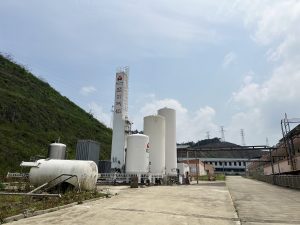
Cryogenic air separation is a process that separates atmospheric air into its primary components – notably oxygen – by cooling the air to extremely low temperatures and distilling it. This technology has been the cornerstone of large-scale oxygen production for over a century, enabling industries worldwide to obtain high-purity oxygen along with valuable co-products like nitrogen and argon. In cryogenic air separation, air is liquefied at cryogenic temperatures (below -180°C) so that its constituents can be isolated based on their distinct boiling points. The result is ultra-high purity oxygen (often 99.5% or higher) in volumes sufficient for major industrial needs. This article examines the working principle of cryogenic air separation, outlines the process stages and key components of an air separation unit (ASU), discusses its efficiency and energy requirements, and explores the wide-ranging applications, advantages, limitations, and future trends of this technology.
Working Principle of Cryogenic Air Separation
The working principle of cryogenic air separation relies on fractional distillation at cryogenic temperatures. Gases in air have different boiling points; for example, nitrogen turns to liquid at about -196°C, oxygen at around -183°C, and argon at roughly -186°C. By compressing and cooling air to these cryogenic temperatures, the air is liquefied and its components can be separated as they vaporize or condense at different levels in a distillation column.
In practice, an air separation unit first filters and compresses ambient air, then removes impurities like water and carbon dioxide that would freeze at low temperatures. The purified air is then cooled inside a highly efficient heat exchanger (cold box) until a portion of it liquefies. This cold, liquefied air is fed into a distillation column system. Due to the temperature gradient in the column, nitrogen (having the lowest boiling point) boils off and rises to the top as a gas, while oxygen (higher boiling point) remains as a liquid at the bottom. Argon, whose boiling point lies between those of oxygen and nitrogen, can be drawn off in the middle and sent to a secondary column for further purification. By maintaining the proper low temperatures and pressures, the system yields a continuous stream of high-purity oxygen. In essence, cryogenic air separation harnesses thermodynamic principles – cooling via expansion and heat exchange – to achieve the phase changes and separation of air into pure gases.
Process Stages
The cryogenic air separation process involves several key stages that collectively produce pure oxygen and other gases:
- Air Intake and Compression: Ambient air is drawn in through filters to remove dust and particulates. The clean air is then compressed by a multi-stage air compressor to a pressure typically in the range of 5–10 bar. Intercoolers between compression stages remove heat and condense out some moisture.
- Pre-Cooling and Purification: The compressed air is cooled to near ambient temperature or below using cooling water or refrigeration. It then passes through purification units (usually twin towers with molecular sieve adsorbers) which remove water vapor, carbon dioxide, and any hydrocarbons. This step is critical to prevent these impurities from freezing and clogging equipment downstream.
- Cryogenic Cooling (Heat Exchange): Next, the dry, clean air enters the cold box where it is progressively cooled to cryogenic temperatures (around -180°C) in brazed aluminum plate-fin heat exchangers. The incoming air is chilled by exchanging heat with outgoing product and waste gas streams. A portion of the air may be diverted and expanded through an expansion turbine (turbo-expander) to provide additional refrigeration via the Joule–Thomson effect. By the end of this stage, most of the air has been liquefied or is a cold vapor-liquid mixture.
- Fractional Distillation: The cold liquefied air is fed into a distillation column system to separate oxygen, nitrogen, and argon. Modern ASUs use a double-column arrangement: a high-pressure column and a low-pressure column, linked by a condenser-reboiler. In the high-pressure column, nitrogen-rich vapor rises to the top and is condensed, while oxygen-enriched liquid collects at the bottom. This oxygen-rich liquid is then fed to the low-pressure column (operating at about 1.2 bar) where it is distilled to produce gaseous high-purity nitrogen at the top and liquid oxygen at the bottom. An argon fraction is drawn from an intermediate stage of the low-pressure column into a separate argon purification column if high-purity argon is desired. Throughout these stages, tight integration of heat exchangers and columns ensures efficient energy use.
- Product Extraction and Rewarming: Pure oxygen (typically 99–99.5% when produced by cryogenic distillation) is drawn from the bottom of the low-pressure column. Depending on needs, it may be pumped as a liquid to storage or evaporated and warmed back to ambient temperature for delivery as a gas. High-purity nitrogen gas is withdrawn from the top of the high-pressure or low-pressure column. Argon, if produced, is collected from its column at ~99.9% purity. All product streams are warmed by passing back through the heat exchanger, which recovers cold energy by chilling the incoming air. The remaining non-condensable gases (mainly excess nitrogen after oxygen extraction) are also warmed and typically released to atmosphere or used as inert gas on site.
- Storage and Supply: The output oxygen can be delivered in gaseous form via pipelines to nearby processes or liquefied for storage. Large air separation plants often simultaneously produce gaseous oxygen (for immediate industrial use) and liquid oxygen (stored in insulated cryogenic tanks for backup supply or transport). Liquid nitrogen and liquid argon are likewise stored or transported as needed. The entire process runs continuously and steadily to maintain the low temperatures and product purity, since frequent shutdowns are impractical.
Key System Components
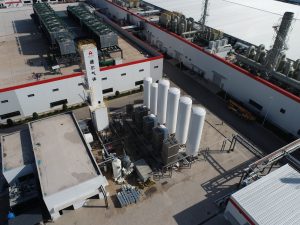
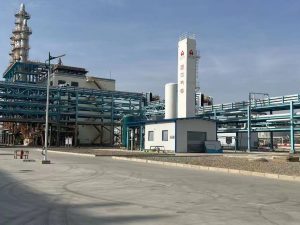
A cryogenic air separation plant (ASU) consists of several integrated components, each performing a specific function to enable the production of oxygen:
- Main Air Compressor: A multi-stage compressor (with intercooling) that raises the pressure of the incoming air. It provides the driving force for throughput and also contributes to refrigeration as the compressed air later expands and cools. This compressor is usually one of the largest power consumers in the ASU.
- Pre-Cooling Unit: A heat exchanger or cooling system that lowers the temperature of the compressed air before it enters the cryogenic section. Often a direct-contact cooling tower is used, where cold water chills the air and condenses out most of the remaining moisture.
- Molecular Sieve Purifier: A pair of adsorption vessels filled with desiccant (zeolite or alumina) that trap residual H₂O, CO₂, and hydrocarbons. The purifier prevents these contaminants from freezing in the cold box. The vessels operate alternately, so one adsorbs while the other regenerates (using warm dry gas), ensuring a continuous flow of clean, dry air.
- Cold Box and Heat Exchangers: The cold box is an insulated enclosure housing the cryogenic heat exchangers (typically brazed aluminum plate-fin exchangers) and often the distillation columns. Within, the incoming air is cooled against returning cold product and waste streams. These heat exchangers are designed for minimal temperature difference to maximize heat recovery and refrigeration efficiency.
- Expansion Turbine (Turbo-Expander): A turbomachine that expands a portion of the high-pressure air to a lower pressure, producing a dramatic temperature drop. This expansion provides the necessary refrigeration to liquefy part of the air. The turbo-expander is usually linked to the compressor drive train or an electrical generator to recapture energy. Its role is critical for efficient cold production in the ASU.
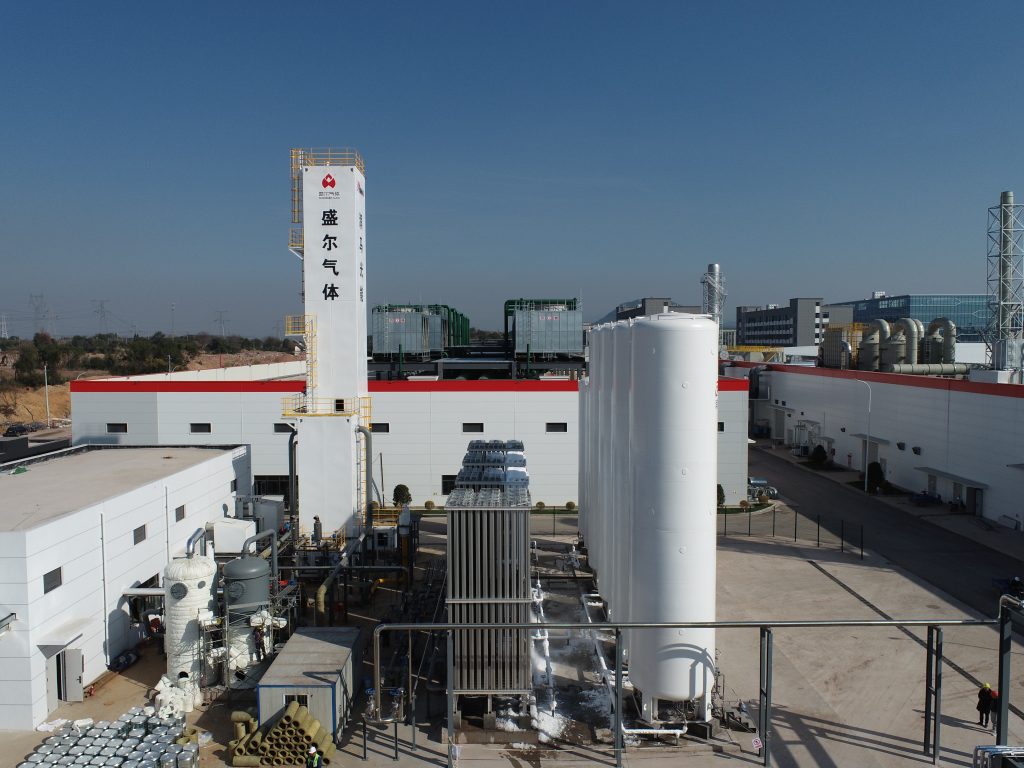
- Distillation Columns: The core of the cryogenic air separation unit, these are tall, cylindrical columns (usually two in a double-column setup) where the separation of oxygen, nitrogen, and argon occurs by distillation. They contain multiple trays or structured packing. The high-pressure column produces pure nitrogen at its top and oxygen-enriched liquid at the bottom; the low-pressure column refines that oxygen-enriched liquid into high-purity oxygen at the bottom and waste nitrogen at the top. An internal reboiler-condenser between the columns enables heat exchange: boiling oxygen in the low-pressure column and condensing nitrogen from the high-pressure column.
- Argon Separation Column: An additional column used when argon is to be captured. It receives a side-stream of oxygen-rich liquid from the low-pressure column where argon concentrations are highest. In the argon column, argon is separated from oxygen (and nitrogen) to produce crude argon, which can be further purified to yield argon gas with ~99.9% purity. Modern plants often use two argon columns (crude and pure argon columns) without the need for hydrogen deoxygenation, thanks to improved column packings.
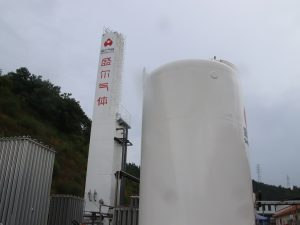
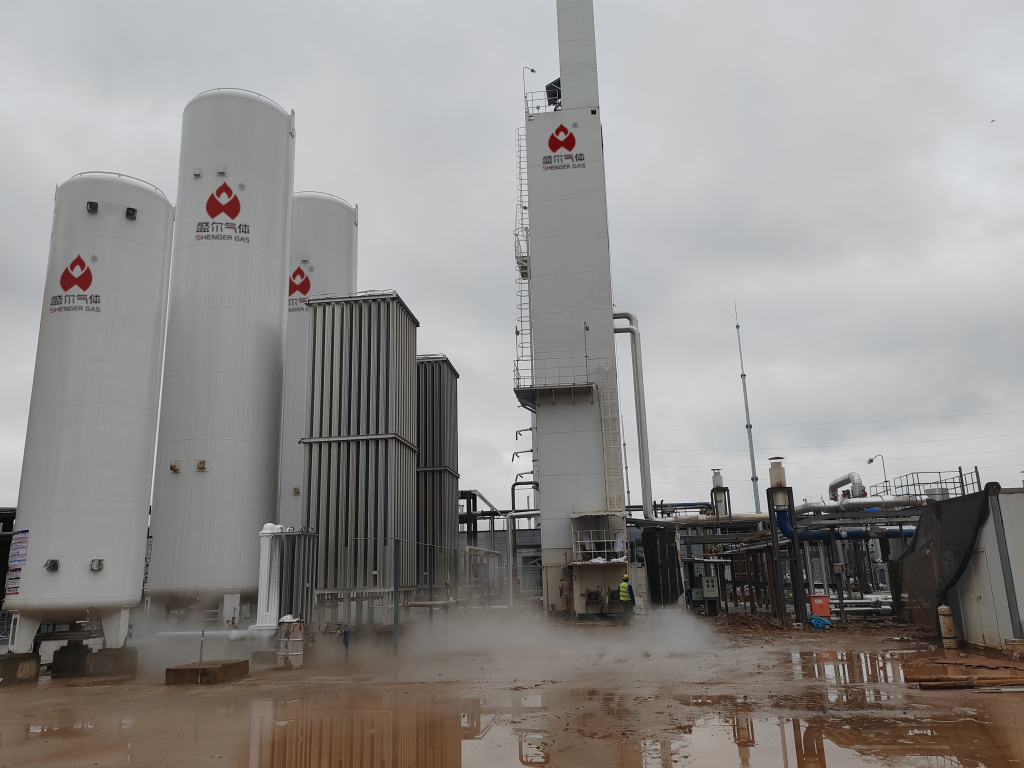
- Cryogenic Storage Tanks: Vacuum-insulated tanks for storing liquid oxygen, nitrogen, or argon that the plant produces. These tanks maintain cryogenic temperatures with minimal heat leak and provide buffer capacity. Stored liquid products can be vaporized for use during peak demand or transported off-site. Storage is especially important for oxygen supply reliability (e.g. for hospitals or continuous processes) because it provides a backup in case the ASU has a brief outage or needs maintenance.
- Instrumentation and Controls: Extensive sensors, control valves, and an automated control system are employed to monitor and regulate the ASU. Parameters like temperature, pressure, flow, and purity are continuously controlled to keep the plant running safely and optimally. Given the complexity and hazards (e.g. extreme cold, high oxygen levels), modern cryogenic air separation plants feature advanced control systems and safety interlocks to ensure stable operation and to quickly respond to any deviations.
Efficiency and Energy Consumption
Cryogenic air separation is energy-intensive, primarily due to the work required to compress air and achieve cryogenic refrigeration. A significant portion of a facility’s operating cost is the electricity consumed by the main air compressor and associated equipment. In practice, large modern air separation units consume on the order of 200 to 250 kWh of electricity per ton of oxygen produced (this value can vary with plant size, design, and product purity targets). Smaller or older plants may have higher specific energy consumption – sometimes in the range of 400–600 kWh per ton for modest-sized ASUs – because they lose some economies of scale. For perspective, the thermodynamic minimum work to separate oxygen from air is roughly 50 kWh per ton, so real systems operate at several times this minimum due to inefficiencies and practical limitations.
Several design features improve efficiency in cryogenic air separation. Heat integration is maximized by recycling cold energy: the outgoing cold nitrogen and oxygen streams pre-cool the incoming air in the heat exchangers. Expansion turbines are used instead of simple throttling valves to generate refrigeration more efficiently (and to recover work). Additionally, operating the distillation columns at optimal pressures and using advanced column internals (like structured packings that reduce pressure drop) help lower the energy required for separation. Modern air compressors with better aerodynamic design and motor efficiency further contribute to reducing power consumption per unit of oxygen.
Despite these optimizations, a cryogenic ASU remains a large power consumer. For example, a typical 1,000 ton-per-day oxygen plant can draw tens of megawatts of electrical power continuously. These plants generally run 24/7 at a high capacity factor (often above 95% uptime) to avoid the losses associated with warming up and cooling down. Because of the high energy usage, operators often seek ways to improve overall economics – for instance, by purchasing electricity during off-peak hours or integrating the ASU with other processes to utilize waste heat or cold. The efficiency of cryogenic air separation has improved incrementally over the decades, but further substantial reductions in energy consumption remain challenging due to the fundamental thermodynamics of gas liquefaction.
Industrial Applications
Cryogenic air separation plants supply oxygen (and co-products nitrogen and argon) to a wide array of industries worldwide. Key industrial applications include:
- Steel and Metals Production: Large volumes of oxygen are consumed in steelmaking (e.g. basic oxygen furnaces and electric arc furnaces for oxygen lancing) and in non-ferrous smelting. Injecting high-purity oxygen intensifies combustion and increases furnace temperatures, improving productivity and product quality in metal production.
- Chemical and Petrochemical Industries: Oxygen is a feedstock for processes such as coal gasification and partial oxidation of hydrocarbons, which produce synthesis gas for ammonia, methanol, or Fischer–Tropsch fuel production. Refineries and petrochemical plants use oxygen for things like sulfur recovery units and oxy-cracking. Cryogenic ASUs attached to large gas-to-liquids, coal-to-liquids, or gasification complexes often produce thousands of tons of O₂ per day to support these processes.
- Energy and Power Generation: Oxy-fuel combustion power plants burn fuel in pure or enriched oxygen to generate a CO₂-rich flue gas that is easier to capture for carbon sequestration. Such plants require an immense oxygen supply, typically provided by on-site cryogenic air separation. Oxygen is also used to enrich air for industrial boilers and cement or glass furnaces to boost efficiency. In the aerospace sector, rocket launch sites consume huge quantities of liquid oxygen (LOX) as an oxidizer for rocket propellants; this LOX is produced and stored by cryogenic air separation units.
- Medical and Healthcare: Medical-grade oxygen for hospitals is often produced via cryogenic separation at central plants, then delivered as liquid oxygen in tankers and stored at the hospital for vaporization. Many hospitals and clinics rely on this bulk liquid O₂ supply to meet high-purity requirements (99%+) for patient care. While smaller on-site PSA generators are used in some cases (providing ~93% oxygen for medical use), cryogenic plants remain essential for filling oxygen cylinders and supplying large medical facilities, especially in regions where 99% purity is the standard.
- Electronics and Semiconductor Manufacturing: Ultra-high purity oxygen (99.9%+), as well as high-purity nitrogen, are critical for semiconductor fabrication and other electronics manufacturing processes. Cryogenic air separation is used to achieve the required purities for these gases. The semiconductor industry also values the reliability and large volume capacity of cryogenic plants, as a single fabrication facility may consume enormous amounts of pure gases.
- Welding and Metal Cutting: Oxygen used in oxy-acetylene welding and cutting torches is typically supplied from cryogenically produced oxygen. Industrial gas companies use cryogenic ASUs to liquefy oxygen and then fill high-pressure cylinders for distribution. Without cryogenic production, it would be difficult to economically supply the dispersed demand for welding oxygen across countless workshops and construction sites.
- Food Processing and Water Treatment: In food processing, nitrogen from the same ASU is commonly used for freezing, refrigeration, and food packaging (modified atmospheres), while oxygen is sometimes used for oxygenating aquaculture ponds or in specialized food preservation processes. In wastewater treatment, pure or enriched oxygen can be bubbled into aeration tanks to improve the efficiency of biological treatment; large municipal systems may utilize liquid oxygen produced by cryogenic plants to supplement aeration, especially when higher dissolved O₂ levels are needed than what air can provide.
In summary, cryogenic air separation enables a reliable, continuous supply of oxygen in both gaseous and liquid forms across diverse sectors. Its ability to produce high purity and large volumes economically makes it the default choice for heavy industries and any application where oxygen demand is substantial and continuous.
Advantages and Limitations
Advantages: Cryogenic air separation offers several notable advantages for oxygen production:
- High Purity Output: It can produce oxygen at 99.5% (or higher) purity consistently, which is essential for many industrial and medical applications. It also simultaneously yields high-purity nitrogen and argon as valuable co-products, which other technologies (like PSA) cannot easily provide at comparable purity and volume.
- Large Production Capacity: Cryogenic plants are scalable to very large sizes – individual ASUs can produce thousands of tons of oxygen per day. This makes them well-suited for supporting industries with massive oxygen demands, and the cost per unit of oxygen tends to decrease at larger scales.
- Cost Efficiency at Scale: Although expensive to build, at large throughputs a cryogenic ASU often provides the lowest unit cost of oxygen. The energy consumption per cubic meter of O₂ produced generally improves with scale due to better heat integration and equipment efficiency, so for high-volume requirements, cryogenic separation becomes more economical than multiple smaller units.
- Versatility of Product Form: These plants can deliver oxygen in both gaseous and liquid form. The ability to produce liquid oxygen (as well as liquid nitrogen) is unique to cryogenic methods and allows for storage and transport. Liquid product storage provides a buffer that can supply oxygen during peak demand or in emergencies if the ASU goes down temporarily.
- Mature and Reliable Technology: Cryogenic distillation is a well-established, proven technology with many decades of operational experience. Modern ASUs are highly automated and robust. With proper maintenance, they offer reliable long-term operation and plant lifespans that can extend for 20+ years. There is also extensive industry know-how and support infrastructure for cryogenic systems.
Limitations: Despite its strengths, cryogenic air separation has some drawbacks:
- High Energy Consumption: The process requires a large amount of electricity for air compression and refrigeration. This translates to high operating costs and, if the electricity is from fossil fuels, a significant indirect carbon footprint. Even with efficient designs, cryogenic oxygen production consumes more energy per unit O₂ than newer alternatives might at smaller scales.
- Capital & Infrastructure Intensive: Building a cryogenic oxygen plant involves substantial capital investment. The cold box, distillation columns, multi-stage compressors, and heat exchangers constitute a complex facility that also requires significant space and supporting infrastructure (foundations, cooling water systems, power supply, etc.). The high upfront cost and complexity mean cryogenic ASUs are only justified when there is a continuous, high demand for oxygen.
- Operational Complexity: These plants are complicated to operate and maintain. They require skilled personnel and careful control of many variables to keep the process stable. Cryogenic systems also have limited turndown flexibility – they operate best at steady state near design capacity. Ramping production up or down significantly is slow and can upset the column balance. After a shutdown (planned or unplanned), the restart and cool-down to achieve on-spec products can take many hours, which is a logistical challenge for users who depend on an uninterrupted oxygen supply.
- Not Efficient for Small Demand: For smaller oxygen requirements (e.g. a few tons per day or less), cryogenic plants are generally not practical. Simpler technologies like PSA (Pressure Swing Adsorption) or VPSA are more suitable for on-site oxygen generation at small to medium scales. Cryogenic ASUs achieve their efficiency and cost advantages only when processing very large volumes of air, so they are overkill for modest needs.
- Safety and Maintenance Challenges: Handling cryogenic liquids and high-purity oxygen poses safety risks. Materials must be chosen to withstand extremely low temperatures; brittle fracture and thermal stresses are engineering concerns. Pure oxygen environments can greatly accelerate combustion, so any organic contaminants (like oils) must be rigorously avoided to prevent fires or explosions in oxygen-rich equipment. Maintenance of rotating machinery (compressors, expanders) and periodic revamps of cold box internals are needed, which require expertise and careful procedures to ensure safety.
Comparison with Other Oxygen Production Technologies
While cryogenic distillation is the dominant method for bulk oxygen production, other technologies are used for smaller scale or lower purity needs. The two main alternatives are pressure swing adsorption (PSA) and membrane separation. Each method has its own operating principles, output characteristics, and ideal applications. The table below summarizes a comparison of cryogenic air separation with PSA and membrane oxygen generation:
| Feature | Cryogenic Air Separation (Distillation) | PSA (Adsorption) | Membrane Separation |
|---|---|---|---|
| Oxygen Purity | 99–99.9% (high purity) | ~90–95% (moderate purity) | ~30–40% (low purity) |
| Capacity Range | Large (hundreds to thousands of Nm³/h; suitable for 50+ tons/day and up) | Small to medium (from a few Nm³/h up to a few hundred Nm³/h per unit) | Small (tens to low hundreds of Nm³/h) |
| Startup Time | Slow (several hours for cool-down) | Fast (minutes to start/stop) | Immediate (no significant startup time) |
| Equipment Complexity | High – multiple compressors, heat exchangers, distillation columns (complex plant) | Moderate – compressor and dual adsorber vessels (skid-mounted system) | Low – membrane modules and a feed compressor (compact system) |
| Capital Cost | High capital investment and construction effort | Lower capital cost (modular equipment) | Low capital cost (simple equipment) |
| Maintenance & Operation | Requires skilled operators; regular maintenance of cryogenic equipment and turbo-machinery | Relatively simple operation; periodic adsorbent replacement and basic upkeep | Minimal maintenance; few moving parts (mostly just air compressor) |
| Typical Uses | Large industries requiring high volume & high purity O₂ (steel mills, large chemical plants, industrial gas suppliers; also needed to produce liquid O₂) | On-site supply for hospitals, small factories, wastewater treatment, glass workshops (when ~90–95% O₂ is acceptable) | Niche applications where slight O₂ enrichment is sufficient (e.g. enhancing combustion air in some processes) |
In summary, PSA oxygen generators are ideal for lower-volume, lower-purity needs due to their quick start-stop capability and simpler setup. Membrane systems play a relatively minor role, generally providing only modest oxygen enrichment (for instance, from 21% in air to ~30–40% O₂) rather than high-purity oxygen. Cryogenic air separation remains the only practical choice for producing very high purity oxygen at large scales or for producing liquid oxygen. Often, industries will choose PSA or VPSA units for decentralized or backup oxygen supply and rely on cryogenic plants for the backbone of high-volume oxygen demands.
Future Trends and Innovation
As global industries evolve and energy considerations become more important, the field of cryogenic air separation is seeing innovations aimed at improving efficiency, flexibility, and sustainability. One notable trend is the push for greater energy efficiency and lower carbon footprint. Researchers and engineers are exploring optimized process cycles and better integration of ASUs with other systems. For example, waste heat from power plants or industrial processes can be used to drive auxiliary refrigeration cycles, reducing the electrical energy needed by the ASU. Some proposals even integrate air separation units with liquefied natural gas (LNG) regasification terminals, capitalizing on the cold energy from LNG to assist in air liquefaction.
Another active area of development is operational flexibility. Traditional cryogenic plants run best at steady state, but future energy systems may require more load-following ability due to fluctuating renewable power or varying oxygen demand. Advanced control systems and AI-driven process optimization are being implemented to allow ASUs to ramp output up or down more quickly and efficiently within certain limits. This could enable oxygen plants to consume power when it’s cheapest or most available (for example, during wind or solar generation peaks) and then curtail consumption during high-cost peak hours, essentially acting as a flexible load on the electrical grid. Improvements in machinery such as variable-speed drives for compressors and improved column internals also contribute to easier turndown and ramping capabilities. In the nearer term, digitalization and optimization of existing cryogenic air separation plants is an innovation focus. Operators are employing advanced analytics to predict and prevent operational issues (like exchanger icing or column instabilities) and to optimize power usage in real time. By leveraging process data with machine learning, an ASU can be run closer to ideal setpoints, saving energy while maintaining product specifications.
Beyond incremental improvements to cryogenic technology, alternative oxygen production methods are on the horizon which may complement or compete with cryogenic air separation. One promising technology is the use of ion transport membranes (ITM) – ceramic membranes that at high temperatures (around 800–900°C) allow only oxygen ions to pass through, yielding virtually pure oxygen on the permeate side. ITM systems (sometimes called oxygen transport membranes) have been demonstrated at pilot scale and could significantly reduce energy consumption for oxygen production when integrated with a source of high-temperature heat (for instance, using waste heat from a gasifier or power plant). Another approach is chemical looping air separation, where metal oxide particles absorb oxygen from air in one reactor and then release O₂ in a second reactor when heated. This method avoids the need to refrigerate and distill air, potentially cutting energy use if practical challenges can be overcome. While these techniques are still under development and not yet commercially deployed, they represent potential future pathways to produce oxygen with lower energy penalties than the current cryogenic process.
With the ongoing transition to cleaner energy, powering cryogenic air separation using renewable electricity is another focus to improve sustainability. Some industrial gas producers have started marketing “green oxygen” – oxygen produced in ASUs run on renewable power – to customers looking to reduce the carbon footprint of their supply chain. In addition, large-scale oxygen production will play a role in emerging clean technologies; for example, oxygen is required for gasifying biomass or waste to produce biofuels, and even in water electrolysis for hydrogen (where oxygen is a by-product that could be captured and used). By integrating with these trends, the cryogenic air separation process can remain relevant in a low-carbon future.
Conclusion
Cryogenic air separation has proven to be a robust and indispensable technology for oxygen production, especially when high purity and large quantities are required. It leverages the fundamental physics of air liquefaction and distillation to provide oxygen purities and volumes unattainable by other techniques. Despite its high energy consumption and capital cost, it remains the method of choice for supplying industries like steel, chemicals, and healthcare with a reliable oxygen source. Competing technologies such as PSA and membranes serve important roles for smaller or less exacting applications, but cryogenic air separation continues to deliver the scale and purity that heavy industries demand. As we look to the future, improvements and innovations are poised to enhance this century-old technology – making it more efficient, flexible, and sustainable. By integrating advanced controls, leveraging waste heat, and potentially adopting new oxygen separation methods alongside it, cryogenic air separation will continue to evolve. In a world that increasingly values both productivity and sustainability, cryogenic air separation stands as a critical process that is adapting to meet modern challenges while retaining its core strengths.