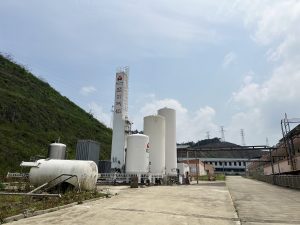
The cryogenic air separation process is the standard route for making large volumes of high-purity oxygen, nitrogen and argon. At the scale of steelworks, refineries, glass furnaces and gasification plants, other technologies struggle to match its combination of purity, capacity and long-term operating cost.
In a typical plant, ambient air is compressed, purified, cooled to cryogenic temperature and then separated in distillation columns operating at different pressures. The process may look straightforward on a block diagram, but the details of column design, heat integration and control make a big difference to energy use and reliability. For researchers and plant engineers, these details are where optimisation work really pays off.
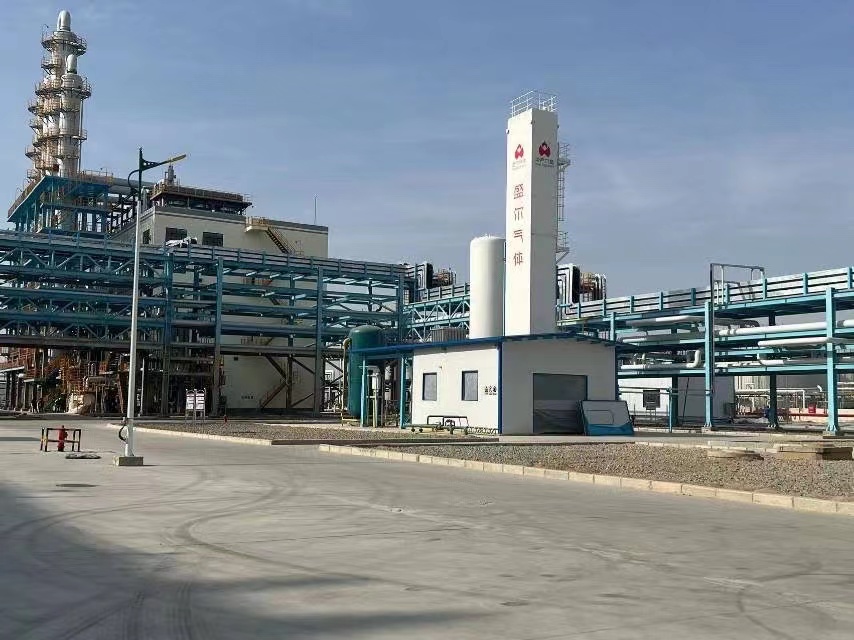
Process Flow in a Modern Cryogenic Air Separation Process
Most designs follow a similar overall flowsheet, even though the equipment selection and integration details change from project to project. A simplified process flow can be sketched as:
      Ambient Air
           │
     Air Intake Filter
           │
   Main Air Compressor
           │
   Air Pre-treatment Unit
 (H2O / CO2 / HC Removal)
           │
   Main Heat Exchanger
 (Cooling to Cryogenic T)
           │
      ┌──────────────┐
      │   Cold Box   │
      │              │
      │  HP Column   │
      │  LP Column   │
      │ (Argon Col.) │
      └──────────────┘
        │    │    │
      O2    N2   Ar
        │    │    │
   Product Warming
           │
   Gaseous / Liquid
      Product Handling
In words, the main steps are:
- Air intake and compression – the plant draws in ambient air, removes dust and compresses it to the operating pressure of the high-pressure column.
- Purification – water, CO₂ and most hydrocarbons are removed to avoid freezing and to reduce safety risks in the cold section.
- Cooling and liquefaction – the clean air is cooled in a plate-fin heat exchanger against cold product and waste streams; part of the stream is expanded in a turbine to generate refrigeration.
- Rectification in columns – separation takes place in a high-pressure column, a low-pressure column and, where required, an argon column.
- Product handling – oxygen, nitrogen and argon are withdrawn as gases, liquids, or a mix depending on the customer load profile, then warmed or stored as needed.
The same basic structure is used whether the plant is a stand-alone ASU or part of a large integrated complex.
Main Process Steps and Key Equipment
Air compression and pre-treatment
The main air compressor sets the pressure level for the whole system. Large units usually rely on multi-stage centrifugal compressors with inter-cooling, while smaller or higher-pressure duties may use reciprocating machines. Inter-coolers between stages cut the discharge temperature, reduce power demand and protect the downstream adsorbers.
Pre-treatment is typically handled by a dual-bed adsorption unit packed with alumina and molecular sieve. One bed dries the air and removes CO₂ while the other is regenerated with hot, dry gas. The outlet dew point is kept low (often below −60 °C) and CO₂ slip is kept close to zero so that the cold box can run for long intervals without freezing issues.
Cooling, heat exchange and refrigeration
In the cold box, brazed aluminium plate-fin heat exchangers cool the purified air down to near its dew point. The cold side is made up of product oxygen, product nitrogen, crude argon and waste nitrogen streams returning from the columns. The exchanger layout must balance temperature approach, pressure drop and flow distribution; poor distribution can cause local hot spots, cold spots or partial freezing.
Refrigeration is provided by an expansion turbine that processes a portion of the compressed air. Gas leaving the turbine returns to the cold box at a lower pressure and temperature, providing cooling duty for the rest of the system. Turbine sizing and control are important for turndown capability and overall efficiency.
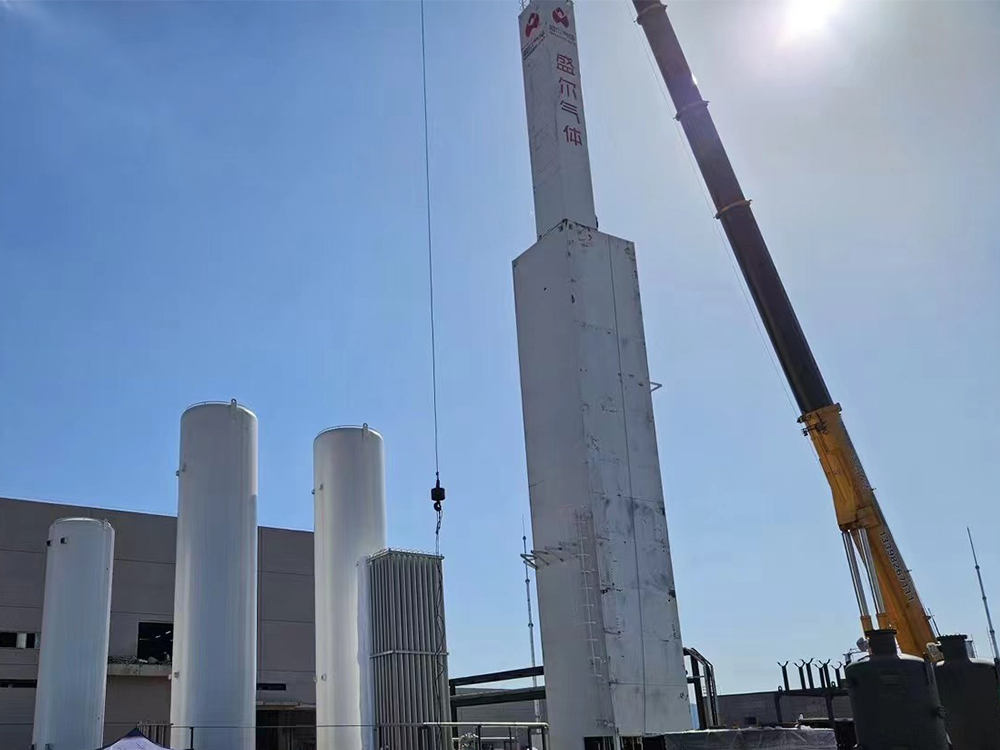
Distillation in HP and LP columns
The high-pressure column runs at roughly 5–6 bar(a). Feed air enters near the middle, and rectification produces an oxygen-rich liquid at the bottom and nitrogen-rich vapour at the top. The overhead nitrogen is condensed in a condenser-reboiler that supplies boil-up for the low-pressure column.
The low-pressure column operates close to atmospheric pressure. Oxygen-rich liquid from the high-pressure column, together with reflux streams, is separated into high-purity oxygen at the bottom and high-purity nitrogen at the top. Packers or trays are selected based on capacity, purity targets and pressure-drop limits.
Where argon recovery is required, a side stream from the low-pressure column in the oxygen–argon concentration region is fed to an argon column. This column delivers crude argon or high-purity argon depending on the flowsheet and downstream purification.
Product warming, storage and back-up
Products leave the columns at cryogenic temperature and are warmed in the main heat exchanger to near-ambient conditions for gaseous supply. Liquid oxygen, nitrogen and argon are stored in insulated tanks to provide back-up and to balance variable demand. Many plants operate with a mix of continuous gaseous loads and intermittent liquid sales.
For anyone designing or troubleshooting a cryogenic air separation process, these product flows determine the internal heat balance and influence the choice of operating pressures and column loadings.
Typical Operating Parameters
While every project has its own specification, Table 1 gives a set of indicative values for a medium-sized plant producing gaseous oxygen and nitrogen plus some liquid product.
Table 1 – Typical operating parameters for the cryogenic air separation process
| Parameter | Typical Range |
|---|---|
| Air compressor discharge pressure | 5.5–7.0 bar(a) |
| High-pressure column operating pressure | 5.0–5.5 bar(a) |
| Low-pressure column operating pressure | 1.2–1.3 bar(a) |
| Feed air temperature into cold box | Ambient to 10 °C |
| Cold-end temperature approach (main exchanger) | 2–3 K |
| Gaseous oxygen product purity | 95–99.8 vol% |
| Gaseous nitrogen product purity | 99.9–99.999 vol% |
| Crude argon purity before purification | 92–96 vol% Ar |
| Specific power (based on O₂ product) | 0.28–0.35 kWh/Nm³ O₂ |
These numbers move around with plant size, product mix, ambient conditions and the chosen flowsheet. Single-column, double-column, elevated-pressure and integrated-cycle designs each shift the optimum a little.
Energy Use and Specific Power
Power consumption is a central metric when comparing one cryogenic air separation process with another. Most of the energy goes into air compression; the rest is shared between refrigeration, pumps, auxiliaries and losses.
For early design work it is common to work with specific power, expressed in kWh per normal cubic metre of oxygen. Table 2 shows an illustrative trend with plant size:
Table 2 – Example specific power vs. oxygen capacity (illustrative)
| Gaseous O₂ Capacity (Nm³/h) | Typical Specific Power (kWh/Nm³ O₂) |
|---|---|
| 3,000–5,000 | 0.34–0.36 |
| 10,000–20,000 | 0.30–0.33 |
| 30,000–50,000 | 0.28–0.31 |
Larger units usually benefit from economies of scale: bigger and more efficient compressors and turbines, more favourable column dimensions and a better ratio between useful duty and fixed losses. Once a rough specific-power figure is fixed, more detailed simulations, heat- and mass-balance calculations, and vendor data can be used to refine the design.
Control, Safety and Integration
From a control point of view, the cryogenic air separation process is a tightly coupled system. Column pressures, liquid levels, temperature profiles in the main exchanger and turbine load all interact. Modern plants rely on distributed control systems with a mix of PID loops and higher-level logic to manage start-up, shutdown and load changes.
Safety is dominated by a few key themes:
- Avoiding hydrocarbon accumulation in cold sections.
- Controlling oxygen-enriched atmospheres in enclosed spaces.
- Providing proper relief paths for abnormal pressure conditions.
- Maintaining instrument reliability in low-temperature and high-oxygen environments.
Integration with downstream units is increasingly part of the design brief. When an air separation unit is coupled to a gas turbine combined-cycle plant, for example, air extraction and nitrogen reinjection can raise overall efficiency. In oxy-fuel combustion or gasification projects, careful coordination of load-following behaviour is needed so that both the gas user and the ASU remain within safe operating limits.
Outlook and Research Directions
Although the basic flowsheet has been in place for decades, there is still scope to improve how the cryogenic air separation process is designed and operated. Research topics include:
- Better prediction and control of column hydrodynamics at high turndown.
- New packing geometries that save column height while keeping pressure drop low.
- Digital twins that combine first-principles models with plant data for real-time optimisation.
- Integration with low-carbon power sources, including strategies for flexible operation with variable electricity prices.
Given the ongoing demand for oxygen, nitrogen and argon in energy transition projects, metallurgical processes and advanced manufacturing, the cryogenic air separation process will remain a central technology. For engineers and scientists working in this field, a clear view of the process flow, key parameters and equipment interactions is the starting point for any serious optimisation or innovation work.