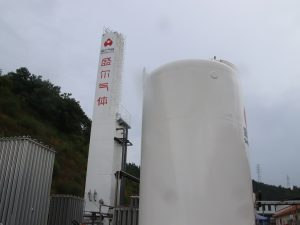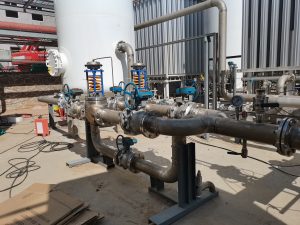
Cryogenic Air Separation and Pressure Swing Adsorption (PSA) are two established industrial processes for generating oxygen and nitrogen from ambient air. Cryogenic Air Separation involves compressing air and cooling it to cryogenic temperatures (around –180 °C) so that the components can be separated by distillation. In contrast, PSA uses zeolite or carbon molecular sieves under elevated pressure (typically 4–8 bar) to selectively adsorb one component of air while passing the other; when the pressure is lowered, the captured gas is released and the sieve is regenerated. Each approach has unique strengths and design trade-offs.
Gas Purity and Product Range
Cryogenic ASUs can routinely deliver extremely high gas purities. Typical oxygen purity is on the order of 99.5 % or higher, and nitrogen can exceed 99.9 %. Because air is liquefied and distilled, the plant also co-produces argon (and can even extract rare inert gases in advanced designs) at high purity. PSA systems generally produce lower purities: oxygen-enriched gas at roughly 90–95 % O₂ or nearly pure nitrogen (up to ~99.5 %), but they cannot separate argon or other rare gases because these are not preferentially adsorbed.
Production Scale and Throughput
Cryogenic Air Separation units are designed for very large-scale throughput. Commercial cryogenic plants typically start at a few hundred Nm³/h of O₂ and can scale to tens of thousands of Nm³/h for industrial gas supply. This makes them well-suited for steel mills, large chemical facilities, and centralized gas networks. PSA generators are modular and inherently small-to-medium scale. A single PSA module might deliver on the order of 10–50 Nm³/h; multiple skids can be paralleled for higher capacity. This modular format fits applications like hospitals or laboratories that need moderate gas flow.
Energy Consumption and Efficiency
Energy use differs markedly. A Cryogenic Air Separation plant requires substantial power for multi-stage compression and refrigeration. Estimates for modern cryogenic ASUs range roughly from 150 to 800 kWh per tonne of O₂ produced (about 0.2–1.1 kWh per Nm³ of O₂). Large plants may use expansion turbines to recover some work, improving efficiency at high throughput. PSA systems omit deep refrigeration, so their energy use is much lower at small-to-medium scales. Advanced PSA oxygen generators can achieve on the order of 0.3–0.5 kWh per Nm³ of O₂. In general, PSA yields lower energy consumption per unit at modest flow rates, whereas a cryogenic ASU only becomes thermodynamically competitive on a per-unit basis for very large output.
Operating Conditions (Pressure and Temperature)
The two processes run under very different conditions. A cryogenic ASU compresses feed air to roughly 6–10 bar then cools it to liquid. The distillation columns typically operate around 1–1.3 bar (low-pressure column) and a few bars (high-pressure column). This demands a robust cold box to handle –185 °C. PSA plants operate near ambient temperature; the air is compressed only to the adsorption pressure (∼4–8 bar) and separation occurs without cryogenic cooling. PSA modules thus omit elaborate insulation and cryogenic vessels, greatly simplifying the hardware.
Capital Cost and Footprint
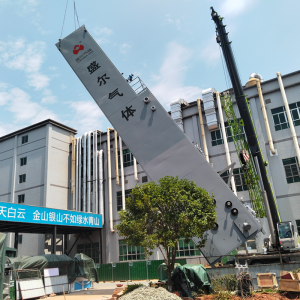
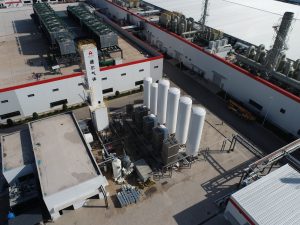
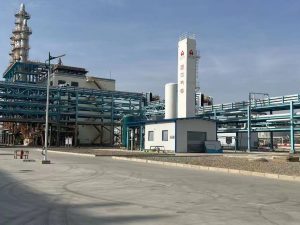
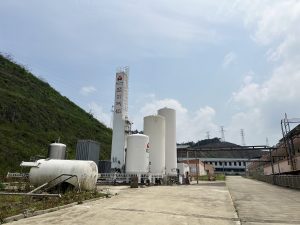
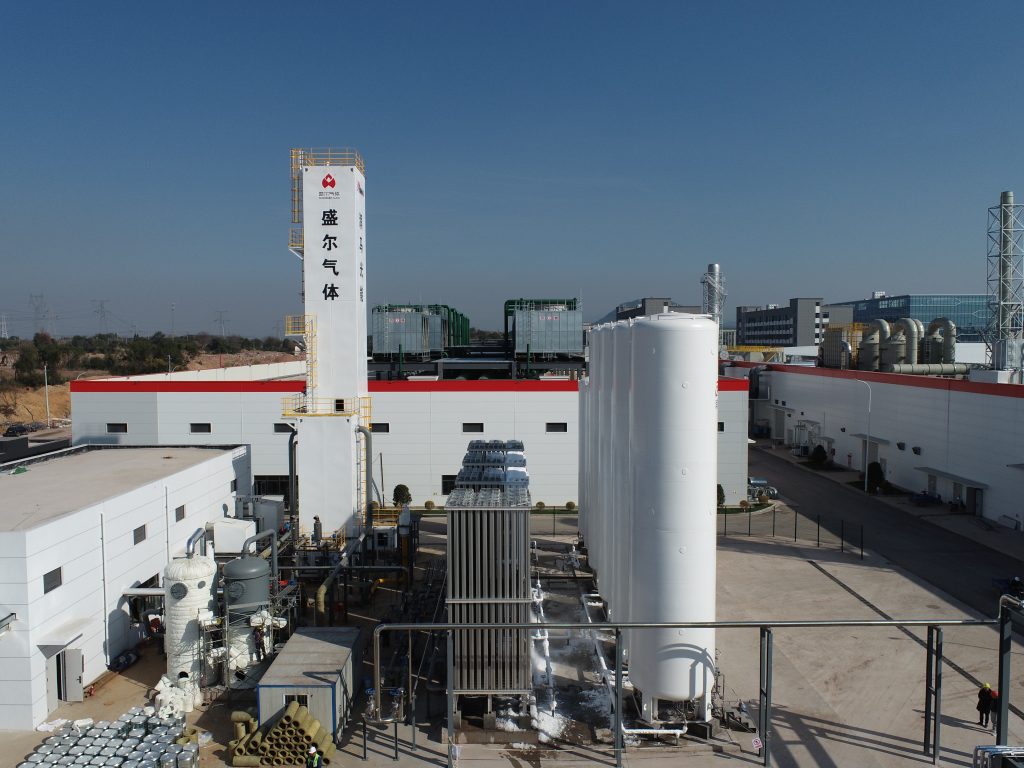
Cryogenic ASUs have very high capital costs and large physical footprint. A full-scale plant includes heavy-duty air compressors, multi-stage heat exchangers, an insulated cold box, tall distillation columns, and cryogenic storage tanks. Construction is complex and time-consuming. By comparison, a PSA system can be supplied as a packaged skid with its compressor and adsorbers. The equipment is compact and requires only electrical and piping hookups. Reported figures suggest PSA plants often cost less than half of a cryogenic unit of equivalent output. PSA installations can be on-stream in weeks or months, whereas a comparable cryogenic build typically requires much longer site work.
System Flexibility and Operation
PSA generators start up and shut down very quickly (often in minutes) and support modular expansion. They are inherently suitable for on-demand or intermittent use. For example, a medical-grade PSA oxygen unit will reach full pressure in under 10 minutes. Multiple PSA trains can be staged for load-following or redundancy. Cryogenic units, by contrast, require long cooldown times (often 12–24 hours or more) to begin operating; once stable, however, they deliver uninterrupted gas continuously. A cryogenic ASU is not designed for frequent cycling or rapid load swings, but it provides extremely consistent high-volume output under steady demand.

Comparative Summary
| Parameter | Cryogenic Air Separation | PSA (Pressure Swing Adsorption) |
|---|---|---|
| Process Principle | Air is compressed, cooled to ~–180 °C, then fractionally distilled to separate O₂, N₂ (and co-produce Ar). | Compressed air (∼4–8 bar) flows through alternating adsorber beds; one gas is adsorbed while the other passes through, then pressure is released to regenerate the adsorbent. |
| Product Purity (O₂/N₂) | Very high – O₂ up to ≥99.5 %, N₂ up to ≥99.999 %; argon is co-produced. | Moderate – O₂ ~90–95 %, N₂ ~95–99.5 %; argon not recovered. |
| Throughput Scale | Large (hundreds to tens of thousands Nm³/h of O₂). | Small-to-medium (modules from ~10 Nm³/h up to a few hundred Nm³/h each). |
| Energy Consumption | High total power; roughly 150–800 kWh per tonne O₂ (≈0.2–1.1 kWh/Nm³). | Lower at small scale; optimized PSA O₂ systems use ~0.3–0.5 kWh/Nm³. |
| Operating Conditions | Feed pressure ~6–10 bar; distillation at ~1–3 bar; cryogenic temps (~–185 °C). | Operating pressure ~4–8 bar; ambient temperature (no cryogenic cooling). |
| Capital Cost & Footprint | Very high capex; large plant with compressors, coldbox, and tanks; long lead time. | Lower capex; compact modular units; rapid deployment. |
| Flexibility | Slow startup; best for continuous high-volume loads; highly stable once running. | Fast start/stop (minutes); easy modular scaling; suits variable demand. |
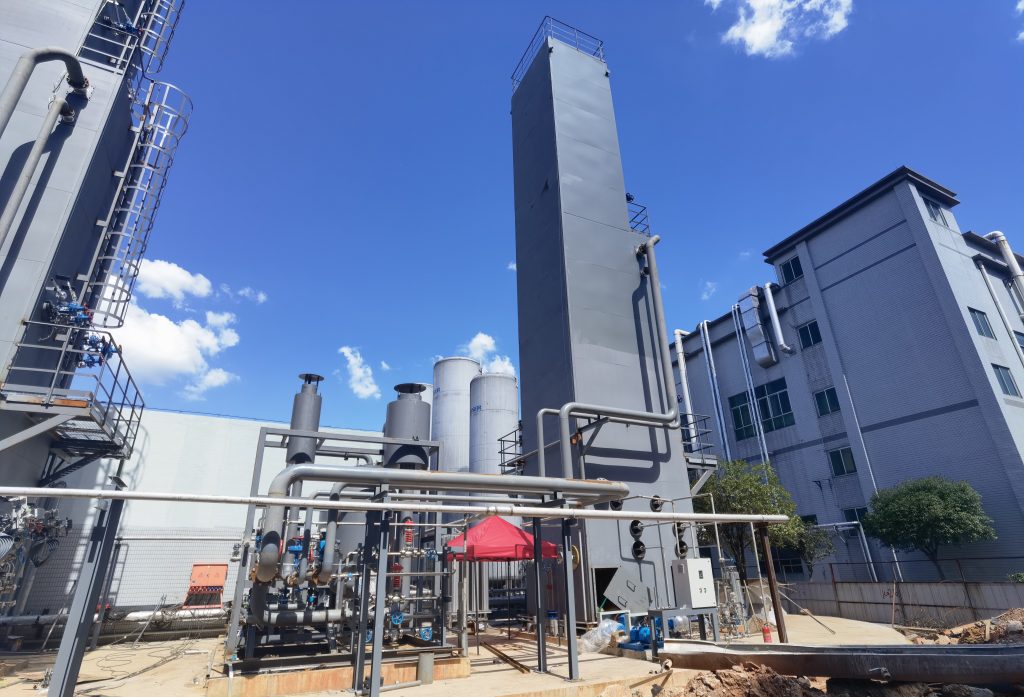
The table highlights process-level contrasts between cryogenic ASUs and PSA systems. Cryogenic Air Separation delivers the highest purities and multi-gas production capability at very high flow rates, whereas PSA achieves moderate purity with simpler plant design. PSA modules typically require much lower investment and can be deployed faster, but they cannot match cryogenic units for maximum purity or flow rate. In practical terms, engineers choose Cryogenic Air Separation when continuous, ultra-high-purity gas supply is required at large scale. PSA is chosen when on-site or mid-scale production of moderate-purity gas (90–99 %) is needed with lower capital and quick startup. One source puts it succinctly: “If you need ultra-high purity gases or co-production of argon, choose Cryogenic; if the goal is continuous supply of a single medium-to-high purity gas, PSA is more cost-effective.” These trade-offs ensure the selected technology aligns with the project’s capacity, purity, and cost requirements.