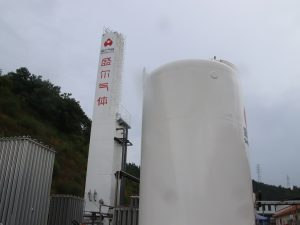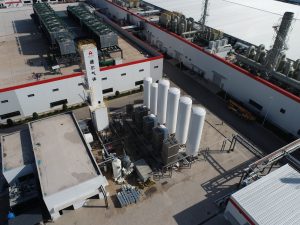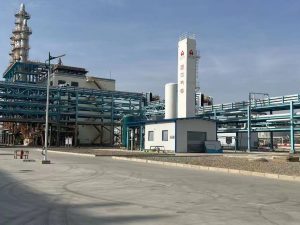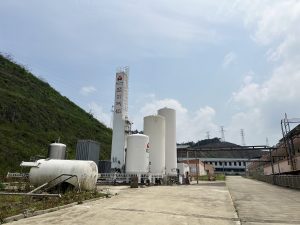
The cryogenic air separation unit for oxygen production is an industrial workhorse for generating high-purity oxygen on a large scale. It operates by distilling air at extremely low temperatures to separate oxygen from nitrogen and other gases based on their boiling points. Unlike pressure swing adsorption (PSA) or membrane oxygen generators (which are suited for lower volumes or purities), cryogenic ASUs can produce oxygen at 99.9% purity in the massive quantities required by industries such as steelmaking, chemicals, and energy. This article examines the cryogenic separation process (compression, purification, cooling, and distillation), key design considerations for achieving 99.9% O₂ purity, typical performance metrics, and how these units integrate into industrial systems. This article focuses exclusively on cryogenic air separation units for oxygen production and does not cover PSA or membrane systems.
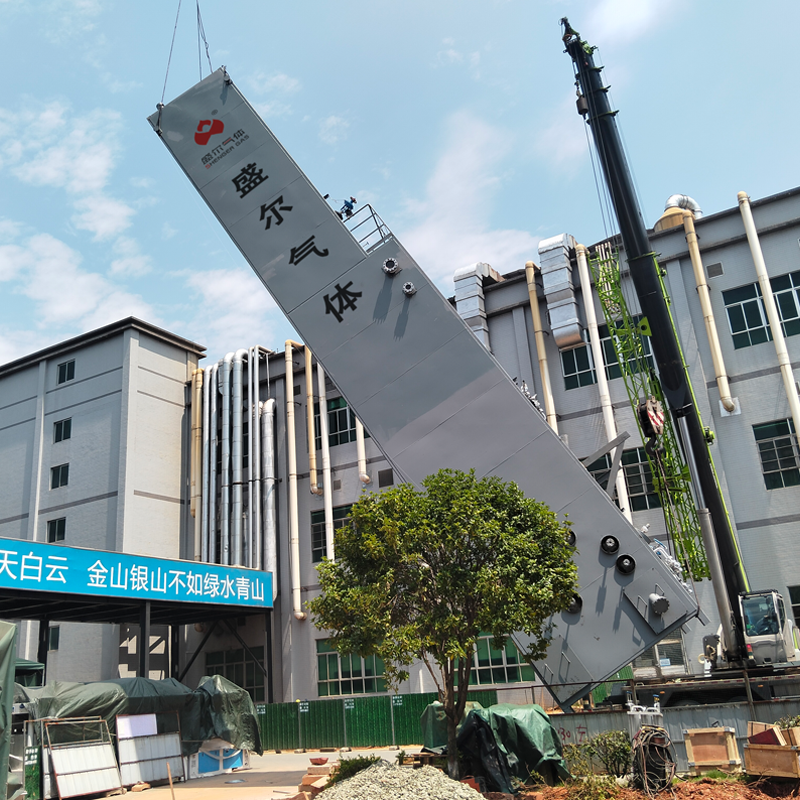
Process Flow of a Cryogenic ASU
A modern cryogenic air separation unit for oxygen production employs a series of stages to extract oxygen (and co-products like nitrogen and argon) from atmospheric air:
- Air Compression: Ambient air is filtered and compressed to about 5–8 bar using multi-stage compressors with intercoolers. This increases air density and prepares it for efficient cooling and liquefaction.
- Purification: The compressed air passes through molecular sieve purifiers to remove moisture, CO₂, and hydrocarbons. Removing these impurities is essential to prevent ice or solid CO₂ formation in the cold equipment.
- Cooling & Liquefaction: The clean, dry air is then cooled to cryogenic temperatures (~–185°C) in heat exchangers. A refrigeration cycle (often using a turbo-expander) provides the cold energy, causing most of the air to condense into liquid.
- Cryogenic Distillation: The liquefied air enters a distillation system, typically a double-column setup. In the high-pressure column, oxygen-rich liquid collects at the bottom while nitrogen-rich vapor rises to the top. This nitrogen is condensed in the low-pressure column’s condenser-reboiler, which boils oxygen in the low-pressure column and helps achieve nearly complete separation. Ultimately, oxygen becomes concentrated as a liquid at the bottom of the low-pressure column, and nitrogen gas emerges pure at the top of the high-pressure column.
- Product Extraction: Oxygen is drawn from the bottom of the low-pressure column at ~99.5% purity (as a gas or liquid). To reach 99.9% purity, an argon removal unit (side column) is added to strip out argon impurities, yielding an oxygen stream of 99.9% O₂. Nitrogen is withdrawn from the top of the low-pressure column at about 99.9% purity. Both gases are warmed back to ambient temperature through the heat exchangers and delivered to end use. Oxygen product can feed directly into pipelines at low pressure, be compressed for high-pressure applications, or be stored as liquid. Nitrogen by-product is often used on-site for inerting or purging, or liquefied for storage.
Once running, a cryogenic air separation unit operates continuously (24/7) with automated controls to maintain stable output and purity. Because starting and cooling down an ASU is energy-intensive, these plants are designed for steady long-term operation with minimal shutdowns, ensuring a reliable oxygen supply to downstream processes.
Thermodynamic Principles and Efficiency
The cryogenic separation process exploits the different boiling points of air’s components. By cooling air to around –190°C, oxygen (boiling point –183°C) liquefies while nitrogen (boiling point –196°C) remains gaseous, allowing separation by distillation. The energy-intensive part of this process is generating the low temperatures required. In a cryogenic air separation unit for oxygen production, large compressors do the initial work by pressurizing the air, and then expansion (in turbines) at cryogenic conditions cools the stream. Modern ASUs use turbo-expanders instead of simple Joule-Thomson valves to recover work during expansion, improving overall efficiency.
Efficient heat exchange is critical: the incoming air is precooled by outgoing product and waste streams in a counter-current heat exchanger, so very little refrigeration energy is wasted. Even so, separating air is power-intensive. Larger plants tend to have better specific energy performance (kWh per Nm³ O₂) than smaller ones due to economies of scale and more effective heat integration. State-of-the-art units may consume as little as ~0.3 kWh of electricity per Nm³ of oxygen produced, whereas smaller or older designs might use 0.5–0.6 kWh/Nm³. Continuous improvements in thermodynamic cycle design and equipment (e.g. efficient compressors, cold box insulation) aim to further reduce this energy cost.
In summary, the efficiency of a cryogenic air separation unit for oxygen production strongly depends on effective heat integration and optimal thermodynamic design.
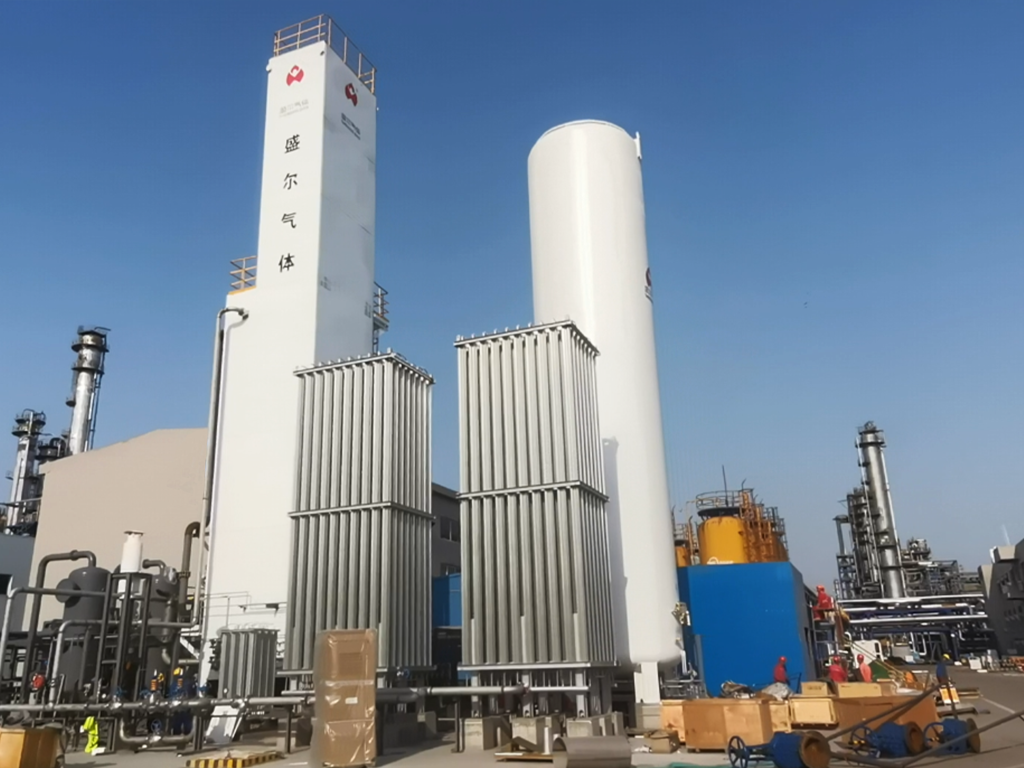
Designing for 99.9% Oxygen Purity
Designing a cryogenic air separation unit for oxygen production to deliver 99.9% O₂ purity requires additional measures beyond the standard setup. Without special steps, a typical cryogenic ASU produces ~99.5% oxygen, with the remainder mostly argon. To achieve 99.9%, an argon side column is incorporated. This column draws off an argon-rich side stream from the main distillation and separates argon from oxygen. The result is a high-purity argon product (often collected if there is demand) and an oxygen stream returning to the main column almost free of argon. By removing argon, the oxygen product purity can rise to 99.9%.
Another critical aspect of high-purity design is thorough front-end purification and safety. Any trace hydrocarbons or acetylene in the air feed must be eliminated by the molecular sieves because they can accumulate in liquid oxygen and pose explosion hazards at 99.9% purity. The plant is equipped with analyzers to monitor oxygen purity and trace contaminants continuously. Operating parameters (like reflux ratios and feed conditions) are carefully controlled to keep the oxygen purity consistently at 99.9% once the plant is tuned. In essence, achieving “triple-nine” purity entails an enhanced distillation setup (for argon removal) and vigilant operational control to avoid any contamination of the product.
In short, a cryogenic air separation unit for oxygen production engineered for 99.9% purity is inherently more complex than one designed for lower purity levels.
Performance Metrics and Typical Ranges
The table below summarizes typical performance characteristics of cryogenic air separation units:
| Parameter | Typical Range |
|---|---|
| Oxygen Product Purity | 99.5% – 99.9% (high-purity O₂) |
| Production Capacity | ~1,000 to >100,000 Nm³/h O₂ (per unit) |
| Specific Power Consumption | ~0.3 – 0.6 kWh per Nm³ O₂ |
| Operating Pressure (Air Feed) | ~5 – 7 bar into distillation |
Table 1: Typical performance of a cryogenic ASU for oxygen production.
In practice, a cryogenic air separation unit for oxygen production at a major facility can supply tens of thousands of cubic meters of O₂ per hour, while smaller units serve lower demands. As shown, cryogenic ASUs are capable of delivering essentially pure oxygen. They also cover a vast range of output capacities: small units (serving, for example, a hospital) might produce on the order of a few hundred Nm³/h, whereas mega-plants at petrochemical or steel complexes can exceed 100,000 Nm³/h of oxygen. In terms of energy use, efficiency improves at larger scales – a large cryogenic air separation unit for oxygen production can reach the low end of specific power (~0.3 kWh/Nm³), whereas smaller plants might be around 0.6 kWh/Nm³. Power consumption is a major factor in operating cost, so operators continuously aim to minimize it. The air feed pressure of around 6 bar is a design compromise that allows effective liquefaction and distillation without excessive compression work.
Integration into Industrial Systems
Cryogenic ASUs are often integrated closely with the industrial facilities they supply. In a steel mill, for example, an on-site cryogenic air separation unit for oxygen production provides oxygen to blast furnaces and basic oxygen furnaces, while the by-product nitrogen is used for blowing, purging, or blanketing. In chemical plants and refineries, ASUs feed oxygen to processes like gasifiers or oxidizers. Integration can extend to sharing resources: some gasification-based power plants route compressed air from a gas turbine to the ASU rather than using separate compressors, which saves energy. In return, the ASU’s cold high-purity nitrogen stream might be injected into the gas turbine for increased power output and lower NOx emissions. Such symbiotic setups improve overall efficiency.
Operationally, integration means the ASU must reliably track the demands of the process it serves. These units usually include backup systems (like liquid oxygen storage and vaporizers) to handle transient peaks or supply interruptions. By being part of a larger industrial ecosystem, the ASU ensures that vital gases are available on demand and at the required purity. This on-site production reduces the need for delivered gas cylinders or tanks, improving safety and economy for large-scale consumers. This level of integration makes the cryogenic air separation unit for oxygen production an indispensable utility in modern industrial complexes.
Conclusion
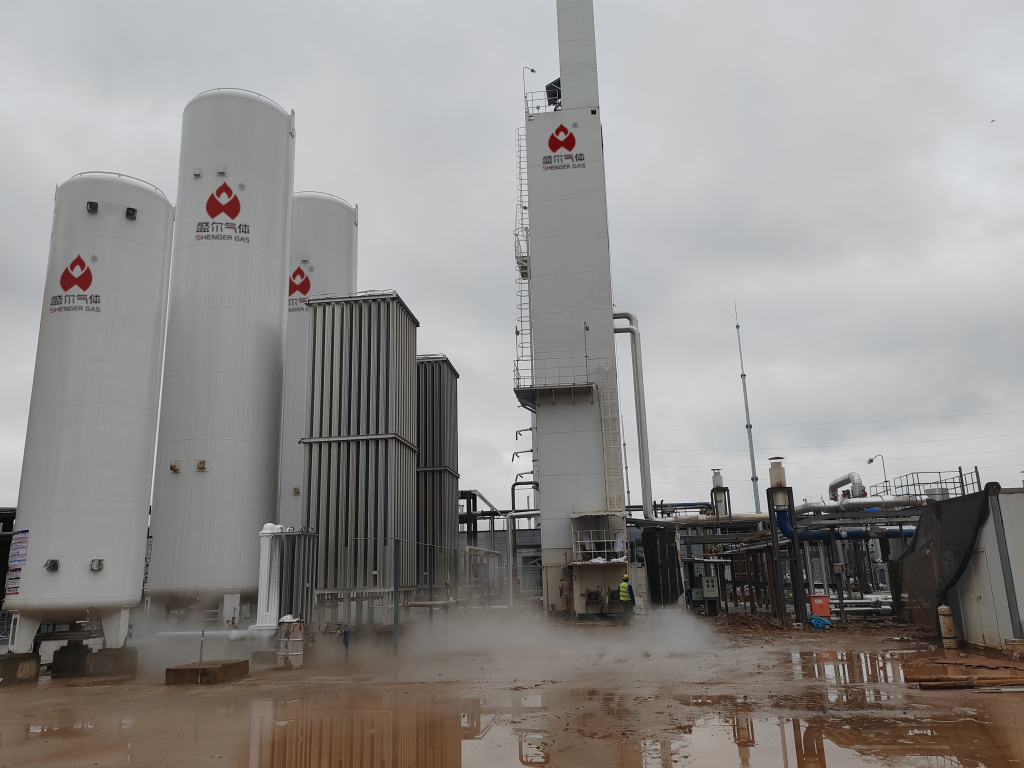
Cryogenic air separation remains the definitive technology for high-volume, high-purity oxygen supply in industry. Its cryogenic distillation process delivers oxygen at 99.9% purity levels and scales to meet the deman ds of giant steelworks, chemical complexes, and power plants. Though energy-intensive, the technique has continually improved, squeezing more efficiency out of compressors, heat exchangers, and expansion turbines. Equally important, modern control systems and design refinements allow these ASUs to run with extreme reliability and to integrate seamlessly with other plant operations. In an era where processes are becoming more oxygen-hungry (and where efficiency and purity are paramount), cryogenic air separation units remain a proven solution. The cryogenic air separation unit for oxygen production will continue to play a central role in industrial gas supply, combining low-temperature physics with robust engineering to meet future oxygen needs.