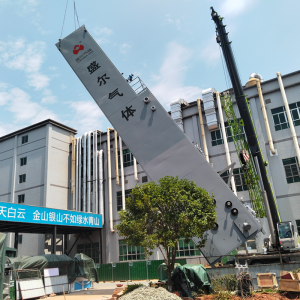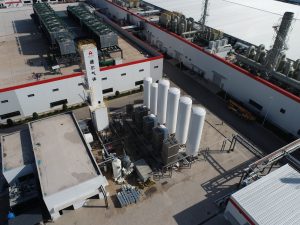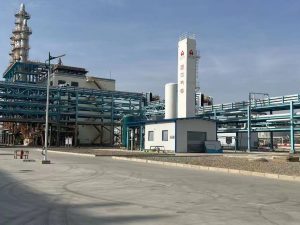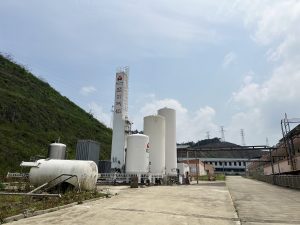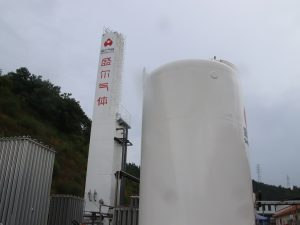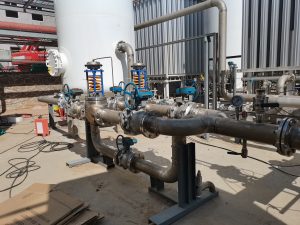
Air separation equipment has evolved dramatically from its early 20th-century origins to the sophisticated air separation systems operating today. These technologies, which extract pure oxygen, nitrogen, and other gases from atmospheric air, underpin crucial industries from steelmaking to healthcare. Over the past century, engineers transformed primitive air liquefaction setups into high-efficiency industrial plants capable of producing thousands of tons of gas per day. This article traces the chronological development of these systems, highlighting major innovations, global contributions (particularly from the USA and China), and milestone shifts in scale, energy efficiency, and digital integration

Early 20th Century Innovations: Cryogenic Foundations
The story begins in the early 1900s with the advent of cryogenic air separation.In 1902, the first practical air separation equipment was commissioned, based on the pioneering work of German engineer Carl von Linde. His initial system employed a single-column distillation process to liquefy air and produce oxygen. By 1910, Linde had introduced a revolutionary double-column design that could simultaneously generate high-purity oxygen and nitrogen. This breakthrough established the fundamental blueprint for cryogenic air separation equipment that is still in use today. Early plants were small and manually operated, yet they proved the concept that liquefying air and fractionally distilling it could yield pure industrial gases. Soon after, companies in Europe and the United States began adopting and refining these cryogenic techniques. Air separation equipment of this era enabled early uses of oxygen in welding and medical therapy, albeit on a limited scale by modern standards.
Mid-20th Century Expansion: Scaling Up and Efficiency Gains
During the mid-20th century, air separation technology advanced in tandem with growing industrial demand. The introduction of the basic oxygen furnace in steelmaking around the 1950s created an enormous need for oxygen, driving the development of larger air separation equipment. spurring construction of larger cryogenic plants in the USA, Europe, and beyond. Where 1930s-era facilities produced only a few tens of cubic meters of oxygen per hour, post-war air separation equipment began delivering orders of magnitude more. By the 1960s, oxygen units capable of hundreds of tons per day were being built to supply steel mills and chemical factories. This period also saw significant improvements in energy efficiency. Early systems had relied on simple Joule-Thomson cooling, but mid-century designs adopted expansion engines (turbo-expanders) to more efficiently produce the refrigeration needed for air liquefaction. Advances such as switching heat exchanger materials from brass to aluminum allowed for larger cold boxes and better heat transfer, further cutting energy consumption per unit of gas produced. In the United States, companies like Air Products pioneered on-site gas supply concepts during the 1940s and 1950s, relocating air separation units next to customer facilities to save on distribution costs. Meanwhile, China began developing its own air separation industry by the 1960s, initially with imported designs and later through domestic engineering efforts. By the end of the 1970s, air separation plants had grown vastly in capacity and became staples of any country’s industrial infrastructure.
Late 20th Century Diversification: PSA and Membrane Technologies
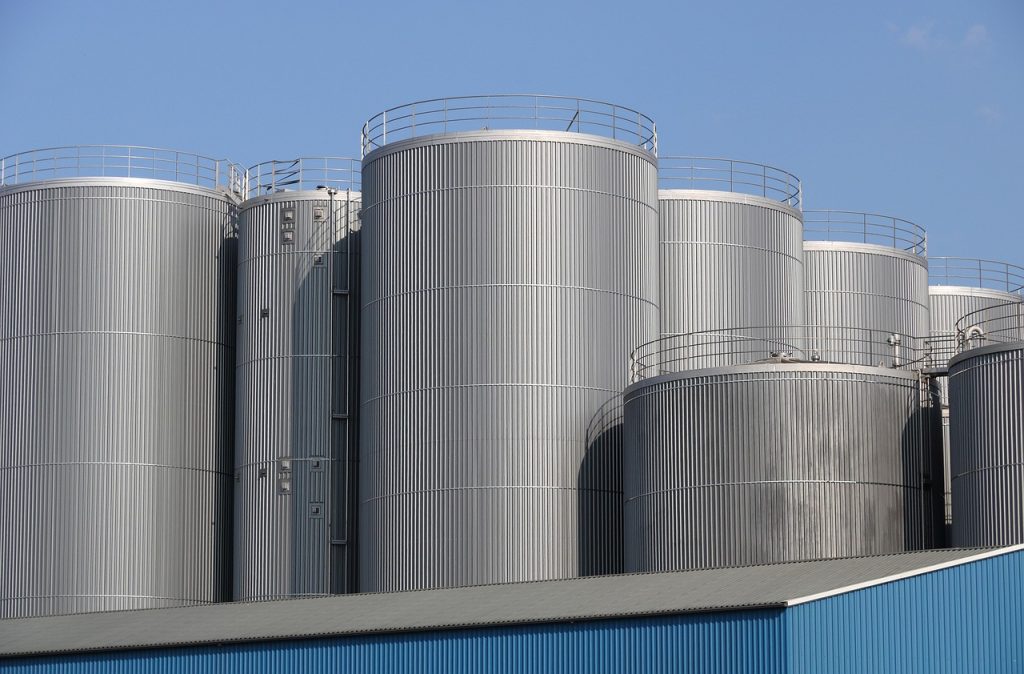
While cryogenic distillation remained dominant for large-scale production, the late 20th century introduced new types of air separation equipment, such as PSA nitrogen generators and membrane separation systems, better suited for smaller capacities. or specific applications. In 1960, American engineer Charles Skarstrom patented the concept of pressure swing adsorption (PSA). The PSA process uses beds of adsorbent materials (like zeolite molecular sieves) that trap one component of air at high pressure and release it at low pressure, thus selectively separating gases without cryogenics. By the 1970s, companies had commercialized PSA units for air separation, providing a compact way to generate moderate-purity oxygen or nitrogen on-site. Vacuum swing adsorption (VPSA), a variation with vacuum regeneration, soon followed for efficient oxygen concentrators (commonly ~90–95% O₂) used in healthcare and industry.
Around the same time, advances in polymer science led to membrane separation technology for gases. By the 1980s, commercial membrane air separation systems (pioneered largely by U.S. firms) became available, especially for nitrogen generation. These systems push compressed air through semi-permeable hollow fibers; oxygen (a faster permeating gas) enriches the permeate stream, leaving a nitrogen-rich product at the outlet. Membrane units have no moving parts aside from compressors and offer a lightweight, modular means to produce nitrogen with typical purities of 95–99%. Both PSA and membrane-based air separation equipment filled important niches: they were simpler and more energy-efficient for lower volumes and moderate purities, even if they could not match the ultra-high purity or massive output of cryogenic plants.
By the late 20th century, industrial gas companies worldwide (in the USA, Europe, Japan, and emerging players in China) were leveraging all three technologies. Cryogenic air separation units (ASUs) reached record sizes for bulk production, while PSA and membrane units proliferated for on-site gas supply in laboratories, hospitals, and oil fields.
21st Century Advancements: Digital Integration and Mega-Scale Plants
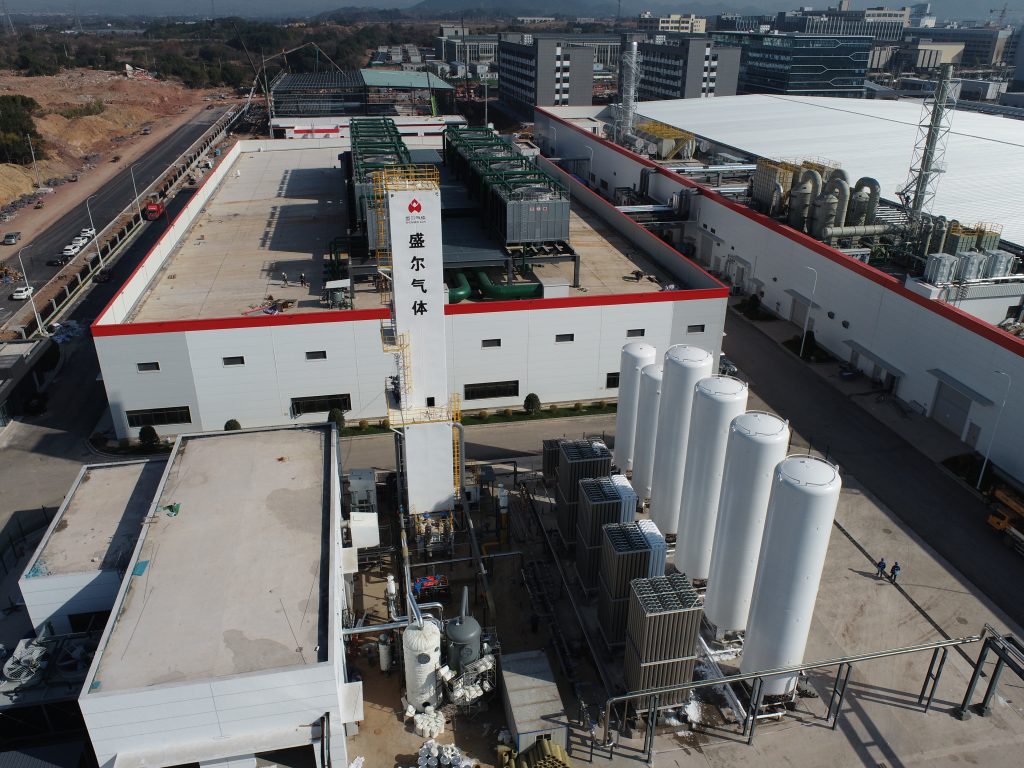
In the 21st century, air separation equipment has reached unprecedented scales and intelligence, enabling the construction of mega-scale air separation units.Large-scale cryogenic ASUs today can produce oxygen on the order of thousands of tons per day, a leap from the capacities of a few decades ago. For instance, engineering firms have constructed complexes with multiple parallel units—some individual units yielding over 100,000 Nm³/h of O₂—to support mega-projects in chemicals and energy. China in particular has emerged as a leader in building and operating these mega-scale plants. Chinese manufacturers, once reliant on foreign designs, now produce state-of-the-art ASUs domestically, including some of the world’s largest single-unit plants for sectors like coal gasification and petrochemicals. At the same time, top U.S. and European corporations (now often merged into global entities) continue to push technical boundaries, whether through constructing huge oxygen facilities for gas-to-liquids projects in the Middle East or innovating new efficient process cycles. The result is that modern cryogenic air separation equipment is far more energy-efficient than mid-century predecessors, with some large plants consuming nearly half the kilowatt-hours per unit of gas compared to older designs.
Another hallmark of present-day development is the integration of advanced digital systems. Modern air separation units feature sophisticated control and monitoring technology that was unimaginable to early 20th-century pioneers. By the 1990s, companies had deployed the first unmanned, remotely controlled ASUs. Today, operators frequently manage plants via distributed control systems (DCS) and even cloud-based supervisory systems that can oversee multiple sites. Real-time sensors and automation allow precise regulation of purity and output to match customer demand, and they help optimize energy usage by adjusting operations in response to electricity pricing or grid conditions. Predictive maintenance algorithms monitor equipment health (such as compressors and turbines) to prevent downtime, reflecting a broad trend of digital transformation in the industrial gases sector. In short, current air separation equipment not only produces more product at lower energy cost, it does so with a level of reliability and autonomy that defines modern “smart” factories.
Comparison of Air Separation Technologies
To summarize the key differences between the main air separation methods, the following table provides a technical comparison of cryogenic distillation, PSA/VPSA, and membrane systems. Each technology has distinct strengths and ideal use cases:
| Technology | Purity Achievable | Output Capacity | Energy Consumption | Advantages | Typical Applications |
|---|---|---|---|---|---|
| Cryogenic Distillation | Very high (up to ≥ 99.9% O₂ or N₂; argon and rare gases possible) | Very large (from ~50 Nm³/h in small plants to >100,000 Nm³/h O₂ in mega-plants) | High per volume (due to refrigeration; large plants ~0.3 kWh/Nm³ O₂) | Produces multiple gases (O₂, N₂, Ar) at high purity Economies of scale for large volumes | Steel mills, chemical refineries, gas suppliers (bulk liquid O₂/N₂), semiconductor manufacturing (ultra-high purity gases) |
| Pressure Swing Adsorption (PSA/VPSA) | Moderate (O₂ ~90–95%; N₂ up to ~99+% with multi-bed setups) | Low to medium (from small portable units to industrial units of a few hundred Nm³/h) | Moderate (primarily compressor/vacuum work; no cryogenic cooling needed) | Simple, modular equipment with quick startup/shutdown Lower capital cost for small to mid-scale | On-site oxygen generators for hospitals and glass/metal cutting, nitrogen for food packaging, inerting in chemical processes |
| Membrane Separation | Lower (typically O₂ enrichment to 30–40%; N₂ ~95–99% max) | Low to medium (scalable by adding membrane modules, commonly up to hundreds of Nm³/h) | Moderate (compressor-driven; efficiency drops at higher purities) | Compact, lightweight, no moving parts in modules Easiest to operate and maintain | Nitrogen blanketing (oil & gas tank inerting), instrument air dryers, portable nitrogen generators, oxygen enrichment for combustion in specialized systems |
Global Impact and Ongoing Developments
From its humble beginnings over a century ago, air separation equipment has become a backbone of modern industry worldwide. The United States and Europe led early innovation in cryogenic processes and later introduced PSA and membrane techniques. Those advances spread globally, enabling countries like China to rapidly expand their own capabilities. In recent decades, China’s investment in domestic air separation manufacturing has not only met its internal demand but also set records on the international stage, building some of the largest and most energy-efficient plants. Meanwhile, collaborative global efforts continue to refine these technologies – for example, research into novel methods such as ceramic ion transport membranes for oxygen production, or hybrid systems that combine cryogenic and adsorption steps for improved efficiency.
Each evolutionary step, from the first Linde air liquefier to today’s digitally managed mega-plant, reflects an ongoing pursuit of greater purity, output, and efficiency. The history of air separation equipment development is therefore not just a chronicle of machines, but a testament to human ingenuity in meeting the ever-growing need for industrial gases. As we reach the current state-of-the-art, the journey continues with incremental improvements and bold innovations that will define the next chapter of this industry.