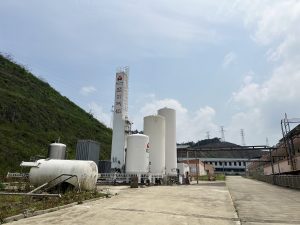
Nitrogen generators provide on-site supply of industrial nitrogen gas, allowing facilities to bypass cylinder deliveries or liquid bulk contracts. These systems can produce ultra-pure N₂ (typically from ~95% up to 99.999%) continuously. Many industrial buyers wonder: How much does a nitrogen generator really cost? In this article we break down all the cost factors—from the initial capital investment to ongoing energy and maintenance—and provide detailed examples of typical ROI payback for small, medium and large plants. For industrial operations, the total cost of a nitrogen generator can vary widely depending on required flow, purity and system features.
PSA vs. Membrane Nitrogen Generators: Technology Comparison
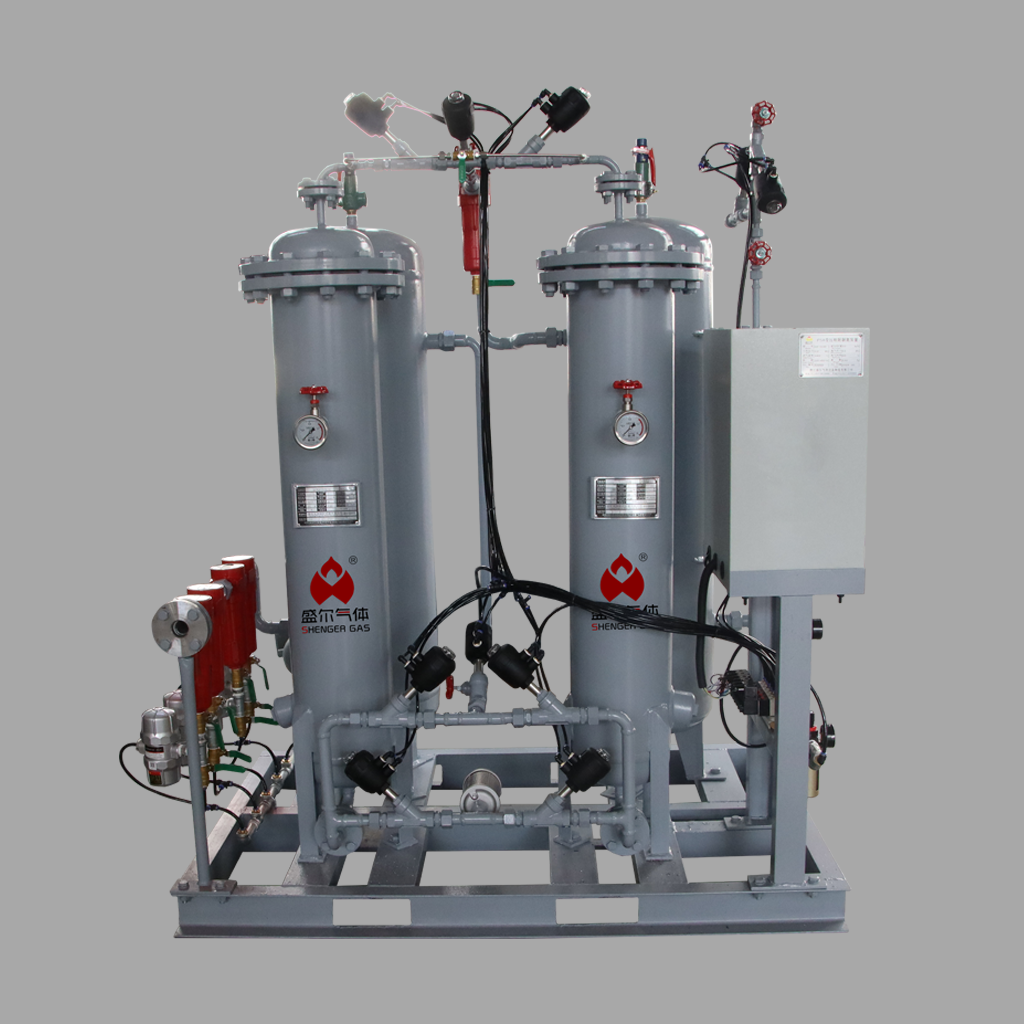
On-site nitrogen generators use two main approaches. PSA (Pressure Swing Adsorption) nitrogen generators use specialized adsorbent beds that cycle to capture oxygen and other impurities from compressed air. A PSA nitrogen generator can reach extremely high purity levels (often 99% and above, up to 99.999% for multi-bed systems). PSA units can handle very large flow rates (hundreds to tens of thousands of SCFH) but typically have higher capital cost for a given capacity. They also require valves and periodic replacement of adsorbent media and filters as part of routine service.
Membrane nitrogen generators push compressed air through bundles of polymer fibers that preferentially permeate oxygen, delivering nitrogen-rich gas. Membrane systems generally have lower upfront cost for moderate purity needs (typically up to ~98–99.5% N₂) and are physically compact. They perform best for smaller to medium flows or where space is limited. However, membrane units become less efficient at very high purity or very large flows. In practical terms, membrane systems are often used when purity needs are below 98%, while PSA generators are chosen for ultra-high purity or heavy-duty applications. Both systems require a clean, dry compressed air source. If a facility lacks adequate compressor capacity or dryers, adding those (with filters) must be budgeted as well, raising the overall project cost.
| Specification | PSA Nitrogen Generator | Membrane Nitrogen Generator |
|---|---|---|
| Nitrogen Purity | Up to 99.999% (ultra-high purity) | Typically up to ~98–99.5% |
| Flow Rate | Tens to 100,000+ SCFH (very large scale) | Tens to a few thousand SCFH (small/med) |
| Initial Cost (USD) | ~$5,000–$500,000+ (depending on capacity) | ~$3,000–$100,000+ (for larger flows) |
| Energy Use | ~0.4–0.6 kWh per Nm³ of N₂ | ~0.2–0.4 kWh per Nm³ of N₂ |
| Maintenance | Regular adsorbent servicing (annually) | Filter/dryer replacement (periodically) |
| Footprint | Larger (multi-bed skid) | Smaller (modular, skidded) |
Table: Typical specifications and cost ranges for PSA vs. membrane nitrogen generators.
Above, note that membrane generators can be cheaper at purities below ~98%, whereas PSA units are typically required for purities above 99.5%. Both systems need dry, oil-free air; if your compressor/dryer capacity is insufficient, installing them (with filters) is an extra cost to include.For a more detailed explanation of how a PSA nitrogen generator operates in practice, see Atlas Copco’s technical overview on how a PSA nitrogen generator works.
Key Cost Factors for Nitrogen Generators
Several factors influence the total cost of a nitrogen generator system. Understanding these helps industrial buyers specify the right system and budget accurately:
- Flow Rate & Capacity: The required nitrogen flow from the nitrogen generator (in SCFH or Nm³/hr) directly scales the system size and price. Small demands (tens to a few hundred SCFH) use compact units, while large processes (thousands of SCFH) need multiple modules or large PSA skids. An undersized generator will throttle production, whereas oversizing increases capital expenditure and energy use. Match the generator’s rated output to peak usage to optimize cost-effectiveness.
- Purity Requirement: The required N₂ purity dramatically affects cost. High-purity gas (99.999%) needs larger or more complex PSA systems with extra adsorption beds and controls. Membrane units are cost-effective up to ~98–99% purity, but above that their flow rate drops off sharply. Defining the minimum needed purity (e.g. 95% vs. 99.999%) is crucial, as it largely dictates whether a membrane or PSA generator is appropriate and thus the baseline price.
- Energy Consumption: Nitrogen generators run on compressed air and electricity. A nitrogen generator uses roughly 0.3–0.6 kWh to produce 1 Nm³ of N₂ (more energy for higher purities). At U.S. electricity rates (~$0.08–$0.12/kWh), this adds a few cents per 100 SCF of N₂. If a facility has no spare compressor, adding a compressor and dryer can be a significant extra cost. Always account for both the generator’s power draw and any new compressor/dryer energy use when evaluating operating expenses.
- Maintenance & Service: Regular servicing maintains performance. PSA systems typically need annual or biannual maintenance: changing adsorbent media, checking valves and seals, and replacing dryer filters. A service contract or parts kit may cost a few thousand dollars per year for a mid-sized system. Membrane units have simpler upkeep (mostly filter replacement) and longer intervals between full service. Be sure to factor in these maintenance schedules—often estimated as 5–10% of initial cost per year—when calculating total ownership cost.
- Additional Components: A complete setup often requires extras. A receiver (buffer) tank ($1k–$5k) is commonly used to smooth out intermittent flow demands. For example, a properly sized receiver helps even out the nitrogen generator’s output during peak usage. High-pressure applications (above ~120–150 psi) require a booster compressor ($5k–$20k). Critical processes may need an oxygen analyzer ($500–$2k). If air quality is marginal, a dedicated air dryer and filters ($5k–$15k) may be needed. Each of these components adds to upfront cost but can be essential for reliable operation.
- Installation & Footprint: While generators are fairly compact, installation considerations can add cost. Outdoor or containerized units cost more than simple indoor skids. Consider piping, mounting, electrical wiring and site prep. Local safety or permitting requirements may also add to timeline and expense. These factors typically add a smaller fraction of cost but should be included in project planning.
By analyzing flow/purity needs, utility requirements and the extras above, buyers can define the optimal system. This scoping minimizes unnecessary capital outlay while ensuring reliable nitrogen supply for the application.
Pricing Estimates for Nitrogen Generators
What do nitrogen generator systems cost in the U.S. market? Vendors and industry sources report broad price bands based on capacity and technology:
- Small-Scale Systems: Generators delivering tens to a few hundred SCFH (e.g. lab gas supply or a small production line) typically start around $3,000–$10,000. These often use compact membrane units or small PSA stacks (95–99% purity). For example, a 100 SCFH membrane nitrogen generator might cost ~$5,000. A 200 SCFH PSA system at 99.5% purity could be in the $8k–$15k range.
- Medium Systems: For flows on the order of several hundred to a few thousand SCFH (medium manufacturing plants, mid-size packaging lines), budgets usually range $20,000–$100,000. In this range you find robust PSA packages with higher purity and larger membranes. For instance, a 500 SCFH, 99% PSA generator might run about $25k–$30k; a 1,000 SCFH unit $30k–$50k. Larger membrane skids in this class are typically similar or slightly lower in cost. Final price depends on options like air prep, controls, and dual-unit configurations.
- Large / High-Purity Systems: High-demand industrial installations (multi-thousand SCFH) or ultra-high purity specs often exceed $100,000. A large PSA system (e.g. 5,000 SCFH at 99.999%) could be $150k–$300k. Complex projects with redundant modules, SCADA integration or custom engineering can approach $500k. On the other hand, very large capacity yields some economies of scale, but additional features often offset these savings.
These figures are rough guidelines. Exact quotes require a detailed needs assessment. Note that leasing or financing deals are common; many suppliers will compare a monthly lease payment against the ongoing cost of gas deliveries. Often, even including financing, the cost per year for a generator lease is lower than long-term bulk gas bills.
-769x1024.png)
ROI Scenarios: Small, Medium, and Large Facilities
To illustrate the economics, consider example scenarios comparing on-site generation versus purchasing N₂. Assume delivered nitrogen costs ~$0.70–$1.00 per 100 SCF (depending on purity and contract) and electricity ~$0.10/kWh:
- Small-Scale Operation: A small factory (e.g. a food-packaging line) uses about 1 million SCF of N₂ per year (~30 SCFH continuous) at ~95% purity. A compact membrane nitrogen generator (~95% N₂) costing $15,000 could meet this need. Delivered gas at ~$0.85/100 SCF would run ~$8,500/year. The generator’s electricity (0.3 kWh/SCF) plus minimal maintenance might be ~$2,000/year. Net savings ~$6,500/year yield a payback of ~1.5–2 years. (If delivered prices rise or bulk contracts include rental fees, payback can be even faster.)
- Medium-Sized Plant: A mid-sized electronics plant needs ~5 million SCF per year (~150 SCFH continuous) at 99% purity. A PSA nitrogen generator system (with compressor/dryer) around $50,000 upfront fits this requirement. Delivered N₂ (~$0.80/100 SCF) would cost ~$40,000/year. On-site generation (power + maintenance) might be ~$8,000/year. Annual savings ~$32,000 imply a payback of ~15–18 months. In practice, most medium plants see on-site N₂ generation pay off in under 2 years.
- Large Industrial Facility: A large chemical plant consumes 20+ million SCF per year (>600 SCFH) at high purity. A heavy-duty PSA generator (plus air prep) may cost $150,000. Delivered gas ($0.75/100 SCF) would be ~$150,000/year. Operating the generator (power & service) might total ~$25,000/year. Net savings ~$125,000/year give a payback under 1.2 years. In real situations, high-volume usage and volatile gas prices can even lead to break-even in just 12 months.
These examples are illustrative. Actual payback depends on your specific gas rates, usage pattern and electricity cost. The general trend is clear: as annual nitrogen use grows, on-site generation often recoups its cost within 1–2 years. After that, the plant enjoys low, predictable gas cost (essentially just the cost of electricity and maintenance).
In summary, the cost of a nitrogen generator involves initial capital plus operating costs. A well-specified system will minimize capital outlay while meeting purity and flow needs. Once installed, a properly sized nitrogen generator supplies N₂ at very low marginal cost, making the investment highly attractive over the long term. For budgeting, note that a nitrogen generator’s capital cost is one-time; after payback only electricity and maintenance remain as expenses. Always obtain detailed quotes and calculate total cost of ownership based on your facility’s demand to ensure the best economic outcome.