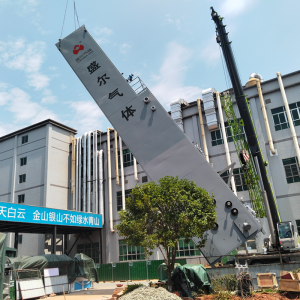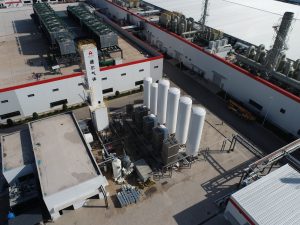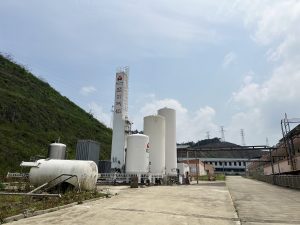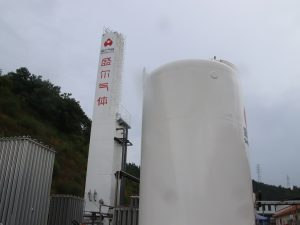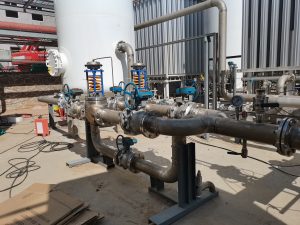
On-site nitrogen generation has become a critical utility in modern industry, providing a continuous supply of high-purity N₂ gas for blanketing, purging, and inerting without relying on delivered cylinders or liquid supplies. Instead of handling and storing bulky gas cylinders or managing liquid-nitrogen deliveries, engineering teams install on-site PSA, membrane, or cryogenic systems to produce nitrogen on demand. These systems range from compact units (a few Nm³/h) for laboratory or manufacturing lines to large skids and air separation plants (hundreds or even thousands of Nm³/h) for heavy industrial use. As industries pursue higher uptime and efficiency, digital transformation is rapidly advancing in this field. By 2026, smart sensors and data-driven control will be embedded in nearly all nitrogen generators, enabling real-time monitoring, process optimization, and predictive maintenance. This article explains the main on-site nitrogen generation methods (PSA, membrane, cryogenic) and explores how AI and IoT technologies will optimize their operation in the coming years.In the era of smart factories, on-site nitrogen generation has become a cornerstone of industrial automation, enabling continuous, cost-efficient gas supply without logistics delays.
Key On-Site Nitrogen Generation Technologies
The digital shift is redefining how on-site nitrogen generation systems are monitored, optimized, and maintained.Engineers typically choose among three principal on-site nitrogen generation technologies, each with distinct features:
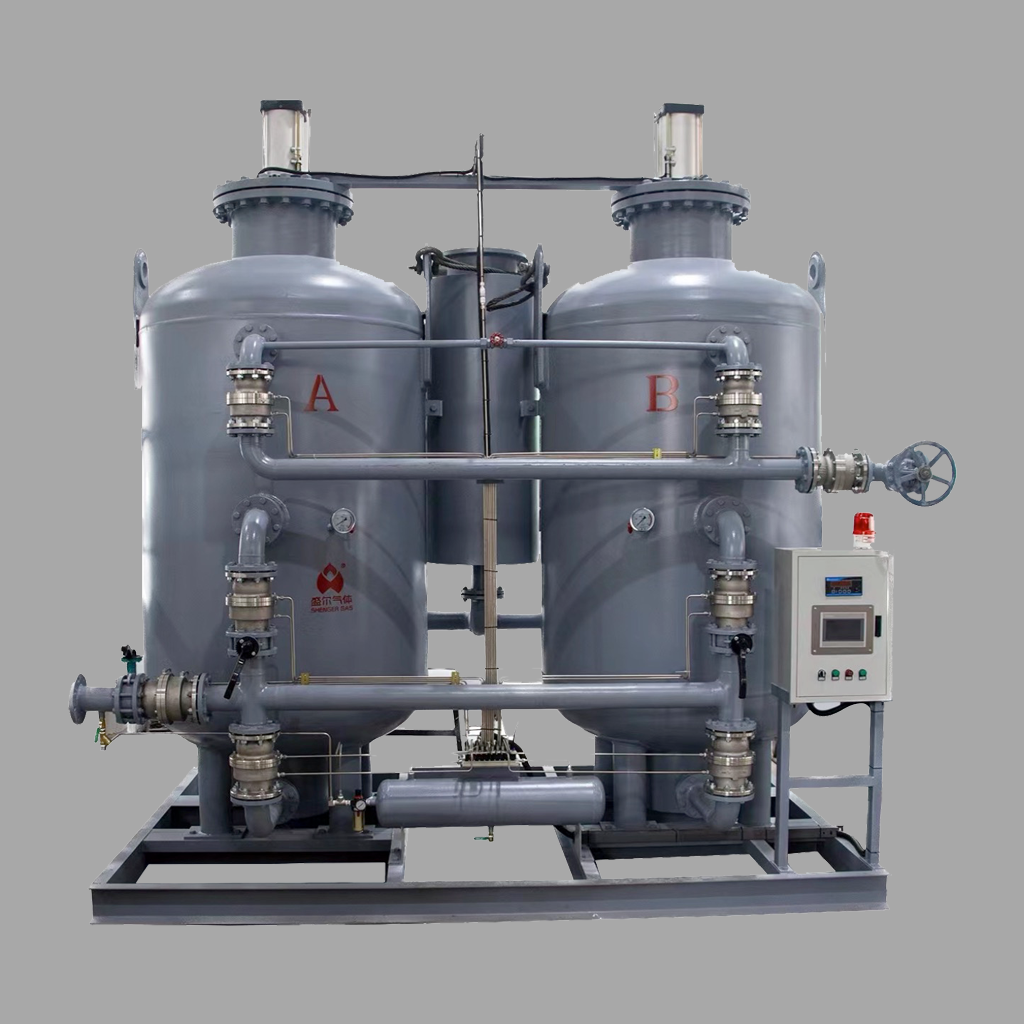
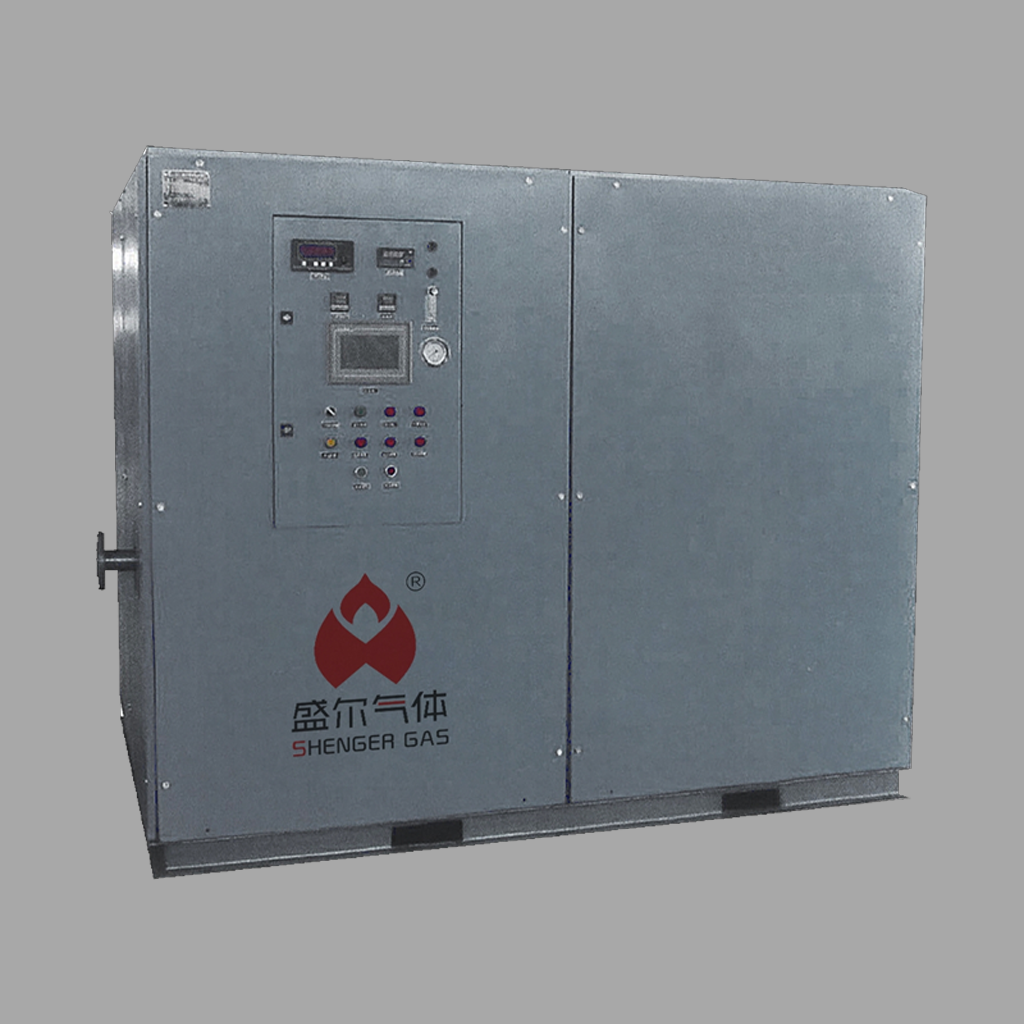
- Pressure Swing Adsorption (PSA): PSA units use pressurized air and adsorbent beds (usually carbon molecular sieve or zeolites) to trap oxygen and other impurities, producing a nitrogen-rich output. After adsorption, the bed is regenerated by depressurizing. PSA systems can reach very high purities (up to ~99.999%), and units range from small (tens of Nm³/h) to large installations (thousands of Nm³/h). They are valued for customizable purity and on-demand operation, making them common in petrochemical, electronics, metal, and food industries.
- Membrane Separation: Membrane nitrogen generators force compressed air through polymeric hollow fibers or bundles. The fibers preferentially allow oxygen and moisture to permeate out, while nitrogen permeates more slowly and is collected as product gas. Membrane units are continuous-flow and have no cyclic adsorption phases. They typically deliver purities up to about 95–99% (depending on module design and pressure) and are compact and low-maintenance. Membrane systems suit moderate purity needs with flows from a few to several hundred Nm³/h (multiple modules can be paralleled for higher flow).
- Cryogenic (Air Separation): Cryogenic generators cool air to liquefaction and then perform fractional distillation. This yields very high-purity nitrogen (99.999% and above) and is ideal for very high flow rates or ultra-pure requirements. Cryogenic units are large and energy-intensive, often used where thousands of Nm³/h are needed, but smaller “liquid nitrogen generator” units (liquid dewars) also exist for lab-scale demand. In on-site cryogenic generation, reliability hinges on precise temperature and pressure control.
Each technology has unique operational parameters (compressor pressures, temperatures, flow ranges, purity limits, etc.), but in all cases advanced automation is emerging. For example, a typical mid-scale PSA system might operate at ~0.7–0.8 MPa (7–8 bar) and produce 100–500 Nm³/h at 99.5% purity, while a compact membrane unit may run at ~0.4–0.5 MPa and yield 50–200 Nm³/h at 95–98% purity. Regardless of method, modern on-site generators share a growing reliance on sensors and digital control.
Pressure Swing Adsorption (PSA) Systems
AI brings significant improvements to on-site nitrogen generation through PSA technology.PSA generators are a proven solution for on-site nitrogen production where 99%+ purity is needed. A PSA plant typically contains two or more adsorbent towers filled with molecular sieves. Compressed air enters one tower (around 5–9 bar), where oxygen and water vapor are selectively adsorbed, and high-purity N₂ exits as product. When a tower becomes saturated with O₂, the cycle switches: the pressure is released, the bed desorbs O₂, and the process repeats on the alternate tower. This cycle (adsorb/repressurize) can repeat several times per hour.
Modern PSA units integrate extensive sensing and automation. With AI algorithms interpreting sensor data, on-site nitrogen generation based on PSA now achieves adaptive control and lower energy per Nm³.IoT sensors embedded in each adsorption tower monitor pressures, temperatures, and gas composition in real time. For instance, zirconia oxygen analyzers (O₂ sensors) at the outlet feed data back to the control system to verify purity (often within ±0.1% of setpoint). Digital pressure transducers and flow meters track the state of each tower. All this instrumentation can be networked via industrial IoT (IIoT) protocols (such as Modbus, Profibus, or Ethernet) to a local PLC or cloud platform. Operators can remotely view key metrics on dashboards or mobile apps, and alarms can be issued if e.g. O₂ slip climbs above specification.
Operators using PSA-type on-site nitrogen generation can visualize tower status, pressure, and purity remotely in real time.Meanwhile, AI and machine learning layers can analyze this sensor data to optimize the PSA cycle. For example, learning algorithms can tune the valve timing and cycle frequency based on demand patterns. If product flow requirements drop or rise, AI can adjust the adsorption/desorption durations to maintain target purity with minimal energy use. Machine learning models trained on historical performance can detect subtle trends indicating molecular sieve degradation or micro-leaks. If an analyte starts to creep up slowly over time, an AI system may flag the need for sieve replacement or valve servicing before a failure occurs. This predictive maintenance approach prevents unexpected downtime. In some advanced designs, a “digital twin” of the PSA unit uses process data to simulate changes; operators can virtually test new settings or predict the impact of component aging on system performance. The result is a PSA nitrogen generator that continuously self-optimizes – for instance, balancing the airflow between parallel towers to maximize purity while minimizing blow-off losses and compressor load.
These smart PSA features bring concrete benefits. For example, an AI-optimized PSA control can reduce energy consumption by fine-tuning the compressor motor speed to match actual N₂ demand rather than running at constant speed. Over large systems, this can cut kWh/Nm³ by 10–20%. Predictive maintenance algorithms, by analyzing valve cycle patterns and pressure drops, can extend the service life of sieve beds beyond the typical 5–8 years, and schedule maintenance during planned downtime windows. In short, AI/IoT enhancements ensure that on-site PSA generation is more reliable, efficient, and cost-effective than legacy systems.
Membrane Nitrogen Systems
IoT platforms enhance membrane-based on-site nitrogen generation by linking each module’s pressure, temperature, and humidity readings to cloud dashboards.In membrane-based on-site nitrogen generation, IoT ensures stability and lower maintenance.Membrane nitrogen generators differ from PSA units in that they separate gases continuously and without cyclic beds. Compressed air is fed into a membrane module (or multiple parallel modules), which contains thousands of hollow fibers. The membrane selectively permeates oxygen, water vapor, and carbon dioxide to the permeate side, while the slower-diffusing N₂ (and a small fraction of argon) emerges from the other side as product gas. Because membranes rely on diffusivity rather than adsorption, they typically produce nitrogen at lower purity (often 95–99%) and lower differential pressure (around 4–7 bar). However, membranes have no periodic purge stage and involve fewer moving parts, making them very robust and low-maintenance.
With the advent of IoT, even membrane systems are getting smarter. Each membrane module can now be instrumented with pressure and temperature sensors at the feed and permeate ends. By continuously monitoring feed-air pressure, flow rates, and humidity, the system can detect membrane fouling or fiber failure. For example, if the outlet nitrogen purity begins to slowly degrade (measured by an inline O₂ sensor), IoT sensors can alert operators that a membrane module may need cleaning or replacement. Many modern membrane generators offer remote connectivity, letting engineers check module performance from a central control room or via smartphone.
On the AI side, optimization algorithms can tweak the operation of membrane stacks. In a skid with multiple membrane modules, an AI controller might balance the flow distribution among modules to equalize wear and maximize output. It could also adjust the compressor throttle or valve to maintain the optimal feed pressure for the desired purity and flow, rather than running in a fixed mode. By analyzing trends (for instance, changes in ambient temperature or demand profile), AI can anticipate when membrane efficiency will drop and schedule maintenance in advance. Since membranes degrade gradually, predictive models can estimate remaining useful life of each module based on production hours and performance decay.
Overall, AI/IoT in membrane systems leads to smoother operation. Remote monitoring ensures that even small leaks or blockages are identified quickly. Automated controls allow membrane units to ramp nitrogen output up or down in synchronization with plant demand, minimizing waste. And because membrane units have relatively low OPEX to begin with, the main gains are in avoiding purity excursions and unscheduled downtime. Engineers benefit from dashboards that integrate membrane status with the rest of the plant’s instrumentation, enabling holistic process control in an Industry 4.0 framework.
Cryogenic Nitrogen Generation
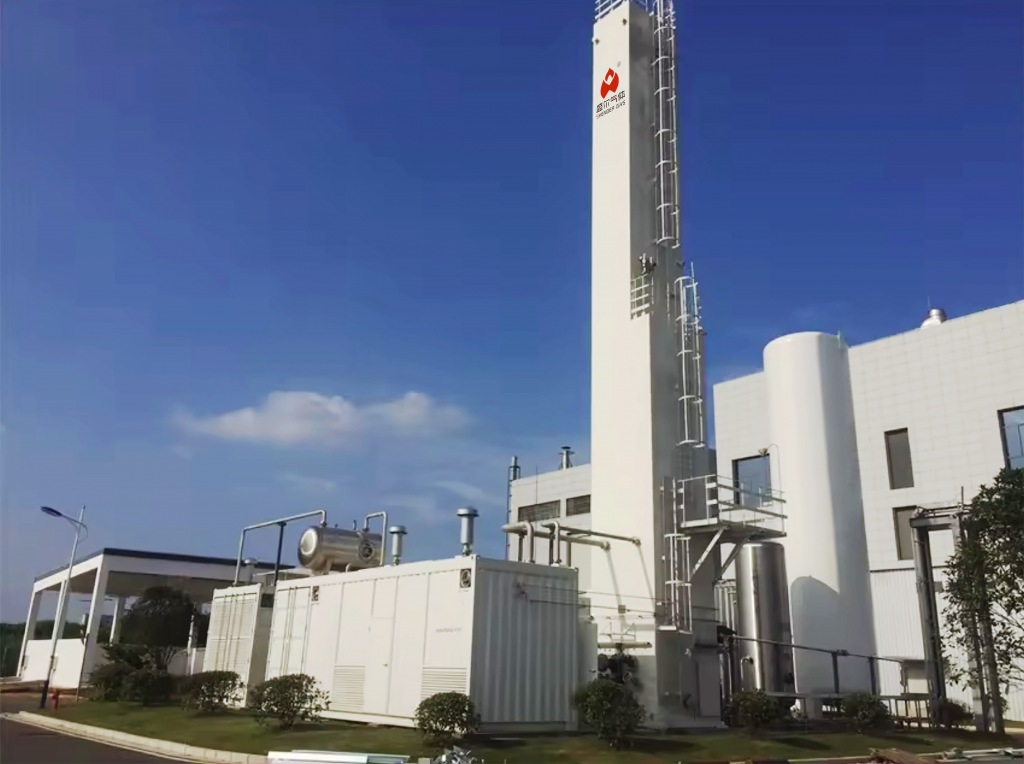
Cryogenic on-site nitrogen generation meets ultra-high-purity demand for semiconductor and pharma users.Cryogenic systems achieve nitrogen separation by liquefying air and distilling out N₂ at very low temperature (around –196 °C for liquid nitrogen). These systems, often called air separation units (ASUs), dominate when very large flows or ultra-high purity (>99.999%) are required. Traditional cryogenic plants operate continuous distillation columns with compressors, expanders, and heat exchangers. Although cryo units historically predate IoT, they are increasingly integrated into digital control architectures.
In a modern on-site cryogenic generator (or liquid-nitrogen system), IoT-enabled instrumentation is commonplace. Sensors for temperature, pressure, liquid level, and flow in the cold box and condenser send data to a distributed control system (DCS) or SCADA network. Valve positions and compressor statuses are tracked by PLCs with network connectivity. The result is that cryogenic plants can be monitored remotely just like smaller units: operators can observe column performance, energy use, and purity from anywhere. For example, liquid N₂ level in the storage tank and dew point analyzers on the vent line can feed the cloud, triggering alerts if anomalies appear.
On the AI/ML side, cryogenic nitrogen production stands to gain in efficiency and reliability. AI algorithms can optimize the refrigeration cycle in real time. For instance, they can adjust the compressor brake horsepower and expansion turbine settings to match load changes, while minimizing power consumption. Machine learning can correlate inflow gas composition or ambient conditions to output flow, tweaking the process for maximum throughput. Predictive analytics are especially valuable for cryo machinery: vibration and temperature data on large rotating equipment (like turboexpanders) can feed an AI model that predicts bearing wear or impeller issues before they cause a shutdown. Some advanced plants even use digital twins of the distillation column to simulate column tray performance and forecast when trays or heat exchanger surfaces might foul.
This deep learning control ensures every on-site nitrogen generation plant runs at peak thermodynamic efficiency.By 2026, it is expected that most industrial cryogenic N₂ plants will incorporate AI-driven control loops. This will shorten start-up and stabilization times (key for liquid nitrogen generators in labs and hospitals) and reduce power use per Nm³ of N₂. In the pharmaceuticals and electronics industries, where cryogenic purity is essential, AI can automatically tighten controls when higher purity is demanded (for example, by adding extra reflux in the column) and relax them when less purity is acceptable, saving energy. In summary, digitization of cryogenic N₂ generation means a traditionally manual process becomes largely autonomous, with higher efficiency and fewer manual adjustments.
AI and IoT: The Smart Transformation
Across all on-site nitrogen systems, the integration of AI and Internet of Things (IoT) technologies is driving a smart transformation. Key enablers include widespread deployment of wireless sensors (wirelessHART, 5G IoT devices, etc.), edge computing modules on equipment, and cloud-based analytics platforms. These tools turn a simple nitrogen generator into a connected machine.
- Real-Time Monitoring: IoT sensors track critical parameters (pressure, temperature, flow, and purity) in real time. Data are logged and visualized on dashboards, allowing engineers to see the N₂ generator’s “health” at a glance. Trend analysis can catch drift in key metrics (e.g. rising pressure drop across a filter) that may signal an issue.
- Automated Control and Optimization: AI-based controllers (using algorithms or trained models) can automatically adjust control valves, compressor speeds, and cycle schedules to meet demand curves. For example, in a plant where N₂ usage varies over a day, the system can ramp production up before a peak and idle gracefully when demand is low. These optimizations improve energy efficiency by ensuring compressors and blowers are not running harder than needed.
- Predictive Maintenance: Predictive analytics will soon allow on-site nitrogen generation to self-schedule maintenance and optimize energy tariffs automatically.Perhaps the biggest impact is reducing downtime. AI models analyze historical and real-time data to predict component failures. For instance, a support vector machine (SVM) or neural network might learn that a specific vibration signature on a PSA valve precedes failure. Once detected, the system will prompt maintenance teams to service that valve during planned shutdowns, avoiding costly unscheduled stops. Similarly, the remaining life of molecular sieves or membranes can be forecasted so spares can be stocked in advance.
- Data Analytics and Trends: Over time, the accumulated data from IoT devices can reveal insights. Plant engineers can compare performance across multiple generators or shifts, identify best-practice settings, and implement continuous improvements. Integration with plant maintenance software (CMMS) and enterprise systems closes the loop, using AI-derived insights to guide purchasing and process engineering decisions.
Some of the key benefits of applying AI and IoT to on-site nitrogen generation include:
- Improved Reliability: Early fault detection and scheduled maintenance reduce unplanned outages.
- Cost Reduction: Optimized compressor drive profiles and smart purge control lower energy consumption per Nm³ of N₂.
- Quality Assurance: Consistent product purity is maintained through automated feedback control.
- Operational Visibility: Stakeholders can remotely monitor N₂ supply status and receive alerts, enhancing safety and responsiveness.
- Process Efficiency: AI may discover subtle process improvements (e.g. alternate cycle sequences) that human operators might not.
In practice, an engineer might receive an alert on a smartphone: “PSA Tower 2 oxygen purity trending upward; change molecular sieve soon.” Or the plant control system could automatically shift flows to a second N₂ generator because an online analysis shows the first one needs servicing. This is the new normal in a smart factory environment.
Role of AI/IoT Across Technologies
The table below compares how AI and IoT features are enhancing PSA, membrane, and cryogenic nitrogen generators:
| Technology | IoT Applications | AI Applications |
|---|---|---|
| PSA Generators | Sensors on pressure, flow, and O₂ analyzers feed live data to PLC/SCADA; remote monitoring of valve status and desiccant conditions. | Machine-learning models optimize cycle timing and purge ratios; real-time purity control using adaptive feedback; predictive maintenance of sieve beds and valves. |
| Membrane Generators | Sensors measure feed-air pressure, membrane temperature and output purity; IoT connectivity allows alerts for pressure drops or leaks. | AI algorithms adjust feed pressure and flow split across modules for demand matching; predict membrane degradation and schedule replacements; anomaly detection for fiber damage. |
| Cryogenic Units | Instrumentation (temperature probes, liquid-level gauges, compressor diagnostics) connected to distributed control; remote monitoring of refrigeration loops. | Optimization of cryogenic cycles (e.g. tuning compressor speed, expansion valves for efficiency); digital twin modeling of distillation column; predictive fault detection on turboexpanders and pumps. |
This technical comparison shows that while each technology has different hardware, all of them benefit from similar digital capabilities: IoT ensures visibility into the process, and AI/ML tools turn that data into actionable control and maintenance strategies.
Looking Ahead to 2026 and Beyond
By the year 2026, on-site nitrogen generation systems are expected to be fully integrated into the broader Industry 4.0 ecosystem. Many of today’s emerging trends will mature into standard practice. For example, digital twin simulations may run in parallel with live operation, continuously learning from new data. AI-driven optimization could become more collaborative, with cloud-based machine learning models shared across multiple plants to improve performance benchmarks industry-wide.
In practical terms, an engineering manager planning a new chemical or food processing facility today should assume that on-site N₂ generators will come with IoT telemetry and AI-enabled controllers as a baseline. Future capital projects will likely specify compatibility with plant-wide predictive maintenance systems. Maintenance crews will increasingly rely on automated diagnostics instead of manually inspecting equipment on schedule. Even compliance monitoring (such as tracking emissions or purity for regulatory standards) will be largely automated.
At the same time, as these systems proliferate, attention to cybersecurity and data integrity will grow. Secure network architectures and encrypted sensor communications will ensure that smart nitrogen generation is safe from interference. Standardization of communication protocols (e.g. OPC UA, MQTT) will make it easier to tie N₂ units into enterprise IoT platforms.
Ultimately, the fusion of AI and IoT into on-site nitrogen generation heralds a shift from reactive, operator-driven control to a proactive, data-driven regime. Engineers and plant managers will benefit from higher system availability, tighter process control, and lower life-cycle costs. As digital tools guide equipment sizing, operation, and maintenance, nitrogen generators themselves become smarter – delivering precisely the right amount of inert gas at the right purity, with maximum efficiency and minimal intervention. By 2026, these capabilities will be a new standard in industrial gas supply, fundamentally redefining how facilities harness nitrogen for their critical processes.By embracing AI-driven on-site nitrogen generation, manufacturers will gain a permanent advantage in reliability, cost, and sustainability.