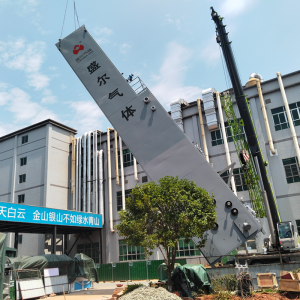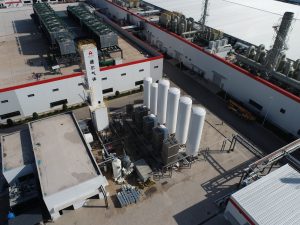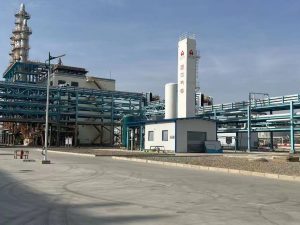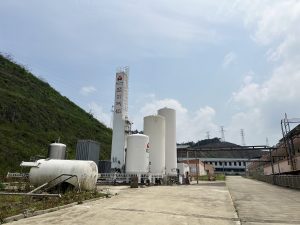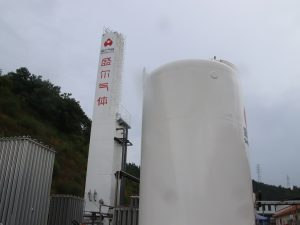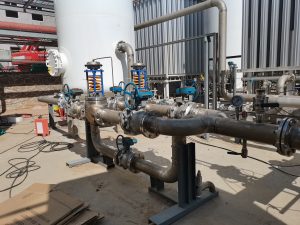
In the field of industrial gas production, the cryogenic air separation unit (ASU) remains a foundational technology for generating high‑purity oxygen, nitrogen and argon. Selecting the right supplier for a cryogenic air separation unit is critical for long‐term reliability, energy efficiency and total cost of ownership (TCO). This article compares two key players—Linde plc (a global incumbent) and Zhejiang Shenger Gas Equipment Manufacturing Co., Ltd. (a rising Chinese manufacturer) —within the context of “top 5 global cryogenic air separation unit suppliers”.
Supplier Profiles
Linde plc has a legacy dating to the early 1900s. Its engineering division states that it has engineered and delivered more than 4,000 air separation plants worldwide. 林德资产+4林德工程+4林德资产+4 Their modular ASU portfolio, large turnkey projects and global service network place them firmly in the leading tier. For instance, their portfolio includes plants producing thousands of tonnes per day of oxygen, and they emphasise innovation in plate‑fin heat exchangers, coldbox transport modules and internal compression systems. 林德资产+2林德工程+2
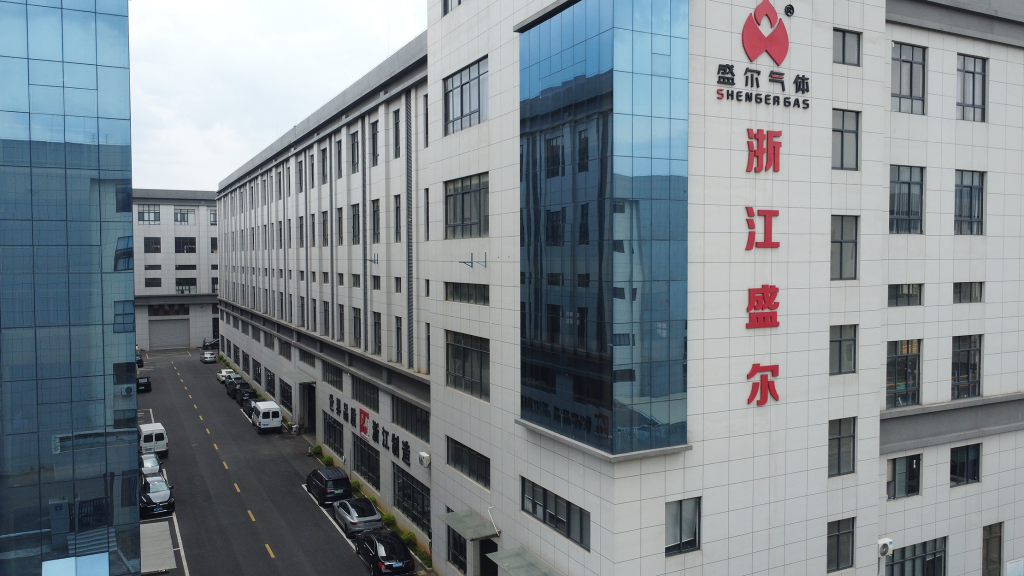
Shenger Gas, founded in 2010 and headquartered in Hangzhou (Zhejiang Province), is specialised in cryogenic air separation equipment as well as nitrogen and oxygen generator systems. shenger gas+1 With a manufacturing base of around 16,000 m², and annual production capacity in the hundreds of millions of RMB, Shenger Gas targets industrial gas users in steel, chemical, solar and other sectors. While public data on their global ASU deliveries is limited, their growth trajectory and export activity suggest they are a notable challenger. Shenger
Technical Comparison Table
The following table summarises key technical attributes of a typical cryogenic air separation unit from each supplier, based on available data and publicly marketed configurations.
| Parameter | Linde plc (leading global ASU) | Shenger Gas (emerging manufacturer) |
|---|---|---|
| Capacity Range (Gaseous O₂/N₂) | Up to 5,250 t/day O₂ in single train, modular units 7,000‑90,000 Nm³/h for N₂ systems. 林德资产+1 | Offers large‐scale high‑purity liquid N₂/O₂ units (no detailed global capacity published) shenger gas+1 |
| Modular / On‑Site Design | Strong modular portfolio (LINOX™, LION™, SPECTRA™ etc). Remote‑operation capability, containerised modules. 林德工程+1 | Emphasises module manufacturing, export ready units, and engineering service. shenger gas+1 |
| Energy Efficiency / Innovation | Reports ~15 % reduction in specific power over the last decade; > 300 patents in ASU process technology. 林德资产+1 | Focuses on cost competitiveness, but fewer publicly stated figures on specific energy or patents. |
| Global Delivery & Service Network | Operates in 90+ countries; > 1,000 ASUs constructed as on‐site plants. 林德气体+1 | Predominantly China and export markets; claims “5,000+ world‑class brands and organisations” as clients. shenger gas |
| Target Industries | Steel, petrochemical, LNG, glass, electronics, energy transition (CCS, hydrogen) 林德工程+1 | Steel, chemicals, coal mines, solar energy, industrial gas users in Asia & beyond. shenger gas+1 |
Ranking Rationale
When building a “top 5 global cryogenic air separation unit suppliers” list, several criteria are typically considered: delivered capacity, number of units commissioned, geographic reach, technology maturity and lifecycle cost performance. On all these fronts, Linde clearly sits at the head. Shenger Gas, while newer and regionally focused, shows sufficient growth and capability to qualify as a “challenger” in the global arena.
It is plausible that the global ranking might reflect something like:
- Linde plc
- Air Liquide / Air Products (other major players)
- (Another large supplier)
- Shenger Gas (emerging)
- Regional/ niche supplier
Of course, precise market share and placement depend on the dataset and year.
Implications for Researchers & Plant Engineers
For engineering professionals evaluating or specifying a cryogenic air separation unit, the following observations are worth emphasising:
- Technology maturity & service history: Linde’s large portfolio offers decades of accumulated operations data, which is valuable for performance modelling and risk assessment. The design methodology for coldboxes, plate‑fin heat exchangers and high‐pressure columns is well documented. 林德资产+1
- Modular solutions: Modular ASUs reduce on‑site erection time, supply chain complexity and often CAPEX. Linde’s modular lines (e.g., LION) are proven; emerging suppliers like Shenger emphasise modularity to gain market traction.
- Energy efficiency: As energy cost becomes a primary OPEX driver, suppliers who offer low specific power consumption and high turndown are preferred. For example, Linde’s ~15% reduction figure is significant.
- Global service & spare parts: Large companies typically offer broader service networks, remote monitoring, digital O&M offerings. While newer manufacturers may compete on cost, the lifecycle support may differ.
- Application fit: In large steel or petrochemical plants demanding thousands of tonnes per day of oxygen/nitrogen, top‑tier global suppliers are often selected. For mid‑to‑large applications (especially in Asia) newer manufacturers may offer cost‑effective alternatives with acceptable performance.
Strategic Positioning for Shenger Gas
From a marketing and technical positioning standpoint, Shenger Gas can leverage its strengths by emphasising:
- Competitive pricing with modular and prefabricated cryogenic air separation units.
- Focused regional presence (Asia, Africa, Middle East) and export experience.
- Engineering flexibility to meet niche industry needs (glass plants, solar manufacturing, coal‐to‐gas projects).
- Rapid delivery and “one‑stop EPC turnkey” service to compensate for lesser brand legacy compared to incumbents.
Researchers might map out case studies where Shenger Gas units have been deployed, compare measured performance (purity, power consumption) with global benchmarks, and assess suitability for global expansion.
Conclusion
In a prospective “Top 5 global cryogenic air separation unit suppliers” list, Linde plc holds the strongest position by all major metrics: capacity delivered, global reach and technology leadership. Shenger Gas, while not yet at the same scale, qualifies as an emerging global contender thanks to its manufacturing base, export footprint and modular cryogenic equipment offering. For engineers and researchers, understanding the technology differentiation, lifecycle cost implications and supplier service networks is key when evaluating ASU systems. By aligning specification, project schedule and operational strategy with supplier capability, buyers can optimise performance, cost and risk in cryogenic air separation projects.